Pixxel and the Rise of India's Hyperspectral Space-Tech Startups
Pixxel's hyperspectral satellites can detect crop disease before it's visible. Skyroot launched India's first private rocket. Agnikul flew the world's first 3D-printed engine. India's commercial space sector, unlocked by IN-SPACe in 2020, is four years into building what Israel took 15 years to create.
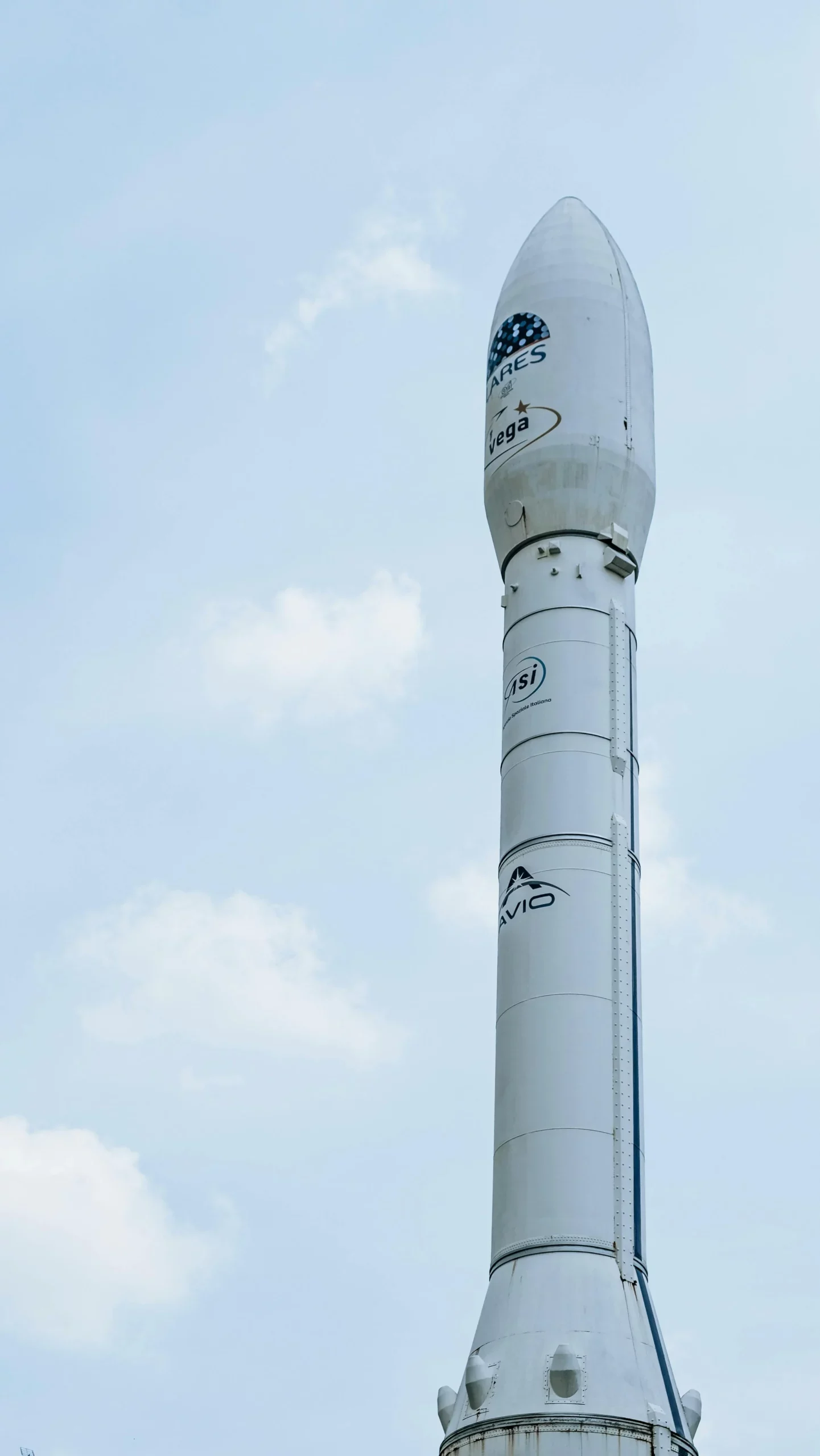
In January 2024, Pixxel’s third satellite joined its growing constellation in low Earth orbit, carrying a hyperspectral camera capable of detecting wavelengths across 150 bands of the electromagnetic spectrum - a resolution of observation that allows farmers to detect crop disease before it becomes visible to the human eye. This Bengaluru startup, founded in 2019 by two BITS Pilani graduates, is part of a wave of Indian commercial space companies that have emerged in the four years since India opened its space economy to private players. The comparison with Israel’s commercial space sector is instructive: a country of 9 million built a $500 million commercial space industry in 10 years. India, with 60 times the population, is attempting the same transformation on a compressed timeline.
IN-SPACe and the Policy Unlock That Made This Possible
Before 2020, space in India was ISRO’s exclusive domain. Private companies could supply components to ISRO, but launching satellites, building rockets, or operating ground stations required special dispensation that was rarely granted. The Indian National Space Promotion and Authorisation Centre (IN-SPACe), established in June 2020 under the Department of Space, changed this fundamentally.
IN-SPACe functions as the single window regulator for private space activities - a concept borrowed from the Federal Aviation Administration’s commercial spaceflight office in the United States and the UK Space Agency’s commercial licensing framework. By 2024, IN-SPACe had authorized over 40 private space entities to operate in India, a number that would have been zero three years earlier.
The structural change matters because it unlocks a different kind of capital. ISRO operates on government budget cycles - its annual budget of approximately Rs 13,000 crore must compete with defense, health, and education for allocation. Private space companies can access venture capital, foreign investment (FDI up to 74% is now permitted in satellite manufacturing), and commercial contracts that ISRO cannot.
Pixxel: Hyperspectral Observation at Scale
Pixxel’s core product is hyperspectral imagery - as distinct from the multispectral imagery that most commercial earth observation satellites provide. Standard satellite cameras capture a handful of wavelength bands (typically red, green, blue, and near-infrared). Hyperspectral cameras capture 100 to 250 bands across the visible and near-infrared spectrum, producing a detailed “spectral fingerprint” of every point on the ground.
This spectral richness has specific applications that conventional satellite imagery cannot support:
- Agricultural monitoring: Detecting chlorophyll stress, water content, and disease in crops before visual symptoms appear - enabling precision intervention rather than reactive treatment.
- Mining and geology: Identifying mineral compositions from orbit, reducing the need for expensive ground surveys.
- Environmental monitoring: Detecting methane leaks from oil and gas infrastructure, tracking deforestation, monitoring coastal eutrophication.
- Industrial facility tracking: Monitoring industrial pollution at scale without relying on self-reporting.
Pixxel’s Firefly constellation, targeting 24 satellites at 6 different orbital planes, would provide global revisit times of 24 hours or less at 5-meter spatial resolution - meaning any point on Earth could be observed daily with hyperspectral detail. At full deployment, this would make Pixxel one of the most capable commercial hyperspectral constellations globally, alongside Planet Labs (USA) and ICEYE (Finland).
The company has secured contracts with clients including NASA, a Fortune 500 mining company, and several Indian agricultural research institutions. In 2023, Pixxel raised $36 million in Series B funding from investors including Google, Lightspeed Venture Partners, and the Blume Ventures fund - capital that reflects international investor confidence in the Indian commercial space market.
“We are building the world’s most powerful imaging constellation. The data we generate will help solve climate change, food security, and environmental monitoring at a scale that had not been achieved before.”
Skyroot Aerospace: India’s First Private Rocket Launch
On November 18, 2022, Skyroot Aerospace’s Vikram-S rocket became the first privately-developed rocket to reach space from Indian soil - a milestone that ISRO’s chairman himself described as “India’s Kitty Hawk moment for private space.” The launch from the Satish Dhawan Space Centre in Sriharikota carried three customer payloads, reached an altitude of approximately 89.5 km, and demonstrated that India’s private space sector could execute a mission from design to launch.
Skyroot’s longer-term product is the Vikram-1 - a 545 kg-payload vehicle targeting the small satellite market at a projected cost of around $4 million per launch. This positions it directly against SpaceX’s Falcon 9 (which costs $67 million but carries much heavier payloads) and the dedicated small launch vehicles from Rocket Lab (USA) and Exos Aerospace (USA). India’s manufacturing cost advantages - Skyroot claims its development cost was approximately $50 million, compared to the hundreds of millions required by equivalent US and European programs - could make Indian small launch vehicles genuinely competitive in the global market.
Agnikul Cosmos: 3D-Printed Rockets and Manufacturing Innovation
Agnikul Cosmos, an IIT Madras spin-off, achieved another first in May 2024: the world’s first flight of a rocket powered by a fully 3D-printed engine. The Agnibaan SOrTeD (Sub-Orbital Technological Demonstrator) used the Agnilet engine - a single-piece cryogenic engine manufactured by additive manufacturing (3D printing) processes that reduce the number of parts from hundreds to one.
The significance of this is manufacturing, not just aerospace. 3D-printed rocket engines represent a radically faster and cheaper production pathway for propulsion systems - the same technology has applications in defense, industrial machinery, and research equipment. Agnikul’s demonstration that India can develop cutting-edge additive manufacturing capability in a startup environment (the company was founded in 2017) signals a broader industrial capability that extends beyond space.
The Comparison: Israel, UAE, and What India Can Learn
Israel’s commercial space sector offers the clearest benchmark for India’s ambitions. Israel Aerospace Industries (IAI) - a state-owned company that operates commercially - is one of the world’s top 10 satellite manufacturers. The country’s private sector includes companies like ImageSat International (commercial earth observation) and Spire Global’s Israeli operations. Israel’s commercial space revenue is estimated at over $500 million annually.
The mechanism Israel used was procurement. Israel’s Ministry of Defense and intelligence community procure extensively from domestic private space companies - creating a stable anchor customer that funds technology development, which then diffuses into commercial markets. India’s defense procurement from private space companies is nascent but growing - the Defence Space Agency (DSA) has begun engaging with commercial satellite imagery providers for reconnaissance data.
The UAE’s Mohammed Bin Rashid Space Centre has taken a different approach: government-funded technology development (the Hope Probe to Mars, the Emirates Mars Mission) combined with aggressive talent acquisition and knowledge transfer from established space nations. The UAE now has 40 Emirati engineers with NASA-equivalent training who form the core of its growing commercial sector.
India’s comparative advantage is different: a large domestic engineering talent pool (ISRO has trained thousands of space engineers over 60 years), an established launch infrastructure, and a cost structure that makes Indian space development genuinely cheaper than comparable programs in the US or Europe. The gap is in the commercial ecosystem - contracts, risk capital, and the procurement anchor that Israel’s defense budget provides.
What Every Indian Can Do: Five Levels of Citizen Action
- Personal level: Follow and engage with Indian space startups. Pixxel, Skyroot, Agnikul, Dhruva Space, and Bellatrix Aerospace all have public communications channels. Consumer awareness of India’s commercial space sector creates the cultural capital that attracts talent and investment. If you are a student considering engineering, follow what IIT Madras’s space engineering programs are producing - the Agnikul founders were PhD students who built a rocket company from an academic incubator.
- RWA/building level: If your locality uses agriculture, consider connecting with pilot programs using satellite-derived advisory services. Pixxel and other earth observation companies are running agricultural advisory pilots in partnership with state agricultural departments - check whether your district is covered and whether farmers in your network are participating.
- Ward/local body level: Push for satellite-derived data to be used in local planning decisions. Land use change detection, flood mapping, and urban heat island analysis are all possible with commercial satellite data that is now accessible at costs that local governments can afford. File RTI requests asking your district administration whether it uses satellite imagery for planning and from which providers.
- City/state level: Advocate for state government procurement of commercial satellite data for agriculture, disaster management, and land records. Andhra Pradesh and Maharashtra have existing satellite-based crop monitoring programs. Push for your state to adopt similar programs and to prefer domestic providers (Pixxel, Bengaluru-based SatSure) where technically equivalent to international alternatives.
- National level: Support the expansion of IN-SPACe’s mandate and budget. File RTI requests asking about the processing times for IN-SPACe authorization applications - delays in authorization slow investment. Support a “space anchor procurement” policy for the Defence Space Agency and ISRO that mirrors Israel’s model of sustaining domestic commercial capability through government contracts.
The Lever That Closes the Gap
India’s commercial space sector in 2026 is at the stage Israel’s was in 2005 - the initial policy framework is in place, the first commercial launches have happened, the talent exists, and the startups are funded. What turns a pioneering moment into a sustained industry is anchor procurement - government buying from domestic commercial space companies - and consistent regulatory speed. IN-SPACe’s ability to process applications within 90 days, consistently, will matter more than any single satellite launch.
The data Pixxel’s satellites collect has direct application to India’s most pressing domestic challenges: food security, climate adaptation, and environmental monitoring. India is not building space technology for prestige. It is building the observational infrastructure that a country of 1.4 billion people, facing accelerating climate change and agricultural volatility, actually needs. That is a different kind of space story from the one that gets told about flags on the moon.
Explore India’s Science and Innovation Stories
India’s space sector is part of a broader science and technology transformation. Read about India’s Rs 6,000 crore Quantum Mission and how AI is changing Indian agriculture – two more fronts in India’s technology emergence.
What you can do
- Share the evidenceSend this to one person who should know about this issue.Share on WhatsApp
- Give an afternoonTeach, mentor, clean up, or lend your professional skills.Ways to volunteer
- Tell us what's missingKnow a story, a fact we got wrong, or a solution worth spotlighting?Suggest a story
Politically neutral. Every claim sourced. Report a correction.

No comments yet