How Indian Mathematicians Changed Computing Forever
<p>From Aryabhata’s zero to Ramanujan’s infinite series to Narendra Karmarkar’s polynomial-time algorithm, how Indian mathematical thought shaped the foundations of modern computing, and the contemporary Indian computer scientists who continue that tradition.</p>
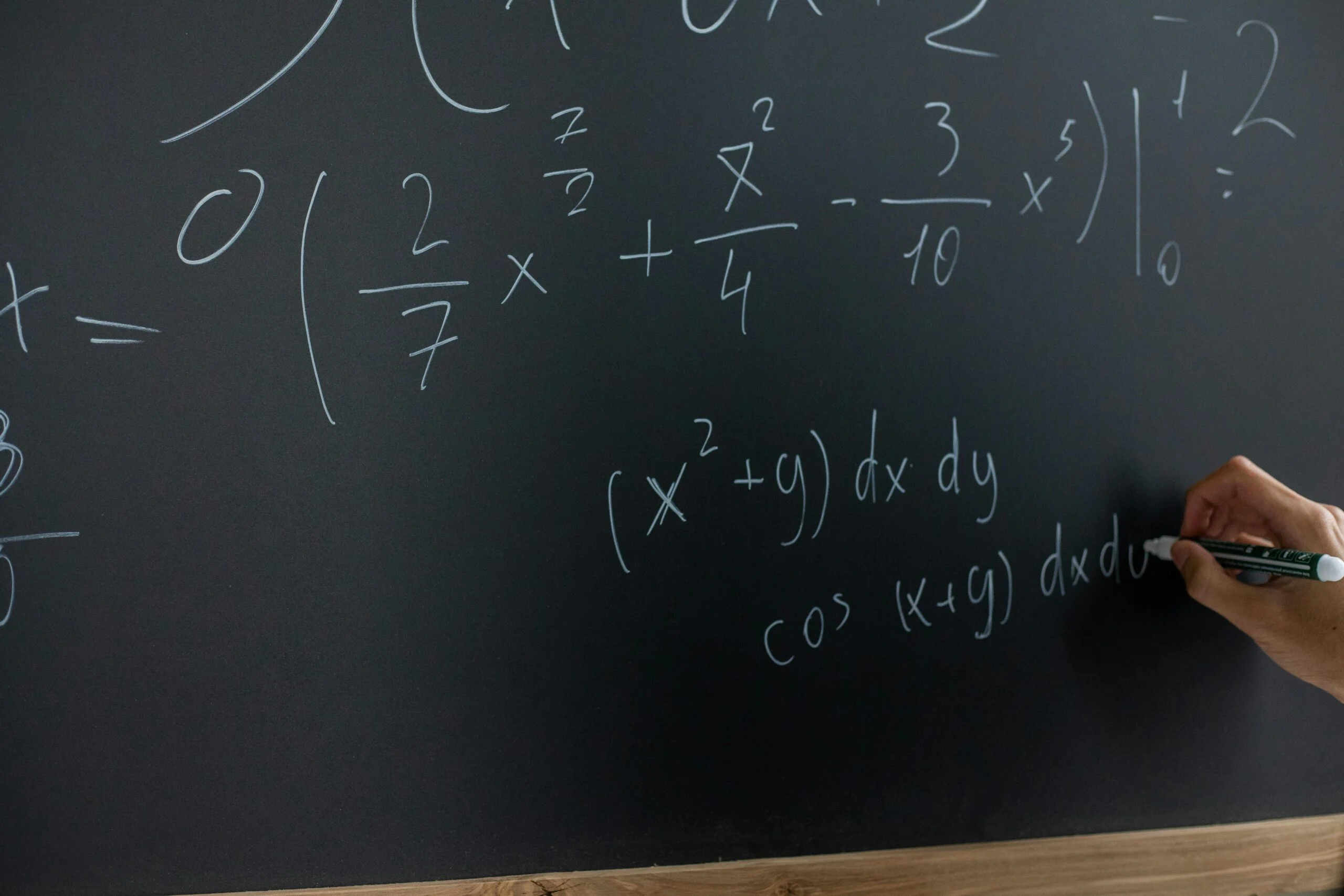
The modern computer would be impossible without three Indian mathematical contributions: the decimal number system, the concept of zero as a numeral rather than a placeholder, and a set of infinite-series techniques that Kerala mathematicians worked out three hundred years before European mathematicians got around to them. And that is before we even get to the twentieth century, where Indian mathematicians and computer scientists have shaped cryptography, algorithm design, and optimization in ways that are genuinely easy to take for granted if you have not traced the ideas back to their sources.
I want to be careful at the start of this piece. This is not a triumphalist history. Plenty of great mathematics has come from every continent, and the story of computing has Hungarian, English, American, Russian, and Japanese chapters that are every bit as important. What I do want to notice, because I think it is worth noticing, is how specifically foundational the Indian contribution is. Not a decorative footnote, not a side lane, but the substrate that almost everything else sits on top of.
The number system itself
Before the sixth century CE, counting in Europe was done in Roman numerals. There is no efficient way to multiply XLVIII by LXXXIX. Arithmetic was the preserve of specialists with counting tables and abacuses, and anything beyond simple addition required a professional scribe.
The Indian positional decimal system, digits zero through nine, with value determined by position, was codified by Aryabhata around 499 CE, though it had been developing in Indian mathematical practice for centuries before that. It spread through Arab scholarship, al-Khwarizmi’s book in 825 CE is where the word “algorithm” comes from, named after him, reached Europe in the twelfth century via Fibonacci’s Liber Abaci, and gradually replaced Roman numerals over the next three hundred years.
The word “zero” itself is a Europeanization of the Arabic sifr, which is a translation of the Sanskrit śūnya. Every single time a computer stores a binary 0, the lineage of that symbol runs back to that Sanskrit word. Think about that for a second. The most basic unit of digital information has an etymology that crosses three civilizations and 1,500 years.
What made the Indian system specifically computational, and this is the part that is often missed, was the treatment of zero as a full numeral rather than a placeholder. Brahmagupta, in 628 CE, wrote explicit rules for arithmetic with zero, addition, subtraction, multiplication, and was the first known mathematician to define zero as the result of subtracting a number from itself. This is the rule that makes base-10 arithmetic work mechanically. It is the reason a computer’s arithmetic logic unit can be a few thousand transistors instead of a specialized human brain.
The Kerala school and the calculus you did not know was Indian
Between the fourteenth and sixteenth centuries, a group of mathematicians in Kerala, Madhava of Sangamagrama, Parameshvara, Nilakantha Somayaji, and their students, developed infinite-series techniques for computing trigonometric functions. Madhava’s series for π (around 1400 CE) is what European mathematicians later rediscovered as the Leibniz-Gregory series (around 1670). Madhava also computed π to eleven correct decimal places, which is better than anything Europe managed for another two centuries.
The Kerala school also discovered series expansions for sine, cosine, and arctangent, understood the concept of a limit, and used iterative methods that foreshadow modern numerical analysis. None of this reached Europe in time to influence Newton or Leibniz directly, which is why the European mathematicians get the calculus credit in textbooks. The mathematics itself was done in Kerala first, in a monastery where the results were written into Sanskrit verse so students could memorize them.
Why does this matter for computing specifically? Because modern processors rely on infinite-series approximations for basically every transcendental function call, sin(), cos(), exp(), log(). The techniques Madhava pioneered are not merely historically interesting. They are the direct mathematical ancestors of what your CPU does in hardware every microsecond of its working life.
Ramanujan and the mathematics of approximation
Srinivasa Ramanujan, the self-taught mathematician from Kumbakonam whose collaboration with G.H. Hardy at Cambridge in the 1910s produced thousands of identities, theorems, and conjectures, is the Indian mathematician most people have heard of. His direct influence on computing is specific and surprisingly large.
Ramanujan’s circle method, developed with Hardy, underpins modern analytic number theory. His mock theta functions, discovered on his deathbed in 1920 and not fully understood until the 2000s, turn out to have deep connections to string theory and black hole physics. His partition identities are used directly in probabilistic algorithm analysis, the kind that tells you how fast a randomized algorithm converges on the right answer.
More practically, Ramanujan’s formulas for approximating π converge so fast that they remain the basis of the algorithms used to compute π to billions of digits. Every record-breaking π computation since the 1980s has used a Ramanujan-Chudnovsky formula. When Google set a world record for calculating π to 100 trillion digits in 2022, they were using a formula Ramanujan wrote down by hand in a notebook in 1914.
Can you think of a clearer example of how pure mathematical insight, with no computer in sight, can become the operational core of a modern calculation a century later? I cannot.
Narendra Karmarkar and the algorithm that moved modern logistics
Jump forward to 1984. Narendra Karmarkar, working at Bell Labs, publishes the first polynomial-time algorithm for linear programming that is also practical on real problems. The Simplex method had been the standard for four decades, fine in theory, but slow on some large inputs. Karmarkar’s interior-point algorithm was dramatically faster on the large problems that actually mattered in industry.
This is not an abstract theoretical contribution. Interior-point methods are the workhorse of modern optimization. Logistics, network routing, machine learning training, financial portfolio optimization, semiconductor design, airline scheduling. Every time your smartphone computes an optimal route, some descendant of Karmarkar’s 1984 algorithm is running somewhere in the stack, and it is probably running in the cloud on hardware that would have been unthinkable in 1984.
The paper is Karmarkar’s “A new polynomial-time algorithm for linear programming.” If you want to see a single academic citation that changed industrial practice, that is one of the clearest examples I can point to. The stock market, the electricity grid, the global supply chain, they all run on optimization problems that are solved using some version of what Karmarkar published.
Manindra Agrawal, two students, and PRIMES is in P
In 2002, Manindra Agrawal and two of his undergraduate students at IIT Kanpur, Neeraj Kayal and Nitin Saxena, published the AKS primality test. It was the first known algorithm to determine whether a number is prime in polynomial time without relying on any unproved hypothesis.
This had been an open problem for decades. Prior primality tests were either fast and probabilistic, like the Miller-Rabin test used in most cryptographic libraries, or deterministic but slow, like trial division and its variants. AKS is deterministic, polynomial, and provably correct. It is not the fastest primality test in practice, the probabilistic ones are still faster in the real world, but the existence of AKS closed a major theoretical question that had been open since the 1970s.
The paper is called “PRIMES is in P.” It is short, about ten pages, and readable by any strong undergraduate. It is one of the cleanest mathematical contributions of this century, and the fact that it came out of an Indian institute of technology with two undergraduate co-authors is the kind of story that should be taught in schools across the country. The same country that, as I have written about elsewhere, loses 50 million students before Class 10, also produces world-class mathematicians in public universities with shoestring research budgets. Both facts are true, and the contradiction is the real story.
The contemporary Indian computing scene
The Indian mathematical tradition is thriving. A partial list of currently active contributors whose work shapes global computing:
- Madhu Sudan at Harvard, working on coding theory and probabilistically checkable proofs. Nevanlinna Prize winner in 2002.
- Subhash Khot at NYU, whose Unique Games Conjecture is one of the most important open problems in complexity theory.
- Neeraj Kayal of AKS fame, now at Microsoft Research India, working on algebraic complexity theory.
- Umesh Vazirani at Berkeley, a foundational figure in quantum computing and quantum complexity theory.
- Sanjeev Arora at Princeton, whose work on approximation algorithms and the PCP theorem reshaped theoretical computer science.
Not all of these scientists work in India, and several built their careers in the United States. That is part of the brain-drain story, a legitimate concern, and one that deserves its own honest conversation. But the pipeline, the IITs, the IISc, the Chennai Mathematical Institute, the Tata Institute of Fundamental Research, continues to produce researchers whose work shapes global computing. The same institutional network that trained the mathematicians listed above is now training the next cohort, and a growing number of them are choosing to stay, particularly as the Indian science and technology economy matures enough to give them meaningful domestic career paths.
Why this history matters
Not because “we had it first.” Mathematics belongs to everyone, and the interesting questions in any science are about what we do next, not about who can claim the longest pedigree. It matters because a computing industry centered in Silicon Valley and a historical narrative centered in Europe can together make the Indian contribution look like a late arrival or an exotic curiosity. It is not. It is substrate-level. The decimal system, zero, the infinite series, the polynomial-time algorithms, none of this is peripheral to computing. It is what computing is actually made of.
The Indian students who today work on cryptography, machine learning, and algorithm design are inheriting a tradition that runs back fifteen centuries. Understanding that lineage is useful because it frames the real question properly: the next chapter of computing will include Indian mathematical contributions because it always has. The question worth asking is whether those contributions are made here, funded here, and built here, or whether the country continues to export its mathematicians and import the technology they helped make possible. That is the same tension that runs through every story about how India builds its own foundations, and the answer is not going to come from the mathematicians alone. It is going to come from whether the country chooses to treat its own intellectual tradition as a substrate to build on or as a museum to visit.
What you can do
- Share the evidenceSend this to one person who should know about this issue.Share on WhatsApp
- Give an afternoonTeach, mentor, clean up, or lend your professional skills.Ways to volunteer
- Tell us what's missingKnow a story, a fact we got wrong, or a solution worth spotlighting?Suggest a story
Politically neutral. Every claim sourced. Report a correction.



No comments yet