Builders of India: Verghese KurienHow Operation Flood Made India the World's Largest Milk Producer
In 1970, India was importing butter from New Zealand and powdered milk from Europe while its own dairy farmers struggled to sell milk at prices that covered their costs. By 1998, India had become the world's largest producer of milk, exporting dairy products and operating a cooperative network that ...
In 1970, India was importing butter from New Zealand and powdered milk from Europe while its own dairy farmers struggled to sell milk at prices that covered their costs. By 1998, India had become the world’s largest producer of milk, exporting dairy products and operating a cooperative network that was the largest food marketing organisation on earth. Operation Flood - the programme that achieved this transformation over three decades - was the work of Verghese Kurien, a mechanical engineer from Kerala who went to Anand in Gujarat in 1949 intending to stay for a few months and stayed for the rest of his life. Kurien’s story is one of the most remarkable in Indian economic history: a man who built an institution that transformed the livelihoods of over 70 million farming families while refusing to personally profit from it.
The Kaira Cooperative: Where It Started
The story of Operation Flood begins with the Kaira District Cooperative Milk Producers’ Union, founded in 1946 in Anand, Gujarat. The union was established to break the monopoly of a British-owned dairy company, Polson Dairy, which held exclusive rights to procure milk from farmers in the Kaira district and supply it to Bombay. Polson’s monopoly allowed it to set procurement prices that left farmers with minimal returns; farmers who attempted to sell to other buyers were blocked. The cooperative was established under the leadership of Tribhuvandas Patel, a follower of Sardar Vallabhbhai Patel, and with the support of the nationalist movement as a form of economic independence.
Kurien arrived at Anand in 1949 on a government fellowship that required him to work with the cooperative for a defined period. He was technically a government servant, trained in dairy engineering at Michigan State University after his undergraduate degree, and his original plan was to serve his bond period and move on. Instead, he found in the cooperative - and in Tribhuvandas Patel’s vision of what it could become - a project worth dedicating his career to. The decision to stay was not primarily strategic; it was the recognition that the cooperative model was addressing a structural problem in Indian agriculture that had not been solved by any other approach.
The Technical Innovation: Processing Buffalo Milk at Scale
Kurien’s most consequential technical achievement was the development of a process to produce spray-dried skimmed milk powder from buffalo milk. This matters because the technology for producing dairy products from cow’s milk was well established by the mid-twentieth century; the global dairy industry was built around bovine milk. Buffalo milk, which is the dominant type in India, has different fat content and composition characteristics that made standard dairy processing equipment poorly suited to it. The Indian dairy industry had largely failed to process buffalo milk efficiently, limiting its reach to fluid milk markets and preventing the development of storable dairy products like butter, ghee, and milk powder that could be transported, stored, and used to even out seasonal supply.
The solution Kurien and his team developed at AMUL (Anand Milk Union Limited, the brand name of the Kaira cooperative) enabled the production of high-quality dairy products from buffalo milk at competitive costs. The technical breakthrough unlocked the possibility of a national dairy industry built around India’s actual cattle population rather than trying to replace it with imported European breeds. The “Amul girl” mascot, which became one of India’s most recognised advertising images, was the public face of a product line - butter, cheese, ice cream, milk powder, ghee - that Kurien built from a single cooperative in Gujarat into a national brand.
Kurien understood that the technical problem and the institutional problem were the same problem. Processing technology that could handle buffalo milk at scale was only useful if it was owned by the farmers who produced the milk - otherwise the technology just created a new monopolist to replace Polson.
Operation Flood: Scaling the Model
Operation Flood, launched in 1970 under the National Dairy Development Board (NDDB) that Kurien had established in 1965, was the programme to replicate the Anand pattern across India. The programme’s name reflected its ambition: to flood Indian cities with milk, ending the chronic shortage that had made dairy products luxuries for urban populations while farmers in surrounding districts could not find markets for their milk. The programme operated in three phases between 1970 and 1996, using revenues from the sale of World Food Programme donated dairy commodities (European surplus butter and milk powder) to fund the establishment of cooperative networks, processing infrastructure, and chilling facilities at village level across India.
The Anand model had three tiers: village-level primary cooperatives that collected milk from individual farmers twice daily, district-level unions that processed and marketed milk and dairy products, and state-level federations that coordinated policy and handled national marketing. Each tier was owned by the tier below it - farmers owned the village cooperatives, village cooperatives owned the district unions, and district unions owned the state federations. This ownership structure was the non-negotiable element of the model; it was what prevented the cooperatives from being captured by processors or middlemen in the way that standard market arrangements had allowed. Kurien’s insistence on this structure - against pressure from various government and donor agencies that wanted more centralised or commercially managed arrangements - was central to what made Operation Flood different from previous agricultural development programmes.
Operation Flood | Phase 1 (1970-80) | Phase 2 (1981-85) | Phase 3 (1985-96) |
|---|---|---|---|
Milk cooperatives formed | 13 federations | 22 federations | Nationwide coverage |
Farmer members (millions) | 1.6 | 6.5 | 9.4 |
Processing capacity | First major plants | Regional expansion | Full national network |
India milk production rank | Low global rank | Significant growth | World’s largest producer (1998) |
The Social Impact: Women’s Economic Empowerment
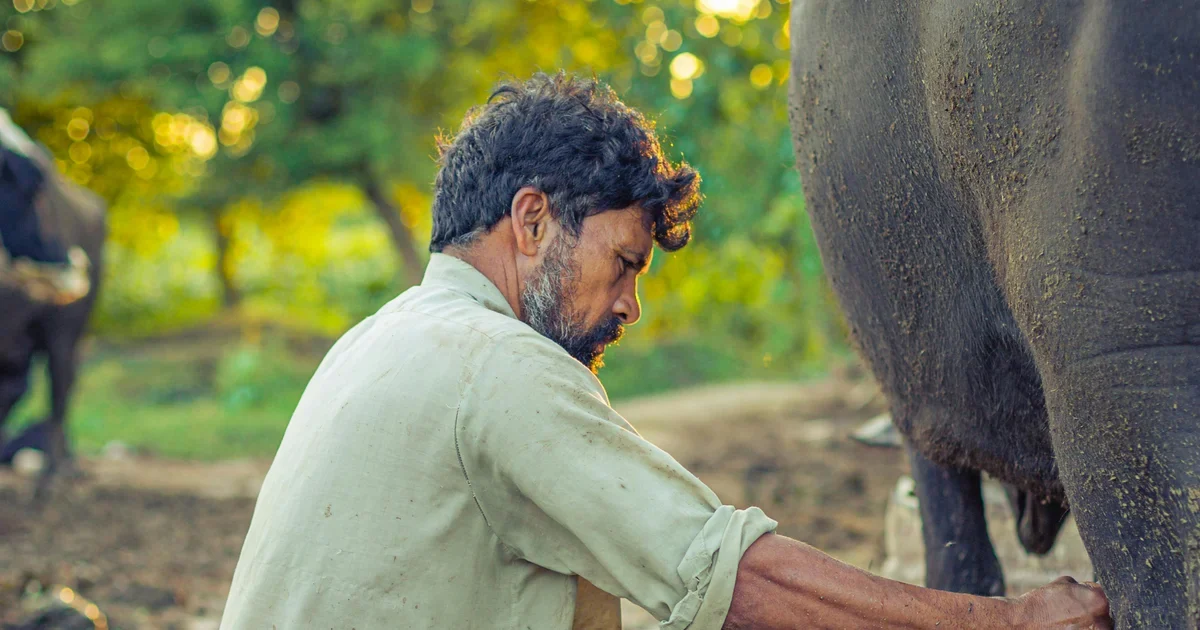
One of Operation Flood’s least-discussed achievements is its contribution to women’s economic status in rural India. In most village dairy households, women are responsible for most of the actual work of dairying: feeding and watering animals, milking, carrying milk to collection points, and managing the household’s relationship with the cooperative. The cooperative model, which made payments directly to members’ accounts for milk delivered, created a formal economic relationship between the cooperative and the household. In many households, the dairy income became effectively the woman’s income - the money she managed and that gave her economic agency within the household.
The NDDB, under Kurien’s leadership, also made explicit efforts to include women as members and office-bearers of village cooperatives. By the 1990s, a significant proportion of village cooperative members in Gujarat were women, and some cooperatives had all-women memberships and governance. This was not transformative of gender inequality in Indian villages - the limits of what an agricultural cooperative can achieve in that domain are obvious - but it created economic visibility for women’s labour that had previously been invisible and uncompensated within household accounts. The connection between rural women’s economic agency and cooperative institutions is explored further in our profile of M. S. Swaminathan and the Green Revolution, which covers parallel developments in the agricultural sector.
The AMUL Model’s Global Influence and Domestic Challenges
The AMUL/NDDB model has been studied internationally as an example of cooperative-led agricultural development and has influenced dairy cooperative programmes in several developing countries. Kurien himself was involved in advising dairy development programmes in Africa and Asia, and the NDDB provided technical assistance to programmes in several countries. The model’s core elements - farmer ownership, two-daily collection, transparent procurement pricing, professional management under farmer governance - are now standard in discussions of agricultural cooperative design.
Domestically, the AMUL model faces new challenges. The liberalisation of India’s dairy sector in the 1990s ended the NDDB’s privileged position and introduced private dairy companies - Nestle, Britannia, Mother Dairy in Delhi, and numerous regional private dairies - as competitors for milk procurement. In states where cooperative networks were strong and well-managed (Gujarat, Andhra Pradesh, Karnataka), the cooperatives have maintained their position. In states where political interference, poor management, or inadequate investment weakened the cooperative structure, private companies have captured procurement market share, often at lower prices to farmers. The question of whether the cooperative model can remain viable in a liberalised market - without the protection and subsidy it received under the pre-liberalisation policy regime - is ongoing. Kurien, who died in 2012, viewed liberalisation with ambivalence: he supported competition but was concerned that it would allow corporate consolidation to recreate the monopoly procurement power that the cooperative movement had originally been built to break. The evidence so far is mixed.
The Cooperative Principle
Verghese Kurien’s achievement was institutional as much as technical. He built something that outlasted him - a cooperative network that continues to provide 70 million farming families with market access and fair procurement prices. The lesson is not simply that cooperatives work but that institutional design matters: the three-tier farmer-ownership model with professional management was specific, deliberate, and non-negotiable. The compromises that other dairy development programmes accepted - government ownership, corporate management, farmer-as-contractor rather than farmer-as-owner - produced different and generally worse outcomes. The design was the achievement, as much as the milk itself.
The NDDB’s Policy Battles
The National Dairy Development Board that Kurien ran was not simply a technical organisation; it was a political project. The dairy sector in India, before Operation Flood, was dominated by large private dairies in urban centres and by government-owned processing plants that operated inefficiently and paid farmers low prices. Both sets of interests resisted the cooperative model that threatened their market position. State government dairy departments that had previously controlled dairy development did not willingly cede authority to the NDDB. Politicians who used government dairy plants as patronage instruments objected to the cooperative structure that would take control out of their hands. Kurien navigated these obstacles with a combination of political skill, institutional independence, and the moral authority of demonstrable results.
The key institutional protection that enabled Kurien’s work was the NDDB’s status as an autonomous body answerable to Parliament rather than to a specific ministry - an arrangement that gave it insulation from day-to-day political interference while maintaining public accountability. Kurien used this institutional independence aggressively, taking positions on policy that conflicted with government preferences when he believed them to be wrong for the cooperative sector. His relationship with successive prime ministers and agriculture ministers was at times contentious; he resigned over policy disagreements on multiple occasions, only to be persuaded to return when the political will to support the cooperative programme was reasserted. This pattern - principled confrontation followed by pragmatic accommodation - characterised his dealings with the political system across five decades and was itself a model of how a civil servant with deep domain expertise could defend institutional integrity without destroying his capacity to operate within the system.
AMUL’s Brand Building: Marketing Cooperative Values
The AMUL brand - built around the butter girl mascot that began appearing on advertising hoardings in 1966 and has since become one of India’s most recognisable and beloved advertising properties - deserves attention as an example of how a cooperative can build genuine brand loyalty without the marketing infrastructure of a large corporation. The Amul girl’s topical advertisements, which comment on current events with wit and occasionally sharp political observation, have maintained the brand’s cultural presence for over five decades. The brand’s association with quality, value, and Indian self-reliance has made AMUL a genuine national symbol in a way that few consumer brands achieve.
What the AMUL brand represents is important: it is a cooperative brand, meaning that the brand equity is owned by the farmers who produce the milk rather than by a corporation that extracts value from both farmers and consumers. The premium that consumers pay for AMUL products over unbranded alternatives returns to the cooperative network and ultimately to the farmers. This alignment of interests - between brand reputation, farmer income, and consumer value - is the cooperative model’s most powerful economic feature, and it has sustained the brand through competitive challenges that would have tested a corporate brand facing the same market pressures. The economic model of cooperatives versus investor-owned firms in agricultural processing is a question with direct implications for farmer welfare, as we explore in our analysis of M. S. Swaminathan’s agricultural legacy and the farmer welfare question.
What you can do
- Share the evidenceSend this to one person who should know about this issue.Share on WhatsApp
- Give an afternoonTeach, mentor, clean up, or lend your professional skills.Ways to volunteer
- Tell us what's missingKnow a story, a fact we got wrong, or a solution worth spotlighting?Suggest a story
Politically neutral. Every claim sourced. Report a correction.

No comments yet