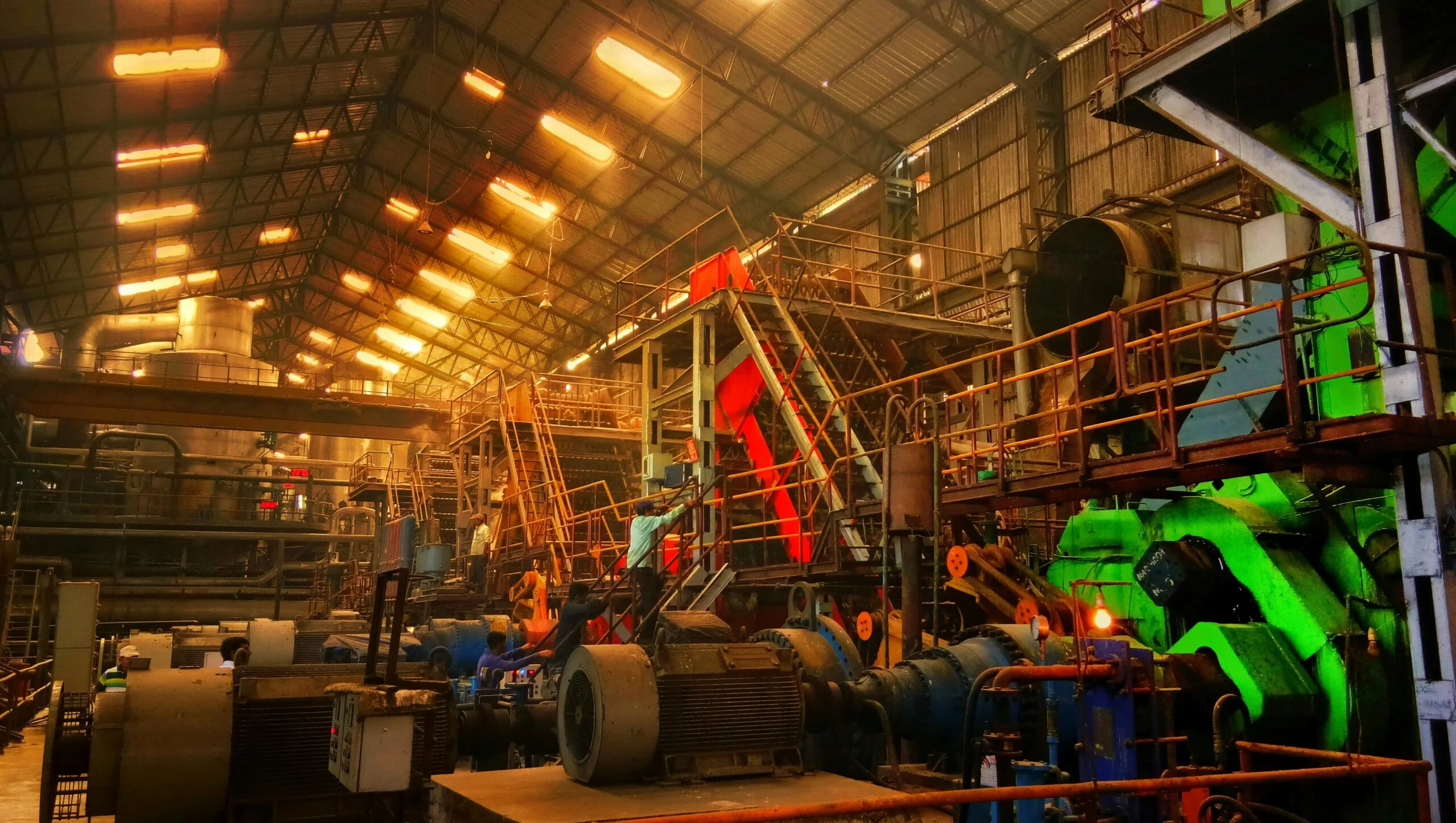
The Inspiring Legacy of Jamsetji Tata: Proven Builder of Modern India
Jamsetji Nusserwanji Tata — the 19th-century industrialist who founded Tata Steel, the Taj Mahal Hotel, the Indian Institute of Science, and India's first hydroelectric project — built the foundations of modern India before the nation itself was free. This is his story.
In the second half of the nineteenth century, when India was still firmly under British colonial rule, one man looked at a land starved of industry and saw not poverty but potential. Jamsetji Nusserwanji Tata was not a politician, a general, or a revolutionary. He was a merchant who became a manufacturer, and in doing so he built the industrial backbone of a nation that did not yet know it was about to be born.
More than a century after his death in 1904, the institutions Jamsetji founded or set in motion still shape the lives of hundreds of millions of people. Tata Steel in Jamshedpur, the Taj Mahal Hotel in Mumbai, the Indian Institute of Science in Bangalore, the Tata hydroelectric projects in the Western Ghats, each of these was an act of imagination so large that his contemporaries thought him reckless. History proved them wrong on every count.
Early Life: A Merchant Family With Bigger Ambitions
Jamsetji Tata was born on 3 March 1839 in Navsari, a small town in Gujarat that had long been a centre of the Parsi Zoroastrian community. His father, Nusserwanji Tata, ran a modest trading and banking business in Shanghai. At fourteen, Jamsetji left for Bombay to study at Elphinstone College, where he proved himself a sharp student with a particular gift for numbers and a restless curiosity about the wider world.
He joined his father’s firm at seventeen and spent the next several years travelling between Bombay, Hong Kong, and Shanghai, building a feel for international trade that few Indians of his generation possessed. It was during this period that he absorbed two ideas that would define his career: that industrial production, not just commerce, was the real engine of national wealth, and that Britain had deliberately kept India from building such industries.
The moment that crystallised his thinking is often cited by historians. When Jamsetji visited Manchester in 1868, he is said to have been struck by the sight of the Lancashire textile mills running on Indian cotton. India grew the raw material, shipped it to England, bought back finished cloth at a premium, and was taxed on both transactions. He decided then that India needed mills of its own, and that he would build them.
The Empress Mills: Where India’s Industrial Age Began
In 1868, Jamsetji established a trading company with a capital of just fifteen thousand rupees. Three years later, in 1871, he took over a bankrupt oil mill in Chinchpokli, Bombay, converted it into a cotton mill, and sold it at a profit within two years. The proceeds funded his next venture: the Central India Spinning, Weaving and Manufacturing Company in Nagpur, which opened in 1877 on the day of Queen Victoria’s proclamation as Empress of India. He named it the Empress Mills, a shrewd act of public relations that also carried an unmistakable subtext.
The Empress Mills was not simply a profitable business. It was a demonstration that Indian enterprise could compete with British industry. Jamsetji introduced technologies and labour practices that were genuinely ahead of their time. He installed humidifiers to protect workers from the dry heat of cotton dust. He introduced a pension fund and a provident fund for employees at a time when such protections were almost unknown anywhere in the world, let alone in colonial India. He built housing for workers near the mill.
“We do not claim to be more unselfish, more generous or more philanthropic than other people. But we think we started on sound and straightforward business principles, considering the interests of the shareholders our own, and the health and welfare of the employees the sure foundation of our prosperity.”
Jamsetji Nusserwanji Tata
This philosophy, that worker welfare and business success were not opposites but partners, ran through everything he built. It was not philanthropy dressed up as business; it was business designed with conscience at its core.
The Dream of Steel: Tata Steel and Jamshedpur
By the 1880s, Jamsetji had turned his attention to a problem that consumed him for the rest of his life: India had no steel industry. Every rail, every girder, every machine part used in building the railways, the ports, and the public buildings of British India was imported from Britain. The raw materials for making steel, iron ore, coal, and manganese, lay in abundance beneath Indian soil. The logic was maddening.
When Jamsetji first proposed building a world-class steel plant in India, the colonial government was not merely indifferent, it was actively discouraging. The India Office in London had little interest in seeing India develop a heavy industry that might compete with British manufacturers. Senior British officials told him openly that the project was impossible. He was advised to abandon the idea.
He responded by hiring the best metallurgical consultants in America. He sent his son Dorabji and a geologist named Charles Perin across the subcontinent to survey possible sites. Working from descriptions in ancient Sanskrit texts that pointed to a region in the eastern jungles rich in iron deposits, Perin eventually identified a site near the confluence of the Subarnarekha and Kharkai rivers in what is now Jharkhand. The land was dense jungle. There was no town, no road, no infrastructure of any kind.
Jamsetji died in 1904 before he could see a single furnace lit. But he had done the harder work: he had secured the land, arranged the financing, lobbied the government, and designed the city that would rise around the plant. His sons Dorabji and Ratanji, and the brilliant manager John D. Rockefeller Peterson, carried the project forward. The Tata Iron and Steel Company was incorporated in 1907, and the first ingot of Tata steel was poured in 1912.
The city that grew up around the plant was named Jamshedpur in honour of its founder. Today it is home to nearly 700,000 people. The plant itself, now known as Tata Steel Jamshedpur, remains one of the largest steel-producing complexes in Asia. It produced the steel for India’s railways, for the construction of post-independence infrastructure, and for some of the iconic structures that define modern India. Jamsetji never saw it, but it is his most enduring monument.
The Taj Mahal Hotel: India’s Dignity in Stone and Marble
The story of how the Taj Mahal Palace Hotel came to be built is one of the most repeated in Indian business history, and like many repeated stories, it has grown in the telling. The popular version holds that Jamsetji was refused entry to Watson’s Hotel in Bombay because it had a policy excluding Indians and dogs. Whether or not this specific incident happened exactly as described, the sentiment behind the story is historically accurate: colonial Bombay maintained a rigid and humiliating colour bar in its best hotels and clubs.
Jamsetji’s response was characteristically sweeping. He would not lobby to be admitted to existing establishments. He would build something better than anything that existed. He acquired a plot on the seafront at Apollo Bunder, hired a team of Indian and European architects, and in 1903 opened the Taj Mahal Hotel, at the time the most technologically advanced hotel in Asia.
The Taj was the first building in Bombay to have electricity, the first to have American fans, the first to have a licensed bar, the first to have a steam laundry, and among the first anywhere in India to freely welcome guests of all nationalities and races. It was an act of industrial and commercial defiance dressed in Italian marble and Moorish arches.
Feature | Status at Opening (1903) |
|---|---|
Electric lighting | First building in Bombay to have it |
American ceiling fans | Installed throughout, a first in the city |
Licensed bar | First in Bombay’s hotel sector |
Steam laundry | One of the first in India |
Admission policy | Open to all races, refused colonial colour bar |
The Taj has survived everything: bubonic plague, two world wars, Indian independence, and the devastating terrorist attacks of November 2008, after which it reopened within weeks. It has hosted kings, presidents, independence leaders, and generations of ordinary Indians who saved for years to spend a night under its roof. It remains among the most recognised hotels in the world, and it carries with it the spirit of the man who built it: a refusal to accept a smaller version of what India deserved.
The Indian Institute of Science: Investing in Minds
Jamsetji understood something that India’s colonial administrators preferred to ignore: that building steel plants and hotels was not enough. Sustained industrial development required trained scientists and engineers, and India had nowhere to produce them in the numbers or at the quality required. He resolved to create a world-class institution of scientific research and technical education, and he spent the last decade of his life pursuing this goal with the same tenacity he had applied to steel.
In 1898, Jamsetji wrote a letter to Swami Vivekananda, who was then at the height of his influence, asking for his support in establishing a research university. Vivekananda endorsed the idea enthusiastically and suggested a location in Bangalore, which had a cooler climate, a tradition of education, and proximity to the British-administered Mysore state, whose Dewan, Sir K. Seshadri Iyer, was sympathetic to the project.
Jamsetji donated fourteen acres of land in Bangalore and a substantial endowment. He lobbied the colonial government, negotiated with the Mysore royal family, and kept the project moving through years of bureaucratic obstruction. He died before the institute was formally established, but the foundation he laid was solid enough to survive without him. The Indian Institute of Science opened in 1909 under the leadership of the chemist Morris Travers, with Jamsetji’s endowment funding its early years.
Today the Indian Institute of Science is ranked among the top scientific research institutions in Asia. Its alumni have led ISRO, including Vikram Sarabhai, the founder of India’s space programme, built Indian defence systems, won international prizes, and founded hundreds of technology companies. In the corridors of IISc, Jamsetji’s belief that India’s future lay in its intellect is lived out every day.
Hydroelectric Power: Lighting India Before India Could See
In 1900, when Jamsetji first proposed building a hydroelectric power plant to supply electricity to Bombay, the technology for large-scale hydroelectric generation was barely a decade old anywhere in the world. Steam power still dominated industry globally. His proposal to harness the monsoon rains of the Western Ghats to generate electricity for the factories and homes of a major Indian city was regarded by many as fantasy.
He disagreed. He identified the Khopoli site in the Sahyadri mountains where the Bhor Ghat drops sharply towards the coastal plain, creating exactly the conditions needed for hydroelectric generation. He commissioned detailed surveys, hired engineering consultants from North America, and began the painstaking process of winning government permissions and private investment.
Once again, he did not live to see the completion of his plan. But the Tata Power Company, incorporated by his successors, completed the Khopoli hydroelectric plant in 1915, just eleven years after his death. It was the first large-scale hydroelectric project in Asia. By 1916 it was supplying electricity to the mills of Bombay, dramatically reducing the cost of industrial power and giving Indian manufacturers a competitive advantage they had never previously enjoyed.
The Tata Power network expanded through the twentieth century and today supplies electricity to millions of homes and businesses across Maharashtra and beyond. The original vision, clean, abundant, affordable power for Indian industry, has been realised many times over. And it started with one man staring at a waterfall in the Sahyadris and asking: what if we could use this?
Philanthropy Before the Word Existed: The Tata Trusts
Jamsetji Tata did not think of philanthropy as writing cheques to deserving causes. He thought of it as designing systems that would produce better human beings and a better society at scale. This distinction is important. His charitable activities were not separate from his business activities, they were continuous with them, flowing from the same conviction that India’s potential was being suppressed by colonial extraction, inadequate education, and poor public health.
He endowed the J.N. Tata Endowment in 1892, which provides scholarships for Indian students to study abroad. In its early decades, the Endowment sent Indian students to universities in Britain, Germany, and America at a time when such opportunities were almost exclusively available to members of the colonial administration. The list of scholars it has supported over 130 years reads like a catalogue of Indian intellectual achievement, figures whose contributions to science and mathematics rival those of Srinivasa Ramanujan, the self-taught genius who reshaped number theory.
After his death, his sons established the Sir Ratan Tata Trust and the Sir Dorabji Tata Trust, which together became the primary vehicles for Tata family philanthropy. These two trusts, along with affiliated institutions, collectively own 66 per cent of the equity of Tata Sons, the holding company that controls the Tata Group. This structure means that the majority of the profits generated by the Tata Group, one of India’s largest conglomerates, flows back into charitable activities rather than to individual shareholders.
- The Tata Trusts fund rural development programmes across more than two hundred districts in India.
- They support education initiatives reaching millions of children in government schools.
- They fund cancer treatment programmes and public health research.
- They back technology innovation through grants to start-ups and research institutions.
- They support arts, culture, and heritage preservation across the country.
By some estimates, the Tata Trusts have disbursed more than fifty thousand crore rupees in charitable grants since their inception. The structure that makes this possible, majority public-interest ownership of a commercial enterprise, was Jamsetji’s idea, embedded in the architecture of the group he created. It is arguably his most sophisticated and most durable innovation.
The Man Behind the Vision: Character and Convictions
Jamsetji Tata has sometimes been described as a Parsi anomaly, a member of a small community of Zoroastrian emigrants who had lived in India for over a thousand years but remained distinct from the Hindu and Muslim majority, and who had adapted with remarkable agility to the commercial environment of British India without fully identifying with the colonial project. This framing is too narrow.
Jamsetji was deeply and consciously Indian in his ambitions. He read the nationalist press. He corresponded with Dadabhai Naoroji, who was then constructing his famous drain theory, the argument that British rule was systematically extracting wealth from India. He spoke publicly about the need for Indian industries to break the dependency on imported manufactured goods. His project was not personal enrichment. It was national development.
He was also a man of unusual personal qualities. He was known for his directness, his discomfort with ceremony, and his genuine interest in the working conditions of the people employed in his businesses. He visited factory floors. He read reports from plant managers. He took seriously the objections of engineers and scientists who told him his plans needed revision. He combined the confidence of a visionary with the intellectual humility of a student, a rare combination in any era.
He was also capable of patience on a scale that would exhaust most people. The steel project consumed over two decades of lobbying, negotiation, survey, and preparation before a single furnace was lit. The IISc took a decade of effort and diplomacy. The hydroelectric scheme required fighting through colonial bureaucracy for years. Jamsetji did not live to see any of these projects completed, but he never doubted they would be. He was building for India, and he was building for the long term.
Worker Welfare: A Century Before It Became a Policy Debate
One of the most striking and least celebrated aspects of Jamsetji Tata’s legacy is his approach to labour. In an era when workers across the industrialised world, in Britain, the United States, Germany, and France, were fighting and sometimes dying for basic rights, Jamsetji was designing those rights into his businesses from the beginning.
At the Empress Mills in Nagpur, he introduced a welfare fund as early as the 1880s. He established a pension scheme for retiring workers. He provided housing near the workplace. He set limits on working hours that were stricter than those required by colonial law. When he designed the city of Jamshedpur on paper, a city he would never see built, he included parks, schools, a hospital, and wide residential streets. He specified that the residential areas should be clean and well-ventilated.
The eight-hour working day that the Tata Steel plant in Jamshedpur adopted in 1912 predated its adoption as a legal standard in India by decades. Free medical care for Tata employees was provided before most Indian governments had considered the concept. The company ran schools for the children of workers. It built recreational facilities. It established a process for resolving disputes between management and workers that was, by the standards of the time, remarkably fair.
These were not acts of charity. They were acts of design. Jamsetji believed that a productive, healthy, educated workforce was the most reliable competitive advantage a business could have. He was right, and his successors proved it over the following century: Tata Steel Jamshedpur became famous not only for the quality of its steel but for the quality of its industrial relations. In over a century of operation, it has never experienced a major labour stoppage.
The Legacy in Numbers: What Jamsetji’s Vision Became
The scale of what Jamsetji set in motion is difficult to grasp in human terms. The Tata Group today comprises over thirty publicly listed companies with a combined market capitalisation of more than three hundred billion US dollars. It employs over eight hundred thousand people directly, and many times that number indirectly through its supply chains and the communities it serves.
Tata Steel is one of the top ten steel producers in the world. Tata Consultancy Services is one of the largest information technology companies on the planet. Tata Motors makes vehicles sold in over 125 countries. Tata Power supplies electricity to millions. Tata Communications carries a significant share of the world’s internet traffic. Titan, Indian Hotels, Tata Chemicals, Tata Consumer Products, the group spans industries that did not exist when Jamsetji was born.
And at the apex of this structure, controlling the whole, are the Tata Trusts, the philanthropy vehicles whose majority ownership of Tata Sons ensures that the profits of commerce continue to flow back into the education, health, and welfare of the Indian people. It is the most elegant piece of corporate architecture in Indian history, and it was the founding idea of one man in the nineteenth century.
Three Dreams, One Dreamer: What Unites It All
Jamsetji Tata outlined what he called his three great dreams in conversations and correspondence during the final years of his life: a steel plant, a hydroelectric power facility, and a world-class university. He did not live to see any of them realised. But all three were completed within fifteen years of his death, and all three have grown beyond anything he could have predicted.
What unites these three projects is not their scale, impressive as it is. It is their logic. Each one addressed a specific bottleneck in India’s capacity for self-determination. Steel meant that India could build its own infrastructure. Power meant that Indian industry could operate at competitive cost. Education meant that India could generate its own technical expertise. Together, they were a programme for national self-sufficiency drafted before the nation had formally declared its intention to be self-sufficient.
Jamsetji Tata was not a political figure. He never gave a speech at a Congress session or wrote a pamphlet calling for independence. But he understood, perhaps more clearly than many of the political nationalists of his era, that freedom without the capacity for self-sustaining economic development was a fragile thing. He built the foundations for economic sovereignty at a time when political sovereignty was still a distant ambition.
Jamsetji Tata in Contemporary India
In 2021, the Tata Group marked 153 years since Jamsetji established his first trading company. The group that bears his name now operates in over a hundred countries, employs people on every continent, and generates revenue larger than the GDP of many small nations. It has acquired companies like Jaguar Land Rover in Britain, Corus Steel in Europe, and Tetley Tea globally, a reversal of the colonial economic logic that had once stripped India of its resources.
Jamsetji himself was formally recognised in 2021 when a Hurun Global Philanthropy List named him the greatest philanthropist of the twentieth century, ahead of better-known names like Andrew Carnegie and John D. Rockefeller. The estimate was based on the value, in today’s terms, of the endowments and institutions he created or seeded: over one hundred billion US dollars in charitable impact.
For Indians, however, the significance of Jamsetji Tata runs deeper than any philanthropic ranking. He represents a specific and important argument: that Indians were always capable of building world-class institutions, industries, and cities. The colonial suggestion that India lacked the administrative, technical, or commercial capacity for industrialisation was not economics, it was ideology. Jamsetji refuted it with steel and electricity and marble and science.
Why His Story Still Matters
India today faces versions of every challenge Jamsetji faced. The need to build world-class institutions, to develop energy infrastructure that is clean and affordable, to create manufacturing capacity that competes globally, to make scientific and technical education available at scale, none of these are solved problems. They are ongoing projects, each of them benefiting from the foundation he laid.
More than the specific institutions, what Jamsetji bequeathed to India is a template for thinking. He showed that it was possible to build at a scale that seemed impossible, to hold to a long-term vision through years of obstruction and setback, to combine commercial ambition with public purpose, and to treat workers and communities not as costs to be minimised but as stakeholders in a shared enterprise.
These are not small lessons. In a moment when India is again trying to build globally competitive industries, attract investment in clean energy, and establish research institutions of international standing, the example of Jamsetji Tata is not merely historical. It is a living argument for what is possible when vision, patience, and a commitment to the public good work together.
He did not build India’s industrial backbone by accident, or by luck, or by the sufferance of a colonial administration that wished him well. He built it through decades of deliberate, patient, principled work. He built it because he believed India deserved nothing less. And he was right.
Further Reading on India’s Builders
Jamsetji Tata was one of several remarkable figures who shaped modern India against the grain of colonial expectation. Explore more stories of the people who built this country in our Builders of India series, from engineers and scientists to social reformers and educators who refused to accept a smaller India than the one they could imagine.
What you can do
- Share the evidenceSend this to one person who should know about this issue.Share on WhatsApp
- Give an afternoonTeach, mentor, clean up, or lend your professional skills.Ways to volunteer
- Tell us what's missingKnow a story, a fact we got wrong, or a solution worth spotlighting?Suggest a story
Politically neutral. Every claim sourced. Report a correction.


No comments yet