India's Semiconductor Dream: Can It Build Its Own Chips?
India imports about $30 billion of semiconductors a year. This article looks at the $10 billion incentive plan, the fab and assembly projects under way, and why chip making is so hard.
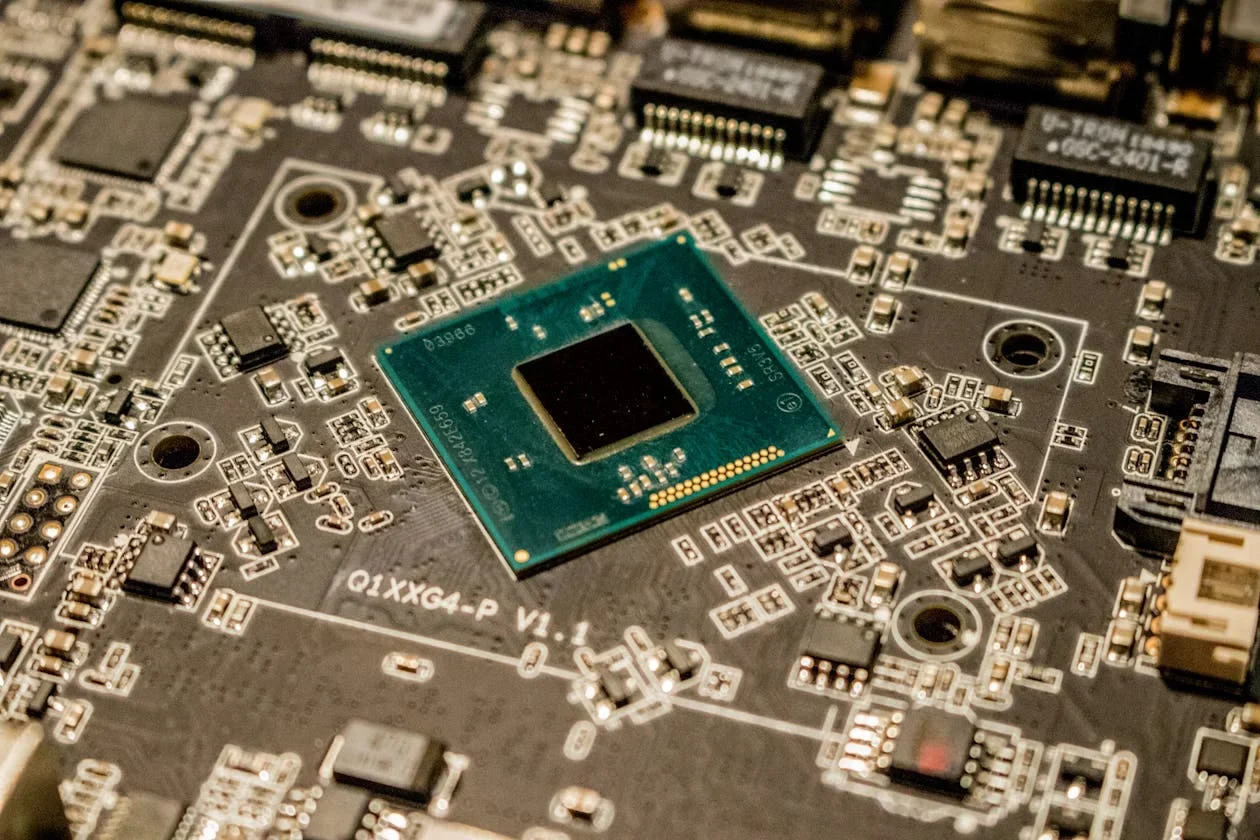
$30 Billion in Imports, Zero in Manufacturing
Every smartphone, every laptop, every car, every missile, every satellite, every smart TV, and every AI server in India runs on semiconductor chips. India imports virtually all of them, about $30 billion worth annually. It manufactures effectively none at scale.
This dependency is more than an economic problem. It’s a strategic vulnerability. When the global chip shortage hit in 2021-2022, India’s auto industry lost an estimated $8 billion in production. Consumer electronics prices spiked. Defence procurement timelines stretched. India had no domestic buffer, no fallback, no sovereignty over the most critical component of the modern economy.
The government has decided this must change. In December 2021, India announced a $10 billion (approximately ₹76,000 crore) semiconductor incentive programme. The ambition is to make India a significant player in global chip manufacturing within a decade.
The question is whether ambition and money are enough to crack the most technically demanding manufacturing process on Earth.
What’s Actually Happening
Project | Partners | Location | Type | Status |
|---|---|---|---|---|
Tata Semiconductor Fab | Tata + PSMC (Taiwan) | Dholera, Gujarat | Fabrication (28nm-65nm) | Under construction |
CG Power / Renesas | CG Power + Renesas + Stars Microelectronics | Sanand, Gujarat | OSAT (Assembly & Test) | Under construction |
Micron Technology | Micron (US) | Sanand, Gujarat | ATMP (Assembly, Test, Packaging) | Under construction, $2.75B investment |
Tata OSAT | Tata Electronics | Morigaon, Assam | OSAT | Under construction |
Kaynes Semicon | Kaynes Technology | Sanand, Gujarat | OSAT | Approved |
The most significant project is the Tata-PSMC fab in Dholera, India’s first large-scale chip fabrication facility. It will produce chips at 28nm to 65nm process nodes. For context, cutting-edge chips today are at 3nm (made by TSMC and Samsung). India is starting well behind the frontier.
Why Semiconductors Are So Hard
Making a modern semiconductor chip is arguably the most complex manufacturing process humans have ever devised. Here’s why India, or any country, can’t simply throw money at it:
- Equipment monopoly, The machines that make advanced chips (EUV lithography systems) are made by exactly one company: ASML in the Netherlands. Each machine costs $380+ million and has a multi-year waiting list. No amount of Indian investment can create an alternative overnight.
- Ecosystem depth, A single chip requires 1,000+ process steps, hundreds of specialised chemicals, ultra-pure gases, photomasks, and substrate materials. This supply chain took decades to build in Taiwan, South Korea, and the US. India is starting from near zero.
- Water and power, A semiconductor fab uses 30-50 million litres of ultra-pure water per day. In a country facing a water crisis, this creates tension between industrial and civilian water needs.
- Talent, India produces excellent semiconductor design engineers (a major strength) but almost no fabrication engineers. Running a fab requires thousands of specialised technicians trained in cleanroom manufacturing. This workforce doesn’t exist in India today.
- Scale and patience, TSMC was founded in 1987. It took 20 years to become the world leader. Samsung’s chip division took even longer. Semiconductor manufacturing is a multi-decade commitment, not a 5-year plan.
What India Does Well (And Should Leverage)
India isn’t starting from zero in semiconductors, it’s starting from zero in manufacturing. In design, India is already a quiet powerhouse:
- Design talent, India has approximately 120,000 semiconductor design engineers, about 20% of the global total. Qualcomm, Intel, AMD, Texas Instruments, Broadcom, and Nvidia all have major design centres in India.
- Bangalore is a chip design capital, More chip design happens in Bangalore than in any city outside Silicon Valley and Tel Aviv. Indian engineers designed key components of the Pentium chip, ARM processors, and smartphone SoCs.
- RISC-V opportunity, The open-source RISC-V instruction set architecture gives India a chance to build sovereign chip designs without licensing from ARM or Intel. Several Indian startups and IITs are developing RISC-V based processors.
- Government commitment, The India Semiconductor Mission (ISM) is backed by significant funding and cross-party political consensus. Unlike many Indian policy initiatives, semiconductor investment has bipartisan support.
The Realistic Assessment
India’s semiconductor strategy has both reasonable goals and unrealistic expectations:
What India can achieve by 2030:
- Operational OSAT (assembly, test, packaging) facilities, the lower-complexity end of the value chain
- One or two fabrication facilities producing mature-node chips (28nm-65nm) for automotive, industrial, and IoT applications
- Expanded design ecosystem with more Indian semiconductor startups
- RISC-V based processors for government and defence applications
What India cannot realistically achieve by 2030:
- Cutting-edge chip manufacturing (3nm, 5nm), only TSMC and Samsung can do this today
- Self-sufficiency in semiconductor equipment, ASML’s monopoly won’t break that quickly
- Complete supply chain independence, chemicals, gases, and materials will remain imported
Why It Matters Beyond Economics
India’s semiconductor ambition isn’t just about reducing import bills. It’s about three deeper issues:
- Strategic autonomy, In a world where chip access determines military capability, digital infrastructure resilience, and economic competitiveness, depending entirely on imports from a single region (East Asia) is a national security risk.
- Job creation, The semiconductor ecosystem creates high-value employment. Each fab creates 2,000-5,000 direct jobs and 10,000-20,000 indirect jobs. For a country that needs to create 12 million jobs annually, this matters.
- Innovation base, Countries that make chips eventually innovate on chips. India’s AI ambitions will be limited if it depends entirely on foreign hardware. Sovereign AI requires sovereign silicon.
The Question
India has made ambitious bets before and delivered, the space programme, UPI, Aadhaar, and nuclear energy all started as “impossible” projects. But semiconductors may be the hardest manufacturing challenge ever attempted. It requires precision measured in atoms, investment measured in decades, and patience measured in generations.
India has the money and the political will. The question is whether it has the patience. Because in semiconductors, there are no shortcuts, only a long, expensive, technically unforgiving road that the world’s most advanced economies spent 40 years building.
The first chips from Dholera will tell us whether India is serious about that road, or whether this is another ambitious announcement that fades before the hard work begins.
What you can do
- Share the evidenceSend this to one person who should know about digital india.Share on WhatsApp
- Give an afternoonTeach, mentor, clean up, or lend your professional skills.Ways to volunteer
- Tell us what's missingKnow a story, a fact we got wrong, or a solution worth spotlighting?Suggest a story
Politically neutral. Every claim sourced. Report a correction.


No comments yet