India's Space Program: ISRO's Journey from Bullock Carts to Mars and Beyond
ISRO began with a rocket launched from a Kerala fishing village in 1963 and now has Mars and Moon missions to its name. This article traces how a frugal programme grew and what comes next.
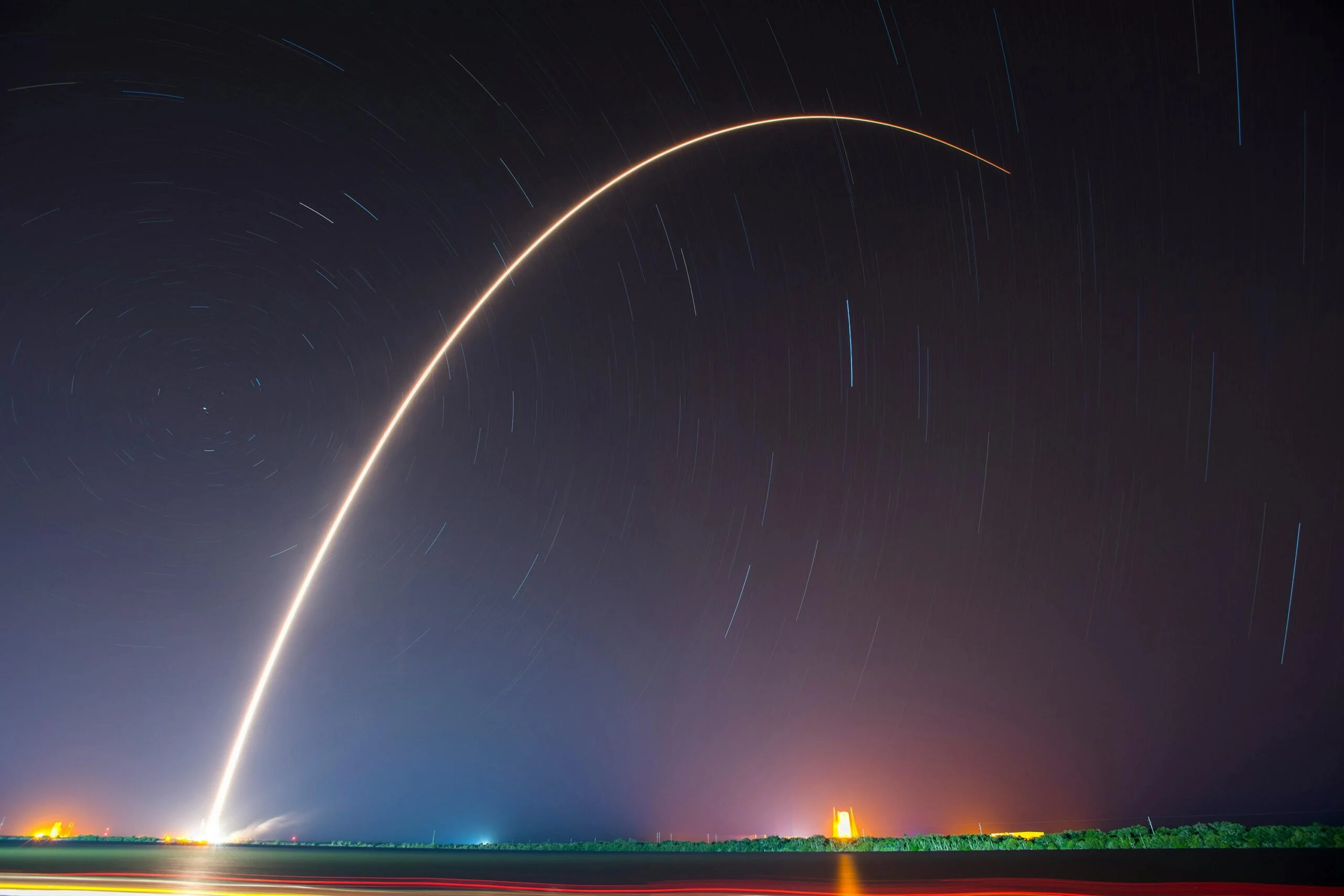
In 1963, India launched its first sounding rocket from a fishing village in Thumba, Kerala. The rocket parts were transported on a bicycle. The launch pad was a converted church. The control room was the bishop’s house. There was no aerospace industry, no satellite manufacturing capability, and no launch vehicle technology. The country’s per capita income was among the lowest in the world.
Six decades later, India has placed a spacecraft in orbit around Mars on its first attempt, landed near the Moon’s south pole before anyone else, and operates one of the world’s most cost-effective space programs. The Indian Space Research Organisation (ISRO) has launched satellites for 34 countries and built a constellation of earth observation, communication, and navigation satellites that serve over a billion people.
This is the story of how a nation with limited resources built a world-class space program, and where it’s headed next.
From Bullock Carts to Rocket Science: The Early Years
India’s space journey began under Vikram Sarabhai, widely regarded as the father of the Indian space program. Sarabhai’s vision was practical, not prestige-driven. He argued that space technology could help India solve real problems: predicting monsoons, connecting remote villages through satellite communication, and managing natural resources through earth observation.
The Indian National Committee for Space Research (INCOSPAR) was established in 1962. ISRO replaced it in 1969. The early years were defined by resourcefulness. Scientists built components by hand, improvised with available materials, and learned through international collaborations, particularly with NASA, which shared sounding rocket technology and provided training for Indian engineers.
The iconic photograph of a rocket nose cone being carried on a bicycle and parts transported on a bullock cart became a symbol of India’s approach: frugal engineering in pursuit of ambitious goals. That philosophy never changed. When ISRO launched the Mars Orbiter Mission in 2013, the entire project cost $74 million, less than the budget of the Hollywood film Gravity.
Key Milestones That Defined ISRO
ISRO’s history reads like a series of improbable achievements, each one building on the last.
Year | Mission | Significance |
|---|---|---|
1975 | Aryabhata | India’s first satellite, launched on a Soviet rocket |
1980 | SLV-3 / Rohini | First indigenous satellite launch vehicle success |
1983 | INSAT-1B | Began India’s satellite communication revolution |
1988 | IRS-1A | First Indian Remote Sensing satellite |
2008 | Chandrayaan-1 | Discovered water molecules on the Moon |
2013 | Mars Orbiter Mission | First Asian nation to reach Mars orbit, first attempt success |
2014 | IRNSS (NavIC) | India’s own regional navigation satellite system |
2017 | PSLV-C37 | World record: 104 satellites launched in a single mission |
2023 | Chandrayaan-3 | First spacecraft to land near Moon’s south pole |
2024 | Aditya-L1 | India’s first solar observation mission at L1 point |
Each milestone tells a story beyond the technical achievement. Chandrayaan-1 (2008) was India’s first lunar mission, and it was Indian instruments that confirmed the presence of water ice on the Moon, a discovery that reshaped global lunar exploration strategy. The Mars Orbiter Mission (Mangalyaan) made India the only country to reach Mars orbit on its first attempt, and the fourth space agency to reach Mars at all.
Chandrayaan-3’s south pole landing in August 2023 was a defining moment. After the Chandrayaan-2 lander failed in 2019, ISRO redesigned the system from scratch, added redundancy, and succeeded where no other nation had, landing in the lunar south polar region where water ice deposits offer the most promise for future exploration.
Why ISRO’s Cost-Effectiveness Matters
ISRO’s budget is roughly $1.5 billion annually, a fraction of NASA’s $25 billion or ESA’s $7 billion. Yet India’s space agency consistently delivers missions at costs that stun the global space industry.
The Mars Orbiter Mission cost $74 million. NASA’s comparable MAVEN mission cost $672 million. Chandrayaan-3 cost approximately $75 million. Russia’s Luna-25, which launched around the same time and crashed, cost an estimated $200 million.
This isn’t about cutting corners. India’s cost advantage comes from lower labor costs (Indian engineers earn a fraction of their Western counterparts), indigenous development of components that other agencies import, and a culture of jugaad, the Indian concept of resourceful innovation under constraint. ISRO reuses proven designs, builds incrementally, and avoids the cost bloat that plagues many Western space programs.
The implication is significant. If space technology costs less, more countries can access it. ISRO already launches satellites for developing nations that can’t afford Western launch services. India’s approach is proving that space exploration doesn’t have to be the exclusive domain of wealthy nations. This same philosophy of doing more with less drives India’s $1.5 billion AI infrastructure push, ambitious goals backed by smart resource allocation.
Space Technology Serving the Common Citizen
Sarabhai’s original vision, space technology for national development, remains ISRO’s guiding principle. India’s satellite fleet serves practical purposes that directly affect everyday life:
Weather forecasting and disaster management. INSAT and Resourcesat satellites provide the data that powers India’s weather prediction systems. During Cyclone Phailin (2013) and Cyclone Amphan (2020), satellite-based early warning systems enabled evacuations that saved hundreds of thousands of lives. India’s cyclone death toll has dropped dramatically since satellite coverage began.
Agriculture and resource management. Remote sensing satellites monitor crop health, water resources, soil moisture, and forest cover. The Bhuvan geoportal, India’s answer to Google Earth, provides free access to satellite imagery for farmers, planners, and researchers. Crop insurance schemes use satellite data to assess drought damage without requiring field inspections.
Connectivity for remote areas. India’s GSAT communication satellites power DTH television, telemedicine services, and distance education programs that reach villages with no terrestrial infrastructure. The VSAT network connects remote hospitals to specialist doctors in cities, a satellite-enabled version of the smart village initiatives transforming rural India.
Navigation. NavIC (Navigation with Indian Constellation) provides GPS-equivalent positioning services across India and the surrounding region. It’s particularly valuable for fishermen navigating the Indian Ocean, where GPS signals can be unreliable, and for strategic applications where India prefers not to depend on foreign systems.
Gaganyaan: India’s Human Spaceflight Program
India’s most ambitious current mission is Gaganyaan, sending Indian astronauts (vyomanauts) to low Earth orbit aboard an indigenously developed crew vehicle. If successful, India would become only the fourth nation to independently achieve human spaceflight, after Russia, the United States, and China.
The program includes developing a crew module capable of carrying three astronauts for up to seven days, a launch escape system for abort scenarios, life support systems, crew training (four Indian Air Force pilots have trained at Russia’s Star City), and recovery systems for splash-down in the Indian Ocean.
Gaganyaan faces significant technical challenges, life support, thermal protection during re-entry, and crew safety standards require a level of engineering precision beyond anything ISRO has attempted. The program has faced delays, but the uncrewed test flights (scheduled through 2025-2026) will validate the systems before astronauts fly.
Beyond national pride, human spaceflight capability opens doors to participating in the international space station ecosystem, conducting microgravity research, and eventually contributing to lunar and Mars exploration as a partner rather than an observer.
The Rise of India’s Private Space Sector
For decades, India’s space program was entirely government-run. That changed in 2020 when the government opened the sector to private companies through the Indian National Space Promotion and Authorisation Centre (IN-SPACe).
The results have been remarkable. Skyroot Aerospace became the first Indian private company to launch a rocket (Vikram-S, November 2022). Agnikul Cosmos test-fired the world’s first single-piece 3D-printed rocket engine. Pixxel is building India’s most advanced commercial earth observation constellation. Dhruva Space is developing satellite deployment platforms.
India now has over 200 space-tech startups, up from fewer than 10 in 2015. Investment in Indian space startups exceeded $300 million in 2023-2024. The government projects India’s space economy to reach $44 billion by 2033, up from roughly $8 billion today.
This growth mirrors patterns in India’s broader tech ecosystem. Just as Indian developers building open-source public goods proved that innovation doesn’t require Silicon Valley resources, Indian space startups are demonstrating that cutting-edge aerospace technology can emerge from Hyderabad and Chennai.
What’s Next for ISRO
ISRO’s roadmap for the next decade includes missions that would have seemed impossible when rockets were transported on bicycles:
- Chandrayaan-4, A lunar sample return mission, bringing Moon rocks and soil back to Earth for laboratory analysis. This would make India only the third country (after the US and China) to achieve a lunar sample return.
- Shukrayaan, India’s Venus orbiter mission, planned to study Venus’s atmosphere and surface. Venus has become a priority target for planetary science since the 2020 detection of phosphine gas in its clouds.
- NISAR, A joint mission with NASA deploying the most expensive Earth observation satellite ever built ($1.5 billion), designed to map the entire planet’s surface every 12 days for monitoring earthquakes, volcanoes, ice sheets, and deforestation.
- Bharatiya Antariksha Station, India’s own space station, planned for assembly by 2035. Starting as a small orbital module, it would grow into a permanent human outpost in low Earth orbit.
- Next-Generation Launch Vehicle (NGLV), A reusable heavy-lift rocket to replace the current GSLV, designed to dramatically reduce launch costs and support the space station and deep space missions.
The Challenges Ahead
India’s space program isn’t without problems. ISRO has faced criticism for delays in major programs, Gaganyaan has been pushed back multiple times. The agency struggles with brain drain as talented engineers leave for better-paying private sector or international opportunities. Budget constraints limit how many missions can run simultaneously.
There’s also a legitimate debate about whether a developing country should spend on space exploration when millions lack clean water, healthcare, and education. ISRO’s answer has always been the same one Sarabhai gave in the 1960s: space technology enables development. Weather satellites save lives. Communication satellites connect the unconnected. Navigation satellites protect fishermen. The investment returns compound over decades.
The private sector opening, while promising, needs regulatory clarity. IN-SPACe is still establishing the frameworks that startups need for licensing, spectrum allocation, and liability. India’s space law is still in draft form. The ecosystem is growing faster than the governance structures around it.
A Legacy of Inspiration
Perhaps the most underrated impact of India’s space program is aspirational. When Chandrayaan-3 landed on the Moon in August 2023, the event was watched live by hundreds of millions of Indians. Schools paused classes. Offices stopped work. The moment unified a country of 1.4 billion people in a shared experience of pride and possibility.
For young Indians growing up in small towns and villages, ISRO represents proof that extraordinary achievement doesn’t require extraordinary privilege. Many of ISRO’s most celebrated scientists, including former President APJ Abdul Kalam, came from modest backgrounds. The message is clear: with education, perseverance, and the right opportunities, you can build rockets.
That inspiration extends beyond India. For developing nations watching from the Global South, ISRO demonstrates that a country doesn’t need to be wealthy to reach for the stars. It needs vision, persistence, and the willingness to start with what it has, even if that means a bicycle and a converted church.
From Thumba to the Moon’s south pole, India’s space journey is a story of what becomes possible when a nation commits to science and engineering as tools for development. ISRO’s next decade, Gaganyaan, lunar sample returns, a Venus mission, a space station, will test whether the frugal engineering model can scale to the most demanding challenges in human spaceflight. If history is any guide, the answer will be found not in the budget, but in the ingenuity.
Frequently Asked Questions
Why does India invest in space when it still has poverty?
India’s space program directly supports development. Weather satellites enable cyclone warnings that save lives. Remote sensing satellites help manage agriculture and water resources. Communication satellites connect remote areas to healthcare and education. The space budget is approximately 0.04% of GDP, a small investment with outsized returns for a billion-plus population.
How does ISRO keep costs so low?
Lower labor costs, indigenous component development, incremental design evolution (reusing proven systems), smaller team sizes, and a culture of frugal engineering. ISRO also avoids gold-plating missions, each spacecraft carries exactly what the mission requires, with minimal over-engineering.
What is the Gaganyaan mission?
Gaganyaan is India’s human spaceflight program, aiming to send three Indian astronauts (vyomanauts) to low Earth orbit. It includes an indigenously developed crew module, launch escape system, and life support. Uncrewed test flights are underway, with the crewed mission expected after successful validation.
Can private companies launch rockets in India?
Yes, since 2020 when IN-SPACe was created to authorize and promote private space activities. Skyroot Aerospace became the first Indian private company to launch a rocket in 2022. Over 200 space-tech startups now operate in India, with investment exceeding $300 million in 2023-2024.
What you can do
- Share the evidenceSend this to one person who should know about digital india.Share on WhatsApp
- Back what worksVolunteer time or skills with groups doing this work.Ways to volunteer
- Tell us what's missingKnow a story, a fact we got wrong, or a solution worth spotlighting?Suggest a story
Politically neutral. Every claim sourced. Report a correction.


No comments yet