Online Betting and Gaming Apps in India: The Debt Trap, the Ban and How Families Can Respond
India banned real-money online games in 2025, yet blocked sites run past 8,000 and surveys show use rising. What the debt trap looks like, how the law is being enforced, and where families can get help.

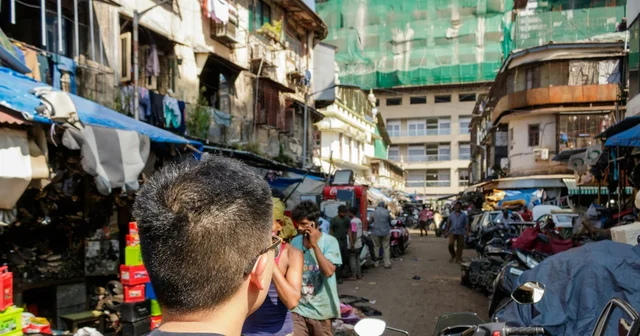
Photo by Chris F on Pexels
In this story
Why are online betting and gaming apps a social problem?
Because the harm arrives quietly and the bill arrives late. A student starts with a free fantasy cricket team. A young man in a small town tries a rummy app that gives him Rs 500 to begin. A first win feels like skill. A first loss feels like bad luck, and the next deposit feels like a way to get the money back. A few months later there are borrowed funds, a hidden loan app on the phone, and a family that has no idea.
Governments, doctors and police across India have described this pattern for years. In August 2025 the Union government went further than any previous one. It passed a law that bans online real-money games of every kind. This article looks at what the law says, how its enforcement is going as of late 2026, and what families, schools and banks can do. It also lists where a person with a gambling problem can get help.
A note on method: figures about the industry and about losses are mostly estimates from ministers, industry bodies or surveys. Where a number comes from one source, we say so and name it.
How big is the problem in numbers?
The scale is the first reason the Parliament acted. Union IT Minister Ashwini Vaishnaw told the House, as reported by Inc42, that about 45 crore people were affected by online money games and had lost more than Rs 20,000 crore. Other outlets repeat the same government estimate as roughly 45 crore people losing close to Rs 20,000 crore a year. These are ministerial estimates, not audited totals, and the two framings differ on whether the loss is annual or cumulative.
Industry-side estimates describe a fast-growing sector. The Week reported a PwC estimate that India’s gaming revenue was Rs 33,000 crore in 2023, of which the real-money segment was Rs 16,500 crore, and an EY estimate that more than 155 million people played fantasy sports, rummy, poker and other transaction-based games in 2024. Those industry figures include licensed Indian platforms that stopped real-money play after the ban.
The human cost shows up in smaller, sadder numbers. A police report from Karnataka in August 2025 linked at least 32 suicides since 2023 to online gambling, and officers believed the real figure was higher. The minister’s own justification for the law cited cases where people died by suicide after losing money in games.
Item | Figure | Source type |
|---|---|---|
People affected by online money games | about 45 crore | Union minister, Parliament, Aug 2025 |
Losses cited | more than Rs 20,000 crore | Union minister, Parliament, Aug 2025 |
Real-money gaming revenue, 2023 | Rs 16,500 crore | PwC estimate, via The Week |
Players of transaction-based games, 2024 | more than 155 million | EY estimate, via The Week |
Suicides linked to online gambling, Karnataka, since 2023 | at least 32 | Police report, Aug 2025 |
How does the debt trap work for students and young men?
The trap is built from a few simple features, and none of them depends on anyone being foolish.
- The free start. Welcome bonuses and free credits make the first game feel risk-free. The bonus often has conditions that push the player to deposit more.
- The near-win. Games are designed so that losses feel close to wins. A hand that ends one card short, a cricket team that finishes a few points behind, keep the player in the chair.
- The speed. UPI makes a deposit a ten-second task. The same convenience we celebrated in how UPI became the world’s largest payment system lowers the friction of a bad decision to almost nothing.
- Chasing losses. Having lost, the player deposits more to recover. This is the hallmark of problem gambling and the reason losses compound.
- The borrowed money. When savings run out, the player turns to friends, then to instant loan apps that charge high interest, then to family jewellery or a parent’s account. At this point the secret becomes a crisis.
- The shame. Because the loss is hidden, nobody can help. The person who is most in need of a conversation is the one least likely to start it.
Young people are particularly exposed. College students have spending money but little income and no experience of debt. Young men in their twenties face job uncertainty, which we described in India’s youth unemployment crisis, and a promise of quick money looks very attractive against that background. Influencer and celebrity advertising added a veneer of respectability to apps that were, at best, a high-risk product. Some of the most common promotions presented gambling as a skill or even a career.
Is there a link with cyber fraud?
Yes. Illegal betting sites and apps are often tied to other crimes. Accounts opened in other people’s names are used to receive and move betting money. Fake apps clone real ones. Personal data collected at sign-up can be misused. People who lose money may also become targets for loan-app harassment. The line between a betting problem and a fraud problem is thin, which is a reason families should treat the first as seriously as the second.
How is a game different from gambling?
The test most health professionals use is simple: is real money put at risk in the hope of winning more? A free puzzle game is a game. A card game where you pay to enter and win cash back is gambling, however it is described. Many apps blur the line with tokens, coins and bonus credits that can be bought with money and later converted back. If you can pay in and cash out, treat it as gambling. The same applies to in-game purchases that work like a lottery, where a child pays for a random reward. Those are not covered by the money-game ban in the same way, but the habit they build is similar, and our look at how young people use social media shows how quickly a screen habit can grow.
What does the Promotion and Regulation of Online Gaming Act, 2025 say?
The Act was passed by Parliament on 20 and 21 August 2025 and received the President’s assent on 22 August 2025. Its main features, as summarised by the Supreme Court Observer, are:
- A ban on online real-money games (Section 5). The ban covers games of skill as well as games of chance. The law removes the old distinction on which many fantasy sports and rummy platforms had built their business.
- A ban on facilitation. The Act also covers advertising an online money game and processing payments for one. Reports on the Act describe prison terms of up to three years and fines of up to Rs 1 crore for offering or facilitating such games, with tougher penalties for repeat offences.
- Support for esports and social games. Sections 3 and 4 provide for the promotion and recognition of non-monetary esports and online social games.
- A regulator. The rules create an Online Gaming Authority of India to oversee and coordinate the regime.
The Act does not punish the player in the way it punishes the operator and the payment chain. The stated aim is to protect users, particularly families and young people, while keeping a place for skill-based and social gaming that does not involve money.
How is enforcement going?
The picture is mixed. The law is in force, the state is blocking sites in large numbers, and a challenge is pending in the Supreme Court. At the same time, survey evidence suggests many players have simply moved to offshore sites.
When did the ban start?
The Supreme Court Observer records that the Union announced on 22 April 2026 that the Act would come into effect from 1 May 2026, along with the Promotion and Regulation of Online Gaming Rules, 2026. Some early reports in 2025 expected enforcement from 1 October 2025, so dates in older coverage may differ. For the present, the 1 May 2026 date is the one in the court record.
Blocking of sites and apps
The IT ministry told the Lok Sabha on 1 April 2026, in a reply reported by MediaNama, that 8,376 URLs linked to betting, gambling and gaming had been blocked or actioned as of 28 March 2026. More than 4,800 of these followed the enactment of the Online Gaming Act. Later media reports described further rounds of blocking and, in July 2026, an advisory from the Online Gaming Authority asking app stores, telecom companies, banks, social media platforms and advertising agencies to cut off online money games, stop related payments and pull their advertisements. We found no official block count after March, so treat later totals as media reports.
Why blocking alone does not stop use
Surveys by the policy group CUTS International, as cited by MediaNama, point to a displacement effect. In a Delhi NCR survey from December 2025, use of such platforms rose from 68.3 percent before the ban to 82 percent after it, and daily access rose from 3.4 percent to 42.3 percent. A Tamil Nadu survey from January 2026 found use of offshore platforms up by 15.2 percent after the ban. These are single surveys in specific regions and should not be read as national estimates. But they fit what people who study gambling regulation expect: when a regulated, visible market is closed and demand remains, a share of players moves to unregulated offshore sites, often using mirror domains and domestic payment routes.
That is a real problem. Offshore sites do not set deposit limits, do not offer grievance channels, and do not care about age checks. A ban that pushes people from a regulated platform to an unregulated one may protect fewer people than it appears to. Supporters of the law answer that the ban cuts off advertising, app-store distribution and payment processing, which are the channels that recruit new, young players. Both views have some force, and the evidence on the net effect is not yet in.
The legal challenge
Petitions challenging the Act, originally filed in the Delhi, Madhya Pradesh and Karnataka high courts, were moved to the Supreme Court in September 2025 and are listed as Head Digital Works v Union of India. The court has declined interim relief and has listed the matter for hearing before a bench headed by the Chief Justice. The petitioners argue, among other points, that treating skill games and chance games alike violates the right to equality and that the Union has gone beyond its powers, since betting and gambling are state subjects. The Union defends the law as a measure against fraud, addiction and money laundering. As of the latest reports we found, from mid-2026, the Supreme Court had not ruled, so the Act remains in force.
What is not yet clear
- How many operators or payment providers have been prosecuted under the Act. We found no official count.
- Whether the rate of problem gambling has fallen. India has no national gambling survey that would show this.
- How much money is moving through offshore sites. Estimates by industry panellists run into billions of dollars but are not official.
What can families do?
Laws take time. Families can act today.
Spot the signs early
- Secretive phone use, a sudden need for money, or unexplained withdrawals.
- Mood swings tied to cricket matches, results or phone alerts.
- Missing valuables, borrowed money from friends, or calls from unknown lenders.
- Falling grades, skipped classes, or late-night screen time.
- New UPI handles or a second SIM or bank account.
Start with a calm conversation
Shouting pushes the problem underground. Say what you have seen, say you are worried, and say that the first goal is to stop the debt from growing. Treat the behaviour as a health problem that can be treated, not a character flaw. The person is more likely to accept help if they are not afraid of being thrown out.
One more point on tone. Many families first respond with anger, and a young person often responds with denial. A calmer opening works better: “I am worried about money, not about blaming you. Can we look at the numbers together?” Looking at bank statements together, rather than demanding explanations, turns the conversation into a shared problem. The same approach helps whether the person is a teenager with a first loss or an adult with years of hidden debt.
Cut the practical links
- Delete betting and fantasy apps and block the sites. Remove saved cards and UPI IDs from them.
- Set a low daily UPI transfer limit through the bank, and keep large savings in an account not linked to UPI.
- Take control of the family’s money for a while. Make a plan for repaying debts, starting with the highest-interest loan apps.
- Do not pay anyone who threatens or shames the person for an unpaid loan. Harassment by loan-app agents is a crime. Save the messages and report to the police or at cybercrime.gov.in.
A simple repayment plan for a family in debt
- List every debt. Write down who is owed what, at what interest, and by when. Instant loan apps usually come first because their charges are highest.
- Stop the bleeding. Freeze new borrowing, remove the apps and close the payment routes that fed the habit.
- Talk to the lender. A regulated bank or NBFC may agree a schedule. Unregistered loan apps are another matter, and paying them under pressure often leads to more demands.
- Sell or pause non-essentials. Family support matters more than pride at this point.
- Get counselling in parallel. Debt that is repaid without treatment often comes back. The goal is to fix both the money and the habit.
Get professional help
Gambling disorder is recognised as a behavioural addiction. Treatment works best when started early, and it includes counselling and, where needed, medical care. See the helplines below.
What can schools, colleges and banks do?
Schools and colleges
- Include gambling and gaming-related harm in life-skills and digital-literacy classes. Use real examples of how a free bonus becomes a debt, rather than a generic warning.
- Train counsellors to ask about betting when a student shows anxiety, sudden debt or falling attendance.
- Tell parents and students that school-level help is available without disciplinary action.
- Run peer sessions. Students listen to other students, especially those who have been through it.
Banks and payment apps
- Flag repeated small, rapid transfers to unknown accounts. Betting deposits have a recognisable shape.
- Act on mule accounts. Accounts that receive and pass on betting money should be frozen and reported.
- Offer customers the option to set and lock spending limits, so that a family can cap the damage.
- Follow the Authority’s July 2026 advisory by cutting off payment links to prohibited games.
App stores, ad platforms and influencers
The Act treats advertising an online money game as an offence. Platforms that carry such adverts, and public figures who endorse them, are at risk. Citizens can report such advertisements to the platform and to the authorities. This matters most for minors, who are targeted by advertising that appears in games, videos and sports coverage.
Where can someone get help for gambling addiction in India?
- Tele-MANAS (14416 or 1-800-891-4416). The government’s free, 24-hour mental health helpline, available in many languages.
- NIMHANS, Bengaluru. The Service for Healthy Use of Technology (SHUT) clinic treats technology-related addictions, including gaming. Ask them whether they can see someone with a gambling problem.
- District mental health programme. Every district has a mental health service, usually at the district hospital. Ask for a psychiatrist or counsellor.
- Cyber helpline 1930 and cybercrime.gov.in. If the case involves fraud, loan-app harassment, a hacked account or blackmail.
- Emergency. If someone talks about harming themselves, stay with them and take them to the nearest hospital. Call 112 for immediate help.
Support groups for people with gambling problems also exist in several Indian cities. Ask a mental health professional for a local referral rather than relying on an unverified phone number found online.
What you can do
- Talk to your teenager or young adult about how betting apps work, before a problem starts.
- Check phones together for betting and loan apps, as a family routine and not as a punishment.
- Set UPI limits for yourself and your family, and keep a low-balance account for daily spending.
- Report illegal sites and ads to the platform and to cybercrime.gov.in.
- Do not share or forward betting promotions, even as a joke.
- Support someone who has lost money. Help them plan repayment and seek treatment. Do not shame them.
- Ask your school or college to hold a session on online betting and debt.
Frequently asked questions
Is playing an online money game a crime for the player?
The Act is aimed mainly at those who offer, advertise or fund such games. Reports on the Act describe the penalties as falling on operators and facilitators. Players should not assume they are safe, since other laws on gambling and fraud may apply, and state laws differ. Seek legal advice if you are in trouble.
Are fantasy sports and rummy banned?
If they involve money, yes. The Act bans online real-money games whether based on skill, chance or both. Free-to-play social games and non-monetary esports are allowed.
Is the ban final?
Not yet. A constitutional challenge is pending in the Supreme Court. Until it rules, the Act remains in force.
Why do people still play if it is banned?
Because demand does not vanish with a law. Surveys in Delhi NCR and Tamil Nadu suggest many players have moved to offshore sites, which the government is trying to block.
What should I do if a loan app is harassing me or my family?
Do not pay under threat. Save all messages, report to cybercrime.gov.in or call 1930, and file a police complaint. Tell the bank. Harassment and threats are crimes.
Is gambling an addiction?
Yes, health professionals treat gambling disorder as a behavioural addiction. It responds to counselling and support. It is not a lack of willpower.
The bottom line
India has chosen a hard line on online betting and gaming for money. The law is in force, thousands of sites have been blocked, and the Supreme Court has yet to rule on its validity. Early evidence suggests that bans alone push some players offshore. The families who are hurt cannot wait for the courts. The most useful steps are practical: early conversations, UPI limits, no shame, quick action on loan-app harassment, and treatment for those who need it. A ban can shut the shop. Only people can close the door that leads to it.
What you can do
- Share the evidenceSend this to one person who should know about digital india.Share on WhatsApp
- Give an afternoonTeach, mentor, clean up, or lend your professional skills.Ways to volunteer
- Tell us what's missingKnow a story, a fact we got wrong, or a solution worth spotlighting?Suggest a story
Politically neutral. Every claim sourced. Report a correction.

No comments yet