45% Youth Unemployment - The Stat Behind India's Most Dangerous Demographic
In September 2023, the Centre for Monitoring Indian Economy (CMIE) reported that India's youth unemployment rate stood at 45.4 percent for those aged 15-24. The number deserves to be read slowly. Nearly one in two young Indians who are actively looking for work cannot find it. This is not a figure a...

In September 2023, the Centre for Monitoring Indian Economy (CMIE) reported that India’s youth unemployment rate stood at 45.4 percent for those aged 15-24. The number deserves to be read slowly. Nearly one in two young Indians who are actively looking for work cannot find it. This is not a figure about laziness, educational mismatch, or lack of ambition. It is a figure about an economy that has grown at 6-7 percent per year for a decade without generating enough jobs for the 7-8 million people entering the labour force every year. Understanding this failure - who it hurts, why it persists, and what it demands of Indian economic policy - is among the most important analytical tasks in Indian public discourse.
What the Data Actually Shows
The 45 percent figure requires some unpacking. The CMIE methodology counts as “unemployed” only those who are actively seeking work - not those who have given up looking, not those in involuntary part-time work, not those in subsistence agriculture that doesn’t match their qualifications. The government’s Periodic Labour Force Survey (PLFS), which uses different methodological choices, reports lower numbers. This discrepancy is not evidence that one source is wrong; it reflects genuine definitional choices about what constitutes unemployment. By any reasonable measure, however, Indian youth unemployment is high, and the divergence between official and independent estimates should prompt scrutiny of which measure is most relevant for policy.
The data becomes more alarming when disaggregated. Youth unemployment is significantly higher among the educated. The PLFS data shows that unemployment rates are highest not among those with no education but among those with secondary and graduate education - young people who have invested years in acquiring credentials that the labour market does not reward with commensurate employment. This is the “educated unemployment” paradox that has been documented in India for decades: the more education a young person has, the more likely they are to be unemployed, because their education has raised their aspirations and reservation wages while the economy has not created enough jobs that match their qualifications. The agriculture sector continues to absorb hundreds of millions of workers, but it does not absorb educated youth from urban backgrounds who have not been trained for agricultural work.
The Skills Mismatch Myth
The dominant policy narrative about Indian youth unemployment has long been the “skills mismatch” story: young people are unemployed because their skills don’t match what employers want, and the solution is to train them better. This narrative has a political utility - it frames the unemployment problem as an individual deficit (wrong skills) rather than a structural failure (insufficient job creation). It also has genuine truth in it: India’s education system does produce graduates who lack the specific skills that specific employers seek. The NASSCOM skills survey, employer feedback surveys in manufacturing, and the low pass rates on skills certification schemes all reflect real gaps between education output and employer requirements.
But the skills narrative cannot explain the magnitude or persistence of the unemployment problem, because the labour demand side has not been growing fast enough to absorb workers even with better skills. Manufacturing employment in India - the sector that historically absorbs the largest share of workers transitioning out of agriculture in developing country development trajectories - has actually shrunk as a share of employment in recent years, from about 12 percent to about 11.6 percent between 2011 and 2023. This is not skills mismatch; it is labour demand collapse. The services sector, which drives GDP growth, is predominantly skill-intensive and capital-intensive, creating jobs for the highly educated while leaving the large majority of India’s labour force underemployed in low-productivity informal work. See how India’s gig economy has absorbed some displaced workers, but without benefits or stability, in our piece on India’s 8 million gig workers without benefits.
Indicator | Value | Source/Year |
|---|---|---|
Youth unemployment (15-24), CMIE | ~45% | CMIE, 2023 |
Youth unemployment (15-29), PLFS | ~17-20% | PLFS 2022-23 |
Manufacturing employment share | ~11.6% | PLFS 2022-23 |
Jobs created vs workforce additions | ~5-6M vs 7-8M/year | CMIE/NSO estimates |
Graduate unemployment rate | Higher than school dropout rate | PLFS data |
Labour Force Participation Rate (women) | ~37% | PLFS 2022-23 |
The Agnipath Reaction
In June 2022, the central government announced the Agnipath scheme - a plan to recruit young people into the armed forces on four-year fixed-term contracts, after which approximately 25 percent would be retained for regular service and the remainder would return to civilian life. The announcement triggered violent protests across multiple states, including Bihar, Uttar Pradesh, and Haryana - states with high youth unemployment and a long tradition of military recruitment. Trains were set on fire. Government property was damaged. The protests were not, at their core, about military service; they were about the desperation of young people who had spent years preparing for a permanent government job - one of the most reliable routes to middle-class stability in states with thin private labour markets - and who saw that route being cut off.
The Agnipath protests were a signal. Young people in India’s smaller cities and rural areas have internalised, correctly, that formal employment in the public sector or formal private sector is increasingly scarce relative to the number of people competing for it. The competition for any government job - from Class 3 positions in state government to the Civil Services - has reached ratios of thousands of applicants per post. A UP government job advertisement for 62 posts in 2022 drew over 37 lakh applications. The aspirational economy - built on the promise that education and hard work lead to stable employment - is under enormous strain. The social and political consequences of this strain are already visible, and they will compound if the employment problem is not addressed at its structural root.
Brain Drain: The Canada Question
Between 2020 and 2023, India became the largest source of immigrants to Canada, overtaking traditional source countries. In 2022 alone, over 118,000 Indian nationals received Canadian permanent residence. The majority of these migrants are young, educated Indians - engineering graduates, IT professionals, healthcare workers, accountants - who have concluded that their employment and earning prospects in Canada exceed what India offers. Similar patterns are visible in migration to Australia, Germany, and the United Kingdom. This is not new, but its scale is accelerating, and the composition is changing: it is no longer only the IIT elite who migrate, but a much broader range of educated young Indians, including those from families without prior migration experience.
The political economy of brain drain is complex. Remittances from the diaspora are valuable. But the departure of educated young people represents a real loss of human capital that India has invested in producing - often through heavily subsidised higher education - but whose economic productivity will accrue to the host country. The irony is that the very factors that drive brain drain - the failure of India’s domestic labour market to create enough high-quality jobs for its educated workforce - are also the factors that drive youth unemployment. These are two faces of the same structural failure. India cannot retain its educated youth without creating the quality employment that retaining them requires. Creating that employment, in turn, requires a different industrial policy than the one India has pursued for the past three decades.
The Gender Dimension
India’s female labour force participation rate has been one of the lowest among large developing economies - approximately 37 percent in 2022-23, compared to roughly 50-60 percent in China, Brazil, and many Southeast Asian economies. The participation rate has actually increased from the historically low levels of 2011-2018, driven partly by women reporting agricultural work in PLFS surveys and partly by genuine increases in formal employment. But the gap between male and female LFPR in India remains among the widest in the world. The youth unemployment problem is gendered: young educated women face not just the general scarcity of formal employment but also the specific social constraints on women’s mobility, the safety concerns around commuting and night work, family expectations about marriage and household management, and the concentration of formal employment in sectors and locations that may be inaccessible to women from conservative backgrounds. The policy conversation about youth unemployment in India consistently underweights this dimension.
What Would Actually Help
The evidence on what creates youth employment at scale in a developing economy points to: labour-intensive manufacturing with adequate worker protections, infrastructure investment that creates construction employment with a pathway to skills development, agricultural diversification toward horticulture and food processing that raises rural wages, and public employment programmes (like MGNREGA) that provide income floors during demand deficits. None of these is new or controversial. The question is political will. Track India’s employment data through CMIE and PLFS (both publicly accessible) and hold economic policy accountable for job creation, not just GDP growth. Source: CMIE Unemployment Rate data; PLFS 2022-23; Economic Survey 2023-24.
The Education-to-Job Pipeline Breakdown
India produces approximately 7 lakh engineering graduates per year from roughly 4,200 engineering colleges. The NASSCOM estimate is that fewer than 25 percent of these graduates are directly employable in the IT industry without additional training. This is not entirely the colleges’ fault - engineering education in India has expanded enormously to meet aspirational demand without commensurate growth in teaching faculty, laboratory equipment, or industry connection. The result is a large number of graduates with credentials that the market doesn’t fully value, trained in curricula that haven’t kept pace with industry requirements, and seeking employment in a sector that cannot absorb them all. The ITI (Industrial Training Institute) system, which provides vocational and technical training, is chronically under-resourced and socially stigmatised compared to degree education, leaving a skills gap in technical trades even while engineering graduates go unemployed.
The National Skill Development Corporation, established in 2009 to coordinate skills training at scale, has had a mixed track record. It has trained tens of millions of people on paper, but surveys of placement outcomes - the percentage of trained workers who actually find employment in their trained field - consistently show numbers well below the scheme’s stated targets. The problem is not entirely implementation failure; some of it is structural. Skills training programmes that don’t come with job guarantees or employer partnerships produce certificates rather than employment. The apprenticeship system, which would be the most efficient mechanism for industry-relevant skills training, is poorly developed in India relative to Germany or South Korea. Expanding genuine apprenticeship - where employers invest in training in exchange for labour - requires both regulatory reform and employer incentives that have not been designed effectively. See our analysis of the gig economy as an inadequate substitute in our piece on India’s 8 million gig workers.
What Would Actually Fix the Problem
The employment crisis requires supply-side and demand-side solutions together. On the demand side: India needs a manufacturing strategy that creates labour-intensive jobs at scale, not just capital-intensive industries. The PLI (Production Linked Incentive) scheme has attracted investment in some sectors but has been slow to show mass employment results. Special Economic Zones and Export Processing Zones need to be redesigned to ensure they generate local employment rather than importing contract labour. On the supply side: the apprenticeship system needs to be expanded dramatically, with mandatory employer contributions; ITI quality and social status need investment; and the mismatch between curriculum content and employer requirements needs systematic correction through industry partnerships in course design. These are all known solutions. The political economy of implementing them - which requires confronting entrenched interests in both the education system and the industrial lobby - is the real obstacle. The 45 percent youth unemployment figure is the price of not confronting those interests. Source: CMIE Unemployment Rate monitor; Azim Premji University State of Working India 2023; PLFS 2022-23 annual report; NASSCOM Skills Report 2023.
States with the Worst Youth Unemployment: Bihar and Jharkhand
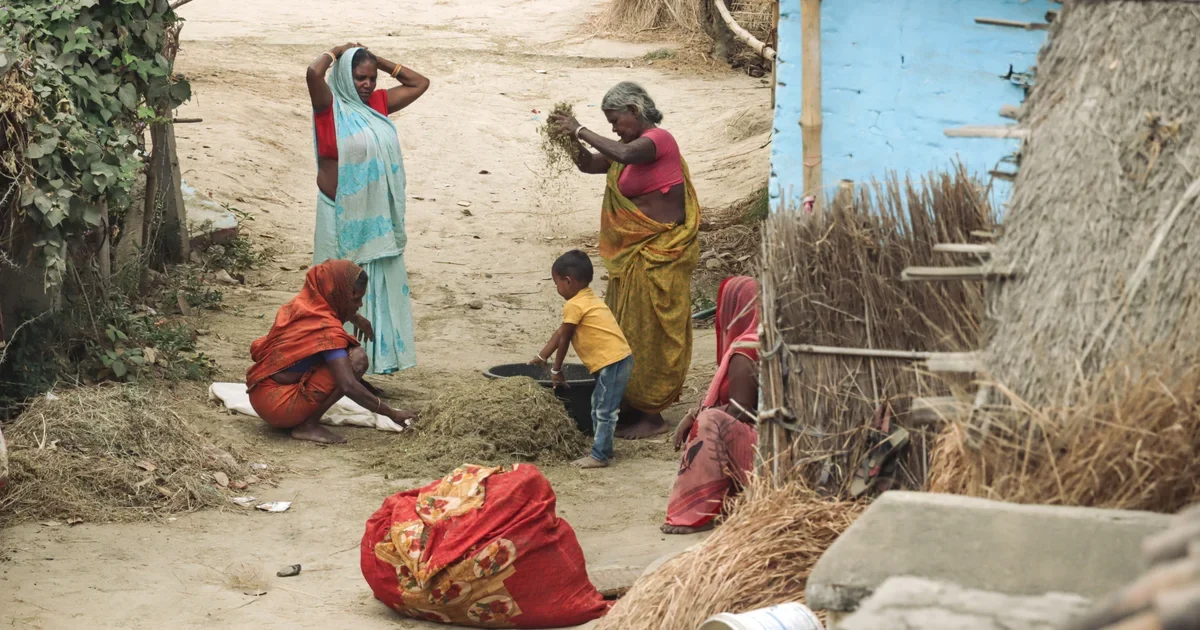
Youth unemployment is not uniformly distributed across India. States like Haryana, Rajasthan, and Jammu have historically had some of the highest youth unemployment rates in national survey data. Bihar and Jharkhand - among India’s poorest states and primary sources of labour migration - face a particularly acute employment deficit for educated youth: the formal private sector is thin, government jobs are scarce relative to applicants, and emigration to cities is the dominant strategy for economic survival among families with any resources. The concentration of agricultural employment in Bihar - roughly 75 percent of the workforce in agriculture - means that educated youth returning from cities face a choice between subsistence farming and continued unemployment while waiting for the next government examination cycle. Jharkhand adds the dimension of mining and industrial employment that was once a pathway for tribal youth but has declined in employment intensity as mechanisation has increased.
What you can do
- Share the evidenceSend this to one person who should know about this issue.Share on WhatsApp
- Give an afternoonTeach, mentor, clean up, or lend your professional skills.Ways to volunteer
- Tell us what's missingKnow a story, a fact we got wrong, or a solution worth spotlighting?Suggest a story
Politically neutral. Every claim sourced. Report a correction.

No comments yet