Why 50 Million Indian Students Drop Out Before Class 10
Nearly 50 million Indian students drop out before reaching Class 10. This in-depth analysis examines the gender gap, rural-urban divide, poverty as the root driver, state-wise data, NEP 2020 solutions, bridge schools, and the concrete policy agenda India needs to reverse this crisis.
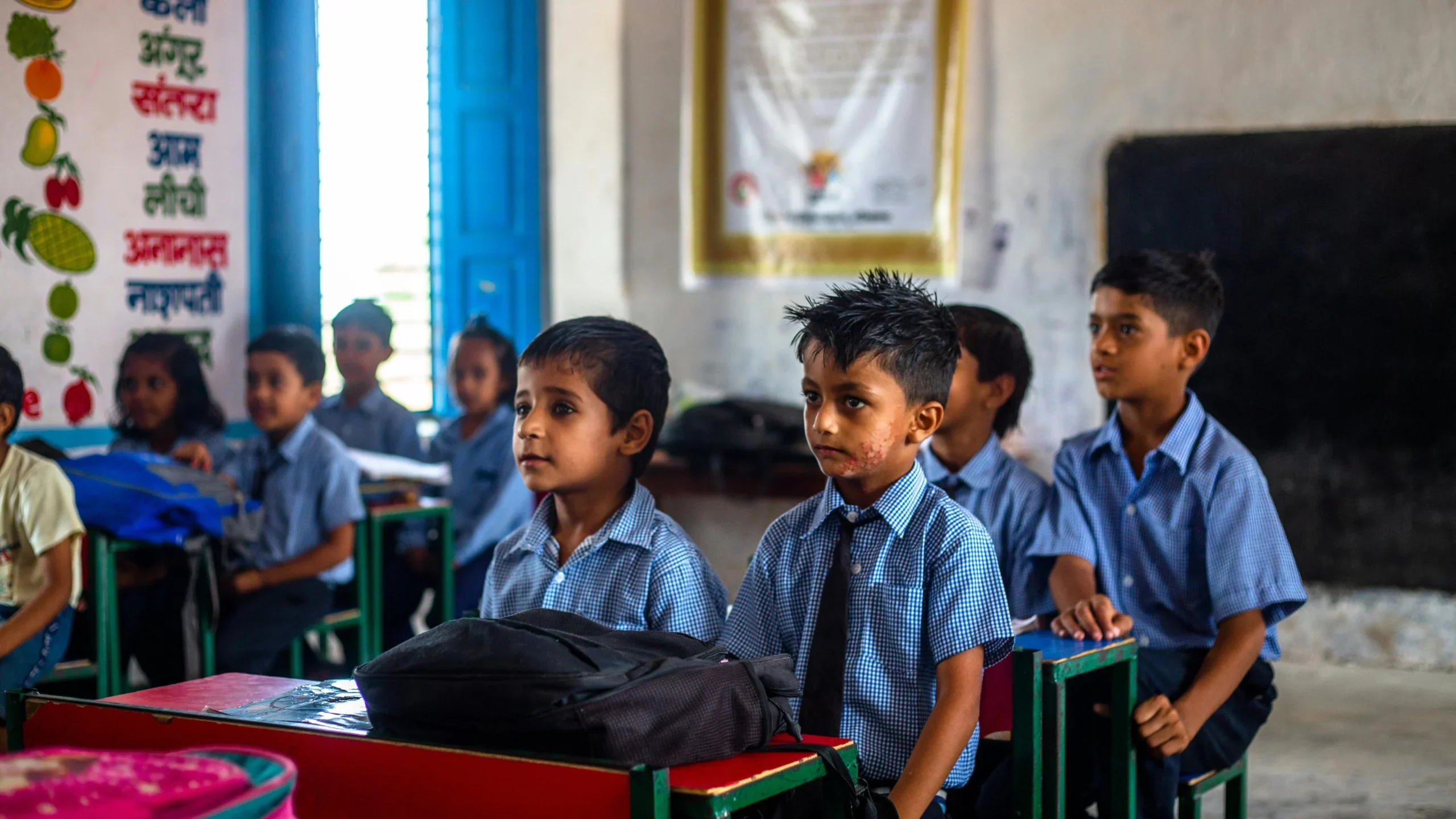
Every year, millions of Indian children walk through a school gate for the last time, not because they graduated, but because they dropped out. India educates more children than almost any country on earth, yet nearly 50 million students never reach Class 10. Behind each statistic is a child who stopped learning, a family that ran out of choices, and a nation that cannot afford to let this continue.
The Scale of the Crisis: What the Data Actually Shows
India’s Unified District Information System for Education Plus (UDISE+) data for 2022-23 paints a sobering picture. Of every 100 students who enroll in Class 1, fewer than 60 make it through to Class 10. That is a system-wide attrition rate that no country with serious educational ambitions can accept.
The numbers look better than they did a decade ago, and that progress is real. Gross Enrollment Ratio (GER) at the secondary level has climbed from around 56 percent in 2012 to approximately 79 percent in 2023. But GER can mask dropout patterns because it measures enrollment against the eligible population, not persistence of the same cohort. The Transition Rate, the share of students who actually move from one class to the next, tells the harder truth.
| Stage | Transition Rate (2022-23) | Implied Annual Dropouts |
|---|---|---|
| Primary to Upper Primary (Class 5 to 6) | 91.4% | ~2.8 million |
| Upper Primary to Secondary (Class 8 to 9) | 87.2% | ~4.1 million |
| Secondary completion (Class 9 to 10) | 82.7% | ~3.6 million |
The Class 8-to-9 transition is the most critical choke point in the system. This is where the Right to Education Act’s guarantee ends, RTE covers Classes 1 through 8, and where fees, examination pressure, and family economics converge to pull children away from school.
State-by-State: India Is Not One Story
National averages flatten enormous variation. A child born in Kerala faces a radically different educational reality than one born in Rajasthan or Uttar Pradesh. Understanding the geography of dropout is essential to designing solutions that actually work.
The High-Performing States
Kerala, Tamil Nadu, Himachal Pradesh, and Mizoram consistently record secondary-level GER above 90 percent and dropout rates below 5 percent. These states share common features: strong teacher density, robust midday meal programs, high female literacy in the parent generation, and, critically, a social norm that treats secondary education as non-negotiable rather than aspirational.
Kerala’s model of state-led universal education offers the clearest proof that near-zero dropout is achievable, a commitment that goes back to 1817 when the state declared schooling a government responsibility. Himachal Pradesh is a particularly instructive case. Despite being mountainous, economically modest by national standards, and geographically challenging to serve, it achieves near-universal secondary enrollment. The state invested heavily in residential schools (Rajkiya Adarsh Uchh Madhyamik Vidyalaya) in remote areas, reducing the distance barrier that drives dropout across hilly regions.
The Crisis States
At the other end of the spectrum, several large states struggle with dropout rates that undermine national progress. Assam, Madhya Pradesh, Rajasthan, and Uttar Pradesh together account for a disproportionate share of India’s total school dropouts. In parts of these states, secondary-level completion rates remain below 60 percent, meaning four in ten children who started school never finish Class 10.
| State | Secondary Dropout Rate (approx.) | Key Driver |
|---|---|---|
| Kerala | 1.9% | High social capital, strong teacher presence |
| Tamil Nadu | 3.2% | Noon meal scheme, aggressive enrollment drives |
| Himachal Pradesh | 2.8% | Residential schools, low poverty |
| Rajasthan | 17.4% | Female dropout, distance, poverty |
| Madhya Pradesh | 19.1% | Tribal areas, economic stress |
| Assam | 22.3% | Tea estate children, flooding, child marriage |
| Uttar Pradesh | 16.8% | Population scale, poverty, low female autonomy |
The northeast presents a mixed picture. Mizoram and Meghalaya perform well on retention; Assam’s tea-estate communities remain deeply excluded. Children of migrant tea workers inherit a cycle of educational exclusion that has persisted across generations, compounded by the fact that many estate schools stop at Class 7.
The Gender Gap: Girls Are Leaving School in Far Greater Numbers
India has made measurable progress on closing the primary-school enrollment gap between boys and girls. At the elementary level, the gender parity index is now close to 1, meaning roughly equal numbers of boys and girls enroll. But that near-parity at age 6 dissolves by age 14.
The Annual Status of Education Report (ASER) 2023 found that among 15-16 year olds not currently enrolled, girls outnumber boys by a significant margin in most states. In Rajasthan and Uttar Pradesh, early marriage remains the single largest reported reason girls leave school. The median age of marriage for women in rural Rajasthan is still below 19 in several districts, a direct collision with the school calendar.
When a daughter turns 13, the conversation at home shifts. People ask about marriage, not marks. The school becomes an obstacle to the family’s plan, not a part of it.
Field researcher, ASER Centre, Rajasthan district study, 2022
The causes of female dropout are not mysterious, they are well-documented and interconnected:
- School distance and safety: When a secondary school is more than 3 kilometres away, parents are significantly less likely to send daughters. The fear of harassment on roads and at schools with poor boundary infrastructure is real, not paranoia.
- Absence of female teachers: In states with conservative gender norms, parents are more comfortable with daughters attending schools that have at least one female teacher. Many rural secondary schools in UP, Bihar, and Rajasthan have no female staff at all.
- Menstrual hygiene: UNICEF data consistently shows that schools without functional, private toilets see a sharp spike in female absenteeism at puberty, which quickly converts to permanent dropout.
- Household labour: Girls are expected to contribute to domestic work, cooking, fetching water, caring for younger siblings. As they enter adolescence, this unpaid labour competes directly with school time.
- Perceived returns: In communities where women’s employment is rare, parents genuinely ask: “What does she gain from Class 10 if she will not work?” Changing this perception requires changing the economic reality, not just the messaging.
Interventions that have demonstrably reduced female dropout include: Kasturba Gandhi Balika Vidyalayas (residential schools for girls from marginalised communities), conditional cash transfer programmes like Rajasthan’s Apni Beti Apna Dhan, and Bihar’s Mukhyamantri Kanya Utthan Yojana, which has been linked to increased secondary enrollment for girls from economically weaker backgrounds. The dropout crisis for girls in secondary school also feeds directly into the broader gender gap in higher education and STEM, where Indian women remain severely underrepresented despite decades of policy commitment.
Rural vs Urban: Two Entirely Different School Systems
India’s urban middle class experiences a school system that is largely unrecognisable to rural India. The average urban secondary school has a computer lab, a science teacher with a graduate degree in the subject, and students with smartphones who can access YouTube tutorials. The average rural secondary school in a high-dropout state often has two teachers handling six subjects across two classes, no laboratory, and students whose parents are illiterate.
The infrastructure gap is stark. UDISE+ 2022-23 data shows that while urban secondary schools achieve near-universal access to functional electricity, toilets, and drinking water, large proportions of rural schools in states like Jharkhand, Chhattisgarh, and Assam still fall short on one or more basic infrastructure indicators. When a school has no electricity, its computer lab is decorative. When its sole toilet is padlocked, the building itself becomes hostile to attendance.
Teacher vacancy and teacher quality compound the problem. Rural postings are less attractive, salaries for contract teachers are lower, and monitoring of attendance is weaker. Para-teachers and Shiksha Mitras, hired at a fraction of regular teacher salaries to fill vacancies, often lack subject-matter competence for secondary-level content. A student struggling with algebra or chemistry in Class 9 who has no qualified teacher to explain it will simply stop coming.
The Distance Problem
The RTE Act mandates a primary school within 1 kilometre and an upper-primary school within 3 kilometres. There is no equivalent mandate for secondary schools. In practice, many students must travel 5 to 10 kilometres each way, a distance manageable for an adult with a vehicle, but a barrier for a 13-year-old girl whose family has no bicycle and whose road floods during monsoon.
Government data from the School Education Quality Index (SEQI) shows a clear inverse correlation: as school distance increases, retention rates fall, most sharply for girls and for children from Scheduled Caste and Scheduled Tribe households. The child who lives farthest from school is also the child whose family can least afford private boarding, so the distance barrier compounds the poverty barrier.
Poverty as the Root Driver: When Schooling Competes with Survival
Economic necessity is the most commonly cited reason for dropout in every survey conducted in India over the past two decades. It manifests differently for boys than for girls, but the mechanism is the same: the family needs the child’s time, labour, or future income more urgently than it needs their Class 10 certificate.
For boys, the trigger is often work. A construction contractor arrives in a village offering daily wages to young men. A father is injured and cannot work the field. The family falls into debt after a crop failure. In each scenario, the 14-year-old boy’s school attendance becomes a luxury the family simply cannot afford. This is not a failure of values, most Indian parents across income levels report that they want their children educated. It is a failure of economic security.
The National Sample Survey Office (NSSO) and multiple rounds of the National Family Health Survey (NFHS) consistently show that dropout rates fall sharply as household income rises. Among the bottom quintile of Indian households by wealth, secondary-level dropout rates are roughly four times higher than among the top quintile. The gap is not explained by parental education or aspirations alone, it is driven by the direct economic cost of keeping a child in school.
The Hidden Costs of “Free” Education
India’s secondary education is nominally free in government schools, but households bear significant costs that are rarely counted. ASER surveys have documented that even in states with no official tuition fee, families spend on:
- Private tutoring to supplement inadequate classroom instruction
- Textbooks and stationery (supply is unreliable)
- School uniforms (often not provided above Class 8)
- Transportation costs for distant schools
- Examination fees at secondary and higher secondary level
For a household earning Rs 6,000 to Rs 8,000 per month, typical for an agricultural labourer’s family in UP or Bihar, these costs are not trivial. They are the difference between two children staying in school or one child working to support the other.
Child labour remains intertwined with school dropout in a way that policy often treats as separate problems. The 2011 Census counted 10.1 million child workers aged 5-14, and independent estimates suggest the number is far higher when informal and seasonal labour is included. A child working in a brick kiln, a domestic setting, or a family agricultural operation is a child who is not in school, and whose dropout was often the precondition for their employment, not the result of it.
Bridge Schools: The Second-Chance Architecture
For children who have already dropped out, re-enrollment in the mainstream school system is rarely straightforward. A 16-year-old who left school at 13 is too old for Class 7 but has not completed secondary education. Bridge programmes exist precisely for this gap, providing accelerated, flexible learning pathways that bring out-of-school children back into the educational fold.
India has experimented with bridge education since the National Programme for Education of Girls at Elementary Level (NPEGEL) in the early 2000s, and the concept was formalised more explicitly under the Samagra Shiksha Abhiyan framework. The key features of effective bridge programmes include:
- Residential or semi-residential model: Removes children from the environment that caused dropout and provides a structured, safe setting. Kasturba Gandhi Balika Vidyalayas (KGBVs) are the most successful example, currently serving over 700,000 girls across 12 states.
- Accelerated learning curriculum: Compresses multiple years of content into a shorter programme, designed by educators who understand what a re-entering student needs rather than replicating the mainstream pace.
- Transition support: The hardest moment is the bridge back, helping students re-integrate into government secondary schools at the appropriate class level with continued support.
- Community involvement: Programmes that engage parents and community leaders see significantly lower re-dropout rates than those that operate in isolation from families.
Civil society organisations have built some of India’s most innovative bridge models. Pratham’s Second Chance Programme, piloted in Rajasthan and Maharashtra, helped thousands of young women who had dropped out between Classes 8 and 10 to complete their secondary examinations through evening and weekend learning centres. The programme’s evaluation showed not just examination success but measurable increases in participants’ household decision-making power and delayed marriage.
Technology is beginning to extend the reach of bridge programmes. India’s EdTech revolution is reaching rural classrooms, with vernacular-language platforms offering secondary-level content to out-of-school adolescents who would otherwise have no access to qualified instruction. The National Institute of Open Schooling (NIOS) is a key piece of the bridge architecture at scale. With over 4 million enrolled students, NIOS allows learners to take Class 10 and Class 12 equivalent examinations without full-time school attendance, at a self-determined pace. For adolescents who are working or managing household responsibilities, this flexibility is not a compromise, it is the only realistic pathway to a credential.
NEP 2020: A Framework for Change, If Implemented Seriously
The National Education Policy 2020 is the most ambitious reimagining of India’s school education system since the Kothari Commission report of 1966. On the dropout crisis specifically, NEP 2020 introduces several conceptual shifts that, if resourced and implemented with fidelity, could meaningfully change outcomes for marginalised students.
Foundational Literacy and Numeracy Mission
One of NEP 2020’s core insights is that the dropout crisis is partly downstream of a learning crisis. Students who cannot read fluently or perform basic arithmetic by Class 3 accumulate deficits that become unmanageable by Class 8. The National Initiative for Proficiency in Reading with Understanding and Numeracy (NIPUN Bharat) targets universal foundational literacy and numeracy by Grade 3 by 2026-27. If this target is met, it would break the learning-poverty cycle that converts early learning failure into later dropout.
Flexible Pathways and Multiple Exit Points
NEP 2020 proposes a 5+3+3+4 structure replacing the 10+2 system, with built-in flexibility for students to move between vocational and academic tracks. This is significant for dropout prevention because it acknowledges that a single rigid pathway excludes students whose circumstances require flexibility. A student who takes a year away from school to support a family during a crisis should be able to re-enter without starting from scratch.
Mother-Tongue Medium Instruction
NEP 2020 endorses mother-tongue medium of instruction through at least Class 5, with a preference for continuation through Class 8 where possible. Research across developing contexts consistently shows that children learn to read and reason faster in their first language, and that switching too early to a language of instruction they do not speak at home (English, or even the state language in multilingual contexts) is a significant contributor to early dropout. Tribal children in Jharkhand, Odisha, and Chhattisgarh who are taught in Hindi rather than their Gondi, Ho, or Santali mother tongue face an immediate, concrete language barrier at school that English-medium urban children never encounter.
Vocational Education Integration
NEP 2020 mandates that at least 50 percent of students complete vocational training by 2025. For students who see no direct economic return to academic schooling, the integration of marketable skills, whether in electronics, agriculture, construction, or services, into the secondary curriculum can change the perceived value of staying enrolled. A Class 9 student who knows that completing the year gives her a recognised certificate in tailoring or food processing has a clearer reason to stay than one who sees only a distant, abstract Board examination.
The Implementation Gap
NEP 2020 is a policy document, not a programme. The gap between its aspirations and ground reality is large. States have autonomy over implementation, and capacity varies enormously. Teacher training for new pedagogical approaches has been slow. NIPUN Bharat’s 2026 targets are ambitious given baseline learning levels. Vocational education integration has proceeded unevenly, with some states showing genuine progress and others treating it as a box-checking exercise. The policy architecture is sound; the question is whether India will invest what implementation actually requires.
What Effective Interventions Look Like: Evidence From the Ground
Beyond policy frameworks, a body of evidence from India and comparable contexts tells us what actually works to reduce dropout rates. The following approaches have demonstrated measurable impact in rigorous evaluations:
Conditional Cash Transfers Tied to Attendance
Direct cash transfers to families conditional on school attendance address the economic opportunity cost of education. Evaluations of programmes like Jharkhand’s Ladli and Madhya Pradesh’s Ladli Laxmi show significant increases in secondary enrollment for girls. The mechanism is straightforward: the cash transfer partially compensates families for the foregone income from child labour, reducing the financial pressure to withdraw children from school. The best-designed programmes require attendance above a threshold rather than mere enrollment, which ensures the incentive is tied to actual participation.
Attendance Tracking and Early Warning Systems
Digital attendance tracking, where teachers record attendance on a mobile app that triggers alerts when a student misses five or more consecutive days, allows schools and district officials to intervene before a temporary absence becomes permanent dropout. Odisha’s school management system has piloted this approach, and Andhra Pradesh’s School Education Department has used SMS-based alerts to parents. The technology is simple; the political will to act on the data is what varies.
School Meals Beyond Class 8
The Midday Meal Scheme (now PM POSHAN) covers Classes 1 through 8. Multiple studies have documented its role in increasing enrollment and attendance. But the scheme’s coverage ends precisely where dropout risk peaks, at the secondary level. States that have extended meal programmes to Classes 9 and 10 with state funds show measurably lower secondary dropout rates. Expanding PM POSHAN to secondary level nationally would require significant additional funding but would likely have a high return in human capital terms.
Community Mobilisation: When Panchayats Own the Problem
In Rajasthan and Himachal Pradesh, gram panchayats that have been formally given a role in school monitoring, including tracking out-of-school children and facilitating re-enrollment, have outperformed comparable panchayats without this mandate. When community leaders own the dropout problem rather than treating it as the school’s problem alone, social pressure, home visits, and peer mobilisation can achieve outcomes that government programmes alone cannot.
The Economic Argument: What Dropout Costs India
The dropout crisis is not only a social justice failure, it is an economic one with quantifiable long-term costs. Research by the Azim Premji Foundation, the World Bank, and others has attempted to estimate the fiscal cost of educational exclusion at scale.
A student who drops out before Class 10 has a significantly lower probability of entering formal sector employment, accessing credit, participating in digital financial services, or voting with informed civic knowledge. Across 50 million students, the aggregate effect on India’s potential GDP growth is substantial. One estimate places the lifetime earnings gap between a secondary school graduate and a dropout at approximately Rs 15 to 25 lakh in present-value terms, a gap that, multiplied across the dropout population, represents a persistent drag on household consumption, tax base, and domestic demand.
India’s demographic dividend, the economic growth potential from a young working-age population, is entirely contingent on that population having the skills to participate productively in a modernising economy. Without secondary education, young people are largely confined to informal, low-productivity work. The window to capitalise on India’s demographic advantage is not indefinitely open; it begins to close around 2040. Every year of inaction on the dropout crisis is a year of wasted potential that cannot be recovered.
What Needs to Happen Now: A Concrete Agenda
Solving India’s dropout crisis requires action at every level, national policy, state execution, district administration, school leadership, and community engagement. No single lever is sufficient. The following priorities emerge from the evidence:
- Extend RTE coverage to Class 10. The logical complement of the Right to Education’s guarantee through Class 8 is extending it through secondary completion. This would require legislation and budget, but it would send an unambiguous signal about national commitment and provide a legal basis for government accountability on dropout.
- Plug the post-Class 8 resource cliff. Government spending per student drops significantly after Class 8 because the RTE mandate ends. States need to equalise per-student spending across secondary grades, with additional weighting for high-dropout communities.
- Build secondary schools within 3 kilometres in every rural habitation. This is achievable through a combination of upgrading upper-primary schools to secondary and expanding residential school infrastructure. It is expensive; it is also necessary.
- Prioritise female teacher recruitment and posting in rural secondary schools. This requires addressing the working conditions that make rural postings unattractive, better housing, transport allowances, and security infrastructure, rather than just mandating recruitment targets.
- Scale NIOS and open schooling as mainstream options. NIOS should not be a fallback for the excluded, it should be a recognised, well-resourced parallel pathway with the same social legitimacy as board examinations.
- Invest in district-level data systems. Dropout prevention requires knowing, in near-real time, which children are drifting out of the system. States that have invested in granular, ward-level tracking have consistently outperformed those that rely on annual UDISE+ reports alone.
Conclusion: This Is Solvable, If We Choose to Solve It
The dropout crisis is not fate. It is not the inevitable consequence of poverty or culture or geography. It is the result of specific, identifiable policy failures and resource gaps that other countries, and other Indian states, have successfully overcome.
Kerala did not become literate by accident. Himachal Pradesh did not achieve near-universal secondary retention through luck. Tamil Nadu did not build its manufacturing and services workforce through wishful thinking. Each of these states made deliberate, sustained investments in school infrastructure, teacher quality, community engagement, and economic support for families. They treated education as a non-negotiable public good, not a charitable aspiration.
India has the policy architecture, in NEP 2020, in Samagra Shiksha, in NIOS, in the Right to Education. What it needs now is the political will to fund implementation at scale, hold states accountable for results, and treat the 50 million children who drop out before Class 10 not as a statistical footnote but as the central emergency that they are.
Every child who completes secondary education is a child whose life outcomes improve measurably, and whose children are more likely to be educated in turn. The investment compounds. The cost of not making it compounds too.
Take Action
India’s education story is written by all of us, policymakers, educators, parents, and citizens who refuse to accept that 50 million children are simply collateral damage in a development story. If you work in education, social development, or community leadership, the organisations working hardest on this problem include Pratham Education Foundation, Teach For India, the Azim Premji Foundation, Room to Read India, and NIOS. Supporting, volunteering with, or simply amplifying their work is a concrete contribution to changing these numbers.
And if you have experienced the dropout crisis, or the determination to overcome it, your story matters. India’s narrative on education changes when real voices replace statistics.
What you can do
- Share the evidenceSend this to one person who should know about child welfare.Share on WhatsApp
- Give an afternoonTeach, mentor, clean up, or lend your professional skills.Ways to volunteer
- Tell us what's missingKnow a story, a fact we got wrong, or a solution worth spotlighting?Suggest a story
Politically neutral. Every claim sourced. Report a correction.

No comments yet