India's Mica Mines: The Deadly Secret Behind Your Makeup
Thousands of children in Jharkhand and Bihar's mica belt crawl into dangerous, unlit mine tunnels every day so the global cosmetics industry can put shimmer in your eyeshadow. This is the story of child labor hidden inside your makeup supply chain — and what can be done about it.
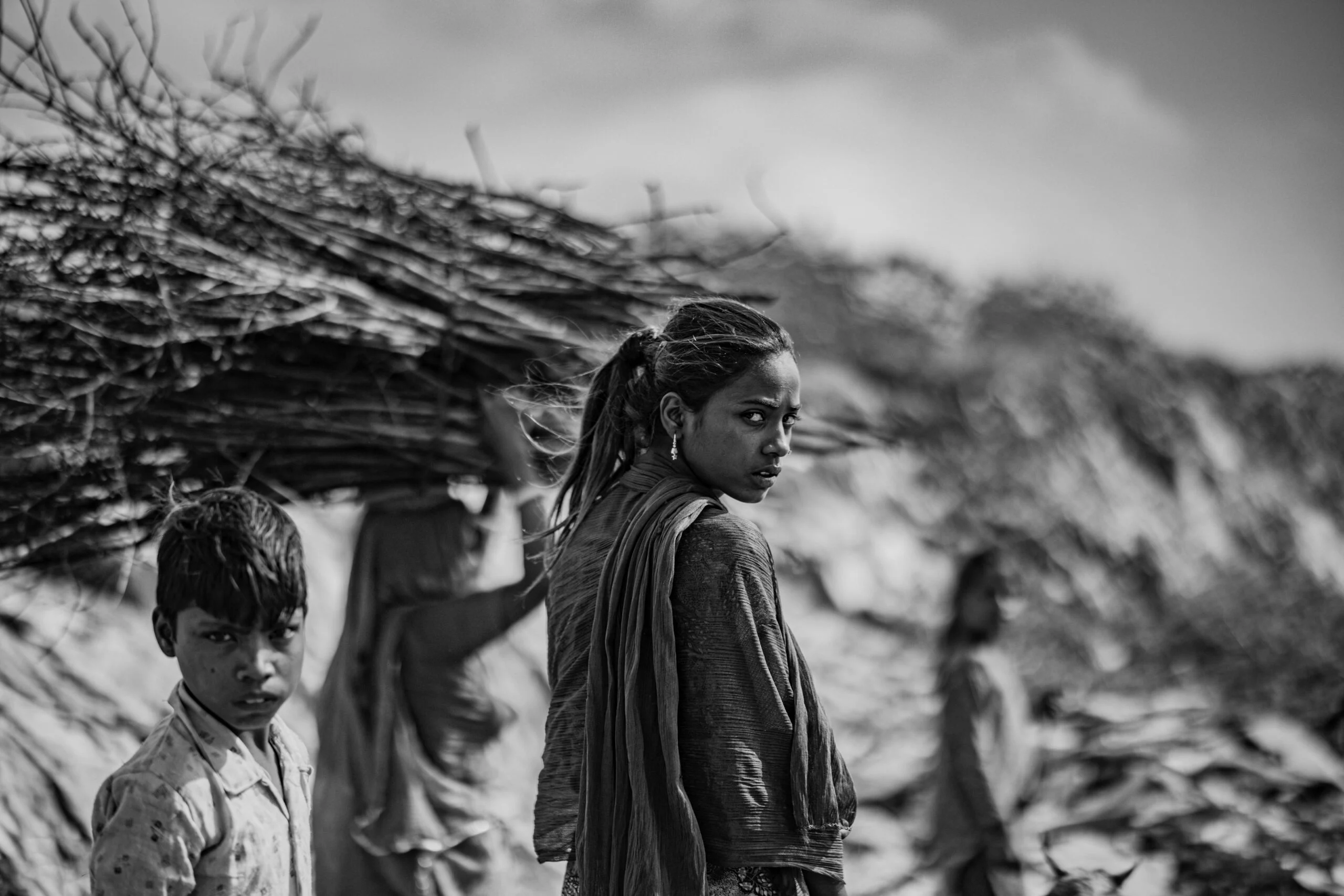
In the red-dust hills of Jharkhand and Bihar, thousands of children skip school every morning, not to play, but to crawl into narrow, unlit tunnels carved into hillsides. They scratch mica from rock faces with bare hands, breathe mineral dust that scars their lungs, and earn a few rupees a day so the family can eat. The mica they extract will travel halfway around the world, ending up as the shimmer in your eyeshadow, the sparkle on your lipstick, and the metallic finish in your car’s paint. This is the hidden supply chain behind the global cosmetics industry, and it runs on child labor.
What Is Mica and Why Does the World Need It?
Mica is a naturally occurring silicate mineral found in layered sheets that can be split into translucent flakes. Its unique optical properties, the way it refracts and reflects light, make it irreplaceable in hundreds of consumer products. The cosmetics industry depends on mica for the shimmer, glitter, and metallic effects in eyeshadows, highlighters, lipsticks, bronzers, blush, and foundations. Automotive companies use mica-based pearlescent pigments to give cars their distinctive metallic sheen. Electronics manufacturers rely on mica’s heat resistance and electrical insulation properties in capacitors and circuit boards. Even toothpaste uses mica as a mild abrasive and whitening agent.
Global demand for mica has grown steadily alongside the beauty industry’s expansion. The worldwide cosmetic-grade mica market was valued at over $650 million in recent years and is projected to grow significantly through the decade. India supplies approximately 60 percent of the world’s mica, and the Jharkhand-Bihar belt, a stretch of mineral-rich terrain spanning districts like Giridih, Koderma, Hazaribagh, Nawada, and Gaya, is the heart of that production.
The Mica Belt: Geography of Neglect
Drive two hours from Ranchi into the interior of Jharkhand, and the landscape begins to change. The trees thin out, the roads roughen, and the earth takes on a silvery hue from the mica dust that coats everything, leaves, corrugated iron roofs, the faces of children walking to the mine sites. This is the mica belt, a region that has been mined for over a century and yet remains one of the most underdeveloped areas of India.
Districts like Giridih in Jharkhand and Nawada in Bihar are home to hundreds of informal mica mines. Many of these are illegal, operating without government licenses, without safety inspections, without any formal oversight. The 2016 Mica Matters report by the Terre des Hommes foundation estimated that approximately 22,000 children were working in mica mines in Jharkhand and Bihar alone. Subsequent investigations by journalists, NGOs, and international observers have confirmed that the problem persists despite years of pressure from global brands and governments.
“Children as young as five are found working alongside their parents, sorting mica flakes, carrying loaded baskets on their heads, and entering mine shafts that have no structural support and can collapse without warning.”
Terre des Hommes Foundation, Mica Matters Report, 2016
The mines themselves are largely unregulated pits and tunnels dug into hillsides. Some are worked-out legal mines that communities continue to scavenge for scraps of mica that escaped earlier extraction. Others are entirely illegal operations, some run by middlemen who pay families by the kilogram with no documentation and no accountability. Safety standards are essentially nonexistent. There are no helmets, no reinforced tunnel supports, no emergency procedures. When a tunnel collapses, and they frequently do, the only tool for rescue is another set of bare hands.
Children in the Mines: Lives Stolen Before They Begin
The children who work in the mica mines are not an anomaly in their communities. In many villages across the mica belt, working in the mines is simply what children do, the same way their parents do, the same way their grandparents did. Poverty is the engine that drives this cycle. Families in these regions are among India’s most marginalized, predominantly from Scheduled Caste and Scheduled Tribe communities, landless, with minimal access to government welfare schemes, and largely invisible to the state apparatus that is supposed to protect them.
A typical working day for a child miner begins before sunrise. Younger children, many as young as six or seven, accompany parents or older siblings to the mine sites, where they sort through rubble to pick out mica flakes. Older children, from around ten or eleven, may enter the mine tunnels. The tunnels are narrow, sometimes less than a meter high, forcing children to crawl on their hands and knees while scraping mica from walls and ceilings. Ventilation is poor, temperatures inside can be extreme, and the silica and mica dust that fills the air with every movement causes silicosis, a progressive, incurable lung disease, with regular and prolonged exposure.
The Toll in Deaths and Injuries
Reliable mortality data from the mica belt is nearly impossible to obtain because so much of the mining activity is informal and undocumented. Deaths are rarely reported to authorities. When a child dies in a tunnel collapse, the family often accepts a small payment from the mine operator and buries their child quietly, fearing that reporting will mean losing access to the only income source they have.
Bachpan Bachao Andolan, the Nobel Peace Prize-winning organization founded by Kailash Satyarthi, has documented dozens of child deaths in the mica mines over successive years. Investigations by Reuters in 2016 confirmed the deaths of 13 children in six months in just one district. A 2019 investigation by the Guardian tracked the deaths of multiple children in Jharkhand’s Giridih district, where collapsed tunnels and accidents on steep mine faces were the most common causes. The true figure is believed to be far higher, a hidden death toll in an industry that has no incentive to keep count.
- Silicosis and respiratory disease from chronic dust inhalation
- Crush injuries and deaths from tunnel collapses
- Falls from steep mine faces and unstable terrain
- Cuts and lacerations from handling sharp mica flakes without gloves
- Eye damage from mica dust and flying mineral fragments
- Malnutrition worsened by physical labor without adequate caloric intake
- Stunted physical and cognitive development from early school dropout
Beyond physical injury, the education cost is devastating and compounding. A child who drops out of school at age eight to work in a mine has already foreclosed the possibility of secondary education, vocational training, or formal employment. Each year they spend in the mine deepens the poverty trap for themselves and for the next generation of their family.
The Cosmetics Supply Chain: From Mine to Makeup Counter
The journey from a mica-rich hillside in Jharkhand to the shelves of a luxury cosmetics retailer in Paris, London, or New York involves a deliberately opaque chain of transactions that makes accountability almost impossible to trace without sustained investigative effort.
At the bottom of the chain are the children and families who mine raw mica for a few rupees per kilogram. The raw mica is sold to local traders, small-scale middlemen who aggregate quantities and sell to larger processing units. These processing units clean, grade, and grind the mica into the fine powder that cosmetics manufacturers require. The processed mica then passes to pigment manufacturers, who coat mica particles with titanium dioxide or iron oxides to create the pearlescent and colored pigments sold to cosmetics companies. By the time mica appears in a product specification sheet sent to a brand’s procurement team, it lists the pigment manufacturer, a legitimate, registered business, as the source. The illegal mine in Giridih is five or six steps removed from that specification sheet, and nowhere visible in the documentation.
Which Brands Are Implicated?
Investigations by Reuters, the Guardian, Refinery29, and multiple NGOs have linked mica from India’s child-labor mines to some of the world’s most recognized cosmetics brands. In 2016, Reuters found that suppliers to L’Oreal, LVMH (which owns Christian Dior, Givenchy, and Benefit), Estee Lauder, Revlon, Chanel, and dozens of other brands sourced mica through supply chains that included child-mined material from Jharkhand and Bihar. Many of these brands publicly pledged to eliminate child labor from their supply chains after the stories broke.
By 2019 and 2020, follow-up investigations found that little had changed on the ground. The structural incentives that made child labor cheap and traceable mica expensive had not been altered. Some brands had shifted to synthetic mica, lab-grown mica particles that are chemically identical but produced in controlled facilities with no child labor risk. Others joined industry initiatives promising supply chain audits. The audits, however, were conducted infrequently, relied on self-reporting by suppliers, and rarely reached the level of the mine itself.
Supply Chain Level | Actor | Visibility to Brands |
|---|---|---|
Mine face (illegal/informal) | Children and families | None, undocumented |
Local trader | Village-level aggregator | Rarely audited |
Processing unit | Regional processor | Occasionally audited |
Pigment manufacturer | Large registered firm | Regularly audited |
Cosmetics manufacturer | Contract or in-house | Full visibility |
Brand | L’Oreal, Estee Lauder, etc. | Sees pigment supplier only |
The table above illustrates why supply chain pledges at the brand level often fail. The brand has full visibility only to the tier directly above it. The layers below that, where the child labor actually occurs, are structurally invisible unless the brand commits to deep-tier traceability, which is expensive, time-consuming, and rarely mandated by law.
The Legal Framework: Rights That Exist on Paper
India has a substantial body of law that prohibits child labor in hazardous industries. The Child and Adolescent Labour (Prohibition and Regulation) Act, originally passed in 1986 and significantly amended in 2016, explicitly bans children under 14 from working in any occupation and adolescents (14-18) from working in any hazardous occupation. Mining is listed as a hazardous occupation. The Mines Act of 1952 prohibits anyone under 18 from working in a mine. The Right to Education Act guarantees free and compulsory education for children aged 6 to 14.
These laws exist. Their enforcement in the mica belt, however, has been consistently, catastrophically inadequate. The state labor departments in Jharkhand and Bihar are understaffed, under-resourced, and often lack the political will to enforce laws against practices that provide income for politically marginal communities and profits for economically powerful interests. Illegal mines operate in remote terrain that requires effort to reach. Mine operators have advance warning of inspections. When children are found working, fines are minimal and rarely collected. The structural incentives for non-enforcement vastly outweigh the incentives for enforcement.
The Indian government has acknowledged the problem and launched several initiatives, including the National Child Labour Project, which operates residential schools for child laborers, aiming to rehabilitate children and reintegrate them into the formal education system. These programs have helped thousands of children but operate at a scale far smaller than the problem requires. They also do not address the underlying economic desperation that pushes families to send children to work in the first place.
NGO Interventions: What Is Actually Working
Despite the scale of the problem and the failure of state enforcement, several NGOs working in the mica belt have achieved genuine progress with approaches that combine community development, economic alternatives, and supply chain pressure on global brands.
Responsible Mica Initiative (RMI)
The Responsible Mica Initiative was founded in 2017 as a coalition of cosmetics companies, mica processors, and NGOs committed to eliminating child labor from the Indian mica supply chain by 2022. The initiative funds community programs in Jharkhand and Bihar focused on school retention, income support for families, women’s self-help groups, health clinics, and farmer training. By their own reporting, RMI had enrolled thousands of children in education programs and worked with over 100 villages by 2021.
Independent assessments of RMI’s impact have been mixed. The initiative acknowledges that the 2022 goal of elimination was not met and has reset its targets. Critics note that participation by major brands remains voluntary, that monitoring in informal mines is still limited, and that the initiative’s community programs, while valuable, cannot substitute for the economic transformation of regions where families have no alternative livelihood. Supporters point to the measurable reductions in child labor in villages where the initiative has active programs, and argue that engagement is more effective than disengagement from the supply chain.
Bachpan Bachao Andolan
Kailash Satyarthi’s Bachpan Bachao Andolan (Save Childhood Movement) has been working on child labor in India for over four decades. In the mica belt, BBA operates rescue missions, runs transit camps for rescued children, and works with local governments to register children in schools. BBA also conducts awareness campaigns in mica mining communities, training parents to understand the long-term cost of removing their children from education and the legal protections their children are entitled to.
The organization has been instrumental in pushing for stricter enforcement actions in Jharkhand and Bihar and has filed public interest litigation to compel government accountability on child labor in mining. BBA’s approach is explicitly rights-based: children in mines are not just a supply chain problem to be managed, they are rights-holders whose rights are being violated, and the state has an obligation to enforce those rights regardless of the economic inconvenience.
Kailash Satyarthi Children’s Foundation and NORAD Partnership
In partnership with the Norwegian development agency NORAD, the Kailash Satyarthi Children’s Foundation has funded school construction and teacher training in mica-belt villages, combined with direct cash transfers to families who keep their children in school. The conditional cash transfers are a critical innovation: they acknowledge that families cannot simply be told to keep children in school if the economic gap created by removing the child’s labor income is not bridged. The program has shown promising retention rates in districts where it operates.
Terre des Hommes
The Swiss children’s rights organization Terre des Hommes published the landmark Mica Matters report in 2016 that brought the scale of the crisis to global attention and directly triggered action from major cosmetics companies. TdH has continued to conduct ground-level research in the mica belt, monitor the impact of industry initiatives, and advocate for binding legal obligations on companies sourcing from high-risk supply chains.
The work of these organizations shows that change is possible when communities are supported with real resources and real economic alternatives. Across India, young Indian changemakers are transforming the lives of their communities, and the mica belt, too, has seen what determined community intervention can achieve.
The Synthetic Mica Question
One technological response to the child labor crisis in natural mica supply chains has been the development of synthetic mica, specifically fluorophlogopite, a lab-grown form of mica manufactured in controlled industrial settings in China, Japan, and increasingly elsewhere. Synthetic mica is chemically and optically very similar to natural mica. It can be produced to precise specifications, with consistent particle sizes and purity levels that are actually advantageous for cosmetics formulation. And its supply chain is entirely traceable, it comes from a factory, not from an informal mine.
A growing number of cosmetics brands have committed to transitioning to synthetic mica or to responsibly sourced natural mica with verified supply chains. Some indie beauty brands have made synthetic mica a marketing differentiator, with “conflict-free” and “child-labor-free” certifications prominently displayed on packaging. The Body Shop, e.l.f. Cosmetics, and several other brands have been recognized for their efforts to verify or replace their mica supply chains.
However, synthetic mica is not a complete solution, for two reasons. First, it is more expensive than natural mica, which creates a commercial incentive for brands to minimize its use or to source it only for premium product lines while continuing to use natural mica in mass-market formulations. Second, shifting demand entirely from Indian mica to synthetic mica sourced primarily from China would eliminate the income, however exploitative, that mica mining currently provides to hundreds of thousands of families in Jharkhand and Bihar who have no alternative. The most thoughtful development economists and NGO practitioners argue that the goal should not be to eliminate Indian mica from global supply chains but to make the extraction of Indian mica safe, legal, and fairly compensated for adults, while eliminating child labor through a combination of enforcement, economic alternatives, and community investment.
Consumer Power: What You Can Do
Consumer awareness has historically been one of the most effective forces for change in corporate supply chains. The campaigns that ended apartheid-era investment, that forced Western clothing brands to improve factory conditions in Bangladesh after the Rana Plaza disaster, and that pushed chocolate companies to address child labor in West African cocoa farms were all driven by consumers who refused to accept that convenience and low prices justified exploitation. The same logic applies to mica. It is worth remembering that India’s chemical waste and industrial pollution problems are not limited to mining, the cosmetics industry’s environmental and ethical footprint extends far beyond mica alone.
Check Before You Buy
Several organizations maintain databases and ratings of cosmetics brands based on their supply chain transparency and mica sourcing policies. The Responsible Mica Initiative publishes its member list. Good On You, an ethical fashion and beauty rating platform, includes supply chain transparency scores for major beauty brands. The Campaign for Safe Cosmetics tracks ingredient sourcing standards. Before purchasing a new cosmetics product, particularly eyeshadow, highlighter, bronzer, or loose powder, all products with high mica content, it is worth spending two minutes checking whether the brand has a credible, independently verified mica sourcing policy.
Ask Brands Directly
Brands respond to consumer pressure, especially when it appears organized and informed. Sending a direct message to a cosmetics brand on social media, asking specifically whether their mica is sourced from India, whether they are a member of the Responsible Mica Initiative, and what independent verification they have that their supply chain is child-labor-free, is a low-effort action with potentially high impact. Brands that receive many such queries are more likely to invest in supply chain transparency and to make that transparency a competitive advantage.
Support Ethical Brands and Certifications
Vote with your purchases. Brands that have made credible commitments to mica supply chain transparency deserve recognition and support. Look for brands that use certified synthetic mica, that are verified members of the Responsible Mica Initiative, or that can demonstrate direct relationships with tracked mining communities. Fair trade and ethical certification bodies are beginning to develop standards specifically for mica, following the model that transformed coffee and chocolate sourcing over the past two decades.
Advocate for Regulation
Voluntary industry initiatives, while valuable, have proven insufficient to eliminate child labor from global supply chains without legal backing. The European Union’s Corporate Sustainability Due Diligence Directive (CSDDD), passed in 2024, requires large companies operating in the EU to identify and address human rights and environmental impacts throughout their supply chains. Advocacy for equivalent legislation in India, in the US (where a draft Mica and Forced Labor Accountability Act has been proposed), and in other major markets would create binding obligations that go beyond current voluntary frameworks. Contacting elected representatives to support such legislation is a meaningful form of consumer advocacy.
The Path Forward: A Rights-Based, Development-Led Approach
There is no single action that will end child labor in India’s mica mines. The crisis is rooted in extreme poverty, caste-based marginalization, inadequate state presence in remote regions, and a global supply chain architecture that systematically obscures the human cost of raw material extraction. Addressing it requires action at multiple levels simultaneously.
At the community level, what works is the combination of economic alternatives for adult workers, conditional support for families to keep children in school, healthcare access, and women’s empowerment through self-help groups and financial literacy programs. Programs that provide only one of these elements tend to produce limited results; programs that provide all of them together have demonstrated meaningful, sustained reductions in child labor in the communities where they operate.
At the state level, what is needed is genuine enforcement of existing child labor laws, combined with a legal framework for artisanal and small-scale mica mining that brings informal miners into the regulated economy, with licenses, safety standards, and fair price floors. A legal, regulated artisanal mining sector is auditable. An illegal, informal one is not. Several advocacy organizations have proposed models for progressive legalization and formalization of the artisanal mica sector in Jharkhand and Bihar, arguing that this is the only realistic path to supply chain transparency at scale.
At the industry level, what is needed is binding due diligence requirements, investment in deep-tier supply chain traceability, and a willingness to pay fair prices that allow producers to meet safety and labor standards. The economics of the current system, in which brands pay prices that only work if child labor subsidizes the production cost, must change. This requires either regulatory pressure or consumer demand sufficiently strong to make ethical sourcing a commercial necessity rather than an optional premium.
And at the individual level, what is needed is awareness. Most consumers who use mica-containing cosmetics products genuinely do not know that child labor is a significant risk in the supply chain. The first step toward change is always the same: knowing.
India’s Children Deserve Better
The children of the Jharkhand-Bihar mica belt are not a statistic or a distant abstraction. They are children in the fullest sense, curious, playful, capable of learning and becoming, whose futures are being consumed by a global supply chain that has decided their labor is worth more than their childhood. They are Indian children, entitled under Indian law and the Indian Constitution to free education, to protection from hazardous labor, and to a childhood spent in school rather than in a mine.
India’s progress as a nation must be measured not only by GDP growth or the number of unicorn startups but by whether the most vulnerable of its children are protected, educated, and given a chance to contribute to that growth on equal terms. The mica mines of Jharkhand and Bihar represent a profound and continuing failure of that standard. Acknowledging the failure, as consumers, as citizens, as a society, is the first step toward ending it.
How Unite4India Is Working on This Issue
Unite4India believes in a unified, informed Indian society that refuses to look away from the most difficult truths about its own inequalities. The exploitation of children in supply chains that feed global consumption is one of those truths. We actively amplify the voices of researchers, NGOs, and community organizations working in the mica belt, and we advocate for the policy reforms and consumer awareness campaigns that can build pressure for change.
If you want to support the work of organizations directly intervening in the mica belt, providing education, economic alternatives, and legal advocacy, consider contributing to or volunteering with Bachpan Bachao Andolan, the Kailash Satyarthi Children’s Foundation, or Terre des Hommes India. Sharing this article is also a meaningful act: the more people understand what mica is and where it comes from, the harder it becomes for the industry to operate in the dark.
What you can do
- Share the evidenceSend this to one person who should know about child welfare.Share on WhatsApp
- Give an afternoonTeach, mentor, clean up, or lend your professional skills.Ways to volunteer
- Tell us what's missingKnow a story, a fact we got wrong, or a solution worth spotlighting?Suggest a story
Politically neutral. Every claim sourced. Report a correction.

No comments yet