Eco-Friendly Holi: Can India Celebrate Without Wasting Water?
Holi is water-intensive in one of the world's most water-stressed countries. This article looks at how to celebrate the festival while conserving water.
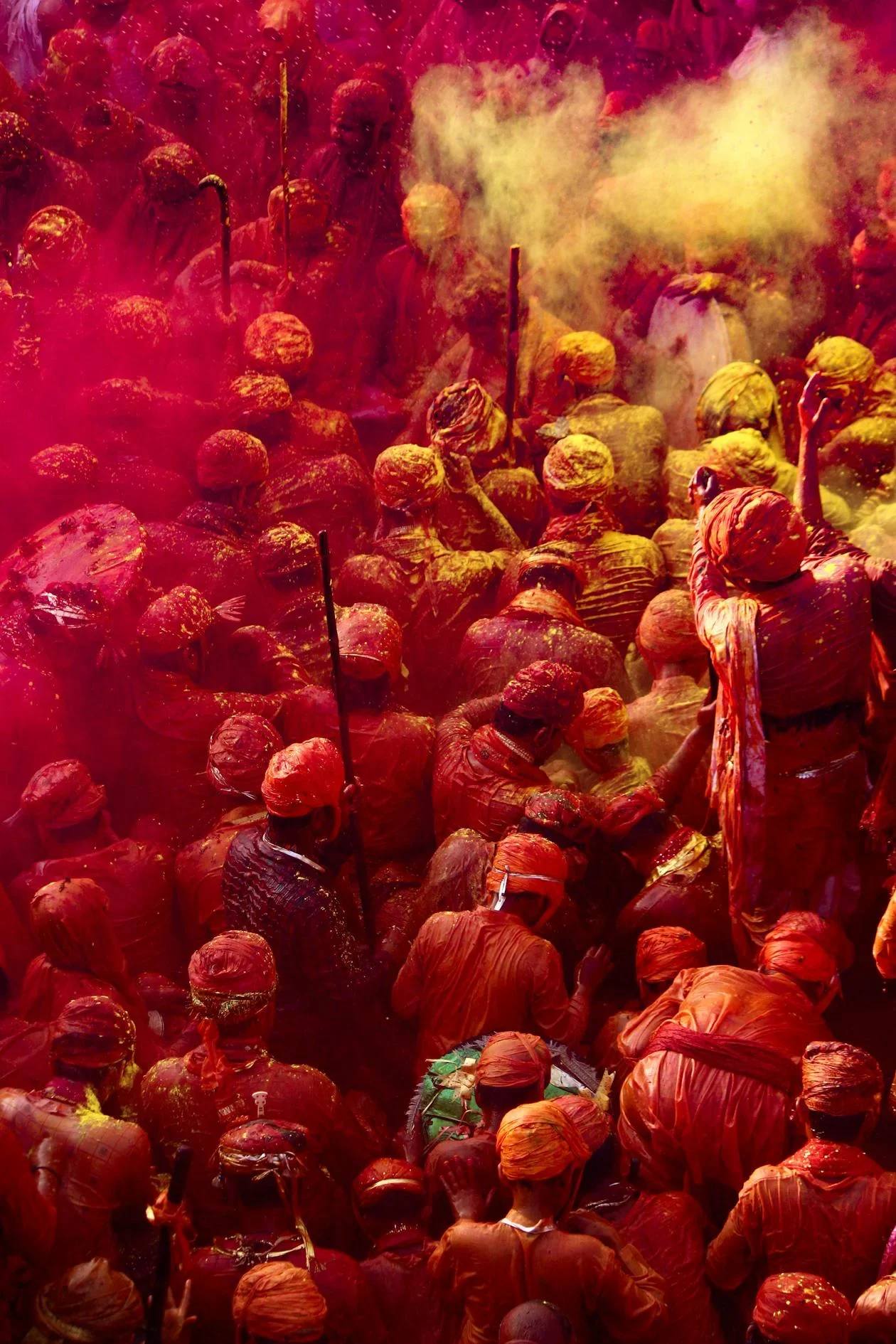
The Festival of Colours Has a Water Problem
Every March, India erupts in colour. Millions take to the streets for Holi, throwing gulal, spraying water guns, drenching each other from rooftop tanks. It’s joyous, communal, and ancient. It’s also extraordinarily water-intensive at a time when India can’t afford to waste a single drop.
A single household Holi celebration uses an estimated 50-80 litres of water. Multiply that across 200 million households that celebrate, and the number climbs to 10-15 billion litres of water consumed in a single day. That’s enough to supply drinking water to 30 million people for a month.
India is simultaneously the world’s most enthusiastic celebrator of Holi and one of the world’s most water-stressed nations. This isn’t about killing the festival. It’s about asking whether celebration and conservation can coexist.
India’s Water Crisis by the Numbers
Indicator | Data | Source |
|---|---|---|
Population facing severe water scarcity | 600 million | NITI Aayog |
Groundwater depletion rate | 61% of districts over-exploited or critical | Central Ground Water Board |
Cities facing “Day Zero” risk by 2030 | 21 major cities | NITI Aayog Composite Water Index |
Annual per capita water availability | 1,486 cubic metres (was 5,177 in 1951) | Ministry of Jal Shakti |
Agriculture’s share of water use | 89% | World Bank |
The numbers are stark. India has 18% of the world’s population but only 4% of its freshwater resources. While the science of Holi’s colours has fascinating chemistry, the water behind those water balloons tells a much harder story.
Where Does the Water Go?
Holi water waste comes from three main sources:
- Water balloons and pichkaris (water guns), The single largest source of Holi water waste. An average pichkari holds 2-5 litres. Children can refill dozens of times in a day.
- Hosing and bucket baths, Post-Holi cleanup uses enormous amounts of water. Removing synthetic colours from skin and clothes often requires multiple washes.
- Commercial celebrations, Rain dance events, club parties, and hotel Holi brunches use industrial water sprinklers. A single commercial Holi event can use 10,000-50,000 litres.
The problem compounds because Holi falls in March, precisely when India’s water reservoirs are at their lowest before the monsoon arrives in June. It’s the dry season in most of North India, the heartland of Holi celebrations.
What “Dry Holi” Actually Looks Like
The eco-friendly Holi movement has grown significantly over the past decade. What started as a niche urban trend is now mainstream enough to have corporate sponsors and celebrity endorsements. But the interesting developments are grassroots:
- Gulal-only celebrations, Playing with dry coloured powders (ideally organic/herbal) instead of wet colours. This is actually closer to the original Holi tradition, water guns were a later addition.
- Natural colours from flowers, Tesu (palash) flowers give orange, turmeric gives yellow, beetroot gives red, henna gives green. Communities in Rajasthan and UP are reviving these traditions.
- Seed-embedded gulal, Startups like Phool.co and local NGOs make coloured powders embedded with flower or vegetable seeds. After the celebration, the gulal decomposes and grows plants.
- Community pool celebrations, Instead of 500 households each filling buckets, one shared community celebration with controlled water use.
The Cities Leading the Change
Several Indian cities are now officially promoting water-conscious Holi:
Bengaluru, After its 2024 water crisis (when tanker water prices hit ₹3,000 for 6,000 litres), Bengaluru’s resident welfare associations now organize “dry Holi” events as the default. The city’s experience with community-driven solutions extends to festival planning.
Chennai, Still scarred by its 2019 “Day Zero” when all four reservoirs ran dry. Chennai’s Holi celebrations are now predominantly dry-colour events, often combined with rooftop garden open houses.
Jaipur, Where Holi is culturally massive, the municipal corporation now offers free organic gulal packets at community centres to discourage water-based celebrations.
Pune, Multiple housing societies have adopted “bucket challenges”, celebrating with exactly one bucket (15 litres) per person maximum, donated by the society.
But Can You Really Separate Holi from Water?
Here’s where it gets complicated. For many Indians, particularly in rural areas and traditional communities, water IS Holi. The drenching, the water fights, the rooftop water dumps are the celebration. Telling people to play “dry Holi” feels like telling them to celebrate Diwali without diyas.
There’s also a class dimension. Eco-friendly, organic, seed-embedded gulal costs ₹200-500 per packet. Regular synthetic gulal costs ₹20-30. When sustainability becomes expensive, it becomes exclusive. The same kind of divide that exists in digital access shows up in who can afford to celebrate “responsibly.”
The solution isn’t to make Holi joyless. It’s to make water-smart celebration accessible and affordable for everyone.
What Would Actually Work
Based on what’s already succeeding in pockets across India:
- Municipal free gulal distribution, If every city provided free organic/herbal colour packets at ration shops and community centres, the switch from wet to dry becomes economic, not just environmental.
- Rainwater harvesting mandates, Cities should mandate that every building that uses water for Holi must have functional rainwater harvesting. Connect celebration to replenishment.
- Ban water tanker sales during Holi week, In water-stressed cities, commercial Holi events buy thousands of tanker loads. Restricting this frees water for drinking needs.
- School-driven change, The most effective shift is happening through children. Schools teaching eco-friendly Holi crafts (making natural colours, seed bombs) are creating a generation that sees dry Holi as normal, not restrictive.
- Transparent water accounting, Publish how much water your city has before Holi, how much Holi uses, and what’s left. Make the trade-off visible.
A Festival That Can Evolve
Holi has survived for thousands of years because it adapts. The festival celebrated in Mathura is different from the one in Bengal, which is different from the one in Maharashtra. Regional variations have always existed. Water-smart Holi isn’t a betrayal of tradition, it’s the next evolution.
India’s water crisis isn’t coming. It’s here. 21 cities are projected to run out of groundwater by 2030. Every year, the gap between Holi month (March) and monsoon month (June) stretches a little wider as climate change delays rains.
The question isn’t whether India can celebrate Holi. Of course it can. The question is whether a billion people can find a way to celebrate that doesn’t deepen the crisis their children will inherit.
The answer, based on what thousands of communities are already doing, is yes. They just need the infrastructure, the affordability, and the honesty to make it happen at scale.
What you can do
- Share the evidenceSend this to one person who should know about environment.Share on WhatsApp
- Give an afternoonTeach, mentor, clean up, or lend your professional skills.Ways to volunteer
- Tell us what's missingKnow a story, a fact we got wrong, or a solution worth spotlighting?Suggest a story
Politically neutral. Every claim sourced. Report a correction.

No comments yet