Vandana ShivaThe Physicist Who Became India's Fiercest Anti-GMO Voice
Vandana Shiva: physicist, Chipko apprentice, Navdanya founder, Right Livelihood Award winner. Her seed sovereignty work and anti-GMO campaigns reshaped global food policy debates - and divided the scientific community. Here is a complete accounting of where she got it right and where the evidence parts ways.
In 1961, a 9-year-old girl from Dehradun watched Chipko organizers in Uttarakhand form human chains around trees marked for commercial felling. Thirty years later, that girl - Vandana Shiva - would become one of the most cited and most contested voices in global food sovereignty, winning the Right Livelihood Award and facing peer-reviewed criticism in the same decade. Her story is not a simple hero arc. It is a lens on how India navigates science, sovereignty, and the politics of seeds.
From Particle Physics to the Fields of Chipko
Vandana Shiva did not begin as an activist. She completed her PhD in philosophy of science at the University of Western Ontario in 1978, with a dissertation focused on the philosophy of quantum theory. Her academic foundation was in physics, not agronomy. What redirected her was a return to Uttarakhand in the early 1970s, where she witnessed the Chipko Andolan firsthand.
The Chipko movement, which began in Reni village in 1973 when Gaura Devi led 27 women to hug trees against felling contractors, was a watershed in Indian environmental activism. Shiva later described this encounter as her intellectual turning point - the moment she understood that ecology and economics were inseparable, and that who controls the land controls the food supply.
After her doctorate, she returned to India and in 1982 founded the Research Foundation for Science, Technology and Ecology in Dehradun. The institution focused not on laboratory science but on documenting the ecological knowledge of farming communities - the kind of knowledge that does not appear in peer-reviewed journals but feeds hundreds of millions of rural Indians.
Navdanya: The Seed Bank as Political Act
In 1991, Shiva founded Navdanya - a Sanskrit term meaning “nine seeds,” representing diversity. The initiative began as a response to the Green Revolution’s homogenizing effect on Indian agriculture. Where the Green Revolution introduced high-yield varieties that required specific chemical inputs, traditional Indian farming maintained hundreds of local rice, wheat, and pulse varieties adapted to specific soil and rainfall conditions. India’s own M.S. Swaminathan, the architect of the Green Revolution who later warned against monoculture risks, saw both sides of this equation clearly.
By 2023, Navdanya had established seed banks in 22 Indian states and helped conserve over 5,000 varieties of rice and 150 varieties of wheat, according to the organization’s own documentation. These are not just agricultural assets - they are genetic insurance against crop failure, climate volatility, and the market concentration that comes when a handful of corporations control global seed supply.
“Seeds are not just food. Seeds are the currency of life. When you control seeds, you control civilizations.”
Vandana Shiva, speaking at the World Social Forum, 2004
The comparison with other countries is instructive. South Korea, facing a similar risk of agricultural monoculture after its rapid industrialization, established the Rural Development Administration’s genebank in Suwon in 1985, which by 2020 held over 280,000 accessions of plant genetic resources (Rural Development Administration, Korea, 2021). Estonia, a country of 1.3 million people, maintains a national gene bank of 17,000 seed varieties as part of its food security infrastructure. India, with 1.4 billion people and the world’s second-largest agricultural land base, has one national gene bank (NBPGR, New Delhi) with roughly 450,000 accessions - impressive in absolute number but with serious questions about accessibility, duplication, and digitization.
Navdanya fills the gap between the national gene bank and the farmer’s field by putting seeds directly in community hands. This decentralized model has parallels in the Svalbard Global Seed Vault and in Norway’s extensive community seed library network, where local agricultural stations maintain working seed libraries that farmers can access and replenish each season. India’s organic farming experiments, as documented in the Sikkim model and the push beyond, demonstrate that biodiversity-first agriculture can work at state scale.
The BT Cotton Campaign: Where the Data Gets Complicated
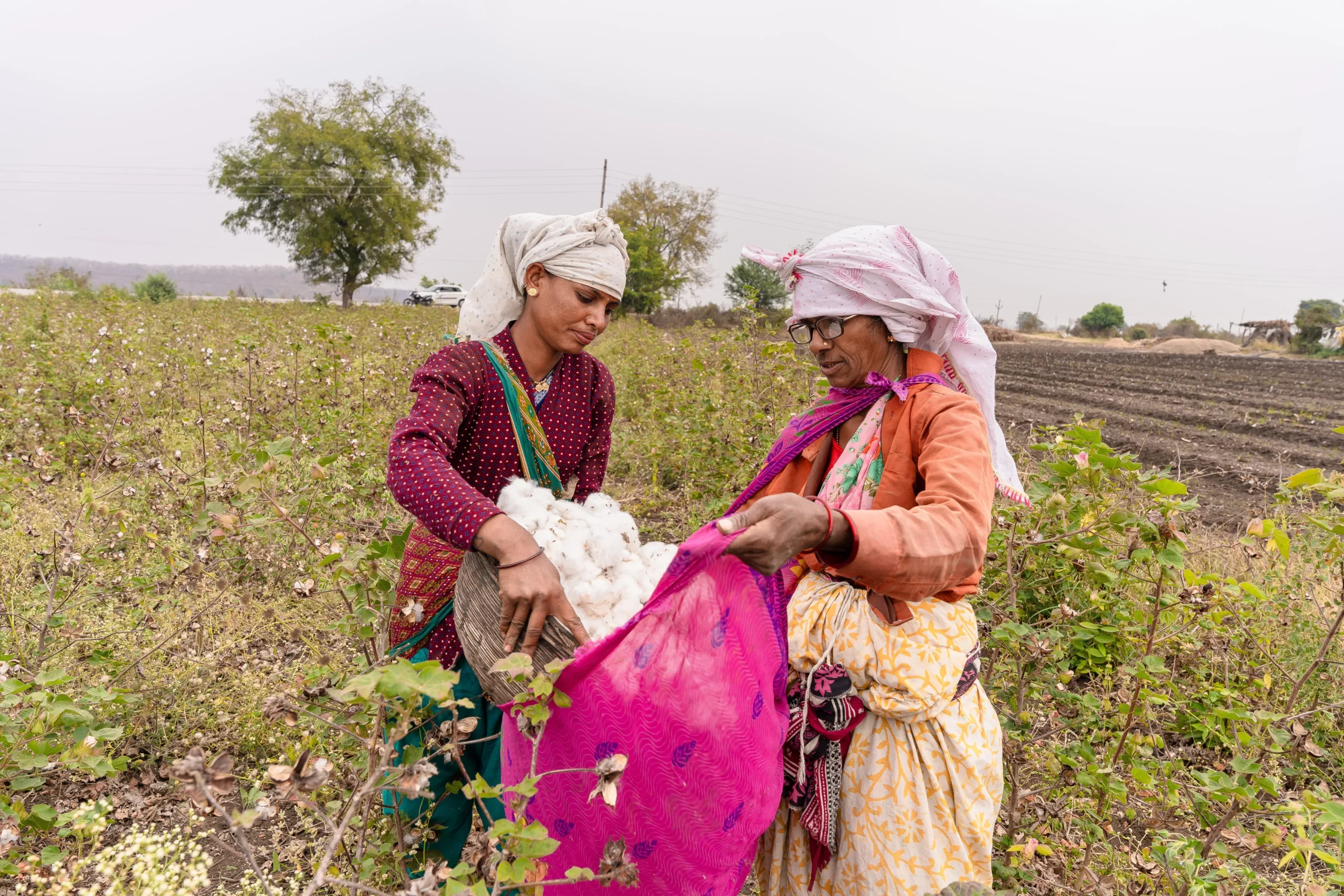
Shiva’s most prominent campaign has been against Bt cotton - the genetically modified variety that produces its own insecticide (Bacillus thuringiensis toxin) and was approved for cultivation in India in 2002. Her central claim has been that Bt cotton caused Indian farmer suicides by trapping farmers in debt cycles through expensive proprietary seed and increased input costs.
The National Crime Records Bureau data on farmer suicides is real and alarming: India recorded between 10,000 and 12,000 farmer suicides annually through the 2010s, with cotton-growing Maharashtra and Telangana consistently among the highest. But the causal chain Shiva draws - from Bt cotton specifically to suicide - has been disputed by multiple independent researchers.
- A 2008 study by Ian Plewis (University of Manchester) analyzing NCRB data found no statistical correlation between Bt cotton adoption rates and suicide rates by district.
- A 2012 study in the journal World Development by Sadashivappa and Qaim found that Bt cotton adoption was associated with higher yields (24% on average), lower pesticide costs, and higher farm incomes in surveyed districts.
- A 2014 analysis in PLOS ONE found that while farmer indebtedness and agrarian stress are real, they predate Bt cotton adoption and correlate more strongly with monsoon failure, land fragmentation, and credit access.
None of this means Shiva is entirely wrong. The NSSO’s 59th round survey (2003-04) documented that 40% of Indian farmers would prefer to leave farming if they could - a number that reflects structural agrarian distress that exists independent of any single crop technology. The World Bank’s 2008 World Development Report on agriculture noted that Indian input markets are dominated by a small number of suppliers in ways that limit farmer bargaining power. These systemic concerns are real. What is contested is whether Bt cotton caused them or merely operated within them.
The Right Livelihood Award and International Recognition
In 1993, Shiva received the Right Livelihood Award - often called the “Alternative Nobel” - for “placing women and ecology at the heart of modern development discourse.” The award, founded by Swedish-German diplomat Jakob von Uexkull in 1980, has gone to figures including Wangari Maathai (Kenya, who later won the actual Nobel Peace Prize), Aung San Suu Kyi, and the International Baby Food Action Network. The recognition placed Shiva alongside some of the 20th century’s most consequential civil society actors.
Where the Academic Critique Lands
The sharpest academic challenge to Shiva’s work came in Keith Kloor’s 2014 profile in Issues in Science and Technology and a series of pieces in Slate, which documented cases where Shiva made claims that contradicted peer-reviewed evidence - including the statistic that Bt cotton caused 270,000 farmer suicides, a number that misread NCRB data (the figure represents total farmer suicides over 16 years, not those linked specifically to Bt cotton).
Plant biologist Pamela Ronald and others have argued that Shiva’s blanket opposition to genetic modification (rather than opposition to corporate ownership of seed patents) conflates a technology with a business model. Golden Rice - a GM variety designed to address Vitamin A deficiency, which causes blindness in hundreds of thousands of children annually - has been opposed by Shiva despite being a non-commercial, publicly funded development with no royalties charged to subsistence farmers.
These are legitimate criticisms. A fair reading of Shiva’s body of work acknowledges both: she is right that corporate concentration in seed markets is a structural risk to food sovereignty, and she has sometimes overstated or misrepresented specific empirical claims in service of that broader argument.
What She Got Right - and Still Gets Right in 2026
By 2026, several of Shiva’s core arguments have been validated by evidence that was not available when she made them.
First: seed market concentration. In 2018, the OECD’s Agricultural Outlook Report noted that the top four agrochemical companies (BASF, Bayer, ChemChina/Syngenta, and Corteva/DowDuPont) controlled approximately 60% of the global commercial seed market after a wave of mergers. This is exactly the structural risk Shiva warned about in the 1990s. When four companies control the genetic inputs to global food production, the resilience of that system to corporate decisions - pricing, discontinuation, export restrictions - becomes a sovereign risk for every importing nation.
Second: the value of agricultural biodiversity. The FAO’s 2019 State of the World’s Biodiversity for Food and Agriculture report documented that 75% of the genetic diversity of agricultural crops was lost during the 20th century due to the replacement of traditional varieties with high-yield monocultures. This is what Navdanya was designed to counter, and the concern has only grown more urgent as climate change increases the variability of growing conditions.
Third: women’s role in seed stewardship. The NSSO Agricultural Census documents that women perform 60-80% of the labour in subsistence agriculture in India, including seed selection and storage - yet they own only 12.8% of agricultural land (Agricultural Census of India, 2015-16). Shiva’s insistence that women are the primary custodians of agricultural biodiversity, and that development models that bypass them will fail, has been borne out by the evidence from multiple programs including the NRLM’s Self-Help Group network for agriculture.
The Systemic Lever: Seed Sovereignty as Policy
The country that has most successfully operationalized seed sovereignty at a policy level is not India - it is France. France’s GNIS (Groupement National Interprofessionnel des Semences) system, reformed under European Union seed legislation, allows farmers to save, exchange, and sell traditional varieties through a certified “amateur seeds” registry. This creates a legal framework for biodiversity that does not depend on charity or activist seed banks - it is built into the commercial seed regulation.
India’s Plant Varieties Protection and Farmers’ Rights Act (2001) theoretically protects farmers’ rights to save, use, sow, and sell seed. In practice, enforcement is weak and awareness is low. The gap between legal provision and field reality is precisely where Navdanya has operated for three decades.
The lever that closes this gap is state-level seed policy. Maharashtra, Andhra Pradesh, and Odisha have experimented with non-pesticidal management programs that create market incentives for traditional varieties - in Andhra Pradesh’s Community Managed Natural Farming program, over 600,000 farmers across 1.3 million acres were farming without synthetic pesticides by 2021 (APZBNF data), with documented yield maintenance and input cost reduction. This is the operational proof that Shiva’s ecological agriculture model can work at scale - not because of her advocacy, but because state governments found the economics compelling.
What Every Indian Can Do: Five Levels of Citizen Action
- Personal level: Buy from farmers’ markets that stock traditional and heirloom variety produce. Ask vendors the variety name. When you know whether your rice is Gobindobhog or your tomato is Nati, you create market signal for diversity. Check whether your district has a seed library (many state agricultural universities maintain one).
- RWA/building level: If your housing society has a kitchen garden, grow one traditional variety from a seed library alongside commercial hybrids. Document what works in your specific microclimate. Share seeds with neighbors. Connect with local agricultural extension offices (Krishi Vigyan Kendras) which operate in every district and often distribute traditional seed kits for free.
- Ward/local body level: Ask your ward councilor whether the municipality has a food-safety policy that includes provisions for local market vendors selling traditional varieties. Many urban local bodies have powers to designate farmers’ market space - advocate for this.
- City/state level: Support state government community farming programs that operate on non-pesticidal lines. Andhra Pradesh’s zero-budget natural farming model is replicable. Write to your state agriculture minister requesting publication of the state’s protected variety list under the Plant Varieties Protection Act and its enforcement record.
- National level: Support the expansion of the National Bureau of Plant Genetic Resources (NBPGR) through RTI queries on its digitization progress and accessibility. The gene bank is publicly funded but its accession database is not fully publicly accessible - this should change. File RTI requests asking how many traditional varieties are in active conservation versus cold storage, and whether farmers can access seeds for cultivation.
The Lesson from a Complicated Hero
Vandana Shiva is not an uncomplicated figure, and treating her as one does a disservice to the genuine complexity of agricultural policy. She is a physicist who became an ecologist, an academic who became an activist, a voice for the global south who is celebrated in European conference halls as much as in Rajasthan fields. Her strongest arguments about seed sovereignty and women’s agricultural knowledge have been validated by decades of evidence. Her weakest arguments about specific technologies have been refuted by peer review.
What her career demonstrates is that the people who move policy are often not the people who are precisely right about every data point. They are the people who are right about the right things at the right time - and who create enough public pressure that policy systems must respond. India’s Plant Varieties Protection Act exists partly because of the political environment Shiva helped create. The Andhra Pradesh natural farming program exists partly because the political cost of agrarian distress, which Shiva and others documented relentlessly, became too high to ignore.
That is a different kind of contribution from laboratory science or legislative drafting - but it is not a lesser one. A developed India will need both.
Explore More on India’s Environmental and Food Policy
India’s path to food sovereignty and agricultural resilience involves far more than any one voice. Explore the Forgotten Heroes series for more stories of Indians who reshaped policy from outside the system.
What you can do
- Share the evidenceSend this to one person who should know about environment.Share on WhatsApp
- Give an afternoonTeach, mentor, clean up, or lend your professional skills.Ways to volunteer
- Tell us what's missingKnow a story, a fact we got wrong, or a solution worth spotlighting?Suggest a story
Politically neutral. Every claim sourced. Report a correction.


No comments yet