Seaweed Farming Is Quietly Becoming India's Best Coastal Climate Adaptation Story
Women's SHGs in Tamil Nadu's Ramanathapuram district are earning from Kappaphycus alvarezii seaweed cultivation. The economics work. The climate benefits are real, if modest. The risks from invasive species and monoculture are documented. Here is a full picture of India's seaweed sector - and what the Indonesia and South Korea models can teach.
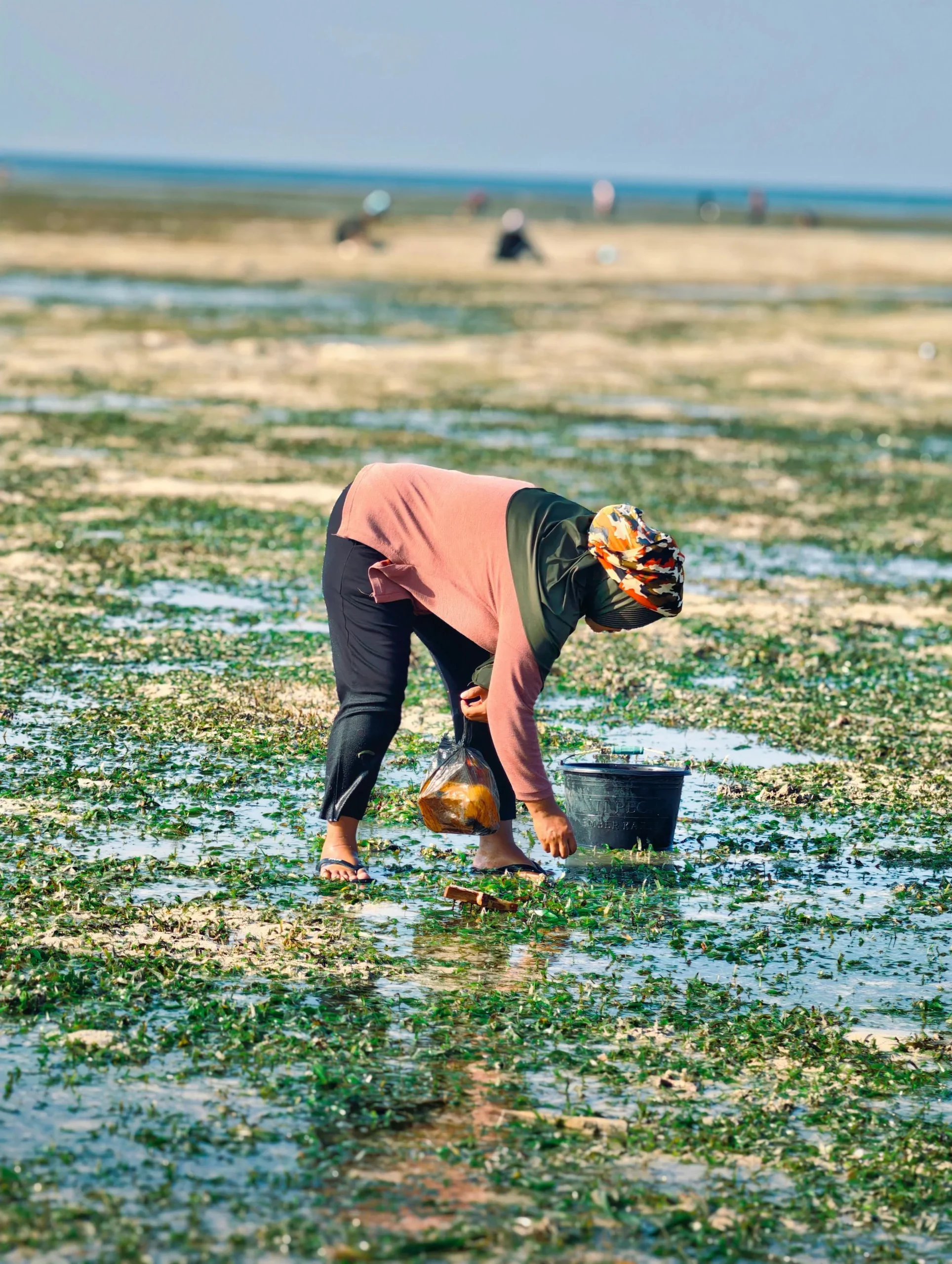
In the shallow coastal waters of Rameswaram, Tamil Nadu, Meenakshi and a dozen other women from a local Self-Help Group pull ropes heavy with wet Kappaphycus alvarezii - a red seaweed that dries to a product selling for Rs 60-80 per kilogram. In 2021, a good year, a single SHG could harvest and sell 500 kilograms of dried seaweed per month. The economics are real, the work is visible, and the climate benefit - seaweed absorbs carbon dioxide as it grows, does not require freshwater or fertilizer, and can restore coastal ecosystems - is attracting attention from researchers, government agencies, and international climate funds. This is not a silver bullet. But it is a genuine lever.
The Scale of the Opportunity: Tamil Nadu’s Seaweed Belt
India is the world’s sixth-largest seaweed producer by volume, according to FAO FishStat data. Tamil Nadu’s Gulf of Mannar and Palk Bay regions - specifically the districts of Ramanathapuram (Ramnad), Thoothukudi, and Tirunelveli - account for approximately 80% of India’s cultivated seaweed production. The crop variety is almost exclusively Kappaphycus alvarezii and Gracilaria species, both of which are used in carrageenan and agar extraction for food, pharmaceutical, and industrial applications.
The Central Marine Fisheries Research Institute (CMFRI), headquartered in Kochi, has been the primary research institution driving seaweed aquaculture development in India. CMFRI’s data from 2019-20 estimated national seaweed production at approximately 34,000 tonnes fresh weight annually, with Tamil Nadu contributing the majority. This is a fraction of India’s production potential - the country has over 8,000 km of coastline with suitable conditions for seaweed cultivation, but only a small percentage has been put into production.
The economics at the farm level are straightforward. A single rope line, seeded with Kappaphycus cuttings and maintained for 45 days in coastal waters, yields approximately 1-2 kg of fresh seaweed per meter of rope. A women’s SHG operating 100 rope lines would produce 100-200 kg fresh weight per cycle - approximately 10-20 kg of dried seaweed (the fresh-to-dry ratio is roughly 10:1). At Rs 60-80 per kg dry weight, a cycle yields Rs 600-1,600 per SHG per 45-day cycle, or roughly Rs 5,000-13,000 per month from a 100-line operation. This is supplementary income - not a replacement for fishing - but in communities where women have limited income-earning options, it is meaningful.
The Women’s SHG Model: Why It Works in Tamil Nadu
The Tamil Nadu seaweed farming model is explicitly organized around women’s Self-Help Groups, and the design reflects a specific social reality in Ramnad’s fishing communities. Men in these communities are primarily engaged in sea fishing - a more capital-intensive, weather-dependent, and physically demanding activity. Women, who traditionally process and market fish catches, have time and access to the coastal intertidal zone that makes seaweed cultivation accessible without boat access or significant capital investment.
The SHG model provides the institutional structure for collective action that individual farmers cannot achieve. Groups of 10-12 women pool their rope lines, share harvesting labor, collectively negotiate with buyers, and access credit through the Tamil Nadu Women’s Development Corporation (TNWDC) - which has provided subsidized loans and equipment grants for seaweed operations. The CMFRI’s technology transfer program provides training in cultivation techniques, post-harvest handling, and market access.
“Seaweed farming cannot magically solve climate change. But it could help coastal families survive it - and survive the next bad fishing season, and the season after that.”
A description of the seaweed sector’s realistic promise from The Better India, May 2026, summarizing CMFRI researchers’ position
The model has spread beyond Tamil Nadu. Odisha’s Puri and Ganjam districts and Gujarat’s Saurashtra coast have begun pilot seaweed cultivation programs modeled on Tamil Nadu’s SHG experience. In Lakshadweep, where fishing communities face acute economic pressure from depleted fish stocks, seaweed cultivation has been piloted as an alternative livelihood - though the smaller and more remote island communities face greater logistical challenges in accessing mainland markets.
The Climate Science: What Seaweed Actually Does and Does Not Do
The climate claims around seaweed require careful calibration. The enthusiasm is not unfounded, but the gap between headline claims and peer-reviewed evidence is significant.
- What is established: Seaweed photosynthesizes, absorbing CO2 from seawater. Growing seaweed does not require freshwater, fertilizer, or agricultural land - all of which are significant inputs in conventional farming. Seaweed farms create habitat that fish and invertebrates use as nursery areas. Some seaweed species, when added to livestock feed, reduce methane emissions from cattle enteric fermentation (this is the basis of several commercial programs in Australia and New Zealand).
- What is contested: Whether seaweed cultivation represents permanent carbon sequestration. When seaweed is harvested, processed, and consumed, most of the carbon returns to the atmosphere. For seaweed to function as a carbon sink, the carbon must be exported to the deep ocean or incorporated into durable products - and the pathway by which coastal seaweed achieves this in the Indian ocean environment is not well-established by peer-reviewed science.
- What is overstated: Some advocacy claims that seaweed farming could offset significant portions of global CO2 emissions. A 2021 analysis in Current Biology by Krause-Jensen et al. found that the climate mitigation potential of seaweed farming is likely smaller than optimistic estimates suggest when accounting for carbon release during decomposition and processing.
None of this undermines the value of seaweed farming for coastal livelihoods, food security, and ecosystem restoration. It does mean that climate finance support for seaweed programs should be evaluated on demonstrated impact rather than theoretical sequestration potential.
The Risks: Invasive Species and Monoculture
Tamil Nadu’s seaweed cultivation story has a documented downside that is important to acknowledge. Kappaphycus alvarezii - the dominant cultivated species - is not native to Indian coastal waters. It was introduced from the Philippines and Indonesia for aquaculture in the 1990s. In the Gulf of Mannar, where cultivation has been most intensive, escaped Kappaphycus has colonized coral reef areas, competing with and damaging coral ecosystems.
A 2010 study by CMFRI researchers documented Kappaphycus spread onto coral reefs in Vaan Island and Shingle Island in the Gulf of Mannar. The Central Marine Fisheries Research Institute has since developed cultivation protocols designed to prevent escape - using floating raft systems rather than bottom-seeded lines, and maintaining buffer distances from reef areas. But the risk is real and must be managed actively.
The monoculture risk is also present. A coastal economy that becomes heavily dependent on a single seaweed species is vulnerable to disease outbreaks, market price collapse, or climate-driven shifts in coastal water temperatures that affect Kappaphycus growth. Diversifying into multiple native seaweed species (India has over 1,000 seaweed species documented, of which many have commercial potential but have not been cultivated at scale) would reduce this risk. CMFRI has identified several native red and brown algae species with carrageenan and fucoidan content suitable for commercial cultivation, but the development work to make them cultivable at scale has not been funded at the level that Kappaphycus programs have received.
The Comparison: Indonesia and South Korea’s Seaweed Industries
Indonesia is the world’s largest seaweed producer, with annual production of over 10 million tonnes fresh weight (FAO 2022). The Indonesian industry employs approximately 3.5 million people directly in cultivation, processing, and trade - a scale that India’s industry, at roughly 34,000 tonnes, has not approached. The mechanisms behind Indonesia’s scale include: government-backed coastal farmer cooperatives with access to subsidized seed stock, a national quality certification system for export, and sustained investment in processing infrastructure (carrageenan extraction plants) located close to cultivation areas.
South Korea’s seaweed industry follows a different model. Korea is the world’s leading per-capita seaweed consumer - seaweed is a staple ingredient in Korean cuisine (miyeok for soup, gim for wrapping rice). Korea’s seaweed cultivation is dominated by Pyropia (nori/laver) and Saccharina japonica (kelp), both native species, and is valued at over $1 billion annually. Korea’s cultivation is concentrated in Jeolla Province in the south, where coastal conditions are ideal - a geographic concentration similar to Tamil Nadu’s Ramnad belt. The difference is vertical integration: Korean seaweed cooperatives have investment in processing, value-added products (seasoned and roasted gim), and export packaging that capture more of the value chain than Indian SHGs currently access.
India’s coastal seaweed farmers currently sell raw dried product to carrageenan processors (predominantly located in Tamil Nadu and Gujarat) who capture the processing margin. The farmer’s share of the value chain is the lowest margin segment. Moving processing capacity closer to cultivation areas - a model that Indonesia and Korea have both pursued - would increase farmer income without requiring increased production.
What Every Indian Can Do: Five Levels of Citizen Action
- Personal level: Add seaweed-based products to your diet and buying habits. Carrageenan is in most dairy products you consume. Direct-consumption seaweed products - kombu stock, dried wakame, seaweed-based face masks - are available from Indian brands including Seaweed India and Sea6 Energy. Consumer demand for Indian-produced seaweed products creates market pull that supports domestic cultivation pricing.
- RWA/building level: If your community is in a coastal district, advocate for awareness programs on coastal livelihood options. Connect with CMFRI’s regional labs (located in Chennai, Mandapam, and Karaikkal for the Tamil Nadu coast) which run training programs and can connect communities with SHG formation support for seaweed cultivation.
- Ward/local body level: In coastal panchayats, demand that the coastal zone management plan include designated seaweed cultivation areas with appropriate buffer zones from coral and seagrass habitats. The Coastal Regulation Zone (CRZ) rules permit traditional coastal livelihoods including seaweed farming - local bodies should be aware of this and incorporate it into livelihood planning.
- City/state level: Advocate for state government investment in community-level seaweed processing infrastructure. Tamil Nadu’s TNWDC model of SHG credit access is a template - other coastal states (Odisha, Andhra Pradesh, Kerala, Gujarat) should be pressed to replicate it. Write to your state fisheries department asking for the current status of seaweed cultivation policy and the number of active SHGs in the sector.
- National level: Support CMFRI’s funding for native seaweed species cultivation research. The risks of Kappaphycus monoculture are real - developing cultivation protocols for native species is the scientific work that will make India’s seaweed sector sustainable over 30 years rather than dependent on a single introduced species. RTI requests to the ICAR system asking about annual allocation to seaweed research versus other aquaculture would reveal whether this priority is reflected in budgets.
The Lever That Closes the Gap
India’s seaweed sector in 2026 is at a genuine inflection point. The foundational model works - Tamil Nadu’s SHG-based cultivation demonstrates viable economics for coastal women. The science on climate benefits is real, if more modest than headline claims. The risks (invasive species, monoculture, processing bottlenecks) are manageable with appropriate investment and regulation.
The lever is processing infrastructure. Indonesia achieved its seaweed scale not by dramatically increasing the number of farmers but by building the carrageenan and agar processing capacity that created market demand for raw seaweed at scale. India’s Tamil Nadu coast has the farming base. What it needs is investment in community-level processing that captures more of the value chain for farmers, reduces the power of intermediary processors, and creates the economic conditions in which seaweed farming becomes a stable multi-generational livelihood rather than a supplementary income source.
Explore India’s Environmental and Coastal Economy Stories
India’s coastal economies and environmental solutions are central to any credible development vision. Read about India’s organic farming revolution from Sikkim and how India’s hidden carbon debt in soil connects to the broader climate adaptation challenge.
The Nutrition Angle: Why Seaweed in India’s Diet Matters
India’s seaweed sector has focused primarily on industrial applications (carrageenan, agar) and export, while the direct nutritional value of seaweed consumption for Indian households has received comparatively little attention. Seaweed is a rich source of iodine, iron, calcium, and vitamins B12 and K - nutrients where Indian dietary surveys (ICMR-NIN National Nutrition Survey 2016-18) consistently document deficiencies across income levels.
Japan, where seaweed is a dietary staple consumed daily in multiple forms (nori in sushi, wakame in miso soup, konbu in dashi broth), has some of the lowest rates of iodine deficiency and thyroid disorders in Asia. Japan’s seafood and seaweed consumption patterns are associated with, though not solely responsible for, its exceptional longevity statistics. Korea’s seaweed soup (miyeok-guk) is given to new mothers post-partum for its nutrient density - a tradition grounded in genuine nutritional science.
India’s coastal communities - particularly in Tamil Nadu and Kerala - already consume some seaweed in traditional coastal cuisine. Expanding this into a broader public awareness of seaweed’s nutritional value would create domestic market demand that supplements industrial export markets and provides a more stable income floor for cultivating SHGs. School mid-day meal programs that incorporate seaweed-derived nutrients (iodized with local seaweed rather than chemical iodine) are being piloted in coastal Tamil Nadu with CMFRI collaboration - a pilot worth watching for scale-up potential.
What you can do
- Share the evidenceSend this to one person who should know about poverty.Share on WhatsApp
- Give an afternoonTeach, mentor, clean up, or lend your professional skills.Ways to volunteer
- Tell us what's missingKnow a story, a fact we got wrong, or a solution worth spotlighting?Suggest a story
Politically neutral. Every claim sourced. Report a correction.



No comments yet