India's Organic Farming Revolution: Sikkim and Beyond
In 2016, Sikkim became the world first fully organic state. A decade on, its model alongside Andhra Pradesh zero-budget natural farming revolution is challenging India to rethink its agricultural future.
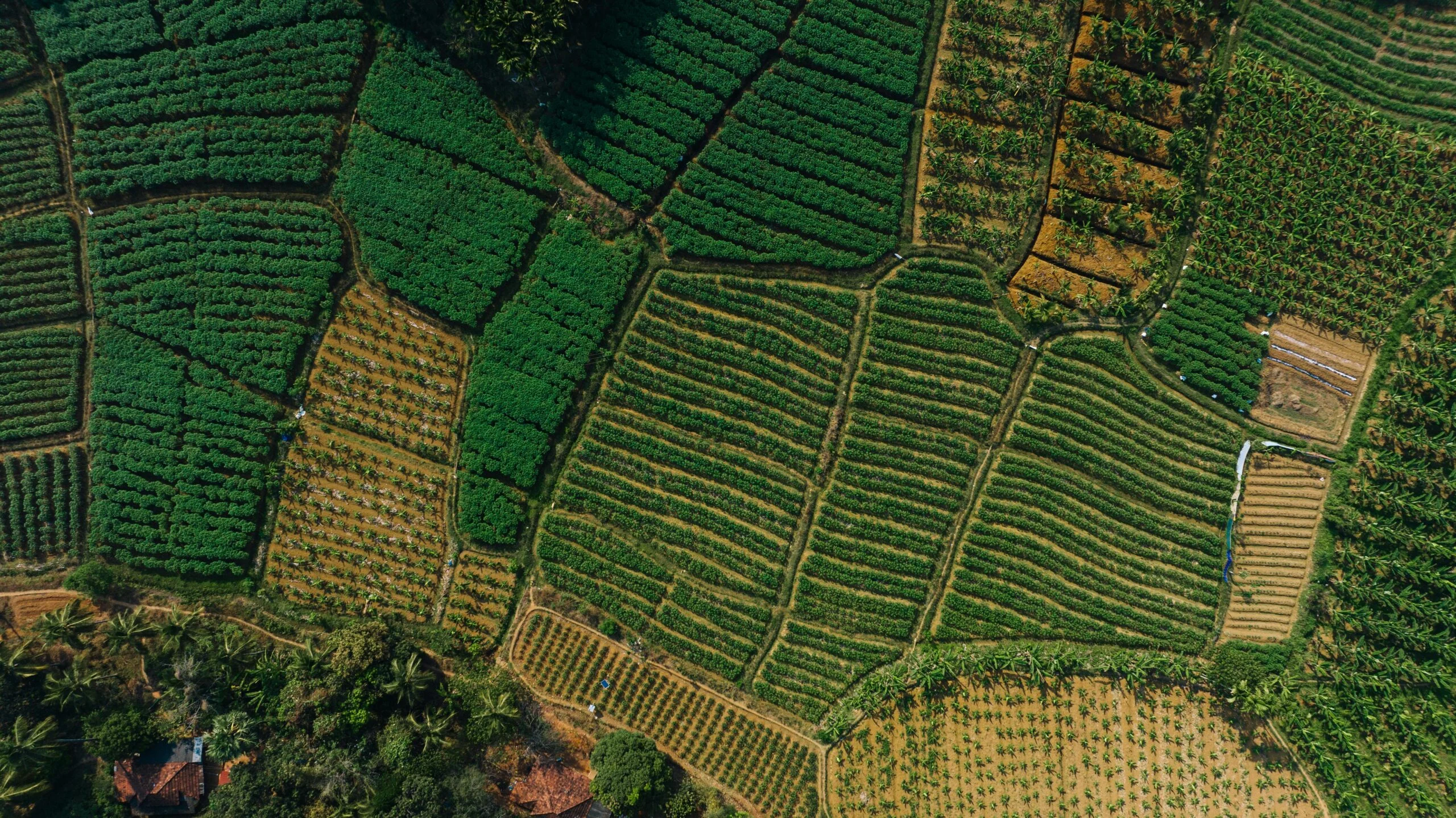
In a world racing toward industrial agriculture, one small Himalayan state quietly did the unthinkable. In 2016, Sikkim became the world’s first fully organic state - no synthetic pesticides, no chemical fertilisers, 100% certified organic across all 76,000 hectares of agricultural land. A decade on, its success is igniting a conversation that stretches from the terraced hillsides of Andhra Pradesh to the cotton fields of Punjab: can India feed itself without chemicals, and can it grow richer doing so?
How Sikkim Became the World’s First Fully Organic State
The journey began in 2003, not with a grand policy declaration but with a quiet political will. Then-Chief Minister Pawan Chamling announced that Sikkim would transition entirely to organic farming within a decade. Critics called it utopian. The state had barely 607,000 people and an agricultural economy that depended on cardamom, ginger, maize, and rice - crops that conventional wisdom said needed chemical inputs to scale.
What followed was methodical. The government phased out the sale of chemical fertilisers and pesticides across all 19 administrative blocks. Farmers received subsidised organic inputs - vermicompost units, bio-pesticide kits, organic certification support. A dedicated Sikkim Organic Mission was established. The state government worked with certification bodies like ECOCERT and IMO to bring farms into internationally recognised certification programmes. By 2016, the certification was complete. The United Nations Food and Agriculture Organization (FAO) awarded Sikkim its “Future Policy Award” - the Oscar of food and agricultural policy - recognising it as a global model.
What the numbers tell is remarkable. Organic farming coverage in Sikkim rose from near zero in 2003 to 100% by 2016. Over 66,000 farmers transitioned successfully. Cardamom exports - Sikkim’s signature crop - grew steadily. Organic produce now commands a 20–30% premium in both domestic and international markets. Tourism to the state surged as the “organic” brand became a draw. Today Sikkim is simultaneously a farming story, a branding story, and a proof-of-concept for what intentional policy can achieve.
The Chemical Pesticide Crisis India Cannot Ignore
To understand why Sikkim’s model matters, you have to first understand what conventional farming has done to the land, the water, and the people who work on it.
India is among the world’s top consumers of pesticides. According to data from the Ministry of Agriculture, the country uses over 50,000 metric tonnes of technical-grade pesticides every year. States like Punjab, Haryana, Maharashtra, and Andhra Pradesh account for the bulk of consumption. The Green Revolution’s legacy - celebrated for ending famines in the 1960s and 1970s - left behind a second, quieter crisis: groundwater contaminated with nitrates, soils stripped of microbial life, and farming communities with elevated rates of cancer, neurological disorders, and endocrine disruption.
The “cancer train” from Bathinda to Bikaner - documented by journalists and researchers for over a decade - became a symbol of this human cost. Villages in Punjab’s Malwa region reported cancer clusters that epidemiologists have linked to organochlorine and organophosphate pesticide exposure. A 2013 study published in the Journal of Epidemiology and Community Health found significantly elevated rates of cancer, stillbirths, and birth defects in districts with the highest pesticide consumption.
Soil degradation compounds the problem. Continuous chemical fertiliser application has reduced organic matter content in Indian soils from an average of 1.2% in the 1970s to below 0.5% in many districts today - well below the 1.5% threshold considered minimum for healthy crop production. The irony is brutal: more chemicals are now needed to produce the same output because the soil’s natural fertility has been destroyed by chemicals.
“We are borrowing fertility from our children’s future. Every kilogram of urea applied today is a debt we are leaving for the next generation of farmers.”
Dr. R. H. Richharia, agricultural scientist and advocate for traditional rice varieties
This is the context in which Sikkim’s organic revolution lands. It is not a feel-good story about pristine mountains and exotic cardamom. It is a hard-nosed argument that the chemical path is a dead end - economically, ecologically, and medically.
Zero-Budget Natural Farming: Andhra Pradesh Rewrites the Playbook
While Sikkim converted through top-down government policy, Andhra Pradesh took a different route - one built on farmer communities, ancient knowledge, and a radical idea that farming inputs could cost essentially nothing.
Zero-Budget Natural Farming (ZBNF), developed by agronomist Subhash Palekar, draws on traditional Indian farming practices and the science of soil microbiology. Its core premise: the soil already contains everything crops need to grow, and the key is not to add external inputs but to activate the biological life that was always there. The method uses four primary preparations - all made from cow dung and urine, which act as inoculants for soil microbes.
- Jeevamrutha: A fermented mixture of cow dung, cow urine, jaggery, pulse flour, and soil. Applied to fields, it dramatically increases microbial populations in the soil within days.
- Bijamrutha: A seed treatment using diluted cow dung and urine that protects seeds from soil-borne fungi and promotes germination.
- Acchadana (mulching): Covering the soil with crop residues, leaves, and biomass to prevent evaporation, build organic matter, and suppress weeds.
- Whapasa (moisture management): The concept that plants need air-water balance in the soil, not waterlogging - reducing irrigation needs by up to 30%.
Andhra Pradesh’s Rythu Sadhikara Samstha (RySS), a farmer-producer organisation backed by the state government, began scaling ZBNF in 2015. The results were startling. By 2024, over 800,000 farmers in Andhra Pradesh had adopted ZBNF across more than 800,000 acres. The average input cost saving per farmer per acre was reported at Rs 8,000–12,000 per season. In a state where a smallholder might farm 2–3 acres, this can translate to Rs 40,000–50,000 in saved costs per year - a significant share of household income.
Yield data has been more contested. Critics, including some agricultural economists, argue that ZBNF yields are lower than high-input conventional farming in the short term, particularly for paddy and cotton. Proponents counter that when input costs are factored in, net profit per acre is higher under ZBNF - and that yield improvement follows after 3–5 years as soil health recovers. A 2019 evaluation by the National Institute of Agricultural Economics and Policy Research found mixed results: ZBNF farms showed comparable yields to low-input conventional farms, with significantly better profitability once input costs were subtracted.
What is not in dispute is the adoption momentum. The Andhra Pradesh government committed to making the state 100% natural farming by 2027 - an ambition on the scale of Sikkim’s, but for a state with 4.9 million farm households instead of 66,000. If it succeeds even partially, it will be one of the most significant agricultural transitions in world history.
The Science Behind the Revolution: Why Natural Farming Works
Sceptics often frame organic and natural farming as a retreat from science. The evidence says otherwise. The science of soil ecology has undergone a revolution of its own in the past two decades, and what researchers have discovered upends many of the assumptions on which industrial agriculture was built.
A teaspoon of healthy agricultural soil contains more microorganisms than there are people on Earth - bacteria, fungi, nematodes, protozoa, arthropods, all forming a web of relationships that breaks down organic matter, fixes nitrogen from the atmosphere, solubilises phosphorus from mineral deposits, and suppresses pathogenic organisms. This invisible infrastructure is what makes soil fertile. And it is precisely what synthetic fertilisers and pesticides systematically destroy.
Nitrogen fertiliser application, for example, suppresses the activity of nitrogen-fixing bacteria like Rhizobium - because the bacteria no longer need to fix nitrogen when the plant receives it directly. Over years of use, the bacterial populations decline and the farmer becomes permanently dependent on purchased nitrogen. The same dynamic plays out with phosphorus-solubilising fungi and many other soil organisms.
Organic amendments - compost, vermicompost, jeevamrutha - work differently. They add carbon to the soil, which feeds microbial life. They introduce inoculants that help re-establish beneficial organisms. Crucially, they build soil organic matter, which improves water retention, protection against groundwater contamination, aeration, and the soil’s buffering capacity against drought and flood. Research from the Rodale Institute’s 30-year Farming Systems Trial - the longest-running comparative study of organic vs conventional farming - found that organic systems matched conventional yields while building soil organic matter, using 45% less energy, and sequestering carbon.
Factor | Chemical Farming | Organic/Natural Farming |
|---|---|---|
Input Cost (per acre, avg.) | Rs 15,000–25,000 | Rs 3,000–8,000 |
Soil Organic Matter (10 yr trend) | Declining | Improving |
Groundwater Impact | Nitrate contamination | Minimal |
Carbon Sequestration | Net emitter | Net sequester |
Price Premium (export) | Standard market rate | 20–40% above standard |
Dependency Risk | High (input costs volatile) | Low (on-farm inputs) |
Export Opportunities: India’s Organic Edge in Global Markets
India is already the largest exporter of organic products by volume among developing countries - but the value story is only beginning. The global organic food market was valued at approximately US$220 billion in 2024 and is projected to exceed US$380 billion by 2030. Europe and North America are the dominant markets, and demand for certified organic produce from South Asia is rising consistently.
India’s organic exports reached Rs 9,323 crore (approximately US$1.1 billion) in 2023–24, according to the Agricultural and Processed Food Products Export Development Authority (APEDA). The top exported products include processed food, oilseeds, cereals, millets, spices, tea, and fresh vegetables. Destinations include the USA (largest market), European Union, Canada, Switzerland, and Australia.
The opportunity gap is significant. India has 3.56 million certified organic producers - the most of any country in the world - but many of their products cannot access premium export markets because of certification fragmentation, cold-chain infrastructure gaps, and inconsistent quality standards. The Participatory Guarantee System (PGS) used widely for domestic organic certification is not accepted by the EU or the US, meaning farmers certified under PGS need separate third-party certification to export.
Sikkim’s Model for Export-Ready Organic Farming
Sikkim’s approach addresses this directly. The state invested in ECOCERT certification - internationally recognised - for all its certified farmers. It created a centralised procurement system through the Sikkim Organic Mission that aggregates produce, maintains quality standards, and markets under a unified “Organic Sikkim” brand. This brand now commands premiums in European supermarkets, specialty food stores in Dubai, and urban premium grocery chains across India.
For cardamom - Sikkim’s most valuable export crop - organic certification has been a game-changer. Organic large cardamom from Sikkim sells at a 35–50% premium over conventional cardamom in international markets. Ginger, another significant crop, shows similar dynamics. As the “Organic Sikkim” brand grows, the premium is not just on individual products but on geographic origin - a model similar to Darjeeling tea’s GI tag.
The lesson for other states is clear: the route to capturing export value is not just in growing organically but in certification, branding, and aggregation. A smallholder in Andhra Pradesh growing organic paddy without certification earns the same as a conventional farmer. The same paddy with EU-recognised organic certification and access to a dedicated export channel can earn 30–40% more per quintal.
The Challenges: What Stands Between Vision and Scale
The organic revolution is real, but it faces obstacles that are just as real. Honest accounting of the challenges is what makes the Sikkim and Andhra Pradesh examples useful - because those states had to solve exactly these problems.
The Transition Period Problem
Organic certification typically requires a three-year transition period during which the farmer uses no synthetic inputs but also cannot sell as certified organic - meaning they bear all the costs of transition without the price premium. For a farmer with a 2-acre holding and no savings buffer, this can mean three years of financial stress. Many give up and return to chemicals.
Sikkim addressed this with direct government subsidies during the transition period. Andhra Pradesh’s RySS provides intensive handholding - field-level “community resource persons” who work with farmer clusters to share costs, troubleshoot problems, and document yield data. Both models require sustained government support; they do not work on market incentives alone during the transition phase.
Yield Risk Perception
Farmers, rightly, are risk-averse. The chemical package was sold to them with a guarantee: follow the schedule, and you will get a predictable yield. Organic farming puts responsibility back on the farmer’s observation and judgment - when to apply jeevamrutha, how to read soil moisture, which companion crops deter pests. This is more demanding, more knowledge-intensive, and less forgiving of mistakes in the first two years.
Extension services are the answer, but India’s agricultural extension system is chronically underfunded. The ratio of extension workers to farmers is approximately 1:1,000 in most states, against a recommended ratio of 1:400. Andhra Pradesh has supplemented this with digital tools - RySS operates a mobile app for ZBNF guidance that has reached over 500,000 farmers - but digital literacy gaps persist in the oldest farmer demographics.
Market Infrastructure Gaps
Growing organic produce is only the first step. Getting it to a buyer who will pay a premium requires post-harvest handling infrastructure that most rural areas lack: cold storage, grading and sorting facilities, packaging that meets export standards, and logistics that minimise transit losses. India loses an estimated 15–20% of its horticultural produce to post-harvest losses. For organic produce - which often lacks the chemical preservatives used in conventional supply chains - the loss rate can be higher.
The government’s One District One Product (ODOP) scheme has made some headway by identifying and investing in value chains for specific crops by district. The Pradhan Mantri Formalisation of Micro Food Processing Enterprises (PM FME) scheme provides financing for small food processors. But the gap between farm and export-quality supply chain remains vast for most of India’s organic farmers.
Other States Joining the Revolution
The momentum is no longer confined to Sikkim and Andhra Pradesh. Across India, states are developing organic missions with varying degrees of ambition and execution.
Himachal Pradesh has declared ambitions to become the country’s second fully organic state, building on its apple-growing heritage. The state has already converted significant acreage in tribal areas to organic certification under the Paramparagat Krishi Vikas Yojana (PKVY) - the central government’s flagship organic promotion scheme.
Kerala has adopted a “chemical-free Kerala” campaign that, while not yet a mandatory transition, provides technical support and market linkages to farmers making the shift. The state’s high-value crops - spices, coconut, banana - have significant export premium potential under organic certification.
Uttarakhand declared itself an organic state in 2017, though implementation has been uneven. The state’s advantage is its large area of rainfed, smallholder farming that was never fully integrated into the chemical input system - a de facto baseline that makes formal certification more accessible than in Punjab or Haryana.
Nagaland and Mizoram in the northeast are pursuing organic transitions for their high-value crops - Nagaland for its famous Raja Mircha (ghost chilli) and Mizoram for its spices and specialty vegetables. The northeast as a whole benefits from low historical chemical input use, making organic certification relatively straightforward compared to states with heavy chemical legacies.
The National Mission for Sustainable Agriculture (NMSA) and PKVY together have covered over 5 million hectares of organic farming area nationwide as of 2024. India’s total certified organic area stands at approximately 3.56 million hectares - still a fraction of the 140 million hectares under cultivation, but growing at 20% per year.
What Urban India Can Do: The Consumer Side of the Revolution
The organic farming revolution is not only a story about farmers. It is equally a story about the choices consumers - particularly urban consumers - make every day at the vegetable market, the grocery store, and online.
India’s organic food retail market is growing at 25–30% annually. Cities like Bengaluru, Pune, Delhi, and Hyderabad have seen an explosion of organic-focused grocery stores, community-supported agriculture (CSA) networks, and direct-from-farm delivery services. Platforms like BigBasket, Nature’s Basket, and dozens of regional players have made organic produce accessible to middle-class households in most tier-1 cities.
But the price premium remains a barrier for many households. A kilogram of organic tomatoes can cost 1.5–2x the price of conventional tomatoes at a supermarket. For low- and middle-income urban families spending 40–50% of income on food, this is not a small ask. Bridging the price gap requires both supply-side efficiency gains (as organic farming scales, unit costs drop) and demand aggregation (bulk buying through office groups, resident welfare associations, and subscription models).
The Farmers’ Markets movement has been one of the most effective consumer-side interventions. Organic farmers’ markets in cities like Bengaluru’s Jayanagar and Delhi’s Dilli Haat cut out multiple layers of intermediaries, allowing farmers to earn close to retail price while offering consumers better prices than specialty grocery stores. The Sahaja Samrudha cooperative in Karnataka, Organic India, and multiple state government-run “organic mandis” have created direct buyer-seller relationships that make the supply chain both shorter and more transparent.
“When you buy organic directly from a farmer, you are not paying a premium for a lifestyle choice. You are paying a fair wage for labour that chose not to poison itself or the land to grow your food.”
Kavitha Kuruganti, Alliance for Sustainable and Holistic Agriculture (ASHA)
The Climate Connection: Organic Farming as a Climate Solution
India has committed to Net Zero carbon emissions by 2070 and to reducing the emissions intensity of its GDP by 45% by 2030 relative to 2005 levels. Agriculture - which accounts for approximately 14% of India’s greenhouse gas emissions - is a critical sector for both mitigation and adaptation. Organic and natural farming sits at the centre of both objectives.
Conventional agriculture is a significant greenhouse gas emitter. Nitrogen fertiliser production alone accounts for roughly 1.5% of global energy consumption. The nitrous oxide emissions from nitrogen fertiliser application are particularly damaging - nitrous oxide has 265 times the warming potential of carbon dioxide over a 100-year period. Synthetic pesticide manufacturing adds further emissions.
Organic farming reverses several of these dynamics. Compost and vermicompost application build soil organic matter, which sequesters atmospheric carbon in stable, long-lived compounds. Reduced tillage, which is compatible with organic systems, further builds organic carbon in topsoil. Research by the Indian Council of Agricultural Research (ICAR) has found that organic farms in India sequester an average of 0.4–0.8 tonnes of carbon per hectare per year, compared to net emissions from conventionally managed soils.
On the adaptation side, organic soils’ higher organic matter content gives them significantly greater water-holding capacity - critical as rainfall patterns become more erratic under climate change. Farms with 1% more soil organic matter can hold an additional 20,000 litres of water per acre. In the context of droughts that are becoming more frequent and more severe in the Deccan plateau, Vidarbha, and Bundelkhand, this is not an academic number. It is the difference between a crop and a failed harvest.
Policy Recommendations: Scaling the Revolution Nationally
The Sikkim and Andhra Pradesh models offer a clear set of policy lessons that central and state governments can apply at scale:
- Transition period income support: Direct income transfers to farmers during the 3-year certification transition period, to de-risk what is currently the most vulnerable phase of the shift. This could be funded through a reallocation of a fraction of the Rs 1.6 lakh crore annual fertiliser subsidy.
- Strengthen extension services with technology: Scale Andhra Pradesh’s community resource person model nationally. Use mobile apps, WhatsApp-based advisory groups, and Krishi Vigyan Kendra networks to extend ZBNF knowledge to farmer clusters across states.
- Harmonise certification: Develop a single, internationally recognised organic certification pathway that serves both domestic and export markets, replacing the current fragmented PGS/NPOP dual system for farmers who intend to export.
- Invest in post-harvest infrastructure: Cold storage, grading, processing, and packaging infrastructure is the missing link between organic farming and export premium capture. NABARD rural infrastructure funds should prioritise organic supply chain gaps.
- Government procurement of organic: Central and state government food procurement - for midday meal schemes, ICDS, and public distribution systems - should include certified organic produce quotas, creating a guaranteed demand signal that reduces market risk for transitioning farmers.
- GI tagging for organic clusters: Replicate the Darjeeling tea and Sikkim cardamom model - geographic indication plus organic certification - for high-value crop clusters across India. GI tags create defensible brand premiums that benefit entire farming communities.
Young Farmers and the New Agriculture Movement
Perhaps the most encouraging signal in India’s organic farming story is who is driving it. Increasingly, it is young people - educated, digitally connected, often with experience in cities or abroad - who are returning to farming not as a last resort but as a deliberate choice, and who are choosing organic methods from the start.
Across Karnataka, Maharashtra, Tamil Nadu, and Telangana, a new generation of farmer-entrepreneurs has emerged. They combine traditional knowledge with modern agronomy. They use soil testing kits. They watch YouTube videos on permaculture and food forests alongside traditional videos on jeevamrutha preparation. They sell directly through Instagram, WhatsApp groups, and farm-to-fork platforms. They think in terms of gross margins, not just yields.
These young farmers are also creating networks. The Organic Farmers’ Collective of India, the Alliance for Sustainable and Holistic Agriculture, and dozens of regional movements connect practitioners, share knowledge, and advocate collectively for policy support. These networks are the living infrastructure of the revolution - more resilient than any government scheme because they are self-organised, self-funded, and driven by shared conviction.
The IITs and IIMs have begun to engage with agricultural entrepreneurship in ways that were unimaginable a decade ago. Agricultural startups with roots in organic farming - from AI-powered soil testing platforms to direct-to-consumer organic delivery to agri-input manufacturing using bio-fertilisers - attract venture capital and incubation support at India’s top institutions. The intersection of technology, enterprise, and organic farming is creating a new category of agricultural professional that India has never seen before.
Sikkim’s Ongoing Lessons: What the Rest of India Must Learn
A decade after its organic certification, Sikkim continues to evolve its model and export its learning. The state government has built an Organic Agriculture Research Institute to study outcomes, document best practices, and support farmer adaptation. International delegations from Sri Lanka, Bhutan, Nepal, and several African nations have visited to study the transition process. The Sikkim model has been cited in reports by the IPCC, FAO, and the UN Special Rapporteur on the Right to Food as a viable pathway for small and medium agricultural economies.
But Sikkim’s leaders are also candid about its limits. The state’s small size, relatively homogeneous terrain, limited crop diversity, and high dependence on a few cash crops (cardamom, ginger) made transition more manageable than it would be for a large, diverse agricultural state. Replicating its model in Maharashtra’s cotton belt or Uttar Pradesh’s wheat and sugarcane system requires substantially more complex interventions.
What is transferable is the political will - the decision, backed by policy and funding, that chemical farming will not be the state’s future. That decision, taken by one small mountain state in 2003, has started a conversation that India can no longer afford to postpone.
Conclusion: A Revolution Worth Joining
India’s organic farming revolution is underway. It is not uniform, not fast enough, and not yet supported by the policy architecture it needs - but it is real, growing, and increasingly impossible to ignore. From Sikkim’s terraced cardamom gardens to the cotton fields of Andhra Pradesh, from urban rooftop farms to the young entrepreneurs building digital supply chains for organic produce, a different kind of agriculture is being built farm by farm.
The stakes are not abstract. They are the health of 140 million farming households, the safety of the groundwater that 600 million Indians depend on, the climate resilience of a food system increasingly stressed by heat, drought, and flood. They are also the economic futures of communities whose farms could be worth far more - in export premiums, in soil capital, in reduced healthcare costs - if they made the transition to organic.
Sikkim proved it is possible. Andhra Pradesh is proving it can scale. The rest of India is watching - and the time for watching is running out.
Support India’s Organic Farmers
Every time you choose certified organic produce - at a farmers’ market, through a CSA subscription, or at a trusted grocery store - you send a price signal that reaches a farm family making the hard choice to transition. You also join a growing community of Indians who believe that the food on their plate and the future of the land are connected.
Learn more about organic farming initiatives in your region, connect with local farmer collectives, and share this story with someone who eats food - which is everyone.
What you can do
- Share the evidenceSend this to one person who should know about environment.Share on WhatsApp
- Give an afternoonTeach, mentor, clean up, or lend your professional skills.Ways to volunteer
- Tell us what's missingKnow a story, a fact we got wrong, or a solution worth spotlighting?Suggest a story
Politically neutral. Every claim sourced. Report a correction.

No comments yet