Farmer Suicides and Climate Change: A Ground Report from Vidarbha
Over 4,000 farmers have died by suicide in Vidarbha in five years. This ground report from Yavatmal traces how erratic monsoons, Bt cotton failures, mounting debt, and absent mental health support are devastating India's cotton belt.
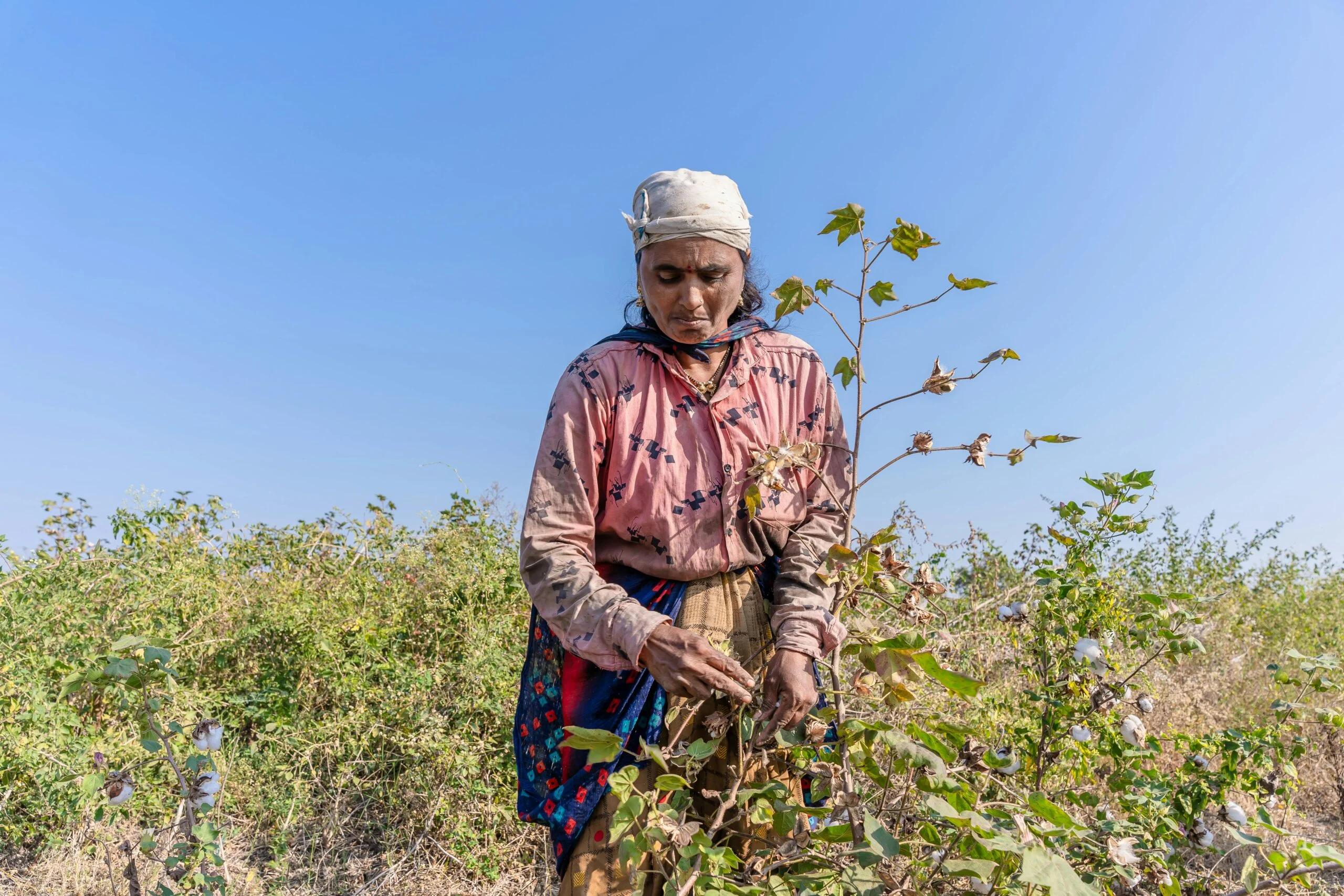
Yavatmal, Maharashtra - The road from Nagpur to Yavatmal cuts through a landscape that tells its own story. Fields that should be thick with cotton plants in October stand brown and brittle. Borewells dot the terrain like grave markers. In every village along this highway, someone knows a family that has lost a farmer - not to disease, not to old age, but to despair. This is Vidarbha, the cotton country of India, where more than 4,000 farmers have taken their own lives in the last five years alone.
A Family Unmade by Debt and Drought
Sunita Rathod sits on the mud floor of her two-room house in Kalamb taluka, Yavatmal district. The walls are bare except for a framed photograph of her husband, Mahadev, draped with a marigold garland that has long since dried. He was 42 when he died. The official record says he consumed pesticide. The real cause, Sunita will tell you, was a cascade of failures - failed seeds, failed rains, and a system that failed him at every turn.
Mahadev Rathod farmed four acres of cotton in Yavatmal, a district that has earned the grim distinction of being India’s farmer suicide capital. In 2020, encouraged by seed company agents and the promise of a bumper harvest, he took a loan of Rs 2.5 lakh from a local moneylender at 36 percent annual interest to buy Bt cotton seeds, fertilizers, and pesticides. The transgenic seeds, he was told, would resist bollworm and double his yield.
The monsoon that year was erratic. It arrived late, pounded the region for two weeks, and then disappeared. The cotton plants, starved of moisture during the critical flowering period, produced barely half the expected bolls. Mahadev harvested just 3 quintals from his four acres - a yield that would have been considered catastrophic even at the best of prices. He sold it at Rs 5,200 per quintal, the prevailing market rate, well below the Minimum Support Price of Rs 5,726 that the government had announced but that no procurement agency in Yavatmal was actually offering.
The next year was worse. Unseasonal rain in October - a phenomenon that climate scientists now attribute to shifting monsoon patterns - destroyed the standing crop. The third year brought a severe dry spell. By then, Mahadev’s debt had ballooned to Rs 5 lakh, including compound interest. The moneylender began visiting the house. Mahadev stopped sleeping. He stopped eating. On a March morning in 2023, Sunita found him behind the cowshed. He had drunk the same pesticide he once used to protect his crops.
“The seeds company promised double yield. The rain never came. Three years, three failures. What was he supposed to do? The moneylender would come every week. My husband stopped talking to anyone. He would just sit and stare at the field.”
Today, Sunita farms two of the four acres alone. She sold the other two to pay off part of the debt. Her son, 16, has dropped out of school to work as a daily wage labourer in a nearby town. Her daughter, 13, still attends the government school but comes home each afternoon to help in the field. The Rs 1 lakh compensation from the state government - part of the farmer suicide relief scheme - took 14 months to arrive. It covered barely a fifth of the outstanding debt.
“I don’t grow Bt cotton anymore,” Sunita says. “I grow jowar and tur dal. The income is less, but I don’t need to borrow for seeds.” She pauses. “My husband’s name is still in the moneylender’s book. They say I owe Rs 1.8 lakh. I don’t know how I will pay.”
The Young Farmer Who Chose a Different Path
Twenty kilometres from Sunita’s village, 28-year-old Pravin Waghmare is trying to write a different story. Pravin’s father, like Mahadev, grew Bt cotton for years. But Pravin, who completed a diploma in agriculture from the Krishi Vidyapeeth in Akola, decided in 2021 to switch to organic farming. He converted his family’s five acres to a mix of soybean, pigeon pea, and seasonal vegetables, using cow dung-based compost and neem-based pest control instead of chemical inputs.
“My input cost dropped from Rs 25,000 per acre to about Rs 8,000,” Pravin says, sitting under a neem tree at the edge of his field. “But the problem is the market. Organic produce should fetch a premium, but there is no separate mandi for it. My soybean goes to the same trader as everyone else’s. He pays me the same rate. Sometimes less, because my yield is lower.”
Pravin is part of a small but growing network of young farmers in Vidarbha who are experimenting with alternatives - organic inputs, crop diversification, rainwater harvesting. He helped dig a farm pond on his land through the Jalyukt Shivar scheme, which stores enough rainwater to provide supplementary irrigation during dry spells. But he admits the transition is precarious. Without price premiums for organic produce, without reliable market linkages, and without crop insurance that actually pays out, one bad season could push him back to the same precipice his father once stood at.
“My neighbours think I am foolish,” Pravin says with a wry smile. “They say, ‘Why are you doing all this extra work when you can just spray and forget?’ But I have seen what happens when the spray stops working. I have seen what happens when the rain doesn’t come. I would rather earn less and sleep at night.”
Voices from the Crisis
The agrarian distress in Vidarbha is not a statistic. It is a lived reality in every village, every taluka, every household that depends on rain-fed agriculture in a region where the rain itself has become an unreliable stranger. The voices of those living through this crisis paint a picture that no government report can fully capture.
Rekha Kale is an ASHA worker in a cluster of villages near Pandharkawda in Yavatmal. Her job is maternal and child health, but increasingly, she finds herself responding to a different kind of emergency. “Every village I cover has two or three families in debt crisis,” she says. “The women come to me because they don’t know who else to talk to. Their husbands are not sleeping, not eating, drinking more. I am not trained for this. I am a health worker, not a counsellor. But there is no one else.”
“Every village has two or three families in debt crisis. The women come to me because they don’t know who else to talk to. Their husbands are not sleeping, not eating, drinking more. I am not trained for this. But there is no one else.”
Rekha describes a pattern she has observed across her villages. After a crop failure, the first sign is withdrawal. The farmer stops attending community gatherings. He stops going to the chai stall. Then comes the irritability - arguments at home, sometimes violence. Then silence. “By the time the family realizes something is seriously wrong, it is often too late,” she says. “We don’t have a single mental health professional in this entire block. The nearest psychiatrist is in Nagpur, four hours away.”
Rajendra Deshmukh, a senior agricultural officer at the Krishi Vigyan Kendra in Yavatmal, has spent two decades working with farmers in the district. He has watched the groundwater table drop, the monsoon patterns shift, and the debt loads grow. “When I joined this post in 2004, farmers in this area would hit water at 80-100 feet,” he says. “Today, borewells are going to 200, 300, even 400 feet and coming up dry. Groundwater has dropped 15 feet in a decade in many talukas. The aquifers are being depleted faster than they can recharge.”
“Groundwater has dropped 15 feet in a decade. When I joined in 2004, farmers hit water at 80-100 feet. Today borewells go to 300-400 feet and come up dry. We are mining water that took centuries to accumulate.”
Deshmukh is blunt about the failure of the extension system. “We have good drought-resistant varieties. We have good water management techniques. But we have one agricultural officer for every 10,000 farmers. The seed companies have one agent for every 500. Who do you think the farmer listens to?”
The Climate Connection: When the Weather Becomes the Enemy
The farmer suicide crisis in Vidarbha cannot be understood without understanding what has happened to the climate of this region over the past two decades. This is not a distant, abstract phenomenon. It is measured in inches of rainfall that did not fall, in degrees of temperature that pushed past thresholds, in pest cycles that broke free of their natural controls.
The Indian Meteorological Department’s data for the Vidarbha region tells a stark story. Over the past decade, rainfall has been deficient - more than 20 percent below the long-period average - in six out of ten years. In the worst years, the deficiency has exceeded 36 percent. But it is not just the total rainfall that matters. The distribution has become dangerously erratic. The monsoon now arrives in intense bursts followed by prolonged dry spells, a pattern that is devastating for cotton, which requires steady moisture over its 150-day growing cycle.
“Cotton is particularly vulnerable to monsoon variability,” explains Dr. Arvind Padhye, an agronomist at Dr. Panjabrao Deshmukh Krishi Vidyapeeth in Akola. “It needs rain at sowing in June, steady moisture through July-August for vegetative growth, and dry conditions at harvest in October-November. What we are seeing now is heavy rain in June that waterloogs the fields, a mid-season dry spell in July-August that causes flower drop, and then unseasonal rain in October that damages the open bolls. This pattern alone can reduce yields by 30-40 percent.”
Rising Temperatures and Heat Stress
Temperature records from Yavatmal show that average maximum temperatures during the cotton growing season have risen by 1.2 degrees Celsius over the past three decades. This may sound modest, but its impact on cotton physiology is severe. Cotton flowers are highly sensitive to heat. When daytime temperatures exceed 35 degrees Celsius during flowering - which now happens regularly in Vidarbha from April through June - pollen viability drops sharply. Studies by the Central Institute for Cotton Research in Nagpur have shown that heat stress during flowering can reduce cotton yields by 20-30 percent, independent of rainfall.
The combination of heat stress and erratic rainfall creates a compound risk that farmers in Vidarbha have never faced before. Their traditional knowledge - which planting dates to choose, which soil moisture levels to expect, which pest pressures to prepare for - was calibrated to a climate that no longer exists. The seeds they buy, the inputs they invest in, the loans they take - all are premised on a monsoon that behaves the way it used to. When it doesn’t, the financial consequences are catastrophic.
The Bt Cotton Paradox
The story of Bt cotton in Vidarbha is a cautionary tale about technology deployed without adequate ecological foresight. When Bt cotton was introduced in India in 2002, it was hailed as a revolution. The transgenic seeds, engineered to produce a toxin lethal to bollworm, did initially reduce pesticide use and boost yields. But two decades later, the picture is far more complicated.
The pink bollworm, the very pest that Bt cotton was designed to resist, has developed widespread resistance to the Cry1Ac and Cry2Ab toxins in the transgenic plants. In Vidarbha, pink bollworm resistance was first documented in 2014 and has since become endemic. Farmers who invested in expensive Bt seeds - which cost Rs 800-1,200 per packet compared to Rs 100-200 for conventional seeds - found that the bollworm resistance they were paying for no longer worked. They were back to spraying pesticides, but now on top of the higher seed costs.
“The tragedy of Bt cotton is that it raised the cost floor without maintaining the yield ceiling,” says Dr. Keshav Kranthi, former head of the Central Institute for Cotton Research and now with the International Cotton Advisory Committee. “Farmers are paying five to six times more for seeds, and their yields are no better - and often worse - than what they got with conventional varieties. When you add climate stress on top of that, the economics simply do not work for a small farmer on rain-fed land.”
Groundwater: Mining the Last Reserve
The groundwater crisis in Vidarbha is both a symptom of climate change and an accelerant of the agrarian crisis. As monsoon rainfall has become unreliable, farmers have turned increasingly to borewells for irrigation and drinking water. The result has been a dramatic depletion of aquifers across the region.
Data from the Central Ground Water Board shows that in Yavatmal district, the water table has fallen from an average depth of 8-10 metres below ground level in the early 2000s to 15-25 metres today. In some talukas, farmers are drilling borewells to depths of 120-130 metres (approximately 400 feet) and still failing to find water. Each failed borewell represents an investment of Rs 1-2 lakh - money that is almost always borrowed.
The geology of Vidarbha compounds the problem. Much of the region sits on Deccan basalt, a hard rock formation with limited groundwater storage capacity. Unlike alluvial aquifers in the Indo-Gangetic plain, basalt aquifers recharge slowly and are quickly exhausted by intensive pumping. Climate change, by reducing the total monsoon rainfall and concentrating it in fewer, more intense events, is further limiting recharge. The water runs off the hard surface instead of percolating into the ground.
The Bigger Picture: A National Crisis in Numbers
Vidarbha is the sharpest edge of a crisis that cuts across India’s agricultural heartland. According to the National Crime Records Bureau (NCRB), more than 10,000 people engaged in the farm sector - farmers and agricultural labourers - die by suicide every year in India. Between 2018 and 2022, the NCRB recorded over 53,000 such deaths. Maharashtra consistently accounts for the highest share, with Vidarbha’s districts - Yavatmal, Washim, Buldhana, Akola, Amravati - leading the state’s grim tally.
But these numbers almost certainly undercount the true extent of the crisis. Many farmer suicides are not recorded as such. If the land is in the father’s name but the son who farms it takes his life, it may not be classified as a farmer suicide. If a woman farmer - and women constitute a growing share of the agricultural workforce - dies by suicide, she is often not recognized as a farmer at all, because the land title is not in her name. Activists and researchers estimate that the true number of farm-related suicides may be 30-50 percent higher than official figures suggest.
The Debt Trap
At the heart of the crisis is debt. The National Sample Survey’s Situation Assessment of Agricultural Households (2019) found that 50.2 percent of all agricultural households in India are indebted, with an average outstanding loan of Rs 74,121. In Maharashtra, the figure is significantly higher. In Vidarbha specifically, surveys by the Tata Institute of Social Sciences have found indebtedness rates exceeding 80 percent among cotton farmers, with average debts of Rs 2-4 lakh.
The sources of this debt are revealing. Institutional credit - from banks and cooperative societies - accounts for only about 60 percent of farm borrowing nationally, and far less in rain-fed regions like Vidarbha, where banks are reluctant to lend to farmers without irrigation. The remainder comes from informal sources: moneylenders, input dealers, and traders who advance cash against future crop sales. Interest rates from these informal sources range from 24 to 60 percent per annum, compared to 7-9 percent for institutional loans.
When a crop fails, the institutional loans can be restructured - at least in theory. The informal debts cannot. They compound relentlessly. A Rs 1 lakh loan from a moneylender at 36 percent interest becomes Rs 1.36 lakh after one year, Rs 1.85 lakh after two, and Rs 2.5 lakh after three. Three consecutive crop failures - which climate change is making increasingly probable - can turn a manageable loan into an unpayable burden.
MSP vs. Market Reality
The gap between the government’s Minimum Support Price and the price farmers actually receive is another critical dimension of the crisis. The MSP for medium-staple cotton for the 2024-25 season was set at Rs 7,121 per quintal. But in mandis across Vidarbha, farmers routinely report receiving Rs 5,500-6,200 per quintal. The reason is structural: the Cotton Corporation of India, which is supposed to procure at MSP, operates limited procurement centres and imposes strict quality parameters that exclude much of the rain-damaged, pest-affected cotton that Vidarbha’s farmers produce.
For a farmer with two acres of rain-fed cotton yielding four quintals per acre, the difference between MSP and market price can amount to Rs 7,000-12,000 - a sum that may seem small in the abstract but that, for a household with an annual income of Rs 80,000-1,00,000, represents the difference between repaying a loan instalment and defaulting on it.
What Vidarbha’s Farmers Need: Beyond Loan Waivers
Every few years, a state or central government announces a farm loan waiver. Maharashtra has done so multiple times. The waivers provide temporary relief, but they do not address the structural causes of the crisis. They cover institutional loans but not informal debt. They reach landholding farmers but not tenant farmers or agricultural labourers. And they create moral hazard - banks become more reluctant to lend to farmers in distressed regions, pushing them further into the arms of moneylenders. The pattern of populist election promises - including loan waivers announced before elections - often fails to deliver lasting structural change.
What Vidarbha’s farmers need is a comprehensive response that addresses the intersection of climate change, market failure, and institutional neglect. Based on conversations with farmers, agricultural scientists, activists, and government officials across the region, several priorities emerge.
1. Crop Insurance That Actually Works
The Pradhan Mantri Fasal Bima Yojana (PMFBY), India’s flagship crop insurance scheme, has been widely criticized for its poor payout record. In Yavatmal, farmers report that claims are routinely rejected on technicalities - the crop cutting experiment was conducted in the wrong village, the loss threshold was not met at the taluka level even though individual farmers suffered total losses, or the claim was filed after the deadline that no one informed them about.
What is needed is a shift from area-based to individual farm-level assessment, using satellite imagery and smartphone-based crop photography that is already technically feasible. Weather-indexed insurance, which triggers automatic payouts when rainfall drops below a defined threshold at a nearby weather station, offers another path - but requires a denser network of weather stations than currently exists in Vidarbha.
2. Climate-Resilient Agriculture
Indian agricultural research institutions have developed drought-tolerant and heat-resistant varieties of cotton, soybean, and pulses that are suited to Vidarbha’s changing climate. But the adoption of these varieties remains low because the seed supply chain is dominated by a handful of private companies that profit from selling high-cost Bt hybrids. Public sector seed production and distribution needs to be dramatically scaled up, with extension workers actively demonstrating climate-resilient varieties in farmers’ fields.
Water harvesting and micro-irrigation must be expanded far beyond their current reach. The farm pond scheme and watershed development programmes have shown results where they have been implemented - but coverage remains patchy, and the schemes are plagued by corruption and poor construction quality. Drip irrigation, which can reduce water use by 40-60 percent, is used on less than 5 percent of Vidarbha’s cultivated area.
3. Income Diversification
The monoculture of cotton in Vidarbha is itself a risk factor. When the entire region depends on a single crop, a single pest outbreak or weather event can devastate millions of families simultaneously. Diversification into horticulture, dairy, poultry, fisheries, and agro-forestry can provide alternative income streams that are less correlated with monsoon rainfall. But diversification requires investment - in cold chains, in market linkages, in training - that small farmers cannot make on their own.
Farmer Producer Organizations (FPOs) offer a mechanism for collective investment and market access. Some FPOs in Vidarbha have successfully negotiated better prices for their members’ produce, accessed institutional credit, and even set up small processing units. But the FPO movement in Vidarbha is still in its infancy, with most organizations lacking the managerial capacity and financial resources to operate effectively.
4. Mental Health Support
This is perhaps the most neglected dimension of the crisis. There is not a single government mental health centre in rural Yavatmal. The District Mental Health Programme, mandated under the National Mental Health Policy, exists on paper but has virtually no presence on the ground. ASHA workers like Rekha Kale, who are often the first to identify distressed farmers, have received no training in mental health first aid.
What is needed is a rural mental health infrastructure that integrates with the existing primary health care system. Community-level counsellors, tele-psychiatry services, and crisis helplines in local languages (Marathi and Hindi in Vidarbha) could save lives. The Vandrevala Foundation and iCall at TISS have demonstrated that telephone-based counselling can be effective in reaching distressed farmers, but these remain small-scale, NGO-driven initiatives rather than components of a government-led system.
The Road Ahead: Climate Justice and Agrarian Justice Are Inseparable
As I drive back from Yavatmal to Nagpur, the landscape that seemed merely dry on the way in now reads differently. The barren fields are not just the result of a bad monsoon. They are the visible surface of a deeper crisis - one in which the global phenomenon of climate change collides with the local realities of debt, market exploitation, institutional failure, and social abandonment.
Vidarbha’s farmers did not cause climate change. India’s per capita carbon emissions are a fraction of those of the industrialized nations whose historical emissions are driving the warming that is destabilizing the monsoon. Yet it is Vidarbha’s farmers - smallholders on rain-fed land, with no irrigation, no insurance, no savings, and no safety net - who are paying the price. This is not just an agrarian crisis. It is a crisis of climate justice.
The solutions exist. Drought-resistant seeds exist. Water harvesting technology exists. Weather-indexed crop insurance exists. Tele-psychiatry exists. What is missing is the political will to deploy these solutions at scale, to fund them adequately, and to hold the institutions responsible for their implementation accountable. Meanwhile, the children of farming families - like Sunita Rathod’s son who dropped out of school - are denied the opportunities that policies like NEP 2020 promise on paper. What is missing is the recognition that the farmer standing in his failed field in Yavatmal is not a beneficiary waiting for a government scheme. He is a citizen whose rights - to livelihood, to water, to health, to life - are being systematically eroded by forces beyond his control.
Sunita Rathod does not use the language of climate justice. She does not speak of monsoon variability or aquifer depletion or pest resistance. But she understands, with the clarity that comes from lived experience, what these abstractions mean in practice. “The land used to give us enough,” she says, looking out at her two remaining acres. “Now it gives us nothing. And nobody can tell us why.”
She can be told why. The question is whether anyone in a position of power is willing to listen - and to act before the next name is added to Vidarbha’s unbearable toll.
Some names in this report have been changed to protect the privacy of the individuals and families involved. This ground report is based on field visits to Yavatmal district in late 2025. All data cited is from publicly available government sources including NCRB, IMD, CGWB, and NSSO.
What you can do
- Share the evidenceSend this to one person who should know about environment.Share on WhatsApp
- Give an afternoonTeach, mentor, clean up, or lend your professional skills.Ways to volunteer
- Tell us what's missingKnow a story, a fact we got wrong, or a solution worth spotlighting?Suggest a story
Politically neutral. Every claim sourced. Report a correction.

No comments yet