India's EV Revolution: The Essential Guide to Electric Vehicles Reshaping Cities
India registered over 1.7 million electric vehicles in 2023-24. From Tata Nexon EV to Ola S1 Pro and BYD India, discover how electric vehicles are reshaping urban transport, the state of charging infrastructure, government policies like FAME II and PM E-DRIVE, and what the next five years hold for India's electric mobility revolution.
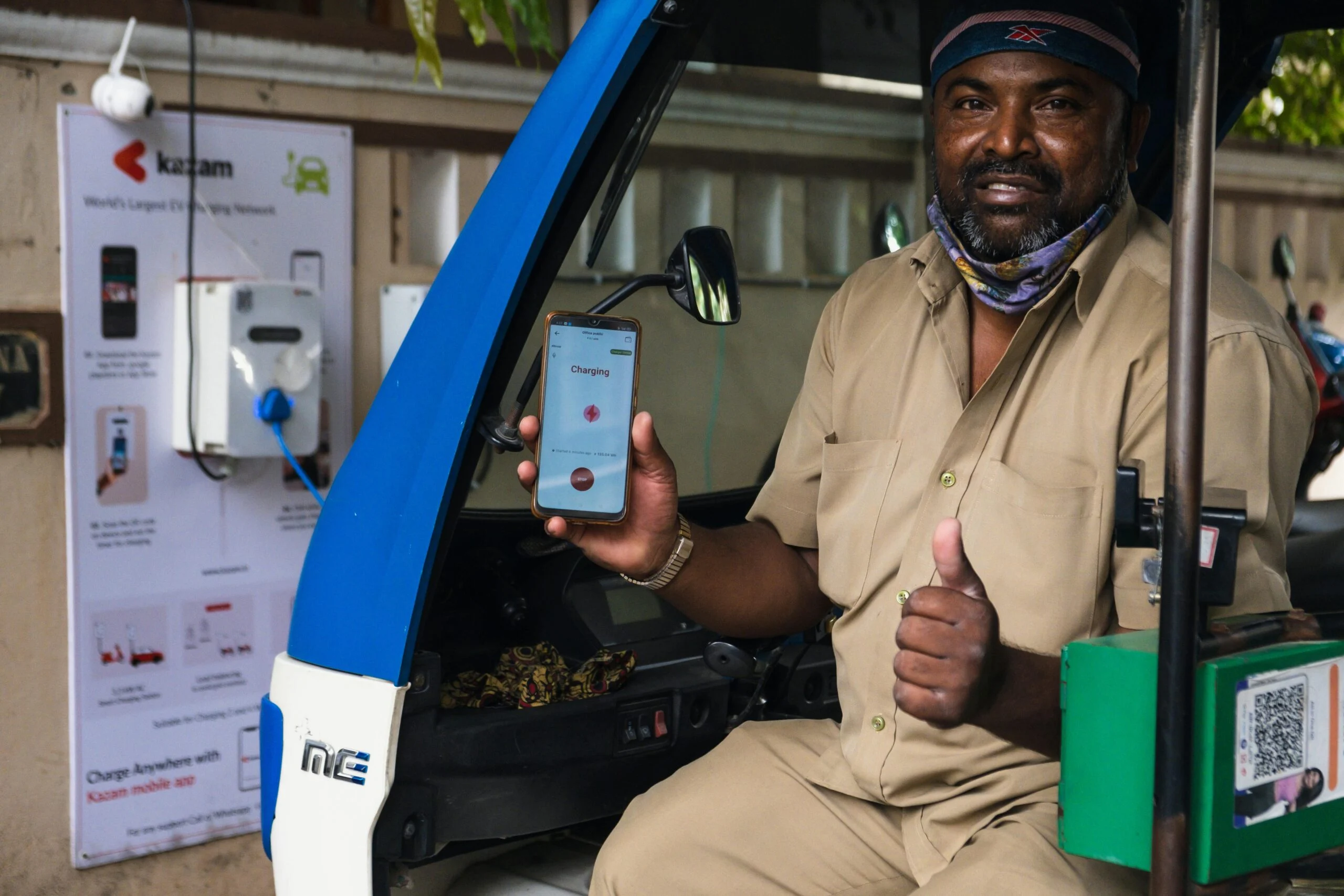
India is in the middle of an electric vehicle revolution. From the crowded streets of Mumbai to the wide highways of Bengaluru, electric two-wheelers, three-wheelers, and cars are becoming a common sight. In 2023-24, India registered over 1.7 million electric vehicles - a 40% jump over the previous year. The shift is no longer a distant future promise; it is happening right now, and it is reshaping how Indians move through their cities every single day.
The Scale of India’s EV Market Growth
India’s electric vehicle market has grown from a niche segment into a serious economic force. According to data from the Society of Indian Automobile Manufacturers (SIAM), EV sales across all categories crossed 1.68 million units in FY 2023-24. The two-wheeler segment leads the charge, accounting for more than 55% of all EV sales. The government’s FAME (Faster Adoption and Manufacturing of Electric Vehicles) scheme has played a major role in making this possible.
What makes India’s EV growth story unique is its bottom-up nature. Unlike many Western markets where premium electric cars drove initial adoption, India’s growth started with affordable two-wheelers and three-wheelers. This grassroots adoption is a direct response to the daily commute economics faced by millions of Indian families and small business owners.
Category | FY 2022-23 Sales | FY 2023-24 Sales | Growth |
|---|---|---|---|
Two-Wheelers | 847,000 | 944,000 | +11.5% |
Three-Wheelers | 490,000 | 690,000 | +40.8% |
Passenger Vehicles | 80,000 | 90,000 | +12.5% |
Commercial Vehicles | 4,000 | 5,500 | +37.5% |
Total | 1.56 million | 1.68 million | +7.7% |
Industry analysts from NITI Aayog estimate that India’s EV market could reach 10 million units annually by 2030, representing a massive opportunity for domestic manufacturers and an equally large reduction in the country’s fuel import bill.
Tata Motors: Leading the Passenger EV Segment
When it comes to electric passenger cars in India, Tata Motors is the undisputed leader. The company holds over 70% of India’s electric car market, driven by two flagship models that have become synonymous with affordable electric mobility.
The Nexon EV: India’s Best-Selling Electric Car
The Tata Nexon EV has been the best-selling electric passenger vehicle in India for three consecutive years. Starting at around Rs 14.49 lakh (ex-showroom), the Nexon EV offers a real-world range of 312 km in its standard variant and up to 437 km in the long-range version. These numbers address the range anxiety that has historically been the biggest barrier to EV adoption in India.
The Nexon EV’s success lies in its practical design. It fits squarely into the compact SUV segment that Indian buyers love, comes with a familiar interior, and requires only minor adjustments to the ownership experience. Tata’s widespread service network - with over 1,000 EV-ready service centres across India - has also helped new buyers feel more confident about making the switch.
The Punch EV: Democratising Electric Mobility
Launched in January 2024, the Tata Punch EV has quickly become a game-changer. Priced starting at Rs 10.99 lakh, it is the most affordable electric car with a real range above 300 km available in India. The Punch EV is aimed at first-time car buyers and urban families looking to make the transition from petrol to electric without stretching their budget.
The Punch EV sold over 4,000 units in its first month of availability, signalling strong demand at the entry-level price point. Analysts say this model could be the catalyst that moves electric cars from being a premium choice to a mainstream one in Indian cities.
“We are not just selling cars. We are creating an ecosystem for electric mobility in India. Every Tata EV that hits the road takes us closer to the vision of a cleaner, more self-reliant India.”
Shailesh Chandra, MD, Tata Motors Passenger Vehicles
Ola Electric: The Two-Wheeler Disruption
If Tata Motors represents the four-wheeler EV story, Ola Electric is the face of India’s two-wheeler revolution. Founded in 2017 and backed by SoftBank, Ola Electric went from a startup to one of India’s largest two-wheeler manufacturers in just three years. Its flagship product, the S1 Pro, has become a cultural phenomenon.
The S1 Pro: Performance Meets Affordability
The Ola S1 Pro is priced at approximately Rs 1.47 lakh (ex-showroom) and offers a certified range of 195 km per charge. For city commuters in Bengaluru, Delhi, or Hyderabad, this range comfortably covers multiple days of riding. The scooter can accelerate from 0 to 40 km/h in just 3 seconds - faster than most petrol scooters in its class.
Beyond the hardware, Ola Electric has built a digital ecosystem around the S1 Pro. Regular over-the-air software updates add new features, improve range performance, and fix bugs - a concept borrowed from Tesla that is entirely new to Indian two-wheelers. The scooter connects to a companion app that tracks charging, battery health, riding statistics, and even allows remote diagnostics.
Ola Electric became India’s largest EV two-wheeler company by sales in FY 2023-24, capturing around 35% of the electric scooter market. The company sold over 330,000 units that year, a remarkable figure for a brand that did not exist five years ago.
The Hypercharger Network
One of Ola Electric’s biggest bets is its charging infrastructure. The company is building the Ola Hypercharger Network, targeting 100,000 charging points across 400+ cities. As of early 2024, it has deployed over 3,000 fast chargers. While critics have pointed out reliability issues at some locations, the scale of the ambition is matched by few players in the market.
BYD India: The China Factor in Indian EVs
Chinese automaker BYD (Build Your Dream) has made a significant push into the Indian market, and it is one of the most interesting subplots of India’s EV story. BYD operates in India through a partnership with Hyderabad-based Megha Engineering and Infrastructures Ltd (MEIL), and it has carved out a premium position in the four-wheeler EV segment.
The BYD Atto 3 and BYD Seal are among India’s best-equipped electric SUVs, offering long ranges, premium features, and build quality that competes with European brands. However, BYD’s India journey has not been without controversy. The Indian government’s FDI scrutiny of Chinese investments delayed BYD’s planned Rs 1 billion manufacturing facility in India, a plan that would have significantly expanded its local footprint.
Despite these regulatory hurdles, BYD India sold over 4,000 units in FY 2023-24 and continues to expand its dealership network. The brand is particularly popular in cities like Bengaluru, Mumbai, and Hyderabad, where technology professionals have the disposable income for a premium EV and the infrastructure to support daily charging.
The broader question BYD raises for India’s EV ecosystem is strategic: how much of the electric vehicle supply chain will be controlled by Chinese companies? India’s government is keenly aware that depending on Chinese battery cells and motor components could replicate the oil import problem in a new form. This supply chain concern mirrors the same debate playing out in India’s semiconductor manufacturing push - where reducing import dependence is equally a matter of national strategy. This has made supporting domestic battery manufacturing a key policy priority.
Charging Infrastructure: Building the Backbone
No EV ecosystem can succeed without a reliable charging network. India’s charging infrastructure has grown rapidly, but it still has significant ground to cover before it can support mass EV adoption across all vehicle categories and geographies.
Tata Power’s EV Charging Network
Tata Power is the largest public EV charging operator in India. The company has deployed over 7,000 public charging points across more than 500 cities and towns. Its network covers national highways, city centres, residential complexes, workplaces, and retail destinations. Tata Power’s EZ Charge app allows users to locate chargers, initiate sessions remotely, and pay digitally - a seamless experience that reduces friction for EV users.
Tata Power has also signed agreements with multiple state governments to set up charging infrastructure in Tier 2 and Tier 3 cities. This expansion beyond the top metros is critical because a large share of India’s future EV growth will come from smaller cities and towns.
Ather Grid: Built for Two-Wheelers
Ather Energy, maker of the Ather 450X electric scooter, has built the Ather Grid - a fast-charging network designed specifically for two-wheelers. With over 1,900 fast charging points across 170+ cities, Ather Grid is one of the most geographically distributed two-wheeler charging networks in Asia.
Ather Grid’s approach is hardware-agnostic - any two-wheeler with a compatible connector can use the network, not just Ather scooters. This open-network philosophy has accelerated adoption and made Ather a respected infrastructure builder, not just a vehicle manufacturer.
India’s Public Charging Numbers
Operator | Charging Points | Cities Covered | Connector Types |
|---|---|---|---|
Tata Power | 7,000+ | 500+ | AC, DC Fast, CCS2 |
Ather Grid | 1,900+ | 170+ | Two-wheeler fast |
BPCL | 2,500+ | 300+ | AC, DC Fast |
ChargeZone | 1,800+ | 250+ | AC, DC Fast, CCS2 |
Statiq | 2,000+ | 200+ | AC, DC Fast |
The Ministry of Power’s data shows India had over 12,000 public EV charging stations as of March 2024. While this number sounds substantial, India needs an estimated 46,000 charging stations by 2030 to support projected EV volumes - meaning the infrastructure gap is still significant.
Government Policy: The Engine Behind the Revolution
India’s EV revolution would not be happening at this speed without deliberate government policy. Central and state governments have deployed a mix of subsidies, mandates, and infrastructure incentives that have fundamentally changed the economics of buying and operating electric vehicles.
FAME II: The Subsidy Scheme That Started It All
The FAME II (Faster Adoption and Manufacturing of Electric Vehicles in India - Phase II) scheme was launched in April 2019 with a budget of Rs 10,000 crore. The scheme offered direct purchase subsidies of up to Rs 15,000 per kWh for electric two-wheelers, reducing their effective price by Rs 20,000 to Rs 50,000. For electric buses and commercial three-wheelers, subsidies were even higher.
FAME II ran until March 2024 and is widely credited with kick-starting genuine mass-market adoption. It brought the total cost of ownership of electric two-wheelers below petrol scooters for the first time, which was the tipping point that convinced lakhs of Indian buyers to make the switch.
PM E-DRIVE: The Next Phase of Policy Support
In September 2024, the government announced the PM Electric Drive Revolution in Innovative Vehicle Enhancement (PM E-DRIVE) scheme with a budget of Rs 10,900 crore. This scheme focuses on scaling up electric buses (24,791 buses planned) and electric two and three-wheelers. It also allocates Rs 2,000 crore specifically for public charging infrastructure - a recognition that vehicle subsidies alone are not enough without solving the charging problem.
State-Level EV Policies
Many Indian states have launched their own EV policies to complement central government schemes. The results have been striking in states with strong policies:
- Delhi: The Delhi EV Policy (2020) waived road tax and registration fees for all EVs and offered additional subsidies of up to Rs 30,000 on two-wheelers. Delhi became one of the highest-density EV markets in the country as a result.
- Maharashtra: Subsidies of Rs 10,000 per kWh (up to Rs 1.5 lakh) for electric two and three-wheelers, plus 100% exemption on road tax for the first 100,000 EVs.
- Rajasthan: 15% capital subsidy for EV and battery manufacturing units, plus SGST waiver for EV buyers.
- Gujarat: Rs 10,000 subsidy on electric two-wheelers, Rs 20,000 on electric three-wheelers, and waiver on registration and road tax.
- Tamil Nadu: 100% road tax exemption and 50% subsidy on charger installation for EV manufacturers setting up in the state.
This patchwork of state policies has created notable variation in EV adoption rates. States with strong policies show EV penetration rates 2-3 times higher than states without dedicated EV support schemes.
The Two-Wheeler EV Boom: India’s Real EV Story
The global EV narrative tends to focus on electric cars. In India, the real story is electric two-wheelers - and it is a story about economic transformation, not just transportation.
India has the world’s largest two-wheeler market, with over 20 million units sold annually. Two-wheelers are the primary mode of motorised transport for the majority of Indian households. They are used for daily commutes, last-mile delivery, and small business logistics. Converting this segment to electric has far more impact on fuel consumption, emissions, and household economics than converting the passenger car market.
The economics are compelling. A petrol scooter with 50 km/litre fuel efficiency costs approximately Rs 3-4 per km in fuel at current petrol prices. An equivalent electric scooter costs Rs 0.20-0.30 per km in electricity. Over 10,000 km of annual riding, that is a saving of Rs 27,000 to Rs 37,000 per year - enough to offset the higher purchase price of the electric version within 2-3 years.
Key Players in Electric Two-Wheelers
- Ola Electric: Market leader with ~35% share. S1 series dominates urban commuter segment.
- TVS Motor: The iQube series from TVS has gained strong traction, particularly in South India. TVS sold over 200,000 electric two-wheelers in FY 2023-24.
- Ather Energy: Premium positioning with the 450X. Known for superior build quality and the Ather Grid charging network.
- Bajaj Auto: The Chetak electric scooter - a revival of an iconic Indian brand - has found strong acceptance in Tier 2 cities.
- Hero MotoCorp: India’s largest two-wheeler company is ramping up EV production through its Vida brand, targeting high-volume price points.
- Ampere (Greaves Electric): Focuses on affordable entry-level scooters in the Rs 70,000 to Rs 90,000 range, serving price-sensitive buyers.
Challenges Facing India’s EV Transition
Despite the impressive growth numbers, India’s EV revolution faces serious challenges that could slow its momentum if not addressed systematically. Understanding these challenges honestly is important for setting realistic expectations.
Range Anxiety and Charging Access
Range anxiety remains a real concern, particularly for buyers considering electric vehicles for intercity travel. While urban charging is improving rapidly, highway charging networks are still sparse. Many national highways have charging stations only at 100-150 km intervals - manageable for cars with 400+ km ranges but challenging for older or entry-level models with shorter ranges.
Home charging - the most convenient option - requires a dedicated parking space and access to a power socket. In India’s dense urban housing landscape, where millions of apartment residents park on the street or in shared parking areas, home charging is simply not possible. This is a fundamental infrastructural barrier that will require cooperative housing society policies, municipal parking regulations, and significant investment to solve.
Battery Recycling and End-of-Life Management
India is heading toward a battery recycling crisis that the industry has so far avoided discussing seriously. Lithium-ion batteries have a typical lifespan of 5-8 years in vehicle use. With millions of two-wheelers and scooters sold between 2020 and 2024, the first wave of battery replacements is already beginning. By 2028-2030, India will be handling hundreds of thousands of used EV batteries annually.
The Battery Waste Management Rules (2022) create a framework for battery recycling, but enforcement and infrastructure are still catching up. Without proper recycling, spent lithium-ion batteries present serious environmental and public health risks. Indian startups like Lohum Cleantech and Attero are building recycling capacity, but scale-up needs to happen much faster.
Grid Readiness and Power Quality
Mass EV charging places new demands on India’s power distribution grid. In areas with frequent power cuts or voltage fluctuations - common in many Tier 2 and Tier 3 cities - charging infrastructure requires additional investments in power conditioning equipment. Unplanned EV charging peaks can cause local grid stress, particularly in residential areas where evening charging coincides with cooking and cooling demand peaks.
Battery Fire Safety
A series of EV fire incidents in 2021-2022 - involving vehicles from Ola Electric, Okinawa, and other brands - raised serious questions about battery safety standards. The incidents led to product recalls and government investigations. The Bureau of Indian Standards (BIS) has since tightened safety standards for EV batteries, and AIS-156 (the Indian EV battery safety standard) was amended with stricter thermal runaway protections. The issue has largely been addressed, but it remains a source of buyer concern, particularly among first-time EV adopters.
India’s EV Future: What the Next Five Years Look Like
The Indian government has set an ambitious target: 30% of all vehicle sales to be electric by 2030. Given that the current EV penetration rate is around 6-7% of total vehicle sales, hitting 30% in six years requires a pace of change that seems difficult but not impossible.
Several forces are converging to make this achievable. Battery costs, which have fallen 90% globally over the past decade, are expected to fall another 40-50% by 2030. This cost reduction will bring electric vehicle prices at or below equivalent petrol vehicles at the point of sale, eliminating the last major economic barrier to adoption.
The domestic battery manufacturing ecosystem is being built rapidly. Ola Electric’s Gigafactory in Rajasthan, Amara Raja’s cell manufacturing plant in Andhra Pradesh, and Reliance Industries’ battery business are among the major investments being made in Indian battery production. The Production Linked Incentive (PLI) scheme for Advanced Chemistry Cell (ACC) batteries is attracting Rs 18,100 crore in investments - part of India’s broader technology infrastructure push to reduce import dependence across critical sectors.
Electric Buses and Public Transport
India’s public transport system is undergoing an electric transformation. The PM E-DRIVE scheme’s allocation for 24,791 electric buses will replace some of the oldest, most polluting diesel buses in India’s public bus fleet. Cities like Mumbai, Delhi, Bengaluru, Kolkata, and Pune are already operating electric bus fleets, and the learnings from these early deployments are informing fleet management practices for the next generation of procurement.
Electric buses operating in Indian cities are reporting fuel cost savings of 60-70% compared to diesel equivalents, making the economics increasingly clear even without subsidies. As battery costs fall further and domestic manufacturing scales up, the economic case for electric public transport will become unassailable.
Electric Three-Wheelers: The Unsung Heroes
One of the least-covered success stories of India’s EV transition is the electric three-wheeler segment. Auto-rickshaws and e-rickshaws - the workhorses of India’s last-mile urban transport - have been converting to electric at remarkable speed. The three-wheeler EV market grew 41% in FY 2023-24, with electric three-wheelers now accounting for over 55% of all three-wheeler sales in India.
For auto-rickshaw drivers, the economics are life-changing. Lower running costs mean higher take-home earnings. Daily fuel savings of Rs 200-300 translate to an additional Rs 6,000-9,000 per month - a significant income boost for a segment of the workforce with thin margins. This economic argument has driven adoption faster than any government subsidy.
Impact on Indian Cities: A Cleaner, Quieter Future
The environmental and quality-of-life benefits of the EV transition are already being felt in Indian cities. Delhi, which consistently ranks among the world’s most polluted cities, has seen a measurable reduction in vehicular pollution in areas with high EV adoption. While coal-based electricity generation means that EVs are not zero-emission at the grid level, the shift of tailpipe emissions from congested city streets to power plants (which can be more efficiently managed and gradually greened) represents a meaningful public health improvement.
The noise reduction is equally significant, though less discussed. Indian cities are extraordinarily noisy, with two-stroke petrol engines a major contributor. Electric two and three-wheelers are nearly silent at low speeds, reducing the ambient noise levels in dense residential and commercial areas. This is a quality-of-life improvement that residents notice immediately once EVs become common in their neighbourhoods.
India's electric vehicle revolution is not just about technology - it is about giving millions of families lower running costs, cleaner air, and a more liveable city.
Conclusion: India’s EV Journey Is Just Beginning
India’s electric vehicle revolution is real, it is accelerating, and it is driven by a combination of government policy, falling technology costs, entrepreneurial energy, and genuine economic demand from consumers who see the financial logic of going electric. The challenges - charging infrastructure gaps, battery recycling, grid readiness - are significant but not insurmountable.
What makes India’s EV story particularly compelling is that it is not a copy of any other country’s path. India is writing its own playbook: electric two-wheelers first, infrastructure built in parallel, domestic manufacturing as a strategic priority, and policy support that targets the segments where the economic and environmental impact is greatest. It is a pragmatic, India-specific approach - and it appears to be working.
The next five years will be decisive. If battery prices continue to fall, domestic manufacturing scales up, and charging infrastructure reaches smaller cities and towns, India could well exceed its 2030 EV targets. The revolution is already on the road - it just needs to reach every corner of the country.
Explore More Digital India Stories
India’s transformation goes far beyond electric vehicles. From digital payments reshaping rural commerce to space technology startups competing on the global stage, discover how India is building its future across every sector.
What you can do
- Share the evidenceSend this to one person who should know about environment.Share on WhatsApp
- Give an afternoonTeach, mentor, clean up, or lend your professional skills.Ways to volunteer
- Tell us what's missingKnow a story, a fact we got wrong, or a solution worth spotlighting?Suggest a story
Politically neutral. Every claim sourced. Report a correction.



No comments yet