India's Water Crisis: When Rivers and Wells Run Dry
India holds just 4% of global freshwater for 18% of the world's population. With 600 million Indians facing extreme water stress, groundwater reserves vanishing, and 21 major cities projected to run dry by 2030, the water crisis demands urgent action. From Chennai's Day Zero to farmer suicides in Marathwada, here is the full picture — causes, human cost, and solutions that could still turn the tide.
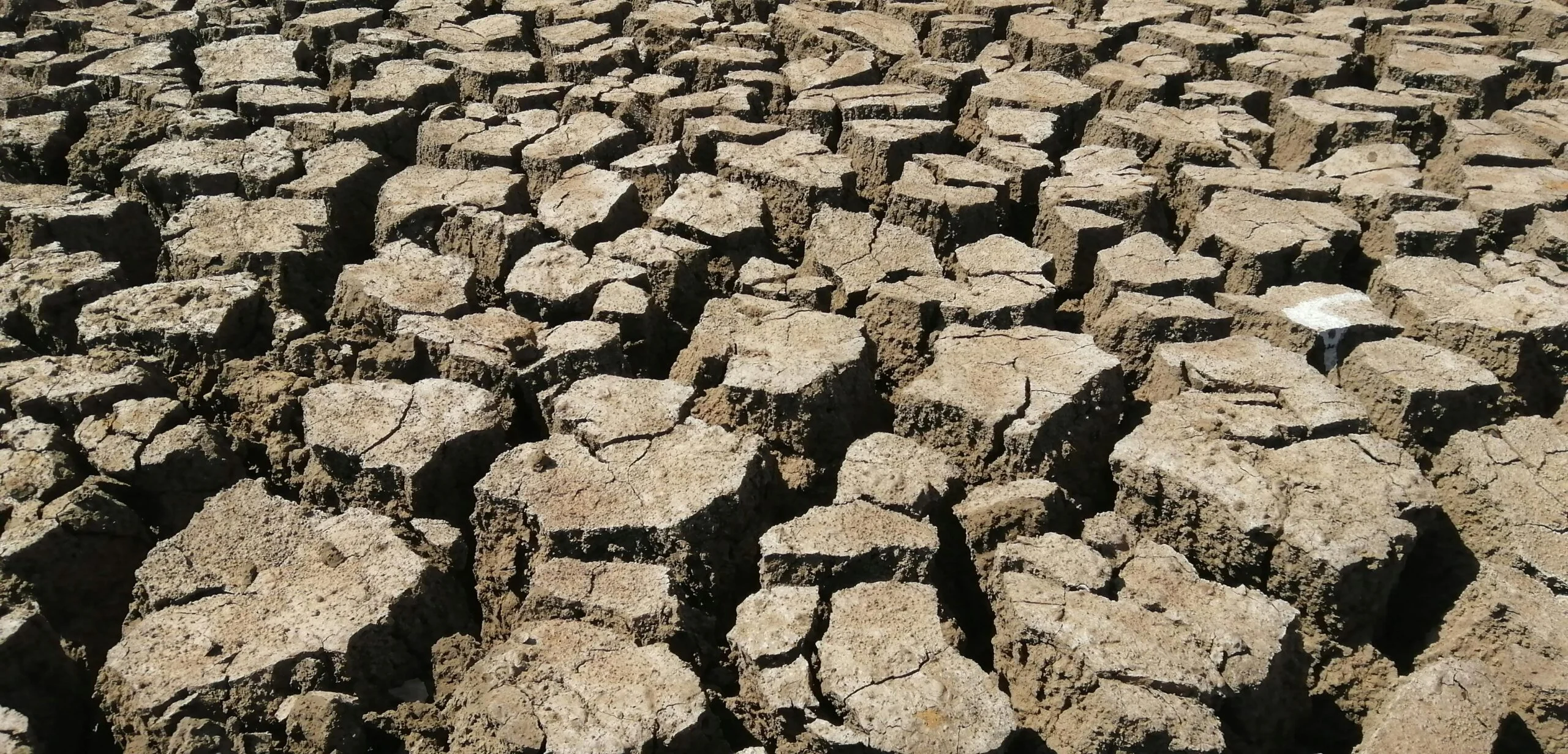
In the summer of 2019, Chennai - India’s sixth-largest city - nearly ran out of water. Reservoirs that once held billions of litres shrank to barren mudflats. Tanker queues stretched for kilometres. Offices shut down. Hospitals rationed water. It was a crisis so severe that global media dubbed it “Day Zero.” Yet Chennai was not an outlier - it was a preview of what awaits much of India if the nation does not fundamentally transform how it manages its most precious resource.
India is home to 18% of the world’s population but holds only 4% of its freshwater resources. According to NITI Aayog’s Composite Water Management Index, approximately 600 million Indians face high-to-extreme water stress. The crisis is not looming - it is here. It manifests in the farmer who drills deeper every year for a borewell that yields less, in the woman who walks kilometres daily to fetch water that may not be safe, and in the city dweller who opens a tap and finds nothing.
This is the story of India’s water crisis - its staggering scale, the people it hurts most, the systemic failures that created it, and the solutions that could still turn the tide. The crisis intersects deeply with other challenges India faces, including child malnutrition driven by unsafe water and poor sanitation, and the disproportionate burden placed on women - a challenge being addressed by NGOs championing women’s empowerment across India.
To understand India’s water crisis, one must confront the numbers - and they are deeply unsettling. What we face is not a single problem but a convergence of groundwater depletion, surface water contamination, inadequate infrastructure, and rising demand driven by population growth and economic development.
Groundwater: The Invisible Emergency
India is the world’s largest extractor of groundwater, pumping out an estimated 251 billion cubic metres per year - more than the United States and China combined. Groundwater supplies roughly 85% of India’s drinking water in rural areas and around 50% in urban areas. It irrigates over 60% of the country’s farmland.
But this underground reservoir is being drained far faster than nature can replenish it. The Central Ground Water Board (CGWB) has classified 1,186 out of roughly 6,881 assessed units as “over-exploited” - meaning extraction exceeds recharge. Another 313 units are classified as “critical” and 169 as “semi-critical.” States like Punjab, Haryana, Rajasthan, and Tamil Nadu are among the worst affected, with water tables dropping by 1 to 3 metres per year in several districts.
A 2023 study published in Nature Geoscience warned that parts of northwest India could see groundwater levels decline by an additional 10 metres over the next decade if current extraction rates continue. For the tens of millions of farmers in the Indo-Gangetic plain who depend on borewells, this is not an abstract statistic - it is the difference between a harvest and hunger.
Surface Water: Rivers in Distress
India’s rivers, once revered as lifelines of civilisation, are increasingly becoming carriers of pollution. The Central Pollution Control Board (CPCB) has identified 351 polluted river stretches across the country. The Ganga, despite billions spent on the Namami Gange programme, continues to receive untreated sewage and industrial effluent along significant portions of its 2,525-kilometre course.
The Yamuna in Delhi carries dissolved oxygen levels near zero at several points - technically making it a dead river. Tributaries of the Krishna, Cauvery, and Godavari face similar contamination. According to WaterAid, approximately 163 million Indians lack access to safe drinking water - a number larger than the entire population of Russia.
Urban Water Crisis: Cities on the Brink
NITI Aayog’s 2018 report made a chilling projection: 21 major Indian cities, including Delhi, Bengaluru, Hyderabad, and Chennai, will run out of groundwater by 2030, affecting an estimated 100 million people. While this timeline may shift, the trajectory remains deeply concerning.
Bengaluru, India’s IT capital, has seen its lakes shrink from over 280 in the 1960s to fewer than 80 today, many of which are heavily polluted. In 2024, the city faced severe water shortages that forced tech companies to truck in water and residents to drill borewells to depths of 1,500 feet - often in vain. Delhi, which relies heavily on the Yamuna and on water piped from neighbouring states, loses an estimated 40% of its treated water supply to leakage and theft - a phenomenon known as “non-revenue water” (NRW).
Interstate Water Disputes: A Governance Failure
Water scarcity has also fuelled bitter interstate conflicts. The Cauvery dispute between Karnataka and Tamil Nadu has simmered for over a century and erupted into violent protests in 2016 and again in 2023. The Krishna water dispute involves Maharashtra, Karnataka, and Andhra Pradesh/Telangana. The Sutlej-Yamuna Link (SYL) canal dispute between Punjab and Haryana remains unresolved after decades.
These disputes reflect a fundamental governance failure - the absence of a nationally coherent framework for water sharing that accounts for changing rainfall patterns, growing demand, and equitable distribution. Water, constitutionally a state subject, becomes a political weapon rather than a shared resource.
Water scarcity is never equally distributed. It falls hardest on those who already carry the heaviest burdens - women, small farmers, and the urban poor. Understanding who suffers most is essential to designing solutions that are just, not merely efficient.
Rural Women: The Invisible Water Workforce
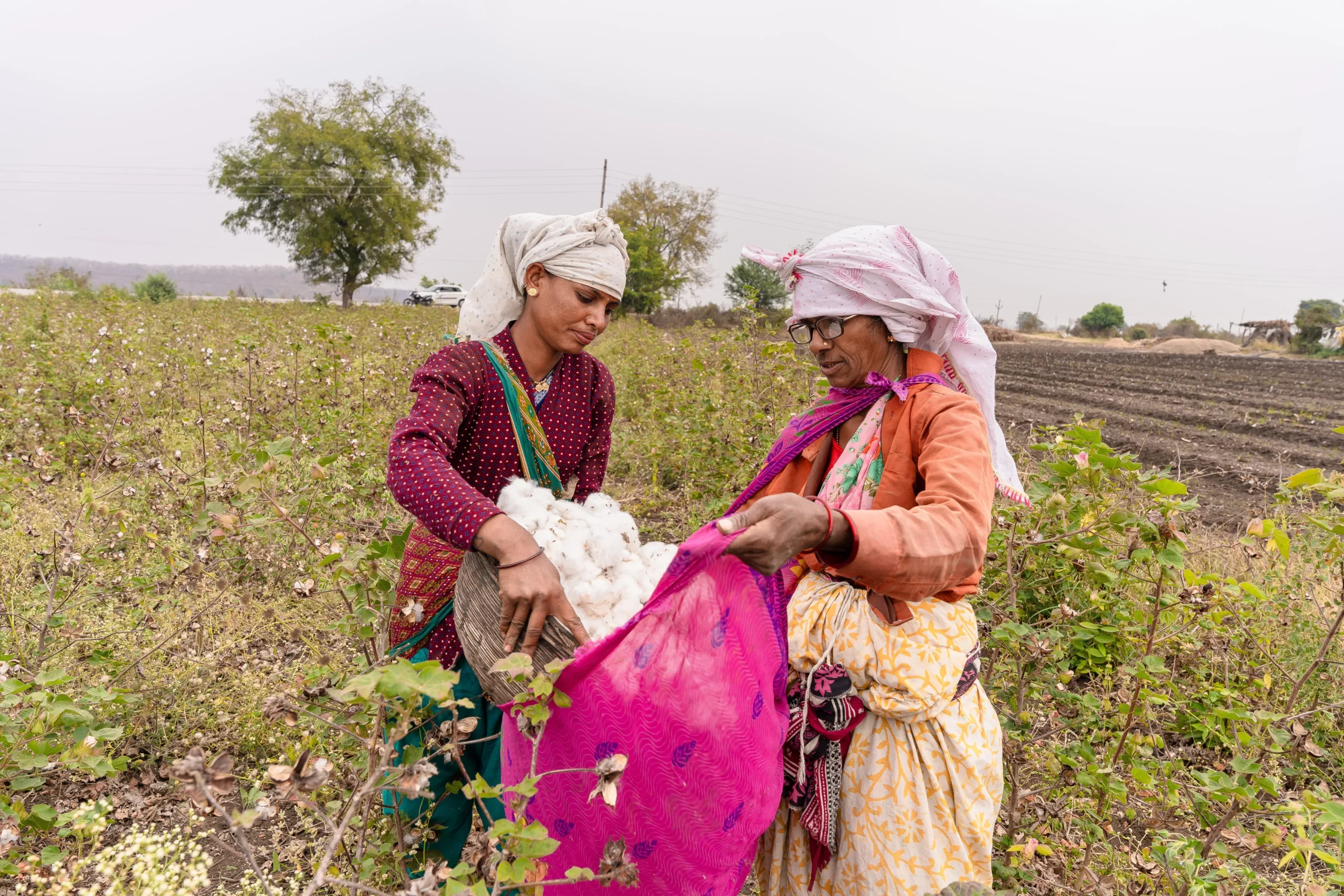
In water-scarce regions of Rajasthan, Bundelkhand, Maharashtra’s Marathwada, and parts of Madhya Pradesh, women and girls walk an average of 2 to 5 kilometres daily to fetch water. A study by WaterAid estimated that Indian women collectively spend 150 million work-days each year fetching water - the equivalent of a national economic loss of billions of rupees.
This burden is not merely physical. Girls who spend mornings fetching water miss school. Women who carry 15 to 20 litres on their heads daily suffer chronic spinal and joint problems. In extreme cases, families in water-scarce villages of Maharashtra have practised “water wives” - men marrying additional women specifically to share the water-fetching burden. The practice, while declining, highlights how deeply water scarcity warps social structures.
Farmers: Chasing Water Deeper Underground
For India’s 120+ million farming households, water is survival. As groundwater tables plummet, farmers invest increasingly in deeper borewells - often spending Rs 2 to 5 lakh on wells that may dry up within a few years. In parts of Karnataka, Tamil Nadu, and Andhra Pradesh, borewells now need to reach 800 to 1,500 feet - compared to 200 feet just two decades ago.
The failure of a borewell can be financially catastrophic. Indebted farmers who lose their water source often have no fallback. Research has drawn troubling correlations between water scarcity and farmer suicides, particularly in Maharashtra’s Vidarbha and Marathwada regions, where consecutive droughts have devastated livelihoods. The National Crime Records Bureau (NCRB) data consistently shows that regions with severe water stress report higher rates of agrarian distress.
Urban Slum Dwellers: Paying More for Less
In the cruel paradox of urban water economics, the poorest pay the most. Residents of informal settlements and urban slums - who lack piped water connections - often buy water from private tankers at rates 5 to 10 times higher than what middle-class residents pay through municipal supply. In Mumbai’s Dharavi, families may spend 10 to 15% of their income on water. In Delhi’s unauthorised colonies, water arrives by tanker a few times a week, with families queuing for hours.
The health consequences are equally stark. Without reliable clean water, waterborne diseases - diarrhoea, cholera, typhoid, hepatitis A - disproportionately affect slum communities. According to UNICEF India, diarrhoeal diseases kill approximately 100,000 children under five in India every year, with unsafe water being a primary cause.
India’s water crisis is not a natural disaster - it is largely a man-made one. While geography and monsoon variability play a role, the roots of the crisis lie in decades of policy choices, perverse incentives, and institutional neglect.
Agricultural Over-Extraction: The 89% Problem
Agriculture consumes approximately 89% of India’s freshwater - one of the highest proportions in the world. Much of this is groundwater pumped for irrigation, often using highly subsidised or free electricity. The Green Revolution of the 1960s and 1970s, while averting famine, created a model of water-intensive farming - particularly rice and sugarcane in semi-arid regions like Punjab, Haryana, and Maharashtra - that is fundamentally unsustainable.
Punjab’s rice-wheat cycle, supported by free electricity for pumping, has caused the state’s water table to drop by over 0.5 metres per year on average, with some blocks declining much faster. Maharashtra grows sugarcane - one of the most water-intensive crops - on just 4% of its cultivable land, yet the crop consumes over 70% of the state’s irrigation water. These are policy-driven outcomes, not inevitable ones.
The Minimum Support Price (MSP) system and procurement policies further incentivise water-intensive crops. When the government guarantees purchase of rice and wheat at profitable prices, farmers have no economic reason to switch to less water-intensive alternatives like millets, pulses, or oilseeds - even when those crops would be more ecologically appropriate for their region.
Industrial Pollution and Discharge
Indian industry - textiles, tanneries, pharmaceuticals, distilleries, paper mills - discharges enormous quantities of untreated or partially treated effluent into rivers and groundwater. The CPCB estimates that India generates roughly 72,368 million litres per day (MLD) of sewage but has installed treatment capacity for only about 36,668 MLD - barely half. Of the installed capacity, not all plants operate effectively.
The Ganga alone receives over 3,000 MLD of untreated sewage. In Kanpur, tanneries discharge chromium-laden waste into the river. In Gujarat’s industrial corridors, groundwater contamination from chemical plants has rendered entire aquifers unusable. The human cost is staggering: villages downstream of industrial zones report elevated rates of cancer, kidney disease, and neurological disorders.
Climate Change: Erratic Monsoons and Extreme Events
India’s water system is deeply monsoon-dependent - roughly 75% of annual rainfall occurs during the four-month southwest monsoon (June–September). Climate change is making this already concentrated rainfall pattern more erratic and extreme.
Data from the India Meteorological Department (IMD) shows an increasing trend of heavy rainfall events concentrated over shorter periods, interspersed with longer dry spells. This pattern is devastating for groundwater recharge: intense rainfall causes runoff and flooding rather than slow percolation into aquifers. The 2023 monsoon exemplified this - while national rainfall figures were near normal, distribution was wildly uneven, with floods in the northeast and drought in parts of Maharashtra and Karnataka.
Himalayan glacier retreat threatens long-term water security for the Ganga, Indus, and Brahmaputra basins. A 2019 study published in Science Advances found that Himalayan glaciers have been losing ice twice as fast since 2000 compared to the previous 25 years. While glacial melt temporarily increases river flows, the long-term trajectory points to diminished dry-season flows in rivers that sustain hundreds of millions.
Poor Urban Planning and Infrastructure
Indian cities lose an average of 40% of their treated water to leakage, theft, and inefficiency - the “non-revenue water” problem. This compares poorly with cities like Singapore (5%) and Tokyo (3%). Crumbling colonial-era pipelines, unplanned urban sprawl, and inadequate investment in water infrastructure mean that even water that is treated and pumped often never reaches consumers.
Rapid urbanisation has paved over natural recharge zones - lakes, wetlands, floodplains - with concrete and asphalt. Bengaluru’s notorious flooding-during-rain and drought-between-rains paradox stems directly from the destruction of its interconnected lake system and the sealing of permeable surfaces that once absorbed rainfall into aquifers.
Amid the crisis, there are powerful examples of what works - from government programmes achieving unprecedented scale to community-led initiatives reviving ancient water wisdom. These successes prove that India’s water crisis, while severe, is not irreversible.
Jal Jeevan Mission: From 17% to 77%
Launched in 2019 with a budget of Rs 3.6 lakh crore, the Jal Jeevan Mission (JJM) set an ambitious target: provide functional household tap connections (FHTCs) to every rural household in India by 2024. When the mission began, only 17% of rural households (approximately 3.23 crore out of 19.3 crore) had tap water connections. As of early 2025, that figure has risen to approximately 77% - over 15 crore households now have tap water at their doorstep.
States like Goa, Telangana, Haryana, Gujarat, and Punjab have achieved near-saturation (close to 100% coverage). The mission’s emphasis on community ownership - through Village Water and Sanitation Committees (VWSCs) and the “paani samiti” model - has improved the sustainability of infrastructure. The JJM represents what is possible when political will, funding, and decentralised governance align.
Challenges remain, however. Having a tap connection does not guarantee regular, safe water supply. Water quality testing, source sustainability, and operation and maintenance of schemes remain areas of concern. The mission’s success will ultimately be judged not by connections installed but by water flowing reliably from them years later.
Traditional Water Harvesting Revival
Some of the most effective water solutions in India are also the oldest. Across the country, communities and organisations are reviving traditional water harvesting structures that sustained civilisations for centuries before they were abandoned in the era of borewells and dams.
- Johads in Rajasthan: Rajendra Singh, known as the “Waterman of India” and recipient of the Stockholm Water Prize, has led the construction of over 11,800 johads (earthen check dams) across Alwar district. These structures capture monsoon runoff and allow it to percolate into aquifers, reviving five rivers that had gone dry - including the Arvari, which now flows year-round. Groundwater levels in treated villages have risen by 3 to 6 metres.
- Tankas in the Thar: Underground cylindrical tanks called tankas, used for centuries in Rajasthan’s Thar desert, are being revived as cost-effective rainwater storage solutions. A single tanka can store 20,000 to 25,000 litres - enough to sustain a family through the dry months.
- Stepwells (Vav/Baoli): While many of India’s magnificent stepwells have fallen into disuse, restoration efforts in Gujarat and Rajasthan are reviving these structures as both heritage sites and functional water sources. The Rani ki Vav in Patan, a UNESCO World Heritage Site, has inspired renewed interest in stepwell architecture.
- Bamboo Drip Irrigation in Meghalaya: Indigenous Khasi and Jaintia communities have practised bamboo drip irrigation for centuries - using bamboo pipes to channel spring water directly to plant roots on steep hillsides. This ancient system, predating modern drip irrigation, achieves remarkable water efficiency.
Community-Led Watershed Management
The Paani Foundation, founded by Bollywood actor Aamir Khan and filmmaker Kiran Rao, has catalysed a remarkable watershed movement in Maharashtra. Through the annual “Satyamev Jayate Water Cup” competition, thousands of villages compete to build water conservation structures before the monsoon. Since 2016, over 6,000 villages have participated, creating water storage capacity that has transformed semi-arid Marathwada and Vidarbha regions.
Villages that participated in the programme have reported significant increases in water availability, with groundwater tables rising and crop yields improving. The foundation’s model is powerful because it leverages community labour (shramdaan), generates healthy competition, and builds local ownership of water resources rather than dependence on external agencies.
Similarly, the Watershed Organisation Trust (WOTR) in Maharashtra and the Foundation for Ecological Security (FES) across multiple states have demonstrated that participatory watershed management - combining contour bunding, percolation tanks, farm ponds, and vegetation restoration - can significantly improve water security at the micro-watershed level.
Chennai’s Rainwater Harvesting Mandate
After its devastating 2019 water crisis, Chennai doubled down on rainwater harvesting (RWH). Tamil Nadu had already mandated RWH for all buildings in Chennai in 2001 - one of the first such laws in the country. While enforcement was initially patchy, the 2019 crisis spurred aggressive implementation. The Chennai Metropolitan Water Supply and Sewerage Board (CMWSSB) reported that increased RWH adoption contributed to measurably improved groundwater levels in several areas by 2022.
The city’s experience offers a lesson: mandates work, but only when accompanied by sustained enforcement, public awareness, and technical support. Buildings with properly maintained RWH systems reported meaningful reductions in dependence on municipal supply and tanker water.
Israel-India Water Technology Partnerships
India has increasingly partnered with Israel - a global leader in water efficiency - to adopt technologies like drip irrigation, micro-sprinklers, and desalination. The Pradhan Mantri Krishi Sinchayee Yojana (PMKSY) promotes “per drop more crop” through subsidised micro-irrigation. As of 2024, India has brought approximately 14.8 million hectares under micro-irrigation - the world’s largest such programme, though still covering only a fraction of irrigated land.
Drip irrigation can reduce water consumption by 30 to 60% compared to flood irrigation while improving crop yields. States like Maharashtra, Andhra Pradesh, and Gujarat have shown significant uptake. However, wider adoption remains constrained by small landholdings, high upfront costs, and inadequate extension services.
Solutions exist. The challenge is scaling them fast enough and embedding them in policy frameworks that outlast election cycles. Here is what India must do to avert a full-blown water catastrophe.
1. Regulate Groundwater Before It’s Gone
India effectively treats groundwater as a private resource - if you own land, you can dig a well and extract as much as you want. This legal framework, rooted in the colonial-era Indian Easements Act of 1882, is catastrophically outdated. The Model Groundwater Bill proposed by the central government has been adopted in some form by several states but enforcement remains minimal.
What is needed is a comprehensive groundwater governance framework that includes mandatory registration of borewells, aquifer-level extraction limits enforced through community management bodies, and pricing signals - particularly for agricultural pumping. Free electricity for pumping, while politically popular, is an ecological subsidy for groundwater destruction. Transitioning to metered electricity with targeted direct benefit transfers (DBT) for small farmers could dramatically reduce wasteful extraction while protecting vulnerable farmers.
2. Rejuvenate Rivers Through Sewage Treatment
No amount of riverfront beautification will restore India’s rivers if untreated sewage continues to flow into them. The single most impactful intervention for river health is closing the sewage treatment gap. India needs to treat 100% of its urban sewage - which requires not just building treatment plants but ensuring they operate effectively, consistently, and with adequate funding.
Decentralised treatment systems, including constructed wetlands and Soil Biotechnology (SBT) systems, offer cost-effective alternatives to large centralised plants, especially for smaller towns. The National Green Tribunal (NGT) has repeatedly ordered action on sewage treatment, but implementation has lagged behind judicial mandates.
3. Reform Water Pricing
Water in India is dramatically underpriced. Municipal water tariffs in most cities do not cover even the cost of supply, let alone investment in infrastructure maintenance and expansion. This leads to deteriorating systems, unreliable supply, and a vicious cycle of underinvestment.
Water pricing reform does not mean making water unaffordable for the poor - it means implementing progressive tariff structures where a basic lifeline quantity is free or very cheap, while heavy users (including commercial and industrial users) pay rates that reflect the true cost of water. Singapore’s water pricing model, which includes a “water conservation tax,” offers a proven template. Revenue generated can fund infrastructure improvement and subsidise access for low-income households.
4. Scale Wastewater Recycling
Treated wastewater is a massively underutilised resource in India. While countries like Israel reuse 85% of their wastewater (primarily for agriculture), India reuses less than 30% - and much of what is “reused” is simply untreated sewage flowing into irrigation canals. Properly treated wastewater can safely irrigate crops, recharge aquifers, serve industrial needs, and even be processed to potable standards.
The National Water Mission and AMRUT 2.0 have begun emphasising wastewater recycling, but adoption is slow. Creating a market for treated wastewater - through regulations requiring industries and large buildings to use recycled water for non-potable purposes - could transform urban water economics.
5. Mainstream Water Literacy
Ultimately, water security requires a shift in public consciousness. Water literacy - understanding where water comes from, how much is available, and what each person’s usage means for collective sustainability - should be part of school curricula, public discourse, and urban planning. The Atal Bhujal Yojana (ABHY), which focuses on community-led groundwater management in water-stressed blocks, represents a step in this direction, but the scale of behaviour change needed is enormous.
India’s water crisis is often called a “slow disaster” - but it is accelerating. Climate change is intensifying monsoon variability. Urbanisation is paving over recharge zones. Population growth is increasing demand. The window for action is narrowing with every passing year.
Yet there is cause for hope. The Jal Jeevan Mission has proven that India can execute water infrastructure at scale when political will is present. Communities across Rajasthan, Maharashtra, and Tamil Nadu have demonstrated that local action can revive aquifers and rivers. Technologies for water efficiency, treatment, and recycling are mature and proven.
What is missing is not knowledge or technology - it is urgency. Water must move from being a periodic crisis-headline to a permanent policy priority. It must be treated not as a resource to be exploited but as a commons to be protected. And every Indian - farmer, industrialist, city dweller, policymaker - must recognise that the water flowing from their tap today is not guaranteed tomorrow.
The rivers can flow again. The wells can be refilled. But only if we act - collectively, urgently, and wisely - before the last drop runs dry.
- NITI Aayog - Composite Water Management Index (2018, updated 2021)
- Central Ground Water Board (CGWB) - Dynamic Ground Water Resources of India (2023)
- Central Pollution Control Board (CPCB) - River Water Quality Reports
- WaterAid India - State of the World’s Water 2023
- Jal Jeevan Mission Dashboard - ejalshakti.gov.in
- India Meteorological Department (IMD) - Monsoon Reports
- Maurer et al., “Acceleration of ice loss across the Himalayas,” Science Advances (2019)
- Rodell et al., “Satellite-based estimates of groundwater depletion in India,” Nature (2009)
- UNICEF India - Water, Sanitation, and Hygiene Reports
- National Crime Records Bureau (NCRB) - Accidental Deaths and Suicides in India Reports
- Paani Foundation - Impact Reports (paanifoundation.in)
- Ministry of Agriculture - PMKSY Implementation Reports
What you can do
- Share the evidenceSend this to one person who should know about environment.Share on WhatsApp
- Give an afternoonTeach, mentor, clean up, or lend your professional skills.Ways to volunteer
- Tell us what's missingKnow a story, a fact we got wrong, or a solution worth spotlighting?Suggest a story
Politically neutral. Every claim sourced. Report a correction.
No comments yet