The Science of Holi: Why India's Festival of Colors Is a Chemistry Lesson
Holi's colours began as natural pigments from plants and minerals. A look at the chemistry, botany and physics behind India's festival of colours.
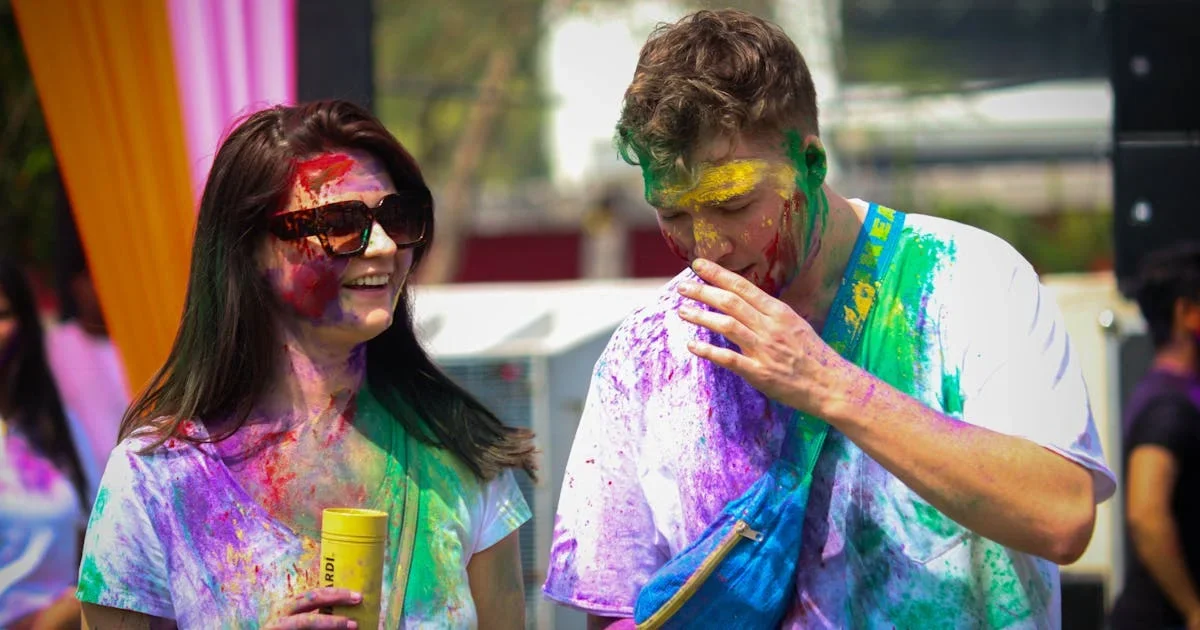
Every March, India erupts in color. Millions of people take to the streets, rooftops, and courtyards to throw powdered pigments, spray colored water, and celebrate Holi, the festival that marks the arrival of spring, the triumph of good over evil, and the one day when social hierarchies dissolve in a cloud of gulal. But behind the joy and chaos lies something fascinating: centuries of chemistry, botany, and physics that most celebrants never think about.
Holi is not just a cultural spectacle. It is an open-air science experiment that has been running for over 2,000 years.
The Chemistry of Traditional Holi Colors
Long before synthetic dyes existed, India’s Holi colors came entirely from nature. Each color had a specific botanical or mineral source, and many of them had medicinal properties that were not accidental.
- Yellow (Haldi/Turmeric): Ground turmeric root (Curcuma longa) produces the bright yellow powder that is perhaps the most iconic Holi color. Curcumin, the active compound in turmeric, is a powerful antioxidant and anti-inflammatory agent. Research published in the Journal of Medicinal Chemistry has shown curcumin’s potential in treating everything from arthritis to certain cancers. When you smear haldi on someone’s face during Holi, you are literally applying medicine.
- Red (Kumkum/Sindoor): Traditional red came from dried hibiscus flowers (Hibiscus rosa-sinensis) or from kumkum, a mix of turmeric and lime juice. The chemical reaction is elegant: when calcium hydroxide (lime) meets curcumin, it shifts the pH and transforms yellow turmeric into a vivid red. This is acid-base chemistry happening on the palm of your hand.
- Green (Neem and Mehendi): Dried neem leaves and henna (Lawsonia inermis) provided green pigments. Neem contains azadirachtin, a compound with antifungal and antibacterial properties. Henna’s lawsone molecule binds to keratin in skin and hair, which is why mehndi stains last for weeks. During Holi, both substances provided a natural skin treatment alongside the celebration.
- Blue (Indigo/Neel): The indigo plant (Indigofera tinctoria), native to India and one of the oldest dyes in human history, produced deep blue. The chemistry of indigo is remarkable: the plant itself is green, but when its leaves are fermented and oxidized, the indigotin molecule forms, producing blue. India was the world’s largest exporter of indigo for centuries, and the dye was so valuable that the British colonial indigo plantations became a flashpoint for India’s independence movement.
- Orange (Palash/Flame of the Forest): The flowers of the Butea monosperma tree, known as palash or “flame of the forest,” produce a brilliant orange when soaked in water. This was traditionally the primary source of Holi’s colored water. The flowers contain butrin and isobutrin, flavonoid compounds that are being studied for their anti-diabetic and hepatoprotective properties.
The genius of traditional Holi colors was that they were biodegradable, skin-safe, and often therapeutically beneficial. Playing Holi in ancient India was, in a very real sense, good for your health.
The Problem with Modern Synthetic Colors
The shift from natural to synthetic Holi colors began in the mid-20th century as industrialization made chemical dyes cheaper than botanical ones. Today, the majority of commercially sold Holi colors contain synthetic compounds that would horrify a chemist.
Studies by the Centre for Science and Environment (CSE), New Delhi, have found the following in commonly sold Holi powders:
- Lead oxide in black and dark colors, a known neurotoxin
- Mercury sulphide in red powders, can cause skin cancer and kidney damage
- Copper sulphate in green colors, causes eye irritation and allergic reactions
- Malachite green (an industrial textile dye), classified as a potential carcinogen
- Rhodamine B in pink colors, banned in food but widely used in Holi powders, linked to liver and thyroid damage
The base material is often industrial-grade talc or silica, fine particles that, when inhaled, can cause respiratory inflammation. A 2019 study published in the Indian Journal of Dermatology found that 15-20% of Holi celebrants reported skin reactions including rashes, itching, and chemical burns from synthetic colors.
This raises an uncomfortable question: has India’s most joyous festival been quietly poisoning its celebrants?
The Physics of Holika Dahan
The night before Holi, communities across India light massive bonfires in a ritual called Holika Dahan. The tradition commemorates the mythological burning of the demoness Holika, but the practice has a scientific rationale that predates the mythology.
Holi falls at the transition between winter and spring, a period when bacterial and viral populations surge as temperatures rise. The large community bonfires serve multiple functions. The heat generates localized thermal currents that displace stagnant, pathogen-laden air. The smoke from specific woods traditionally used, particularly neem and mango wood, contains compounds with antimicrobial properties. Circling the bonfire (parikrama), a common ritual, exposes participants to this therapeutic heat and smoke.
This is not mysticism. The Indian Journal of Traditional Knowledge has published research showing that the smoke from neem wood fires contains nimbin and nimbidin, compounds effective against several bacterial strains. The festival’s timing, at the cusp of seasonal change when infections peak, suggests that the bonfire tradition may have originated as a public health measure wrapped in mythology.
Holi and Water: The Equation Nobody Talks About
Here is a number that should give every Indian pause: an estimated 15-20 billion liters of water are used during Holi celebrations across India each year. In a country where 163 million people lack access to clean drinking water (UNICEF 2023 data) and where cities like Bengaluru, Chennai, and Delhi face recurring water crises, this is not a trivial figure.
The colored water that makes Holi’s water fights so photogenic often ends up contaminated with synthetic dyes that are difficult to remove through standard water treatment. A 2022 study by IIT Delhi found elevated levels of heavy metals in municipal water sources in the days following Holi, with lead and chromium concentrations exceeding safe limits in some samples.
Several Indian cities and communities have responded with “dry Holi” movements that use only dry powder (gulal) and minimize water usage. The Jal Shakti Ministry’s 2024 guidelines encouraged water-conscious celebrations, and social media campaigns like #DryHoli and #EcoHoli have gained traction, particularly among urban youth.
The question is not whether India should stop celebrating Holi. The question is whether India can celebrate smarter, returning to the botanical colors that served for millennia, reducing water waste, and applying the same scientific thinking that originally designed the festival’s traditions.
The Return to Natural Colors: A Growing Movement
The good news: India’s “organic Holi” movement is growing rapidly. Startups like Phool.co (Kanpur), which makes colors from recycled temple flowers, and organizations like CLEAN India (Campaign for Lead-free and Eco-friendly Alternatives for Natural celebration) are creating commercially viable natural color alternatives.
IIT Hyderabad researchers developed a process in 2023 to extract vibrant, stable pigments from agricultural waste, beetroot for magenta, spinach for green, marigold for yellow, that cost only marginally more than synthetic alternatives. Several state governments, including Rajasthan and Kerala, now distribute free natural color kits in schools and public spaces during Holi.
This movement is not about nostalgia. It is about applying modern science to recover ancient wisdom. The original Holi colors were not primitive substitutes for “better” synthetic dyes. They were sophisticated botanical preparations that happened to be safe, sustainable, and therapeutic. India’s ancestors understood something that industrial chemistry forgot: celebration and health do not have to be in conflict.
Holi as India’s Oldest Social Experiment
Beyond the chemistry and physics, Holi performs a social function that no other Indian festival quite matches. For one day, caste hierarchies dissolve. A Dalit child can throw color at a Brahmin elder. A boss gets drenched by their peon. Women chase men with sticks in the Lathmar Holi of Barsana. The rigid social stratification that defines much of Indian daily life briefly, even if symbolically, breaks down.
Sociologists call this “ritual inversion”, a controlled social release valve that exists in cultures worldwide (think of Carnival in Brazil or Mardi Gras in New Orleans). But Holi’s version is uniquely egalitarian in its design: color, once applied, makes everyone look the same. You cannot tell rich from poor, upper caste from lower caste, when everyone is covered head-to-toe in pink and green and yellow.
This is perhaps the most profound science of Holi, not chemistry or physics, but social science. In a country still grappling with inequality, a festival that literally colors everyone the same is not just celebration. It is aspiration.
Holi 2026 falls on March 3-4. This year, before you pick up that packet of gulal, check if it’s natural or synthetic. Your skin, and your local water supply, will thank you.
What you can do
- Share the evidenceSend this to one person who should know about environment.Share on WhatsApp
- Give an afternoonTeach, mentor, clean up, or lend your professional skills.Ways to volunteer
- Tell us what's missingKnow a story, a fact we got wrong, or a solution worth spotlighting?Suggest a story
Politically neutral. Every claim sourced. Report a correction.
No comments yet