Tamil Nadu: The State That Made Free School Lunches Change a Nation's Health
Tamil Nadu pioneered free school meals in 1925. A century later, India's PM POSHAN feeds 120 million children daily in 1.15 million schools. How one state's model changed a nation's health, education, and gender outcomes.
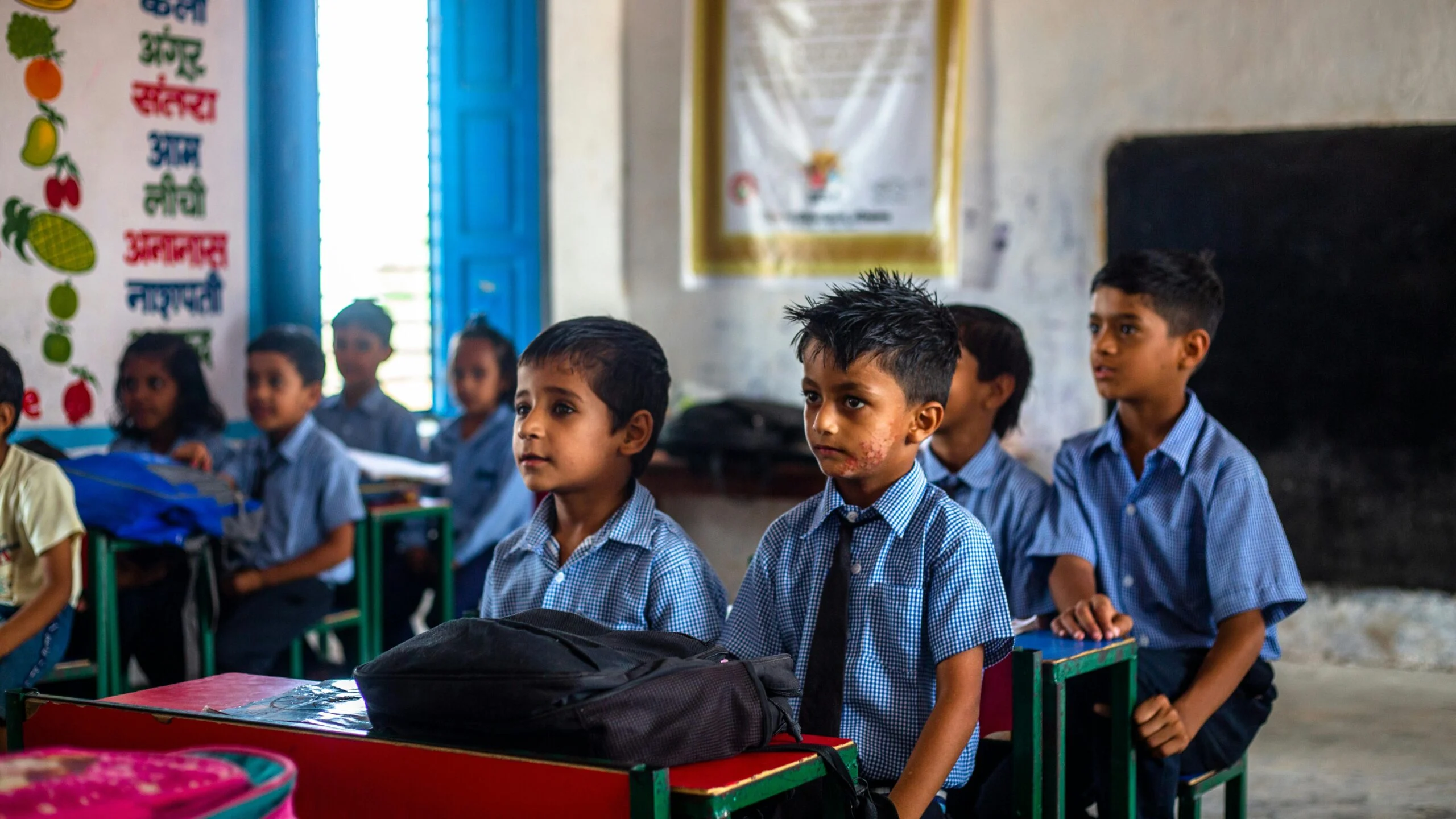
In 1925, the Madras Corporation began serving free lunches to children in elementary schools. It was a modest program in a single city. A century later, India’s Mid-Day Meal Scheme, now called PM POSHAN, feeds 120 million children daily in 1.15 million schools, making it the largest school feeding program in the world. The program’s origin, scale, and impact trace directly back to Tamil Nadu, where a state-level initiative became the model for national policy and changed health, education, and gender outcomes for generations.
How Tamil Nadu Started It All
The Madras Corporation’s 1925 school lunch program was India’s first organized attempt at feeding schoolchildren. But the program that changed national policy came in 1982, when Chief Minister MG Ramachandran (MGR) launched the Chief Minister’s Nutritious Meal Programme, making Tamil Nadu the first Indian state to provide free cooked meals to all children in government and government-aided schools.
MGR’s motivations were both humanitarian and political. As a former film star with a massive popular following, he understood that feeding children was the most direct way to address rural poverty, improve school attendance, and build lasting voter loyalty. The program started by serving a simple meal of rice, sambar, and a boiled egg or banana. The cost was borne entirely by the state government.
The results were immediate and measurable. School enrollment in Tamil Nadu increased by 15 percent within two years of the program’s launch. Attendance rates, which had hovered around 65 percent in rural areas, climbed to over 80 percent. The reason was straightforward: for families living on daily wages, one guaranteed meal per day for their children reduced the economic burden enough to keep them in school rather than sending them to work.
Every subsequent Tamil Nadu government, regardless of party, has expanded the program rather than cutting it. Jayalalithaa added breakfast in 2011. The menu expanded to include vegetables, eggs (three per week), milk, and seasonal fruits. Today, Tamil Nadu’s school meal program is considered the gold standard in India for menu diversity, kitchen infrastructure, and nutritional outcomes.
From State Program to National Policy
Tamil Nadu’s success inspired other states, Gujarat, Kerala, and Madhya Pradesh launched their own school meal programs in the late 1980s and 1990s. But the decisive moment came from the Supreme Court. In 2001, the People’s Union for Civil Liberties (PUCL) filed a public interest litigation arguing that children’s right to food was a fundamental right under Article 21 of the Constitution.
The Supreme Court’s interim order in November 2001 directed all state governments to provide cooked midday meals to every child in government and government-aided primary schools. This order transformed what had been a scattered collection of state-level programs into a national mandate. The Central government launched the National Programme of Nutritional Support to Primary Education, commonly known as the Mid-Day Meal Scheme, with central funding covering grain, cooking costs, and kitchen infrastructure.
The program expanded to upper primary schools (classes 6-8) in 2007 and was rebranded as PM POSHAN (Pradhan Mantri Poshan Shakti Nirman) in 2021 with an increased per-child allocation and the addition of supplementary nutrition like fortified rice and micronutrient supplements.
The Scale Today
Metric | Figure |
|---|---|
Children fed daily | ~120 million |
Schools covered | 1.15 million |
Annual budget (Central + State) | ~15,000 crore |
Cooks and helpers employed | 2.6 million (mostly women) |
Grain distributed annually | 3.7 million tonnes |
Eggs served weekly (in participating states) | ~800 million |
To put this in perspective: India’s school meal program feeds more children daily than the entire population of Germany. The logistics involved, procuring grain, vegetables, eggs, and cooking fuel for 1.15 million kitchens operating simultaneously every school day, make this one of the most complex food supply chains in the world.
Measurable Impact on Health
Multiple peer-reviewed studies have measured the program’s health outcomes:
- Stunting reduction: A 2020 study published in the Journal of Development Economics found that exposure to the mid-day meal program during the first five years of implementation reduced stunting (low height for age) by 2.3 percentage points among children in participating states. In absolute numbers, this translates to approximately 1.3 million fewer stunted children per cohort
- Anemia reduction: States that added eggs and iron-fortified rice to their menus (Tamil Nadu, Karnataka, Andhra Pradesh) showed measurably lower anemia rates among schoolchildren. Tamil Nadu’s anemia rate among 5-9 year olds dropped from 32 percent in NFHS-4 (2015-16) to 18 percent in NFHS-5 (2019-21)
- BMI improvement: The Indian Institute of Science, Bengaluru, analyzed anthropometric data from 15 states and found that children who received mid-day meals for at least 3 years had significantly higher BMI-for-age scores compared to non-participants
- Cognitive performance: A study by the International Food Policy Research Institute (IFPRI) documented improved test scores in mathematics and reading among children who received school meals regularly, with the largest gains among children from the most food-insecure households
Impact on Education
The mid-day meal program’s primary education impact is well documented:
- Enrollment increase: National-level data shows a 12-15 percent increase in enrollment in government primary schools following the Supreme Court mandate. The effect was strongest in states with the lowest baseline enrollment, particularly Bihar, Jharkhand, and Odisha
- Attendance improvement: Daily attendance rates improved by 10-12 percentage points in schools that implemented hot cooked meals versus those offering dry rations or food grain distribution
- Gender equity: The program disproportionately benefits girls. Families that would otherwise keep daughters home (to save on food costs or for household work) are more likely to send them to school when a guaranteed meal is provided. The gender gap in primary enrollment narrowed significantly in states after mid-day meal implementation
- Dropout reduction: Dropout rates in classes 1-5 declined from 25 percent in 2001 to under 5 percent by 2020, with the mid-day meal program cited as a contributing factor alongside other interventions like Sarva Shiksha Abhiyan
- Social integration: Children of all castes eating together daily in school kitchens has a documented desegregation effect. A study in Karnataka found that schools with functioning mid-day meal programs showed lower levels of caste-based discrimination in seating and interaction compared to schools without the program
The Problems: Quality, Safety, and Corruption
The program is not without serious issues:
- Food safety incidents: The 2013 Bihar school meal poisoning killed 23 children after cooking oil contaminated with pesticide was used. While catastrophic incidents are rare, food safety audits regularly find hygiene violations in school kitchens, inadequate handwashing, unclean utensils, and poor storage
- Calorie and protein deficiency: The mandated meal provides 450 calories and 12 grams of protein for primary students. Several state audits have found actual meals delivering 30-40 percent below these targets due to ingredient shortages, portion reduction, or corruption in grain allocation
- Cook wages: The 2.6 million cooks (almost all women) receive an honorarium of 1,000-1,500 rupees per month in most states, far below minimum wage. This makes recruitment difficult and contributes to quality problems. Tamil Nadu pays its cooks 3,000-4,000 per month, which correlates with better meal quality
- Egg politics: Some states (notably Madhya Pradesh and Rajasthan under certain governments) have refused to serve eggs in school meals due to vegetarian ideology, replacing them with bananas or milk. Nutritionists point out that eggs are the most cost-effective source of protein for growing children and that vegetarian alternatives do not provide equivalent nutrition per rupee
- Grain diversion: CAG audits have documented grain meant for school meals being diverted to the open market. States with weak monitoring systems are more susceptible to leakage at the block and district level
Tamil Nadu’s Edge: What Other States Can Learn
Tamil Nadu’s program consistently outperforms other states because of specific design choices that other states have not replicated:
- Kitchen infrastructure: Purpose-built kitchens with gas connections, clean water supply, and covered dining areas. Most other states cook in improvised setups using firewood
- Menu diversity: 25 rotating recipes with regional dishes, eggs three times weekly, milk, and seasonal fruits. Many states serve the same rice-dal combination daily
- Higher cook compensation: Tamil Nadu cooks earn 3,000-4,000/month versus the national average of 1,000-1,500. Better pay attracts more committed workers
- Regular inspections: Block-level nutritional officers conduct surprise inspections with standardized checklists. Results are publicly available
- Political consensus: Every government, DMK, AIADMK, or coalition, has expanded rather than cut the program. This bipartisan commitment ensures continuity regardless of election outcomes
What started as a modest experiment in feeding schoolchildren in a single south Indian city has become the largest school feeding program in human history. Tamil Nadu proved that a well-designed, consistently funded school meal program can simultaneously improve nutrition, boost enrollment, reduce gender disparity, and break caste barriers. The model exists. The data supports it. The question for the rest of India is not whether school meals work, but whether state governments will invest the money, infrastructure, and political will to run them at the standard Tamil Nadu set a century ago.
What you can do
- Share the evidenceSend this to one person who should know about this issue.Share on WhatsApp
- Give an afternoonTeach, mentor, clean up, or lend your professional skills.Ways to volunteer
- Tell us what's missingKnow a story, a fact we got wrong, or a solution worth spotlighting?Suggest a story
Politically neutral. Every claim sourced. Report a correction.


No comments yet