Panchayats Raise 1.1% of Their Own Money: The Devolution That Never Finished
India gave its village governments constitutional status in 1993. More than thirty years later they raise about 1.1 per cent of their revenue themselves and depend on transfers for the rest, which is why the body closest to citizens can decide the least.
In this story
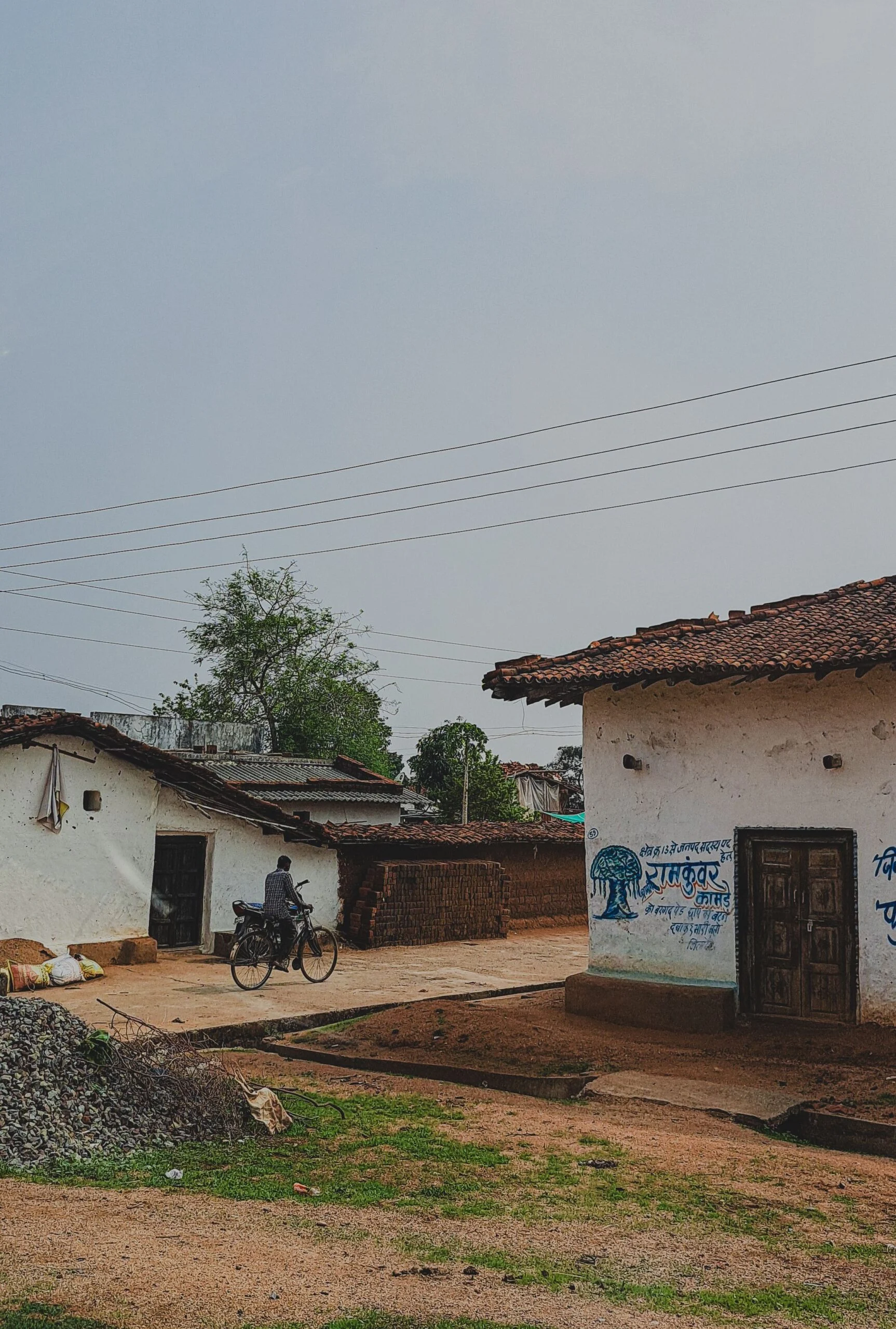
India has close to two and a half lakh village level governments. They are constitutional bodies, not committees. They hold regular polls, they have reserved seats for women and for Scheduled Castes and Tribes, and they are the tier of government that most Indians can physically walk to.
They also raise, on average, about 1.1 per cent of their total revenue from their own sources. Everything else arrives as a transfer from a state or the centre, usually attached to a scheme that specifies what it may be spent on.
A body that raises one rupee in a hundred and receives the rest with instructions is not, in any practical sense, a government. It is a delivery office.
What 1993 actually promised
The constitutional amendment that created this tier set out a design with three parts, usually described as funds, functions, and functionaries. Village governments were to receive a defined set of subjects to administer, the staff to administer them, and the money to pay for it.
The subjects were listed. Twenty-nine of them, covering drinking water, sanitation, rural roads, primary education infrastructure, health centres, and more. On paper this is a substantial local government.
Devolution of the other two parts was left to each state to legislate. Three decades later, states have transferred subjects on paper at very different rates, transferred staff far less, and transferred taxation powers least of all. A panchayat may be formally responsible for village water supply while having no engineer, no budget line, and no power to levy a water charge.
Responsibility was devolved. Money and staff were not. The gap between them is where local government in India actually lives.
Why own revenue stays near zero
Panchayats do have taxation powers in most state laws: property tax on village houses, fees on markets and fairs, charges on water connections, rent from panchayat land and buildings. In practice collection is minimal, and the reasons are structural rather than lazy.
- The political cost is local and immediate. A sarpanch who levies a house tax faces the person taxed at the tea shop that evening. The benefit of the revenue is diffuse and delayed.
- Transfers are unconditional in practice. Grants arrive whether or not local tax is collected, so collecting is optional in a way it is not for a state.
- There is no assessment machinery. Property tax requires a valuation roll and someone to maintain it. Most panchayats have neither.
- Rates are frozen. Where rates are set in state rules and rarely revised, inflation quietly erases the revenue base.
National figures reflect this. Panchayat own revenue collection has in some periods fallen in absolute rupee terms even as total panchayat spending rose, meaning the dependence on transfers deepened rather than eased.
Why this makes services worse
Dependence on tied transfers has effects that show up as everyday failures, and they are worth naming individually.
Nothing can be maintained. Scheme money is overwhelmingly for building things. A hand pump, a school toilet, a village road all arrive funded. Repairing them three years later has no scheme, no line, and no money, which is why so much rural infrastructure is visibly new and visibly broken at the same time. It is the same maintenance gap that leaves school toilets locked within a year of construction.
Local priorities cannot be funded. If a village most needs a drainage line and the available scheme funds a community hall, the village gets a community hall. Local knowledge about what is actually needed has no financial instrument to express itself through.
Accountability points upward. A body funded by transfers answers to the office that sends them. A body funded by local taxes answers to the people who paid. The direction of accountability follows the money, which is the oldest finding in public finance and the one most consistently ignored here.
Where the money comes from instead
If a panchayat raises almost nothing itself, it is worth following what does arrive. Three streams make up nearly all of it.
The first is finance commission grants, released by the centre to local bodies on a population and area formula. These are the closest thing to untied money a panchayat receives, and even here a large portion is now earmarked for specified purposes such as sanitation and drinking water.
The second is state transfers, which vary enormously. Some states pass on a defined share of their own tax revenue to local bodies on the recommendation of a state finance commission. Others constitute those commissions late, accept their recommendations partially, or table the action taken report years after the fact.
The third, and in practice the largest flow through a village, is scheme money. Employment guarantee wages, housing grants, sanitation funds and road programmes all pass through or around the panchayat with their purpose already fixed in Delhi or the state capital. The village council administers them without having chosen them. We looked at how one of these actually performs on the ground in the 2026 verdict on MGNREGA.
Understanding this stack matters because it explains why local government feels simultaneously busy and powerless. A great deal of money moves through a panchayat office. Almost none of it is money the panchayat decided to raise or decided to spend. For a wider view of how public money is allocated before it ever reaches a village, see where your tax money actually goes.
The people problem behind the money problem
There is a second failure sitting underneath the fiscal one, and it is less often discussed.
Reserved seats brought a very large number of women and members of Scheduled Castes and Tribes into elected office, which is a real achievement of the 1993 design. In many places the practice of a husband or male relative exercising the office informally, widely enough that it has its own vocabulary, hollowed part of it out.
The correctives that work are unglamorous: training that actually reaches the elected representative rather than her relative, meetings held at times women can attend, records kept in the local language, and a secretary who is accountable to the council rather than only to the block office.
What would change it
Untied money as a share of every transfer
A fixed proportion of every grant, spendable on local priorities including maintenance, decided by the council and recorded in minutes. Finance commissions have recommended versions of this repeatedly. Implementation keeps narrowing it back into tied categories.
Match local collection with a top-up
If a rupee raised locally brings a matching rupee from the state, collecting stops being politically costly and becomes politically rewarding. This is the cheapest available fix to the incentive problem.
Give them the staff
Functions without functionaries is the failure written into the original design. A shared engineer and accountant across a cluster of panchayats costs little and is the difference between a body that can execute and one that can only forward files.
Publish the accounts where people can see them
Panchayat receipts and spending are public records that almost no resident has read. A painted board outside the office listing money received and spent each quarter does more for local accountability than any audit filed in a district capital.
What you can do about it
- Attend one gram sabha. It is the only forum where residents can formally approve or object to what the panchayat plans to spend. Attendance is usually low enough that one informed person changes the room.
- Ask for the accounts. Receipts and expenditure are public. Asking in writing is a single application and rarely refused.
- Pay the local tax if it is levied. The revenue is small and the precedent is not. A panchayat with a collection record has an argument for more powers.
- At state level: ask which of the twenty-nine subjects your state has actually devolved, with staff and funds. The answer is public and usually shorter than the official claim.
India built the largest structure of elected local government in the world and then declined to fund it. The result is two and a half lakh bodies with democratic legitimacy, constitutional standing, and almost no money of their own.
Featured photo by Vaibhav Sahu on Pexels.
Sources: panchayat own revenue and devolution analysis via Drishti IAS summaries of RBI and ministry data and PRS Legislative Research.
What you can do
- Share the evidenceSend this to one person who should know about governance.Share on WhatsApp
- Give an afternoonTeach, mentor, clean up, or lend your professional skills.Ways to volunteer
- Tell us what's missingKnow a story, a fact we got wrong, or a solution worth spotlighting?Suggest a story
Politically neutral. Every claim sourced. Report a correction.


No comments yet