Your City Is Broke: Why Indian Municipalities Cannot Fund the Roads They Promise
Indian cities generate a large share of national output and run on budgets a mid-sized European town would find small. Municipal corporations raise about half their revenue themselves, smaller towns far less, and almost none of it is enough for what a city is legally required to provide.
In this story
Ask why a road in an Indian city is broken and you will usually be told it is corruption, or contractor quality, or that the drains were dug up again. Those are all real. Underneath them sits a duller explanation that better predicts which cities work: municipal governments in India do not have the money to run the cities they are responsible for.
Not in the sense of being short this year. In the sense of the revenue base being structurally too small for the mandate.
The shape of a municipal budget
Municipal bodies fall into a rough hierarchy, and the gap between the top and bottom is enormous.
- Large municipal corporations raise roughly half their revenue from their own sources, and the biggest cities somewhat more, around 60 per cent.
- Municipal councils and smaller town bodies depend on grants for around 70 per cent of what they spend.
- Everything else comes from state transfers, finance commission grants, and scheme money tied to a purpose.
Own source revenue for a city means property tax first and foremost, then user charges for water and waste, then licence fees, advertisement charges, and rent from municipal property.
The single most important number in that list is property tax, and it is the one Indian cities collect worst.
A city that cannot value its own buildings cannot fund its own roads. Everything else follows from that.
Why property tax collapses
Three failures compound, and each is fixable on its own.
Incomplete registers. Many cities do not know how many taxable properties exist within their limits. New construction, informal extensions, and entire settlements are absent from the roll. A tax you never demanded cannot be a tax you failed to collect.
Stale valuations. Where valuation is based on an assessed rental value fixed decades ago and rarely revised, the tax bears no relation to what the property is worth. Revising it requires a political decision to raise everybody’s bill at once, which is why it does not happen.
No consequence for not paying. Enforcement in most cities is weak enough that paying property tax is closer to voluntary than obligatory. Once that is widely understood, compliance becomes a matter of individual conscience rather than expectation.
Cities that fixed collection did it with unglamorous administration: satellite and drone mapping to find unlisted properties, a published rate card, online payment, and visible enforcement against large defaulters first rather than small households.
The city government you cannot name
There is a second problem that money alone would not solve. In most Indian cities, the person with real authority is not elected by the city.
A municipal commissioner is a state government officer, posted to the city and transferable at the state’s discretion. The elected mayor in many states has a short term, limited executive power, and no control over the commissioner. Water supply, transport, and urban development are frequently handled by separate state owned authorities that the city government does not direct at all.
The practical result is that a resident with a complaint about drainage cannot identify who is responsible, because responsibility is genuinely split between a municipal body, a state development authority, and a state department, none of which reports to the others.
This is the same devolution failure that afflicts rural India, examined in why panchayats raise barely one per cent of their own money. Functions were assigned to local bodies. Money and authority stayed above them.
What being broke looks like on the ground
An underfunded municipality does not announce itself. It shows up as a pattern of specific, familiar failures.
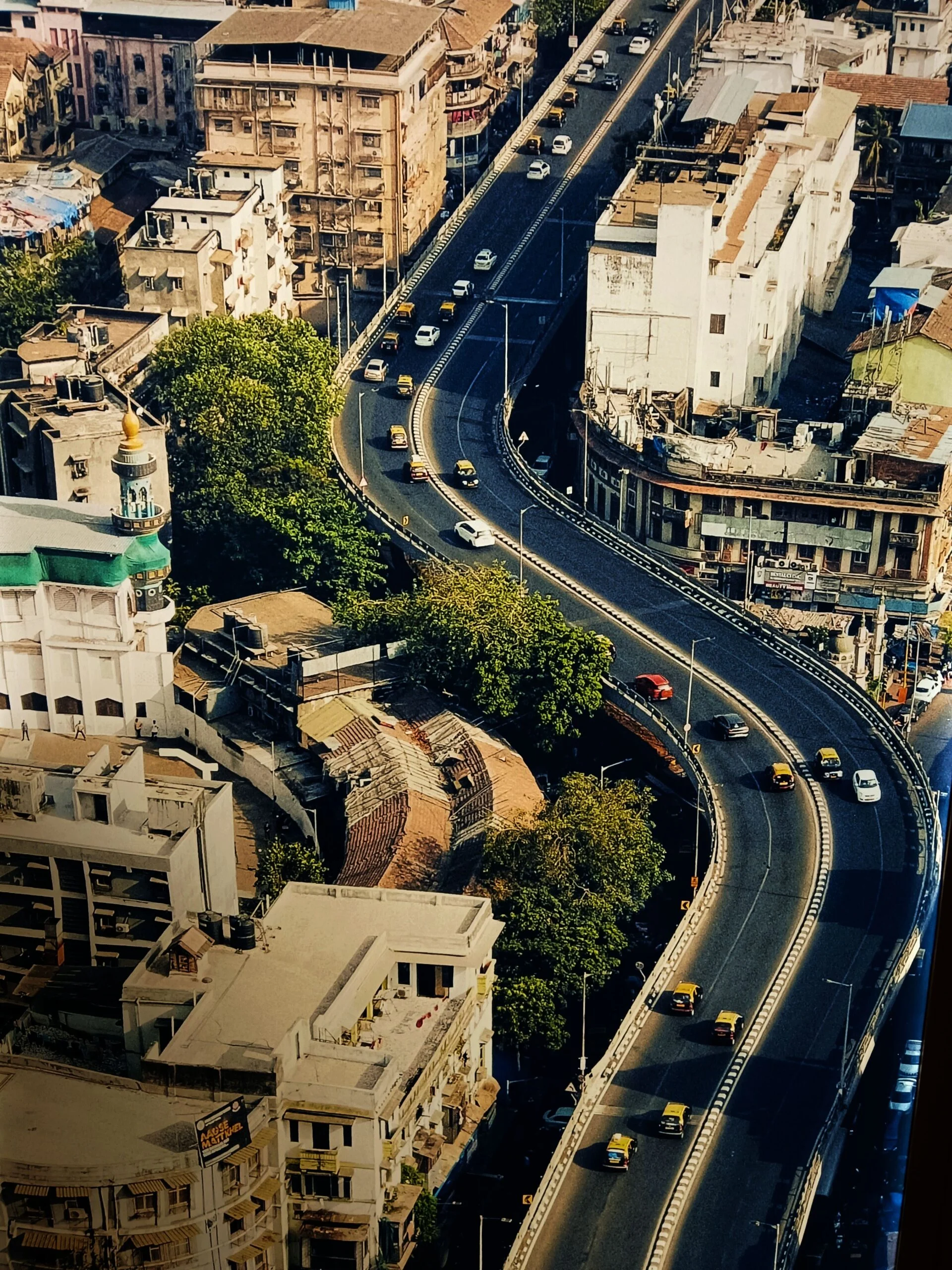
- Capital spending without maintenance. A new flyover gets built with scheme or borrowed money while the existing road network degrades, because construction attracts funding and repair does not.
- Contracted everything. Sanitation, water tankers and street lighting handed to contractors on short terms, with the workers on the lowest possible wages and no municipal employment.
- No planning capacity. Town planners, engineers and public health staff sanctioned and vacant, so the city cannot design what it needs and buys consultant reports instead.
- Waste piling at the edge. Collection funded, processing not, which is why so many Indian cities have a mountain at their boundary. We covered that failure in how India can win the war on waste.
Borrowing is not the escape route
The standard suggestion when a city runs short is that it should borrow, issue municipal bonds, or bring in private capital for infrastructure. India has pushed all three for a decade, with modest results, and the reason is worth understanding.
Lenders price debt against the borrower’s ability to repay. A city whose revenue base is a stale property tax roll it cannot enforce has no credible repayment stream, so either it cannot raise money or it can only do so against a state guarantee, which makes the state the actual borrower. Only a handful of Indian cities have issued bonds at meaningful scale, and they are the same cities that fixed their own revenue collection first.
Public private partnerships run into a related problem. A private operator needs a counterparty that can honour a twenty year contract, set tariffs, and enforce them. Where the municipal body cannot raise a water charge without a state decision, the partnership either fails or is quietly restructured with the public side carrying the risk.
The order matters, and it is frequently reversed in policy discussion. Own revenue first, then borrowing capacity, then private capital. A city that skips to the third step is not financing infrastructure. It is deferring a bill.
The staff a city does not have
Money is one constraint and people are the other. Indian municipal bodies carry large vacancies in exactly the roles that determine whether a city functions: town planners, civil engineers, public health officers, and sanitation supervisors.
A city without planners cannot assess a building proposal properly, which is how unsafe construction gets approved. A city without public health staff cannot inspect water quality or food safety at any real coverage. The work does not disappear when the post is empty. It gets done badly by someone whose job it is not, or it gets outsourced to a consultant who leaves when the report is delivered.
What would fix it
Complete the property register
Every city should know how many properties it contains. Mapping technology has made this cheap, and cities that have done it have seen collections rise sharply without raising a single rate.
Index valuations so revision is automatic
If valuations update by formula rather than by decision, no politician has to announce an increase and the base stops eroding silently with inflation.
One responsible authority per service
A resident should be able to name who is accountable for water, for roads, and for drainage. Where a state authority delivers a service inside city limits, it should answer to the city government for it.
Publish the budget in a form people read
Municipal budgets are public and effectively unreadable. A one page summary per ward, showing money received and spent, converts an abstract complaint about potholes into a specific question.
What you can do about it
- Pay your property tax and check the assessment. Under-assessment of large properties is where most of the missing revenue sits.
- Find your ward committee. Most cities are legally required to have them. Most do not function, because nobody attends.
- Ask for ward level spending. What was allocated to your ward and what was spent is public information and rarely requested.
- Identify the right authority before complaining. A complaint filed with the wrong body is closed without action, which is a large share of why citizen complaints appear to fail.
Indian cities are asked to house, move, water, and clean up after a growing share of the country’s population on budgets that would not run a mid-sized town elsewhere, with authority they do not hold. The pothole is not the problem. It is the receipt.
Featured photo by Nikhil on Pexels.
Sources: municipal own source revenue shares from the Sixteenth Finance Commission report for 2026-31 and state finance commission reporting, including the Sixth Maharashtra Finance Commission recommendations.
What you can do
- Share the evidenceSend this to one person who should know about governance.Share on WhatsApp
- Give an afternoonTeach, mentor, clean up, or lend your professional skills.Ways to volunteer
- Tell us what's missingKnow a story, a fact we got wrong, or a solution worth spotlighting?Suggest a story
Politically neutral. Every claim sourced. Report a correction.

No comments yet