How India Can Win the War on Waste
India generates 62 million tonnes of solid waste every year, yet only a fifth is scientifically processed. This deep-dive examines the crisis, the cities getting it right, and the systemic changes needed to turn trash into opportunity.
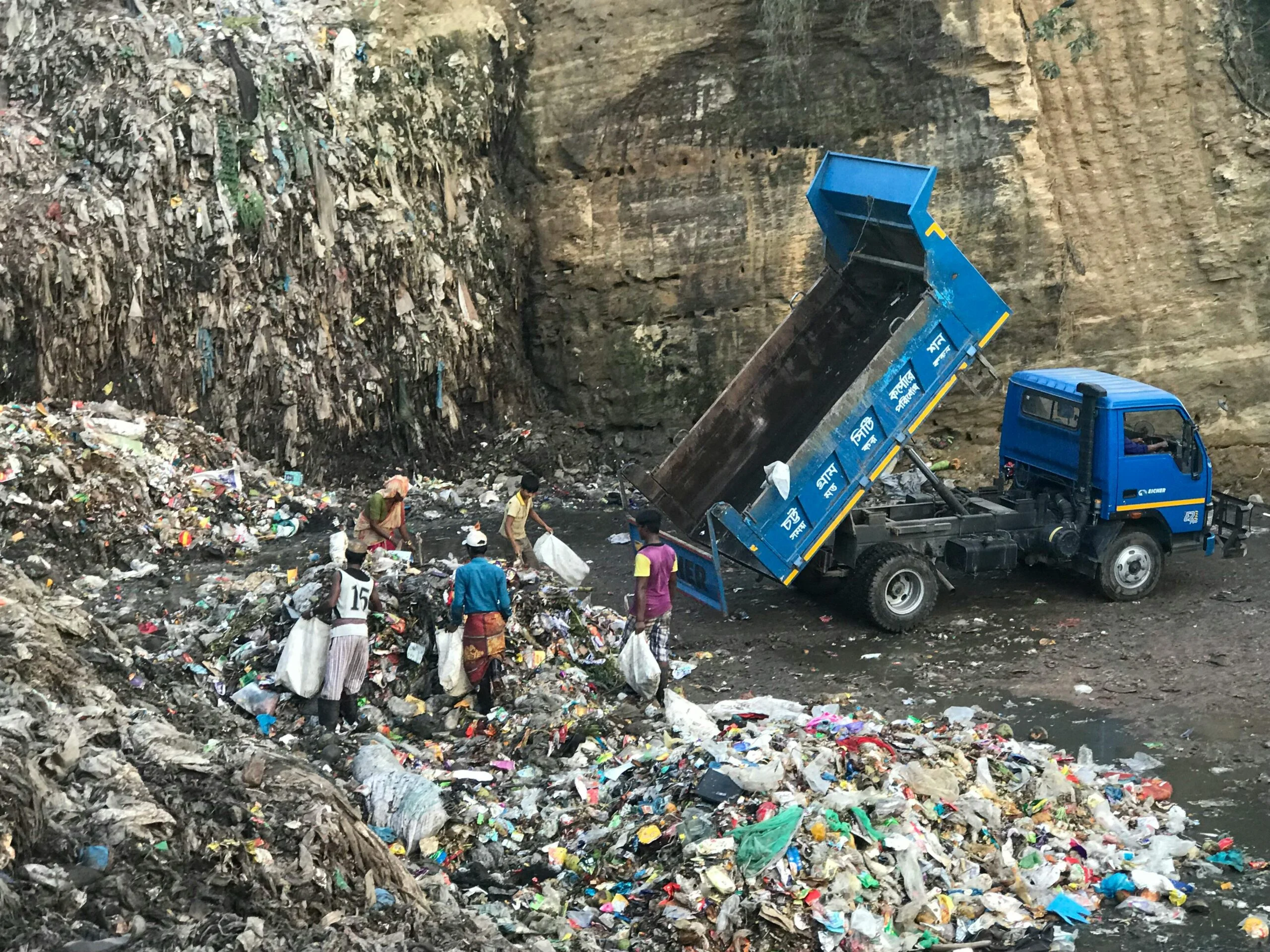
Every morning, long before most Indian cities wake up, an invisible army begins its work. Waste pickers - many of them women and children - sift through garbage dumps, drains, and roadside heaps to salvage recyclable materials. They are the unacknowledged backbone of India’s waste management system. Yet despite their labour, and despite decades of policy interventions, India remains buried under its own waste. The question is no longer whether we have a problem. The question is whether we have the will to solve it.
The Scale of India’s Waste Problem
India generates approximately 62 million tonnes of municipal solid waste (MSW) every year, according to data from the Central Pollution Control Board (CPCB). That translates to roughly 1.5 lakh tonnes per day - enough to fill 15,000 trucks daily, which, if lined up, would stretch from Delhi to Chennai. And these numbers are growing. The Ministry of Environment, Forest and Climate Change (MoEFCC) projects that India’s annual waste generation will reach 165 million tonnes by 2030 if current trends continue.
Of this mountain of waste, only about 75-80% is collected, and a mere 20-25% is scientifically processed or treated. The rest? It ends up in open dumpsites, clogs urban drains causing floods during monsoons, contaminates rivers and groundwater, or is openly burned - releasing toxic fumes including dioxins and furans into the air that millions of Indians breathe every day.
India’s per capita waste generation is still relatively low compared to developed nations - around 0.12 kg per person per day in rural areas and 0.5 kg in urban areas. But when you multiply those figures by 1.4 billion people, and factor in rapid urbanization and rising consumption patterns, the aggregate numbers are staggering. The World Bank, in its 2018 report What a Waste 2.0, warned that South Asia’s waste generation would double by 2050. India, as the region’s largest country, bears the brunt of that projection.
Where Does All the Waste Go?
The honest answer: nobody knows with precision. India’s waste tracking infrastructure is fragmented. But the broad picture is grim.
Landfills and dumpsites are the primary destination. India has over 3,159 legacy dumpsites spread across the country, many of them long past their capacity. These are not engineered sanitary landfills with liners and leachate collection systems. Most are simply open grounds where mixed waste has been dumped for decades, creating towering mountains of garbage. Delhi’s Ghazipur landfill, for example, rises over 65 metres - taller than the Qutub Minar - and has been the site of collapses and fires that have killed people.
Open burning is rampant, particularly in peri-urban and rural areas where formal waste collection is patchy or nonexistent. A 2019 study published in Atmospheric Environment estimated that open burning of waste contributes significantly to India’s air pollution crisis, accounting for a measurable share of PM2.5 in cities like Delhi during winter months.
Rivers and water bodies receive a disproportionate share of waste, especially plastic. The Ganga, Yamuna, and other major rivers carry tonnes of solid waste downstream daily. A 2021 report by the National Mission for Clean Ganga (NMCG) identified solid waste dumping by riverside towns as one of the key challenges to the river’s health.
Drains and sewers clogged with waste are a major contributor to urban flooding. Mumbai’s 2005 deluge, Hyderabad’s 2020 floods, and Chennai’s repeated flooding events have all been linked in part to drains blocked by improperly disposed waste. Poor waste disposal compounds the challenges already faced by India’s struggling sanitation infrastructure.
How Waste Management Should Actually Work
In theory, the framework exists. The Solid Waste Management Rules, 2016 (replacing the older Municipal Solid Wastes Rules, 2000) lay out a clear hierarchy:
- Source segregation: Households and establishments must separate waste into wet (biodegradable), dry (recyclable), and hazardous (sanitary waste, batteries, etc.) categories at the point of generation.
- Door-to-door collection: Urban Local Bodies (ULBs) are responsible for collecting segregated waste from every household and commercial establishment.
- Transportation: Segregated waste must be transported in covered vehicles to designated processing facilities - not dumped in open lots.
- Processing and treatment: Wet waste should be composted or bio-methanated. Dry waste should be sent to Material Recovery Facilities (MRFs) for sorting and recycling. Hazardous waste requires specialized treatment.
- Residual disposal: Only the non-recyclable, non-processable residue should reach a sanitary landfill - ideally less than 10-15% of the total waste generated.
This is the system that works in cities like San Francisco, Tokyo, and Ljubljana. It is also, as we shall see, the system that a few Indian cities have managed to implement. The challenge is not knowledge - it is execution at scale across 4,000+ ULBs in the country.
The Numbers That Matter
Understanding India’s waste crisis requires confronting a few key data points that together paint a picture of systemic failure and incremental progress.
- 62 million tonnes per year: Total MSW generation (CPCB Annual Report, 2020-21).
- 1,50,000 tonnes per day: Daily waste generation across all cities and towns.
- 75-80% collection rate: Significant improvement from roughly 60% a decade ago, but still meaning lakhs of tonnes go uncollected annually.
- Only 28% waste is processed: As per CPCB’s 2021 data, processing capacity has improved but remains woefully inadequate.
- 3.4 million tonnes of plastic waste per year: India’s annual plastic waste generation, of which only about 60% is recycled - mostly by the informal sector (CPCB, 2020-21).
- 3,159 dumpsites: Legacy waste sites identified across the country, many needing biomining and remediation (MoEFCC data).
- 20% handled by informal recyclers: Waste pickers and kabadiwallas process roughly a fifth of India’s recyclable waste, saving municipalities an estimated Rs. 23,000 crore annually in collection and processing costs (Chintan Environmental Research and Action Group).
- Extended Producer Responsibility (EPR) Rules, 2022: Updated regulations that mandate producers, importers, and brand owners to take responsibility for the end-of-life management of plastic packaging. These rules introduced tradable EPR certificates, creating a market mechanism for plastic waste management.
Cities That Are Getting It Right
The narrative of India’s waste crisis is not entirely bleak. A handful of cities have demonstrated that transformation is possible - even within the constraints of Indian governance and fiscal realities.
Indore: The Gold Standard
Indore, Madhya Pradesh, has been ranked India’s cleanest city seven consecutive times in the Swachh Survekshan rankings (2017-2023). What makes Indore’s model noteworthy is not just political will - which it has in abundance - but the systems it has built.
The city achieves 100% door-to-door collection with segregation at source. Every household separates waste into wet and dry categories. The city has deployed GPS-tracked collection vehicles, set up a bio-CNG plant that converts 550 tonnes of wet waste daily into compressed natural gas (which fuels the city’s buses), and established Material Recovery Facilities for dry waste processing. Indore generates revenue from its waste, turning what was a cost centre into a partially self-sustaining system.
Critically, Indore invested in behavioural change. The municipal corporation ran sustained awareness campaigns, imposed fines for littering and non-segregation, and created a culture where cleanliness became a matter of civic pride. The city even banned single-use plastics before the national ban took effect.
Mysuru: Consistency Over Decades
Mysuru, Karnataka, was India’s cleanest city before Indore took the crown. Its waste management system has been built over decades, not overnight. The city operates a well-functioning composting infrastructure, has high collection efficiency, and benefits from a relatively engaged citizenry. Mysuru’s model shows that sustained effort over time matters more than one-time interventions.
Surat: Resilience and Innovation
Surat’s transformation is often traced back to the 1994 plague outbreak, which forced the city into a complete overhaul of its sanitation and waste management systems. Today, Surat runs one of the more efficient waste collection systems in India, with extensive use of technology for route optimization, and has developed waste-to-energy and composting infrastructure. The Surat Municipal Corporation has also been proactive in integrating informal waste workers into its formal system - a model other cities would do well to study.
Alappuzha: Decentralized and Community-Driven
This small Kerala municipality demonstrates that you do not need mega-infrastructure to manage waste effectively. Alappuzha adopted a fully decentralized model - no centralized landfill, no waste-to-energy plant. Instead, households compost their own wet waste using pipe composting and biogas units. Dry waste is collected and channelled to recyclers. The town has virtually eliminated the need for a dump yard, proving that small-scale, community-driven solutions can work at the town and ward level.
India’s 4 million waste pickers recover and recycle approximately 20% of the country’s total waste, saving municipalities an estimated Rs. 23,000 crore annually - yet they remain among the most marginalized communities in the nation.
The Informal Sector: India’s Unsung Waste Managers
India’s informal waste economy is vast, employing an estimated 4 million waste pickers and millions more kabadiwallas (itinerant scrap dealers), recycling unit workers, and sorters. According to research by the Alliance of Indian Wastepickers (AIW) and organizations like Chintan, KKPKP, and SWaCH in Pune, these workers recover and recycle approximately 20% of India’s total waste - a contribution that saves municipalities thousands of crores in costs and diverts millions of tonnes from landfills annually.
Yet waste pickers remain among the most marginalized communities in India. They work without contracts, protective equipment, health insurance, or social security. They face occupational hazards daily - infections, respiratory diseases, injuries from sharp objects. Most belong to Dalit or lower-caste communities, and the stigma attached to their work compounds their economic exploitation.
The SWM Rules, 2016 mandate the integration of waste pickers into formal waste management systems. A few cities - notably Pune, through its SWaCH cooperative - have shown how this can be done. SWaCH is a cooperative of waste pickers that has a formal contract with the Pune Municipal Corporation to provide door-to-door waste collection services. Waste pickers earn a regular income, have identity cards, and access social benefits. But such integration remains the exception, not the rule. In most Indian cities, waste pickers continue to operate outside the system, even as the system depends on them.
The Plastic Crisis: Bans, Gaps, and Ground Realities
India banned identified categories of single-use plastics (SUPs) from July 1, 2022, covering items like earbuds with plastic sticks, plastic plates, cups, straws, wrapping films, and stirrers. The ban was a significant policy step, backed by enforcement drives by CPCB and state pollution control boards.
However, implementation has been uneven. In metropolitan cities, compliance has been reasonably visible - large retailers and restaurant chains have switched to alternatives. But in smaller towns, semi-urban areas, and the vast informal retail sector, single-use plastics remain widely available and affordable. Enforcement capacity at the grassroots level is thin. Many state pollution control boards lack the staff and infrastructure for sustained monitoring.
The deeper challenge is systemic. India produces approximately 3.4 million tonnes of plastic waste annually. While the recycling rate for plastic in India is higher than the global average - around 60% versus a global average of about 9% - this is almost entirely driven by the informal sector, which cherry-picks high-value plastics (PET bottles, HDPE containers) and leaves low-value, multi-layered, and contaminated plastics unrecycled.
The EPR framework updated in 2022 is an important step toward making producers financially responsible for the plastics they introduce into the market. The framework assigns annual recycling and processing targets to producers, importers, and brand owners, and allows trading of EPR certificates. But early implementation has faced challenges: a lack of verified recyclers, questions about data integrity, and the fundamental difficulty of tracking plastic waste across India’s fragmented supply chains.
Legacy Waste and the Burning Mountains
India’s legacy dumpsites are not just eyesores - they are active public health emergencies. Three sites, in particular, have become symbols of the crisis.
Ghazipur, Delhi
Operational since 1984, the Ghazipur landfill was declared full in 2002 but continued receiving waste for years afterward. It towers over 65 metres, covering an area of over 70 acres. In 2017, a section of the landfill collapsed after heavy rains, killing two people and sweeping cars into a canal. Fires at Ghazipur are recurring events, sending plumes of toxic smoke across east Delhi. Biomining operations have begun, but the sheer volume of legacy waste - estimated at over 14 million tonnes - makes remediation a multi-year endeavour.
Bhalswa, Delhi
The Bhalswa landfill, another Delhi dumpsite, catches fire with alarming regularity, particularly during the hot summer months. Residents of nearby colonies suffer from chronic respiratory conditions. The site has been the subject of multiple National Green Tribunal (NGT) orders directing remediation, but progress has been slow.
Deonar, Mumbai
Asia’s oldest and largest dumpsite, Deonar has been receiving Mumbai’s waste since 1927. A massive fire in 2016 blanketed parts of Mumbai in smoke and triggered a public health emergency. Spread over 300 acres, Deonar processes over 5,000 tonnes of waste daily. Plans for biomining and waste-to-energy plants have been announced repeatedly but remain mired in delays and legal challenges.
The Swachh Bharat Mission 2.0 has allocated funds for legacy dumpsite remediation through biomining - a process where old waste is excavated, screened, and separated into soil (which can be used for landscaping), recyclables, and RDF (refuse-derived fuel). Several cities have begun biomining operations, and some smaller dumpsites have been successfully cleared. But for the mega-dumpsites, remediation will take years and require sustained funding and political commitment.
What Needs to Change: A Systemic Agenda
Incremental improvements are happening across India’s waste management landscape. Collection rates are up. Processing capacity is growing. Policy frameworks are more robust than they were a decade ago. But the pace of change is far too slow relative to the pace of waste generation. Here is what a systemic transformation would require.
1. Source Segregation Must Become Non-Negotiable
No waste management system in the world works without segregation at source. Mixed waste cannot be efficiently composted, recycled, or processed. The SWM Rules mandate segregation, but enforcement is lax in most cities. ULBs must invest in sustained behavioural change campaigns, impose meaningful penalties for non-segregation, and - crucially - ensure that segregated waste is not re-mixed during collection and transportation. The last point is critical: citizens who diligently segregate waste lose motivation when they see it all thrown into the same truck.
2. Decentralized Processing Is the Way Forward
India does not need more mega-landfills or giant waste-to-energy plants (which have a troubled track record in the country due to the low calorific value of Indian waste, which has high moisture content). What it needs is decentralized processing at the ward and zone level: community composting, small biogas plants, neighbourhood MRFs. Alappuzha has shown this works. The Centre for Science and Environment (CSE) has extensively documented how decentralized models reduce transportation costs, create local employment, and are more resilient than centralized systems.
3. The Circular Economy Must Move from Slogan to System
India talks about the circular economy, but most of its waste policy is still linear: generate, collect, dump. A genuine circular economy approach would mean designing products for recyclability, creating robust markets for secondary raw materials, incentivizing reuse over disposal, and penalizing planned obsolescence. The EPR framework is a step in this direction, but it needs to be expanded beyond plastics to cover e-waste, textiles, construction and demolition waste, and other waste streams more effectively.
4. Producer Responsibility Must Have Teeth
The EPR rules for plastic packaging are a good start, but they will only work if enforcement is credible. That means independent verification of recycling claims, transparent data on EPR certificate trading, penalties for non-compliance, and a phase-wise expansion of the framework to cover a wider range of materials and products. Producers who profit from selling packaged goods must bear the cost of managing the waste those goods generate.
5. Formalize and Protect the Informal Sector
Any waste management reform that sidelines waste pickers and kabadiwallas is both unjust and inefficient. Integration must mean real contracts, fair wages, safety equipment, health insurance, and a seat at the planning table - not tokenistic ID cards. The Pune SWaCH model should be studied and adapted for other cities. Waste pickers’ cooperatives should be given priority in waste processing contracts.
6. Data and Transparency Are Foundational
India cannot manage what it does not measure. Waste generation data is unreliable. Processing claims are often inflated. There is no national real-time dashboard tracking waste from generation to disposal. ULBs must invest in digital tracking systems - GPS on vehicles, weigh-bridges at processing facilities, ward-level dashboards - and make this data publicly accessible.
What You Can Do
Systemic change requires policy and institutional reform. But individual and community action is not irrelevant - it is a necessary complement. Here is what citizens can do.
- Segregate religiously: Separate wet, dry, and hazardous waste at home. Every day. Without exception. If your municipality does not collect segregated waste, demand that it does.
- Compost wet waste: If you have a balcony, terrace, or garden, compost your kitchen waste. Affordable composting solutions - from khamba pots to biogas units - are widely available. Several urban composting communities on social media can help you get started.
- Reduce before you recycle: Refuse unnecessary packaging. Carry your own bags, bottles, and containers. Buy in bulk where possible. The most sustainable waste is the waste you never generate.
- Support your local kabadiwalla: Sell or give your recyclables to local scrap dealers rather than throwing them in the bin. This keeps the informal recycling economy alive and diverts materials from landfills.
- Hold your municipality accountable: Attend ward committee meetings. File complaints about uncleared garbage through municipal apps and helplines. Use RTI to ask about waste processing claims. Civic engagement is not optional - it is the mechanism through which services improve.
- Avoid single-use plastics: Regardless of enforcement levels, make a personal commitment to eliminate single-use plastics from your life. Carry steel cutlery, use cloth bags, choose glass or steel over plastic containers.
The most sustainable waste is the waste you never generate. India’s war on waste is winnable - but only if we decide to actually fight it.
Key Data Sources and Further Reading
For readers who want to go deeper into the data and analysis cited in this article, here are the primary sources:
- Central Pollution Control Board (CPCB): Annual Reports on Implementation of Solid Waste Management Rules - the most authoritative government data source on waste generation, collection, and processing across Indian states and cities.
- Ministry of Environment, Forest and Climate Change (MoEFCC): Policy documents including the Solid Waste Management Rules, 2016 (and amendments), Plastic Waste Management Rules, 2016, and the EPR framework for plastic packaging.
- Centre for Science and Environment (CSE): Extensive research and publications on decentralized waste management, composting, and waste policy analysis. Their annual State of India’s Environment reports are essential reading.
- World Bank - What a Waste 2.0 (2018): Global dataset and projections on solid waste management, with detailed country-level data including India.
- Chintan Environmental Research and Action Group: Research on the informal recycling sector, waste picker livelihoods, and the economics of waste in India.
- Alliance of Indian Wastepickers (AIW): Data and advocacy resources on waste picker populations, working conditions, and integration models.
- NITI Aayog: Reports on waste-to-energy, circular economy policy, and the Swachh Bharat Mission’s waste management component.
- National Green Tribunal (NGT): Orders and directives on waste management compliance, landfill remediation, and municipal accountability - available on the NGT website.
India’s waste crisis is not a problem without solutions. The knowledge exists. The technology exists. Successful models exist within India itself. What is needed is the political will to implement proven systems at scale, the institutional capacity to enforce rules consistently, and a cultural shift that treats waste not as someone else’s problem but as a shared civic responsibility. The war on waste is winnable - but only if we decide to actually fight it.
What you can do
- Share the evidenceSend this to one person who should know about environment.Share on WhatsApp
- Give an afternoonTeach, mentor, clean up, or lend your professional skills.Ways to volunteer
- Tell us what's missingKnow a story, a fact we got wrong, or a solution worth spotlighting?Suggest a story
Politically neutral. Every claim sourced. Report a correction.

No comments yet