Biryani: 30 Regional Versions, One Disputed Origin, and a Nation That Can't Agree on How to Cook Rice
Biryani is at least thirty regional dishes with a disputed origin. This article traces how Mughal, Deccan and spice trade history shaped India's most argued-about meal.
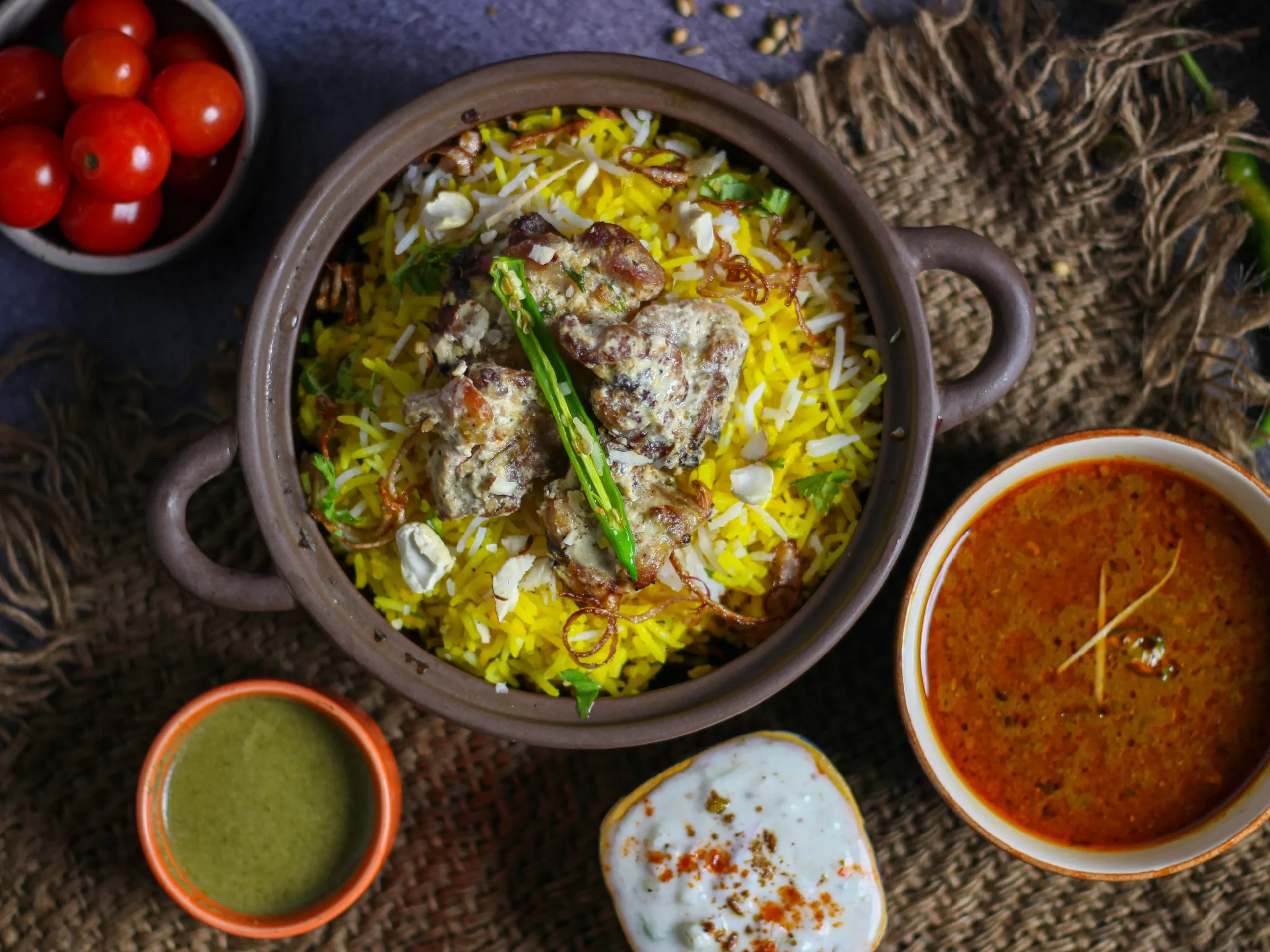
The Argument
Walk into any gathering of Indians, a family dinner, a college canteen, a Twitter thread, a wedding reception, and say the word “biryani.” Within minutes, someone will insist that Hyderabadi biryani is the only real biryani. Someone else will counter that Lucknowi biryani is more refined. A third person will claim that Kolkata biryani, with its potato and egg, is the best because it represents evolution. A fourth, inevitably from Kerala, will quietly mention Malabar biryani and watch the room descend into chaos.
No other dish in India provokes this level of passion, territorial pride, and controlled aggression. Not dosa. Not butter chicken. Not even the eternal vegetarian-versus-non-vegetarian divide. Biryani is India’s most argued-about food, and the argument has been running for approximately 500 years with no sign of resolution.
The reason is simple: biryani is not one dish. It is at least thirty distinct dishes, each shaped by the climate, culture, trade routes, court traditions, and available ingredients of its region. Each version carries the culinary DNA of the people who made it. To tell someone their biryani is inferior is to tell them their history doesn’t matter.
This is the story of how rice, meat, and spices became India’s most loaded meal, a dish that encodes the Mughal Empire, the Deccan sultanates, the spice trade, the colonial encounter, the Partition, and the ongoing politics of food in a country where what you eat is inseparable from who you are.
The Origin Debate
Where did biryani come from? The honest answer is: nobody knows for certain. The contested answer has launched a thousand food fights.
The Persian Theory
The word “biryani” likely derives from the Persian word birian (fried before cooking) or birinj (rice). Persian pilaf, rice cooked with meat and spices in a single pot, existed for centuries before it reached India. When Babur established the Mughal Empire in 1526, his court brought Persian culinary traditions to the subcontinent. The argument: biryani is a Persian dish that was Indianised.
The Mumtaz Mahal Legend
The most romantic (and least historically reliable) origin story involves Mumtaz Mahal, wife of Shah Jahan, who allegedly visited the barracks of her husband’s soldiers and found them malnourished. She asked the court cooks to prepare a dish that combined rice and meat in a single, nutritious pot, and biryani was born. The legend is charming and almost certainly apocryphal. But it speaks to a truth: biryani was always a one-pot meal designed to feed many people, efficiently and deliciously.
The Indigenous Theory
Some food historians argue that rice-and-meat dishes existed in India long before the Mughals. The Tamil Sangam literature (c. 200 BCE - 300 CE) mentions dishes where meat was cooked with rice and spices. The concept of layered rice and meat preparation has parallels in South Indian cooking traditions that predate Mughal influence by centuries. The argument: India had its own rice-meat traditions, and biryani is a fusion of indigenous and Persian techniques.
The most likely truth is a synthesis. Persian cooking methods, particularly the use of saffron, dried fruits, and dum (slow-cooking in a sealed pot), merged with India’s existing rice-and-spice traditions, local ingredients, and regional palates to produce something that was neither purely Persian nor purely Indian. Biryani is the child of cultural exchange, a dish that belongs to no single origin because it was created at the intersection of civilisations.
The Regional Atlas
What makes biryani unique among Indian dishes is how differently each region interprets it. The base concept, layered rice and meat, cooked with spices, remains constant. Everything else changes.
Hyderabadi Biryani (Kacchi and Pakki)
The gold standard of the biryani world, and the version most people think of when they hear the word. Hyderabadi biryani comes in two forms: kacchi (raw, raw marinated meat layered with partially cooked rice and slow-cooked together) and pakki (cooked, pre-cooked meat layered with pre-cooked rice). The kacchi method is considered the more authentic Nizami tradition.
The Nizam’s court in Hyderabad elevated biryani to an art form. Saffron, ghee, fried onions (birista), mint, and long-grain basmati rice cooked on dum, the pot sealed with dough and placed on low heat so the flavours meld through steam pressure. The result is rice grains that are separate, fragrant, and layered with colour, white, yellow, and deep orange from the saffron.
Lucknowi Biryani (Awadhi)
If Hyderabadi biryani is a soldier’s feast, Lucknowi biryani is a poet’s dinner. The Nawabs of Awadh were legendary gourmands, and their court cuisine emphasised subtlety over heat. Lucknowi biryani uses the pakki method exclusively, both rice and meat are cooked separately before being layered and finished on dum. The spicing is restrained: fewer chillies, more aromatics (cardamom, mace, kewra water, rose water). The meat is so tender it falls off the bone.
The difference between Hyderabadi and Lucknowi biryani mirrors the difference between their courts: Hyderabad was martial and robust; Lucknow was refined and aristocratic.
Kolkata Biryani
When Nawab Wajid Ali Shah was exiled from Lucknow to Calcutta in 1856 by the British, he brought his cooks. But Calcutta was expensive, and the exiled court had limited funds. The cooks adapted: they reduced the amount of meat and added potatoes and eggs to bulk up the dish. What began as austerity became tradition. Today, no Kolkata biryani is complete without a large, soft potato and a boiled egg, additions that Hyderabadis and Lucknowites view with polite horror.
Kolkata biryani is lighter on spice, subtly sweet (a trace of sugar in the rice is acceptable here and nowhere else), and uses a distinctive yellow colour from both saffron and turmeric. It is, arguably, the most accessible biryani for beginners, gentle, balanced, forgiving.
Malabar Biryani (Kerala)
Malabar biryani uses kaima rice (short-grain rice) instead of basmati, a heresy to North Indian biryani purists, but essential to the dish’s character. The rice absorbs more flavour and has a softer, stickier texture. The spicing reflects Kerala’s position on the spice trade route: black pepper, cloves, star anise, fennel, and coconut milk appear in some versions.
Malabar biryani is sweeter and more aromatic than its northern cousins, often including cashews, raisins, and fried onions in greater quantity. The Mappila Muslim community of Kerala, descendants of Arab traders who settled on the Malabar coast, developed this biryani, and it carries the fingerprint of Arab-Indian culinary exchange.
Dindigul Biryani (Tamil Nadu)
Dindigul, a small town in Tamil Nadu, has produced a biryani that punches wildly above its weight. Dindigul biryani uses seeraga samba rice (a small, fragrant rice variety native to Tamil Nadu), cube-cut meat (smaller pieces than the large bone-in chunks of Hyderabadi biryani), and a spice level that will make your eyes water. It is the spiciest mainstream biryani in India, and its fans consider this a feature, not a bug.
The peppery heat comes from a generous use of black pepper, green chillies, and a special biryani masala that each Dindigul restaurant guards like a state secret.
Other Regional Variations
- Ambur Biryani (Tamil Nadu), Uses seeraga samba rice with dhalcha (sour lentil curry) as mandatory accompaniment
- Thalassery Biryani (Kerala), Uses kaima rice, ghee-roasted cashews and raisins, distinct from Malabar style
- Bombay Biryani, Spicier than Lucknowi, with fried potatoes and sometimes dried plums for sweetness
- Sindhi Biryani, Heavy on green chillies, tomatoes, and potatoes; the most aggressive spice profile
- Bhatkali Biryani (Karnataka), Uses onion-tomato paste instead of whole spices, with a bright red colour
- Memoni Biryani (Gujarat/Sindh), Uses less food colour, more meat, yoghurt-heavy marinade
The Science of Dum
The technique that makes biryani biryani, as opposed to simply “rice and meat”, is dum pukht (slow-cooking in a sealed pot). The word “dum” comes from the Persian for “breath” or “steam.”
The science is straightforward but demanding. Rice and meat are layered in a heavy-bottomed vessel. The lid is sealed with dough (or, in modern kitchens, with foil and a tight lid). The pot is placed on very low heat, traditionally, live coals were placed both under and on top of the pot. Inside the sealed environment, steam circulates, cooking the rice and meat simultaneously while the flavours of the spice layers penetrate both. The sealed environment traps volatile aromatic compounds that would otherwise evaporate, which is why the moment a biryani pot is opened, the aroma fills the room.
The critical variables are: the moisture content of the rice (it must be 70% cooked before layering, too raw and it stays hard, too cooked and it becomes mush), the amount of fat (ghee creates the separation between rice grains), the temperature (too high and the bottom burns, the dreaded “kaani”, too low and the rice stays undercooked), and the sealing (any leak of steam collapses the entire process).
Master biryani cooks, the ustads of Hyderabad, the bawarchis of Lucknow, spend years learning to judge these variables by instinct. A good biryani cook knows when the pot is ready by the sound of the steam, the smell escaping from the seal, and the colour of the smoke. It is a craft closer to pottery or blacksmithing than to what most people think of as “cooking.”
The Economics of Biryani
Biryani is India’s most ordered food on delivery platforms. Swiggy’s 2024 annual report stated that Indians ordered over 115 million biryanis through the app alone, an average of one biryani every 2.4 seconds. Zomato’s data is similar. In terms of pure volume, biryani outsells pizza, burgers, and every other food category in India’s online food delivery market.
The economics are fascinating. Biryani spans the entire price spectrum: from Rs 99 “student special” biryanis at cloud kitchens to Rs 2,500 Nizami biryanis at heritage restaurants in Hyderabad. This range is possible because the dish scales. The basic ingredients, rice, meat, onions, spices, are cheap in bulk. A skilled cook with a large pot can produce hundreds of portions. The margins are high. The demand is constant.
The Rs 99 biryani revolution, driven by cloud kitchens like Behrouz, EatFit, and dozens of local brands, has democratised what was historically a celebration meal. For college students and young professionals in Indian cities, biryani is now everyday food. The cloud kitchen model, no dine-in space, delivery only, optimised for volume, has turned biryani into a fast-food commodity.
Whether this is culinary progress or cultural tragedy depends on whom you ask. A Hyderabadi food purist watching a Behrouz biryani being assembled in a cloud kitchen might feel the same anguish a Neapolitan feels watching a Pizza Hut assembly line. But the counter-argument is equally valid: more Indians are eating biryani than ever before, and the democratisation of access to a great dish is not something to mourn.
The Politics of Biryani
In India, food is never just food.
Biryani is a Muslim-origin dish that is loved universally across religious lines, and this universality makes it politically complicated. In a country where cow slaughter bans, meat bans, and food identity have become political flashpoints, biryani occupies an awkward space: it is simultaneously India’s favourite food and a reminder that India’s food culture is irreversibly syncretic.
Politicians offer biryani at rallies to signal inclusivity. Other politicians attack biryani as “non-Indian.” During communal tensions, biryani shops in mixed neighbourhoods have been targeted. During elections, biryani is distributed as inducement, so commonly that “biryani politics” is a recognised term in Indian electoral vocabulary.
The Hyderabadi biryani industry, worth an estimated Rs 6,000 crore annually, is run almost entirely by Muslim families who have been cooking biryani for generations. Their businesses employ thousands of people across religious lines, Hindu, Muslim, and Christian cooks work side by side in the same kitchens. The biryani kitchen may be one of the last truly secular spaces in Indian public life.
Biryani vs Pulao: The Eternal Debate
No discussion of biryani is complete without addressing the pulao question. Is biryani just a fancy pulao? Are they the same dish? The question has destroyed friendships.
The technical distinction: in pulao, rice and meat are cooked together in a single step, the rice absorbs the meat stock and spices uniformly. In biryani, rice and meat are prepared separately (or semi-separately) and then layered, creating distinct strata of flavour, the rice at the top tastes different from the rice at the bottom, which tastes different from the rice touching the meat.
Pulao is harmony. Biryani is contrast. Pulao is a painting where all colours blend. Biryani is a painting where each colour retains its identity while contributing to the whole.
In practice, the line blurs. Some regional “biryanis” are technically pulao by this definition. Some “pulaos” use layering. The debate is less about technique and more about identity: calling a biryani a pulao is an insult in Hyderabad. Calling a pulao a biryani is an insult in Lucknow.
The Global Journey
Biryani has gone global in ways that mirror India’s diaspora. In London’s Brick Lane, in Jackson Heights in New York, in the Little Indias of Singapore and Kuala Lumpur, biryani is the ambassador dish of Indian cuisine, the one meal that non-Indians are most likely to encounter and love.
The Gulf states, where millions of Indian workers live, have their own biryani ecosystems. The Mandi (Yemeni rice-and-meat dish) and Kabsa (Saudi rice dish) share DNA with biryani, and the cross-pollination continues: Indian restaurants in Dubai serve biryanis inflected with Arabic flavours, and Gulf-returned Indians bring those flavours home.
In Southeast Asia, biryani has merged with local cuisines: Nasi Briyani in Malaysia and Singapore is a distinct variant, served with cucumber raita and achar. In South Africa, the Cape Malay community prepares a biryani that includes lentils, potatoes, and a distinctive use of turmeric and cumin that reflects the Indian indentured labourers who brought the recipe in the 19th century.
Each diaspora biryani tells the story of the people who carried it. The dish travels because it is adaptable, it accepts local ingredients, absorbs local flavours, and remains recognisably itself. Like the concept of zero, which India gave to the world and which every civilisation adapted to its own mathematics, biryani is a platform, not a prescription. The concept is Indian. The execution is universal.
In a country of 1.4 billion people who can’t agree on language, religion, politics, or cricket strategy, biryani might be the closest thing India has to a national consensus. Everyone eats it. Everyone argues about it. And everyone, no matter which version they grew up with, believes theirs is the best. That, perhaps, is the most Indian thing about biryani: the argument is the tradition.
Like India’s multilingual digital revolution, biryani proves that diversity isn’t a problem to be solved but a richness to be celebrated. Thirty versions of one dish is not confusion, it’s civilisation.
“Biryani is not just food. It is an emotion.”, Every Indian, ever.
This article is part of unite4india’s “India’s Food Map” series, one dish, one story, the culture on the plate.
What you can do
- Share the evidenceSend this to one person who should know about this issue.Share on WhatsApp
- Give an afternoonTeach, mentor, clean up, or lend your professional skills.Ways to volunteer
- Tell us what's missingKnow a story, a fact we got wrong, or a solution worth spotlighting?Suggest a story
Politically neutral. Every claim sourced. Report a correction.
No comments yet