India's Food Map: Kerala Cuisine - How Coconut, Spice, and Trade Built a Regional Identity
Kerala occupies a strip of land between the Western Ghats and the Arabian Sea, roughly 38,000 square kilometres of densely populated, intensely green terrain that has been a crossroads of global trade for over two thousand years. The spices that brought Portuguese, Arab, Chinese, and later Dutch and...
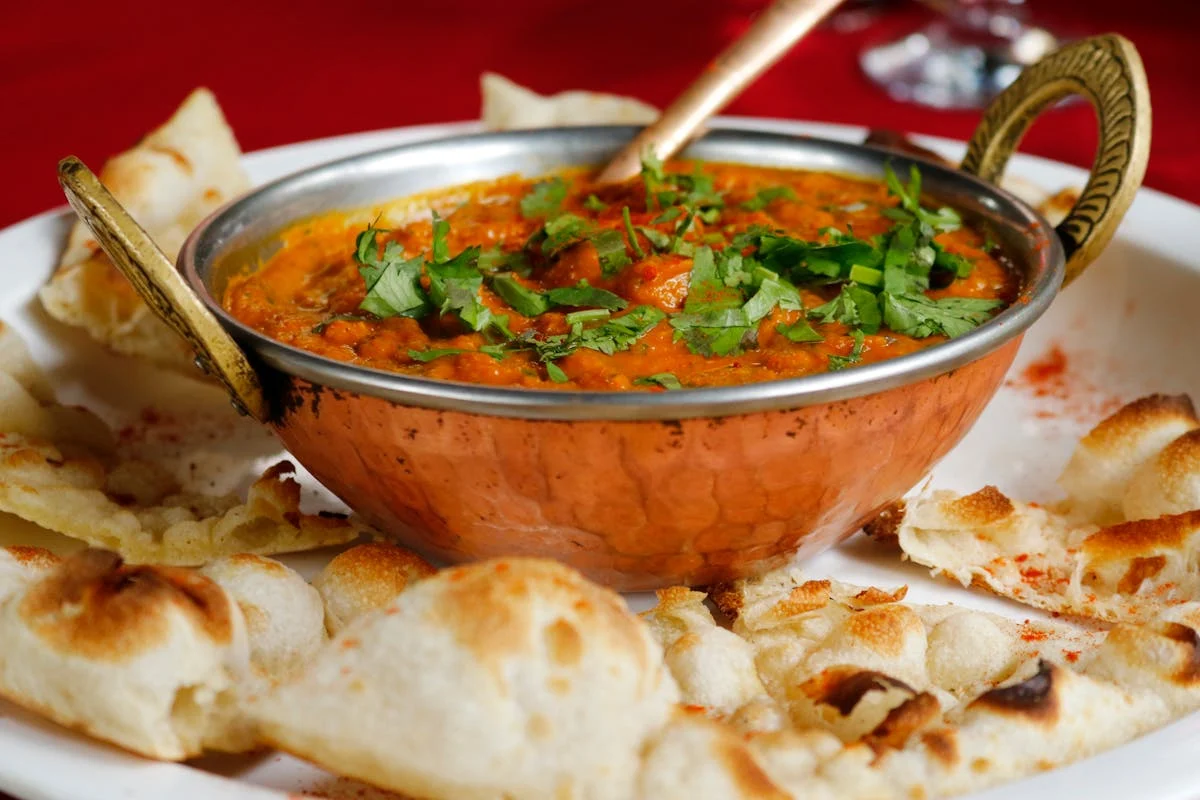
Kerala occupies a strip of land between the Western Ghats and the Arabian Sea, roughly 38,000 square kilometres of densely populated, intensely green terrain that has been a crossroads of global trade for over two thousand years. The spices that brought Portuguese, Arab, Chinese, and later Dutch and British traders to this coastline - black pepper, cardamom, ginger, turmeric, cinnamon - are still grown here, and they still define the cuisine in ways that make Kerala’s food distinctively different from anything else in India. Coconut, in every form from fresh kernel to oil to milk to toddy, is the other defining element. Together, these two pillars - spice and coconut - produce a cuisine of remarkable depth, heat, and aromatic complexity.
The Coconut Civilisation
Kerala’s relationship with the coconut palm (Cocos nucifera, called thengu in Malayalam) is total in a way that is difficult to overstate. The palm dominates the landscape - Kerala has the highest density of coconut trees of any state in India - and its products enter every stage of cooking. Coconut oil is the cooking medium in traditional Kerala households; the flavour it imparts is distinctive, slightly nutty, and fundamentally different from the mustard oil of Bengal or the groundnut oil of Tamil Nadu. Fresh grated coconut appears in almost every dish category: in chutneys, in the coconut paste bases of curries, in dry-cooked dishes (thorans) where it is mixed with vegetables and tempered with curry leaves and mustard seeds. Coconut milk - thin (first pressing diluted with water) and thick (the first pressing undiluted) - forms the base of the most characteristic Kerala gravies, giving them a richness and mild sweetness that balances the heat of the spices.
The coconut’s role in Kerala cuisine reflects its role in Kerala ecology and economy. The state’s dense canopy of coconut palms is not merely decorative - it is a managed agricultural system that has been maintained over centuries. The palms provide timber for construction, leaves for thatching, fibre from the husk for coir, sap for toddy (the fermented palm drink that is as much a part of Kerala food culture as the food itself), and young coconuts for drinking water. The integration of coconut into Kerala life at every level - economic, dietary, cultural - makes it genuinely different from a spice or flavouring: it is a foundational resource around which a civilisation organised itself.
The Spice Road and Its Culinary Legacy
Kerala was the world’s primary source of black pepper for most of recorded history. Arab traders had established the spice route to Malabar (the name by which the Kerala coast was known to medieval traders) centuries before Vasco da Gama arrived at Calicut in 1498. The Chinese admiral Zheng He’s fleet visited the Malabar coast in the early fifteenth century. The Portuguese, Dutch, and British successively competed for control of the spice trade that made Kerala economically central to early modern globalisation. This history left traces in the cuisine: the Syrian Christian community, among the oldest Christian communities in the world (claiming conversion by Saint Thomas the Apostle in 52 CE), developed a distinct culinary tradition that includes preparations not found elsewhere in Kerala cooking. The Malabar Muslim community, descendants of Arab traders who settled on the coast and intermarried with local populations, developed the Moplah (Mappila) cuisine that is one of the most distinctive regional food traditions in India.
Black pepper in Kerala cuisine is not the background seasoning it is in most other Indian cooking - it is a lead spice in many preparations, used in quantities that produce genuine heat alongside its distinctive floral-piney pungency. Kerala pepper chicken (kozhi kurumulaku), pepper mutton, and pepper-heavy beef preparations are dishes where the pepper is the point rather than the accent. Cardamom - both the green variety used in sweet preparations and the larger black cardamom used in rice and meat dishes - is grown in the hill districts of Idukki and Wayanad and appears fresh in Kerala cooking in a way that makes it qualitatively different from the dried, shipped-elsewhere spice that the rest of India uses.
Kerala’s spice trade shaped the modern world - it drove the age of exploration, financed empires, and connected Asia to Europe. The same black pepper that once commanded gold-equivalent prices in medieval Venice still grows in the same hills and still defines the taste of every meal in the land that produced it.
Sadya: The Grand Vegetarian Feast
The Kerala sadya is arguably the most elaborate vegetarian meal protocol in India. Served on a banana leaf, the sadya consists of between 24 and 28 dishes arranged in a specific spatial layout on the leaf, eaten in a defined sequence. The meal is the standard celebration food for Onam (the harvest festival), weddings, and other major occasions. Like the Bengali bhojon, the sadya is not merely a collection of dishes but a structured system: the progression from rice to the various curries and accompaniments follows a logic of taste balance and digestive consideration.
The core components of a sadya include: parippu (moong dal with ghee), sambar (the Tamil-influenced tamarind-lentil vegetable stew), rasam (a thin, peppery digestive soup), avial (a mixed vegetable preparation in coconut-yoghurt sauce, considered the most quintessentially Kerala dish), thoran (dry-cooked vegetables with coconut), olan (white gourd and coconut milk), kichadi (vegetables in yoghurt), kootu curry, preserved condiments (inchi curry - the ginger-coconut condiment being particularly important), papad, banana chips fried in coconut oil, and three to four varieties of payasam (kheer) for the sweet course. The spatial arrangement on the banana leaf is prescribed: condiments and chips on the upper left, bananas and payasam on the right, the various curries poured directly onto the rice in a sequence that the host determines.
Sadya Component | Description | Position on Leaf |
|---|---|---|
Parippu | Moong dal, first poured with ghee | Centre over rice |
Sambar | Tamarind-lentil-vegetable stew | Centre over rice |
Avial | Mixed veg in coconut-yoghurt | Right of centre |
Thoran | Dry vegetable with coconut | Upper right |
Inchi curry | Ginger-coconut-tamarind condiment | Upper left |
Payasam | Sweet rice/milk pudding (2-4 types) | Far right |
The Moplah Tradition: Kerala’s Coastal Muslim Cuisine
Moplah (Mappila) cuisine represents one of the most fascinating culinary fusion traditions in India: the combination of Arab cooking techniques and flavour preferences with indigenous Kerala ingredients and spices, developed over roughly a thousand years of coastal Muslim settlement. The Moplah community, concentrated in the Malabar region of northern Kerala and in Lakshadweep, developed a cuisine that uses coconut and local spices in ways that Arab cuisine does not, while incorporating the lamb preparations, rice dishes, and sweet confections that came from Gulf Arab food culture. The result is a cuisine with distinctive dishes - Moplah biriyani (using jeerakasala short-grain rice rather than basmati), pathiri (thin rice flour flatbreads), and erachi pathiri (meat-stuffed pathiri) - that have no direct equivalent in either the Arab culinary tradition or in mainstream Kerala Hindu cooking.
The Moplah culinary tradition is threatened by the same forces affecting other minority food cultures: the dominance of restaurant food that standardises regional cuisines for broader palatability, the migration of the community to Gulf countries where local food traditions are difficult to maintain, and the reduction in domestic cooking as women’s participation in the workforce increases. Some of the most complex Moplah preparations - the elaborate sweet dishes for Eid celebrations, the complex rice-and-meat one-pot dishes - are now prepared primarily by older women and transmitted imperfectly or not at all to younger generations. For more on India’s regional culinary diversity, see our exploration of the Bengali seven-course meal tradition.
Ayurveda and Kerala Food: The Medicinal Dimension
Kerala is the primary centre of Ayurvedic practice in India - the state’s medical tradition, including its system of Ayurvedic hospitals, has been recognised internationally and attracts medical tourists. The connection between Kerala cuisine and Ayurvedic principles is not merely cosmetic: many of the defining characteristics of the cuisine - the use of curry leaves, the prominence of ginger and turmeric, the role of coconut oil, the inclusion of rasam as a digestive at the end of a large meal - reflect genuine Ayurvedic principles that have been integrated into the food culture over centuries. Panchakarma treatments, which involve regulated dietary regimes using specific foods and medicinal preparations, are a significant part of Kerala’s Ayurvedic tradition; the foods prescribed in these regimes are drawn from the same ingredient repertoire as the everyday cuisine.
The contemporary debate about coconut oil in global health discourse - whether its saturated fat content makes it harmful or whether the medium-chain triglycerides it contains have beneficial properties - has particular relevance in Kerala, where the population has consumed coconut oil as a primary cooking fat for centuries. Kerala’s high life expectancy and historically low rates of certain chronic diseases have been used both by proponents and critics of coconut oil to support their positions; the actual epidemiology is complex and involves many variables beyond cooking fat. What is clear is that Kerala’s cuisine has evolved in conjunction with a sophisticated medical and dietary philosophy that has its own internal logic, as part of the broader story we cover in our analysis of India’s healthcare system and its regional variations.
More Than a Recipe
Kerala cuisine is a product of geography, trade, and philosophical tradition as much as it is a collection of recipes. The coconut and the spice define its flavours; the sadya’s structure reflects its ceremonial significance; the Moplah and Syrian Christian sub-traditions reveal its history as a crossroads of civilisations. Eating Kerala food well means eating it with some awareness of what went into creating it - the spice routes, the palm groves, the Ayurvedic treatises, the Arab traders who settled on the coast and became, over generations, as Keralite as anyone else.
The Syrian Christian Culinary Tradition
The Saint Thomas Christian (Syrian Christian, or Nasrani) community of Kerala claims to be among the oldest Christian communities in the world, with a tradition of conversion by the Apostle Thomas in 52 CE. Whether or not the tradition is historically accurate, the Syrian Christian community has been present in Kerala for at least 1,500 years and has developed a distinct culinary tradition that reflects this long history of being a Christian community embedded in a predominantly Hindu society. Syrian Christian cooking uses beef and pork freely - proteins that caste Hindu communities avoid - while also incorporating the coconut, curry leaves, and spice repertoire of mainstream Kerala cooking. The result is a cuisine with dishes that have no equivalent in either Western Christian cooking or in mainstream Kerala Hindu cooking.
Beef preparations in Syrian Christian cuisine - particularly the dry-fried beef fry (erachi olarthiyathu), beef stew with appam (the fermented rice flour crepe that is one of Kerala’s most distinctive breads), and the slow-cooked beef curries flavoured with roasted coconut - represent a tradition of substantial antiquity. The community has also developed a tradition of elaborate Christmas and Easter feasting that combines Syrian Christian liturgical culture with Kerala’s seasonal and ceremonial food calendar. The Kuttanad region of backwater Kerala, where Syrian Christians have historically been the dominant community, has its own distinctive version of Kerala cuisine that reflects this overlap of religious and regional food cultures. Visiting this region during the Christmas season reveals a food culture that combines European Christmas cake traditions, brought back by community members who worked in the Gulf or the UK, with traditional Kerala feast foods in combinations that are uniquely Kuttanadan.
Kerala’s Tea and Coffee Culture
The hill districts of Kerala - Wayanad, Idukki, and parts of Palakkad - are major tea and coffee growing regions, and the beverage culture of these areas has its own distinctive character. Wayanad coffee, grown at elevations between 700 and 1,200 metres in the Western Ghats, is among India’s most prized specialty coffees for its relatively low acidity and fruity-chocolatey flavour profile. The coffee estates of Wayanad, many of which date from the British colonial period, have been transitioning toward specialty and micro-lot production in recent years, finding international buyers willing to pay premium prices for traceable, high-quality lots. The intersection of Kerala’s agricultural heritage and global coffee culture represents one of the more interesting developments in the state’s food economy.
Tea in Kerala is consumed somewhat differently than in the tea-producing regions of Assam and Darjeeling: the typical Kerala tea is strong, black (or with a small quantity of milk), slightly sweetened, and served in small quantities multiple times a day. The tea shop (chaya kada) is a social institution in Kerala comparable to the dhaba in north India - a place for morning gossip, political debate, and the consumption of accompanying snacks (vada, parippu vada, pazham pori - fried banana fritters) that form an inseparable part of the tea-drinking ritual. This tea culture, transplanted by Kerala’s large diaspora communities to the Gulf countries, to Mumbai, and to other Indian cities, has been one of the more successful exports of Kerala’s food culture beyond its original geography. For more on how India’s different regional food traditions reflect the country’s cultural diversity, see our analysis of the Bengali seven-course meal structure.
What you can do
- Share the evidenceSend this to one person who should know about this issue.Share on WhatsApp
- Give an afternoonTeach, mentor, clean up, or lend your professional skills.Ways to volunteer
- Tell us what's missingKnow a story, a fact we got wrong, or a solution worth spotlighting?Suggest a story
Politically neutral. Every claim sourced. Report a correction.
No comments yet