AI Is Quietly Changing How India Grows Mangoes: Inside the Tech Behind Half the World's Supply
India produces approximately 20 million tonnes of mangoes annually - about 45 percent of global mango production - from over five million hectares of cultivation across Maharashtra, Uttar Pradesh, Andhra Pradesh, Bihar, and Gujarat. The crop employs roughly 25 million farmers and seasonal workers an...
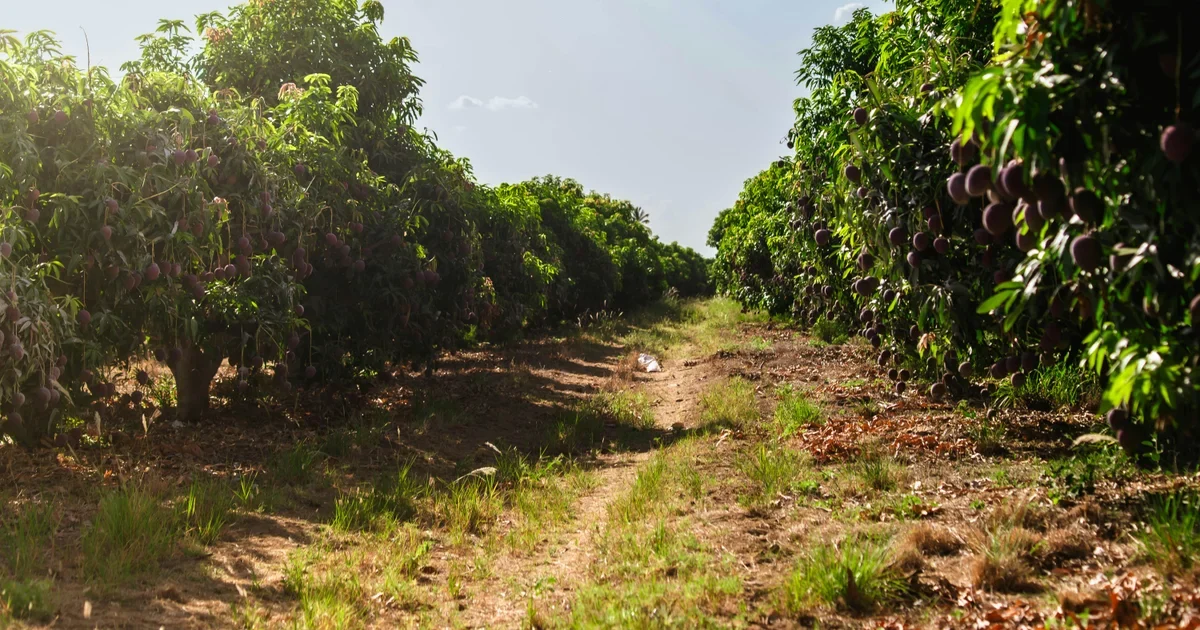
India produces approximately 20 million tonnes of mangoes annually - about 45 percent of global mango production - from over five million hectares of cultivation across Maharashtra, Uttar Pradesh, Andhra Pradesh, Bihar, and Gujarat. The crop employs roughly 25 million farmers and seasonal workers and generates 40,000 crore rupees in annual revenue at farm gate prices. And yet mango farming in India remains substantially less productive than it could be: average yields of 6-8 tonnes per hectare compare poorly with Israel’s 20+ tonnes per hectare using drip irrigation and precision management. Post-harvest losses run at 25-40 percent - one in every three to four mangoes grown in India never reaches a consumer. Into this gap, a new set of tools is arriving: artificial intelligence applications for disease detection, yield prediction, optimal harvest timing, and supply chain management that researchers and early commercial deployments suggest could transform both productivity and farmer income.
The Problems AI Is Being Applied To
Mango cultivation faces a specific set of production and post-harvest challenges that AI tools are now addressing. Disease and pest management is the most acute: mango anthracnose (caused by the fungus Colletotrichum gloeosporioides), powdery mildew, stem end rot, and mango hoppers are the primary threats to Indian mango yield and quality. Traditionally, farmers relied on calendar-based spray schedules - spraying fungicide and pesticide at predetermined intervals regardless of actual disease pressure - which is both wasteful and often mistimed relative to actual infection events. Machine learning models trained on image datasets of diseased mango leaves and fruit can now identify specific disease and pest conditions from smartphone photographs with accuracy comparable to or exceeding expert agronomist assessment, enabling farmers to spray only when disease pressure is actually present and to identify the specific pathogen to treat.
Yield prediction is the second major application. For farmers selling through wholesale markets or exporters, the ability to predict the harvest volume and timing weeks in advance has significant economic value: it allows advance contracting, enables the cold chain and packaging supply to be organised ahead of harvest, and reduces the glut-and-crash price dynamics that occur when all orchards in a region reach peak harvest simultaneously without advance coordination. AI models combining remote sensing data (satellite or drone imagery of canopy density and flowering), weather forecasting, and historical yield data can provide orchard-level yield estimates with usable accuracy 6-8 weeks before harvest. The Indian Council of Agricultural Research (ICAR) has been developing such models in collaboration with technology partners.
The Post-Harvest Problem: Where Most of the Losses Occur
India’s mango post-harvest loss rate - 25 to 40 percent - is primarily a cold chain and handling problem rather than a cultivation problem. Mangoes are a highly perishable fruit: once harvested, they continue to ripen rapidly, and without refrigerated transport and storage, they reach peak ripeness and then decay before they can be consumed or exported. The gap between India’s farm production and what reaches consumers is not primarily agricultural - it is logistical. The cold chain infrastructure that would allow mangoes to be harvested at optimal maturity, transported under temperature-controlled conditions, and distributed to markets far from the production areas is inadequate: India has approximately 8,186 cold storage facilities, but most are potato-focused, and mango-specific pre-cooling and cold transport is limited.
AI applications in this domain focus on two areas: optimal harvest timing and quality grading. Harvest timing is critical for mango because harvesting too early produces fruit that does not ripen properly, while harvesting too late means fruit that reaches the market already over-ripe. Computer vision systems mounted in packing houses can now grade mango fruit by external quality indicators (skin colour, absence of blemishes, size uniformity) at speeds and accuracy levels that exceed manual grading, enabling more consistent quality segregation that supports premium pricing for export-quality fruit. Hyperspectral imaging - a more advanced sensing technique that measures the fruit’s optical properties across dozens of wavelength bands - can detect internal defects, sugar content, and maturity stage without cutting the fruit open, enabling non-destructive quality sorting that was previously impossible.
India grows nearly half the world’s mangoes but accounts for a fraction of global mango exports. The productivity gap is partly agronomic, but the bigger gap is post-harvest: the same fruit that commands high prices in Gulf and European markets is rotting in trucks on India’s highways because the cold chain was not there when the harvest peaked.
Real Deployments: What Is Actually Working
Several programmes and companies are deploying AI tools in Indian mango farming with documented results. The ICAR-Central Institute for Subtropical Horticulture (ICAR-CISH) in Lucknow has developed an app-based disease diagnosis system for mango farmers that uses trained convolutional neural network models to identify common mango diseases from leaf and fruit photographs. The system has been deployed to over 50,000 farmers in UP and Bihar through agricultural extension services. Early results suggest that farmers using the diagnostic app are reducing pesticide use (by spraying only when diagnosis confirms the need) while maintaining or improving yield and fruit quality - a combination that is both economically and environmentally beneficial.
On the commercial side, companies including Intello Labs (now merged with AgriChain) and Cropin Technology have deployed AI-based grading systems at mango packing houses in Andhra Pradesh, Maharashtra, and Uttar Pradesh. These systems automate the sorting of mango consignments by quality grade, reducing the labour cost and inconsistency of manual grading while enabling more reliable quality certification for export shipments. The adoption of these systems has been faster among exporters than among domestic market sellers, because export markets (particularly the Gulf, the United Kingdom, and the United States) require quality consistency that automated grading can provide more reliably than manual methods. India’s mango exports grew from approximately $200 million annually in 2018-19 to over $300 million in 2022-23, and better post-harvest quality management is one of several factors in this growth.
India Mango Sector | Figure |
|---|---|
Annual production | ~20 million tonnes |
Global share | ~45% |
Cultivated area | ~5 million hectares |
Post-harvest loss rate | 25-40% |
Annual export value (2022-23) | ~$300 million |
Farmers employed | ~25 million |
The Connectivity and Smartphone Barrier
The deployment of AI tools in Indian mango farming faces a fundamental barrier: most mango farmers are smallholders (average holding of 1-2 hectares) with limited digital literacy and unreliable internet connectivity in rural areas. Many of the most promising AI applications - real-time disease diagnosis from smartphone images, drone-based canopy monitoring, weather-integrated yield models - require either smartphone ownership, reliable mobile data, or access to drones and sensors that are beyond the individual farmer’s means. This creates an adoption gap: the farmers who can most easily adopt AI tools are the relatively large, better-connected, better-educated commercial farmers who already have better practices; the small and marginal farmers who would benefit most from decision support are least able to access it.
Effective deployment models for AI in smallholder farming address this barrier through intermediaries: extension workers who carry tablets with diagnostic apps and visit multiple farms, farmer producer organisations (FPOs) that aggregate AI tools at the group level, and government-supported platforms that provide AI services to extension agents who then translate the advice to farmers face-to-face. The Digital Agriculture Mission launched by the Indian government in 2021, which creates a “Digital Public Infrastructure” for agriculture including a farmers’ database, crop modelling tools, and advisory services, is intended to create the platform on which AI applications can be delivered at scale to smallholder farmers. Whether this digital infrastructure will actually reach smallholder mango farmers in Malihabad (UP) or Ratnagiri (Maharashtra) depends on execution quality and last-mile connectivity - both longstanding challenges in Indian agricultural development. See our analysis of India’s broader technology ambitions in the quantum computing mission for the context of India’s technology infrastructure development priorities.
Climate Change and the Future of Mango Cultivation
Mango cultivation in India faces a long-term challenge from climate change that AI tools are also being mobilised to address. Mango flowering requires a specific combination of cool nights (below 15 degrees Celsius) and warm days during the winter months - conditions that trigger floral initiation. Warming winters in north India, where much of the country’s Alphonso and Dasheri mango production is concentrated, are disrupting this temperature signal, causing erratic flowering, split seasons, and yield variability that makes orchard management much harder. The 2022-23 mango season saw widespread flowering failures in UP and Bihar attributed to atypically warm January temperatures.
Climate modelling combined with crop phenology models can help farmers and agricultural planners anticipate these changes and adapt - shifting planting locations to higher altitudes where temperature conditions remain suitable, selecting varieties with lower chilling requirements, or adjusting irrigation and nutrition management to compensate for changed conditions. ICAR and international agricultural research centres including the International Centre for Research in the Semi-Arid Tropics (ICRISAT) are developing these models for Indian mango. The adaptation challenge is genuinely difficult: mango trees live for decades, meaning that planting decisions made today will be operating in the climate conditions of 2040 and 2050, not the conditions of 2024. Getting those decisions right requires both better climate projections and better crop models than are currently available, and AI is being applied to both areas. The future of India’s mango sector - whether it will maintain its global dominance or see its share erode to more technically advanced producers - will depend substantially on how well the country manages this adaptation challenge over the next two decades. Also see our analysis of India’s climate position and carbon debt for the macro context of agricultural climate vulnerability.
The Technology Is Not the Constraint
The AI tools for mango farming - disease diagnosis, yield prediction, quality grading, climate adaptation - are largely available and increasingly proven. The constraint is not the technology but its deployment at scale to the 25 million farmers who grow mangoes, most of them smallholders with limited digital access. Solving that deployment challenge requires investment in connectivity, digital literacy, extension infrastructure, and farmer producer organisations that can aggregate access to tools that individual smallholders cannot afford. The mango sector’s AI transformation will happen at the speed of this deployment infrastructure, not at the speed of algorithm development.
The Alphonso and Beyond: Variety Management with AI
India grows over 1,000 named mango varieties, of which approximately 30-40 are commercially significant. The Alphonso (Hapus) of Ratnagiri and Devgad in Maharashtra, the Dasheri of Malihabad in UP, the Langra and Chausa of Bihar and UP, the Kesar of Gujarat, the Banganapalli (Safeda) of Andhra Pradesh, and the Totapuri used for processing each have distinct flavour profiles, ripening windows, export suitability, and management requirements. Managing a multi-variety orchard or supply chain requires tracking the distinct phenology, disease susceptibility, and market timing of multiple varieties simultaneously - a complexity that AI-based orchard management platforms are specifically designed to handle.
AI-based variety identification from images is one of the more immediately practical applications in this domain. Graders who are expert in one or two varieties may misidentify mangoes when handling mixed consignments, particularly for varieties that are visually similar at similar maturity stages. Computer vision systems trained on variety-specific image datasets can identify variety with high accuracy from photographs, enabling automated sorting of mixed consignments and preventing variety substitution fraud in export supply chains where origin and variety affect premium pricing. The Geographical Indication (GI) status of Alphonso mangoes from specific districts creates both a market premium and a verification challenge - buyers want assurance that an Alphonso label reflects actual origin and variety, and automated verification systems are more reliable than manual inspection for this purpose.
The Export Opportunity: Why India Punches Below Its Weight
India’s share of global mango exports is remarkably small given its dominance of global production. Thailand, Mexico, and Peru all export more mango by value than India despite producing substantially less. The reasons are multiple: India’s post-harvest infrastructure disadvantages have already been noted, but export regulations and phytosanitary requirements also play a role. India’s mango exports to the European Union have faced repeated restrictions related to pest interceptions (fruit fly and mealybug) that reflect inadequate packhouse hygiene and cold chain management. The US market, which imports large volumes of mango from Mexico and Central America, has specific phytosanitary protocols (hot water treatment for fruit fly) that Indian exporters must comply with - compliance requires certified treatment facilities that are not available in all production areas.
AI tools are being applied to the export compliance challenge in several ways: real-time monitoring of packhouse environments for pest indicators, automated documentation of temperature and treatment logs for phytosanitary certification, and predictive models that identify consignments at higher risk of pest interception before they reach the border. These applications reduce the compliance cost per consignment and improve the reliability of compliance documentation - important factors for building the track record with importing country regulators that enables access to premium markets. The broader opportunity for Indian agricultural exports in a world of growing middle-class demand for premium tropical fruit is substantial; realising it requires investment in the post-harvest and logistics infrastructure that AI tools can optimise but cannot substitute for. The challenge of connecting India’s enormous agricultural production base to premium global markets parallels the connectivity and deployment challenge we examine in our analysis of rural employment and infrastructure policy.
What you can do
- Share the evidenceSend this to one person who should know about this issue.Share on WhatsApp
- Give an afternoonTeach, mentor, clean up, or lend your professional skills.Ways to volunteer
- Tell us what's missingKnow a story, a fact we got wrong, or a solution worth spotlighting?Suggest a story
Politically neutral. Every claim sourced. Report a correction.

No comments yet