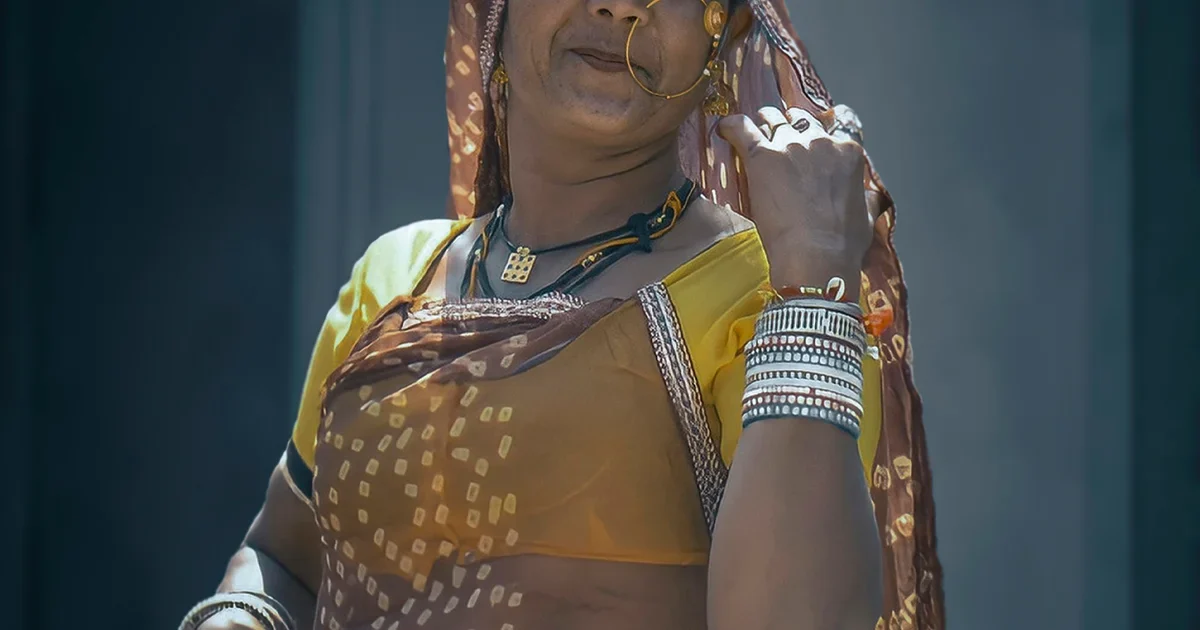
Phoolan DeviBandit Queen to MP, and What India Did to Her Memory
Phoolan Devi was born in 1963 into one of India's lowest-ranked communities, the Mallah boat people of Uttar Pradesh, and died in 2001 with a bullet in her head outside her Delhi home as a sitting member of the Lok Sabha. In between, she became the most infamous dacoit (bandit) in India's most dacoi...
Phoolan Devi was born in 1963 into one of India’s lowest-ranked communities, the Mallah boat people of Uttar Pradesh, and died in 2001 with a bullet in her head outside her Delhi home as a sitting member of the Lok Sabha. In between, she became the most infamous dacoit (bandit) in India’s most dacoit-prone region, the Chambal valley, led a massacre of upper-caste Thakurs in Behmai village in 1981, surrendered to the authorities in a ceremony that drew national media coverage in 1983, spent eleven years in jail without trial, was released and transformed her notoriety into political capital that elected her to Parliament twice. Her life is a compressed history of caste violence, gender-based exploitation, the particular vulnerability of low-caste women, the limits of the Indian justice system, and the complicated ways in which the same society that brutalised her eventually accommodated her.
The Making of a Bandit
Phoolan Devi’s biography, as she narrated it and as it has been documented, is a catalogue of the violence that the caste system routinely inflicted on low-caste women in rural Uttar Pradesh. Married at age eleven to a man decades older than her - a practice common in her community - she was returned to her family after the marriage failed. Treated as a failure and a burden within her own household, she was eventually handed over to the police in a land dispute by a relative, and experienced her first recorded episode of police rape. Her subsequent life on the run and eventual integration into dacoit gangs was less a personal choice than a predictable consequence of having been made an outcast by the system that was supposed to protect her.
The dacoit gangs of the Chambal valley in the 1970s and 1980s operated in a region where the state had historically weak presence and where the topography - ravines, scrubland, river bluffs - provided natural cover for armed groups outside the law. The gangs were not random criminal enterprises; they were structured around caste affiliations, with upper-caste Thakur-dominated gangs and lower-caste Mallah-affiliated gangs existing in competition and conflict. When Phoolan Devi eventually became the de facto leader of a Mallah-affiliated gang, she was operating in a social context where armed resistance to upper-caste power was, for her community, one of the few forms of power available. That context does not make the crimes she committed defensible, but it makes them comprehensible in a way that treating her simply as a criminal does not.
The Behmai Massacre and Its Context
On 14 February 1981, armed members of Phoolan Devi’s gang entered the village of Behmai in Uttar Pradesh and killed 22 men, all of them from the upper-caste Thakur community. Phoolan Devi’s own account of the events at Behmai, and the context of the massacre, is that it was retaliation for an earlier episode in which she had been kidnapped, gang-raped repeatedly over multiple weeks, and subjected to public humiliation in the village by Thakur gang members. The men killed at Behmai included some who had participated in her rape, though the accuracy of specific identifications is disputed. The massacre generated enormous media coverage and made Phoolan Devi the most wanted person in Uttar Pradesh.
The Behmai massacre is the event that defined Phoolan Devi’s public image - both her infamy and, for many low-caste communities, her heroic status. For upper-caste communities and the state, it was mass murder. For Mallah and other backward-caste communities in the region, it was understood as retributive justice - a settling of accounts by someone who had no access to legal justice, against people who would have faced no consequences for what they had done. Both responses are present in how Phoolan Devi’s legacy is discussed: neither the simple criminal narrative nor the simple folk-hero narrative is adequate to what she was.
Phoolan Devi’s life forces a question that the Indian legal system has never adequately answered: what is the moral status of violence committed in response to violence for which no legal remedy was available? The question is uncomfortable precisely because the answer is not simple.
The Surrender, the Jail Years, and the Transition to Politics
Phoolan Devi surrendered to the Madhya Pradesh government in February 1983 in a ceremony attended by thousands of people, conducted with the participation of religious leaders, and photographed by national media. The conditions she negotiated for her surrender included that she would not be handed over to the Uttar Pradesh police (who she had particular reason to distrust), that her gang members would receive defined sentences, and that she would not be subjected to hanging. She laid down her rifle before images of the goddess Durga and the photographs of Mahatma Gandhi and Indira Gandhi. The surrender was theatre as much as legal process, and it was understood as such by all participants.
What followed was not the legal process that the surrender was supposed to initiate: Phoolan Devi spent eleven years in prison without being formally tried. The 48 charges against her remained in various stages of legal proceedings without reaching verdict. The failure to bring her to trial was not an administrative oversight; it was a product of the complexity of the cases, the political sensitivity of prosecuting a figure who had become a symbol for backward-caste communities, and - it is difficult to avoid the conclusion - a judicial system that was not equipped or motivated to process her case expeditiously. She was released in 1994, partly on health grounds, by the Mulayam Singh Yadav government in Uttar Pradesh - a government with strong backward-caste political support that saw advantage in releasing a figure with backward-caste symbolic significance.
Member of Parliament: The Political Phoolan
Phoolan Devi was elected to the Lok Sabha from Mirzapur constituency in Uttar Pradesh in 1996, running on a Samajwadi Party ticket. She was re-elected in 1999. Her electoral success was not simply a matter of notoriety: she received support from Mallah and other backward-caste communities who saw in her election a form of representation that conventional politics had never offered them. A low-caste woman who had been raped and brutalised by upper-caste men becoming a lawmaker in the Parliament of India was, for her voters, a statement about what democratic politics could mean for people at the bottom of the caste hierarchy.
Her parliamentary career was modest in terms of legislation or policy contribution - she had limited education and no political training. But her presence in Parliament was itself significant, and she spoke on issues affecting marginalised communities with an authority that came from having lived their experience rather than studied it. The all-party charges against her (for the Behmai massacre and related offences) were eventually settled out of court in 1996 through a compromise arrangement that satisfied no one completely but allowed the legal questions to be closed without a trial that would have been politically incendiary. For perspective on the broader question of caste, social reform, and political representation in India, see our profile of E. V. Ramasamy Periyar and the Dravidian movement.
Phoolan Devi: Key Events | Year |
|---|---|
Born, Mallah community, UP | 1963 |
Married at age 11 | 1974 |
Behmai massacre | 1981 |
Surrender to MP government | 1983 |
Released without trial | 1994 |
Elected to Lok Sabha (Mirzapur) | 1996 |
Assassinated at Delhi home | 2001 |
The Assassination and Its Unresolved Questions
Phoolan Devi was shot dead outside her Delhi home in July 2001. The man convicted of the murder, Sher Singh Rana, claimed the killing as revenge for Behmai - he was from a Thakur background and said he acted in response to the deaths of his community members twenty years earlier. Rana was convicted in 2014 and sentenced to life imprisonment. The case is formally closed, but questions about whether Rana acted alone or with backing from more powerful interests remain in circulation, particularly among those who believe the assassination was facilitated by political enemies who found Phoolan Devi inconvenient.
Phoolan Devi’s legacy is debated precisely because her life sits at the intersection of the most sensitive questions in Indian society: the relationship between caste violence and criminal violence, the rights of women who have been brutalised and seek their own forms of justice, the limits of legality as a framework for evaluating responses to systematic oppression, and the question of what democracy means when it includes people who were previously excluded from all its institutions. She was not a simple figure and her legacy is not simple. She did kill people. She was also a woman to whom extraordinary violence was done and who had no legitimate means of redress. Indian society has never fully reconciled these two facts about her. For a connected perspective on how India handles justice for the marginalised, see our piece on Kailash Satyarthi and the child rights movement.
What Phoolan Devi’s Life Demands
Phoolan Devi’s life is an indictment of the caste system, of the failure of the Indian state to provide justice to the most vulnerable, and of the legal system’s inability to process even the most visible cases fairly. Her career as a dacoit was not separate from these systemic failures - it was their consequence. Her election to Parliament was not separate either - it was the consequence of her community’s recognition that the democratic system, however imperfect, offered something that the legal system had not. Understanding Phoolan Devi means understanding all of this together, not selecting the parts that fit a preferred narrative.
The Bandit Queen Film and Its Controversy
Shekhar Kapur’s 1994 film “Bandit Queen,” based on Phoolan Devi’s life and on Mala Sen’s biography, became one of the most controversial Indian films of the decade and contributed substantially to the international awareness of her story. The film was explicit in its depiction of the sexual violence she experienced and graphic in its representation of the Behmai massacre. It was banned in India on grounds of obscenity before being permitted to be screened after modifications; it won multiple awards internationally, including the BAFTA award for Best Foreign Language Film. Phoolan Devi herself rejected the film, arguing that it misrepresented her and that the graphic depiction of her rape was exploitative rather than testimonial. She pursued legal action against its release.
The controversy over “Bandit Queen” raises questions about representation and consent that are relevant beyond this particular case: who has the right to tell a marginalised person’s story, particularly when that story involves sexual violence, and what obligations do filmmakers have to their subjects? Phoolan Devi’s objection was not that her story was wrong but that the manner of its telling denied her agency over her own narrative. A woman who had been robbed of bodily autonomy throughout her early life found the most watched representation of her experience to be one she had not authorised and objected to. The film’s defenders argued that its explicit depiction of violence was politically necessary to prevent audiences from aestheticising or sanitising what had actually happened. Both positions reflect genuine values in tension.
Caste Violence in UP: The Context That Made Phoolan
The violence that shaped Phoolan Devi’s life was not an aberration in rural UP but a systematic feature of caste relations in the region. Upper-caste violence against lower-caste communities - particularly sexual violence against lower-caste women by upper-caste men, who faced minimal legal consequences - was a well-documented pattern in the Chambal valley and across the Gangetic plain. The National Crime Records Bureau data for UP consistently shows high rates of caste-based violence; academic studies of caste-based rape in the state have documented the systematic impunity enjoyed by upper-caste perpetrators. Phoolan Devi’s experience was extreme but not unique in kind - it was extreme in that she survived it, refused to accept it as inevitable, and found ways to respond that made her refusal visible rather than invisible.
The structural conditions that created Phoolan Devi’s vulnerability remain substantially unchanged in rural UP despite legal reforms, judicial activism, and repeated state government commitments to address caste violence. The Hathras gang rape case of 2020, in which a Dalit woman was allegedly gang-raped and murdered by upper-caste men and the state government’s handling of the case attracted national and international criticism, demonstrated that the patterns Phoolan Devi’s story represented had not been resolved by the legal changes and social reform efforts of the intervening decades. The political economy of caste violence - in which perpetrators have upper-caste community solidarity, access to political protection, and the capacity to pressure local police and administration - is durable in ways that individual prosecutions and legal reforms have not fully disrupted. Understanding Phoolan Devi requires understanding this context, which is inseparable from the broader questions of social reform explored in our profile of Periyar and the Dravidian movement’s caste abolition agenda.
What you can do
- Share the evidenceSend this to one person who should know about this issue.Share on WhatsApp
- Give an afternoonTeach, mentor, clean up, or lend your professional skills.Ways to volunteer
- Tell us what's missingKnow a story, a fact we got wrong, or a solution worth spotlighting?Suggest a story
Politically neutral. Every claim sourced. Report a correction.
No comments yet