India's Food Map: Millets - From Harappan Fields to Odisha's Ragi Mandis
Millets fed India for 4,000 years, then lost the plate to subsidised rice and wheat. What the nutrition data show, what 2023 changed, and what Odisha and Karnataka teach.
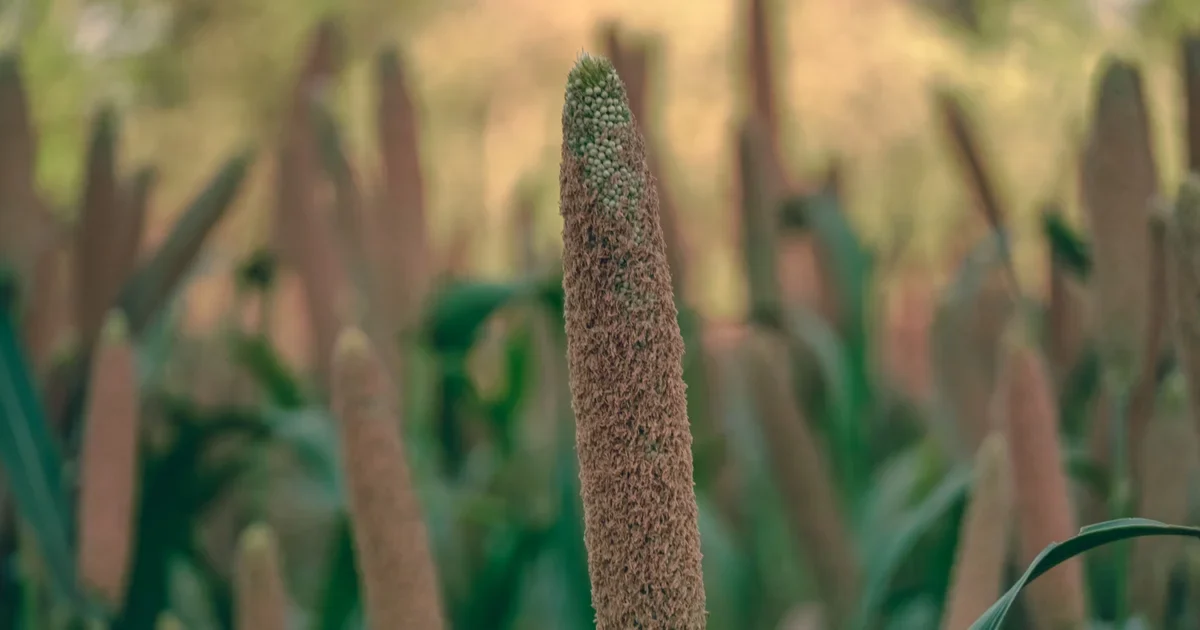
Photo by Ranjeet Chauhan on Pexels
In this story
Millets were among the first grains grown on the Indian subcontinent, and for most of the twentieth century they were treated as the food of people who could not afford rice. Between 1990 and 2020 the area under millets fell by about a third, according to FAO data cited by ICRISAT, and sorghum, one of the main millets, lost 62 percent of its cropped area. Today millets and sorghum make up only about 6 to 7 percent of India’s staple diet. In 2023, the United Nations marked the International Year of Millets on India’s proposal, and the grains returned to menus, ministries and magazine covers.
The harder question is whether the revival reaches the farmer and the family that need it. This post follows the grains from their archaeological record to the nutrition tables, then looks at two states that have built working systems: Odisha, which targets tribal nutrition and rainfed upland farms, and Karnataka, which is the country’s ragi heartland. Along the way it sets out what has not worked.
What are millets, and where are they grown?
Millets are a group of small-seeded, hardy grains that grow with little water on poor soil. India’s official statistics split them into four groups: jowar (sorghum), bajra (pearl millet), ragi (finger millet), and small millets such as foxtail, little, kodo, barnyard and proso millet. The Ministry of Agriculture’s state-wise table for 2022-23, which the government calls Shree Anna, puts national production at 173.2 lakh tonnes: 114.3 lakh tonnes of bajra, 38.1 of jowar, 16.9 of ragi and 3.8 of small millets.
The map has clear regions.
State | Millet production 2022-23 (thousand tonnes) | What dominates |
|---|---|---|
Rajasthan | 5,674 | Bajra (5,105) |
Uttar Pradesh | 2,369 | Bajra (2,046) |
Karnataka | 2,033 | Ragi (1,148) and jowar (682) |
Maharashtra | 1,899 | Jowar (1,312) |
Gujarat | 1,364 | Bajra (1,294) |
Madhya Pradesh | 1,254 | Bajra (943) and small millets (141) |
Haryana | 1,214 | Bajra (1,200) |
Tamil Nadu | 630 | Jowar (293) and ragi (207) |
Uttarakhand | 176 | Ragi (114) and small millets (62) |
Odisha | 76 | Ragi (37) and small millets (32) |
Three patterns stand out. The dry north and west grow bajra. The Deccan plateau grows jowar. And ragi belongs to Karnataka: its 1,148 thousand tonnes are about 68 percent of the 1,691 thousand tonnes grown nationally. Small millets are mostly a crop of the hill and tribal belts, from Madhya Pradesh to Uttarakhand to Odisha.
Odisha’s low tonnage deserves a note. It is not a failure of the mission described below. The state grows millets on small, rainfed upland plots in tribal districts, and the aim is nutrition and income for those households, not volume for the national market.
How old are millets in India?
Very old. Archaeobotanical studies find millets in the Harappan world. A 2014 review by Pokharia and colleagues in the Journal of Archaeological Science reports finger millet at some peripheral Harappan sites in the mature phase and foxtail and little millets as prominent in the Late Harappan period. The authors link the shift to drought-tolerant crops with a weakening of the southwest monsoon in the late Holocene. A 2025 study of pearl millet places the crop in Gujarat by at least 1700 BCE, in the Late Harappan horizon, and possibly 2000 BCE, and finds the oldest securely dated grains at Bhando Qubo in Sindh.
The detail matters less than the pattern. Millets were not a backup grain adopted in a famine. They were part of the farming system from the early days of settled agriculture in the north-west, and later across the Deccan and the south. Where the monsoon is unreliable, they are the crop that still gives a harvest.
Why did Indians stop eating millets?
The answer is mostly policy and price, not taste. An ICRISAT overview of millet supply chains sets out the pieces.
- Consumption collapsed. Rural sorghum consumption fell 73.49 percent, from 9.96 kg to 2.64 kg per person a year, between 1991-92 and 2011-12. Urban consumption fell 60.60 percent.
- Policy favoured rice and wheat. The authors attribute the fall mainly to minimum support prices and the public distribution system that promoted wheat and rice. Rising incomes, urbanisation and changing tastes added to it.
- Price gap. Subsidised wheat and rice reach more than two-thirds of rural consumers at Rs 2 to 3 a kg. Millets sell at Rs 30 to 40 a kg, so a rural buyer has little reason to switch.
- No assured buyer. Government procurement is 1 to 3 percent of production for pearl millet and sorghum, against 45 to 70 percent for wheat and rice. For finger millet, it is about 15 percent. A farmer growing bajra sells at the trader’s price.
- Shelf life and processing. Millet flour keeps 20 to 30 days, which pushes processors to charge more, and suitable machines are scarce.
- Farmers moved on. Cotton and maize gained ground through better yields and value chains.
This is a well-documented example of a system tilted by procurement and subsidy. For how household budgets shape what families can afford, see our posts on out-of-pocket health spending and why income gains do not stick.
What does the nutrition data say?
The official reference is the 2024 Dietary Guidelines for Indians from ICMR-National Institute of Nutrition. It lists the average composition of food groups per 100 g of raw weight.
Nutrient per 100 g raw | Cereals (group average) | Millets (group average) |
|---|---|---|
Protein | 9.3 g | 9.9 g |
Fat | 1.2 g | 2.7 g |
Dietary fibre | 6 g | 7 g |
Calcium | 18.1 mg | 60.4 mg |
Magnesium | 69.1 mg | 73.9 mg |
Iron | 2.73 mg | 3.20 mg |
Zinc | 1.71 mg | 2.12 mg |
Read this with care. The difference is clearest for calcium, where the millets group has about 3.3 times the cereals average, and ragi is named in the guidelines among the sources of calcium alongside milk products and sesame. The gaps for protein, iron and zinc are modest. Millets are a better staple, not a medicine, and the table compares group averages, not individual grains.
The guidelines do not tell Indians to abandon rice and wheat. They say a balanced diet should draw no more than 45 percent of calories from cereals and millets, that at least half of the cereals eaten should be whole grains such as millets, and, in a footnote to the plate table, that 20 to 30 percent of raw cereal weight should come from millets for adults and 20 percent for children up to 10. That is roughly one meal in four or five, not a replacement of the plate.
The case is strongest for people whose diets lack calcium, iron and fibre. Our post on why stunting persists in India explains how dietary diversity, not calories alone, drives undernutrition. ICRISAT notes that India ranked 107 of 121 countries in the 2022 Global Hunger Index despite running the largest food distribution system in the world, which feeds over 800 million people. A system that hands out rice and wheat cannot, by itself, correct a micronutrient gap.
How big is the gap between what India eats and what it could eat?
ICRISAT’s estimate of per capita consumption makes the gap concrete: about 142 kg a year of rice and wheat, against 10.16 kg of millets and sorghum. Millets and sorghum are about 6 to 7 percent of the staple diet. Nutritionists quoted in the overview suggest raising that to 15 to 20 percent, which would mean a three to four-fold increase in domestic demand.
Put plainly, if India’s families moved to the share the nutrition experts suggest, today’s millet harvest would fall well short. That is an opportunity for farmers, but only if production, storage and processing rise together. A rise in demand without an assured supply sends prices up and pushes the grain out of reach of the very households the revival is meant to serve.
What does a millet farmer earn?
At the 2025-26 support price of Rs 4,886 a quintal for ragi, a farmer who gets the lower end of the yield range ICRISAT gives for millets, 1 tonne a hectare (10 quintals), earns about Rs 48,860 a hectare in gross sales, and one at 1.5 tonnes (15 quintals) about Rs 73,290. This is our own arithmetic for illustration, before any costs, and it assumes the whole crop is sold at the support price. It shows two things.
- The support price is the difference. Without it, a farmer sells to a trader at whatever the market offers, which ICRISAT notes was well below the support price for pearl millet in north India in 2022-23.
- Yield is the other half. A farmer who moves from 10 to 15 quintals gains about Rs 24,000 a hectare at the same price. Seed, soil and extension advice are therefore worth as much as the price.
This is why mission-style programmes combine price support, demonstrations and farmer groups. A farmer in a rainfed upland plot with little irrigation will only grow a crop that pays, and millets pay when someone is there to buy them.
What did the International Year of Millets change?
It changed attention first. The UN General Assembly declared 2023 the International Year of Millets on India’s proposal, and the government rebranded the grains Shree Anna. Awareness, restaurants, start-ups and large food companies followed. ICRISAT lists ITC, Tata, Hindustan Unilever and Britannia among firms that entered millet processing, along with small enterprises such as Millet Amma, Troo Good and 24 Mantra.
On the farm, change is slower. The 2022-23 production figure of 173.2 lakh tonnes is the government’s own, and ICRISAT states that current production remains below 18 million tonnes against an official goal of 45 million tonnes by 2030. Average millet yields are 1 to 1.5 tonnes per hectare, which is why a farmer needs an assured price and a buyer more than a campaign. ICRISAT’s analysis also finds that in several districts of Jharkhand, Chhattisgarh, Madhya Pradesh, Maharashtra, Odisha and Bihar, millets were on average more profitable than rainfed upland rice over a three to five year horizon. Where that is true, the missing piece is the market.
What has Odisha done?
Odisha’s approach is the best-documented model in the country. It starts from a specific problem: tribal households in rainfed uplands, where rice is a poor fit and food is less varied. The Odisha Millets Mission began in 2017. A February 2020 account in Vikalp Sangam described a programme in 72 blocks of 14 districts covering 51,045 farmers, with the area under finger millet and little millet rising in many districts for the first time in 20 years.
Its working parts are worth listing because they are the answer to the problems above.
- Assured procurement. The state buys ragi at the minimum support price through local procurement centres. Koraput district, for example, bought 239,875 quintals from 14,574 farmers in the 2024-25 season, almost reaching its target of 244,200 quintals, as reported by Millets News. The all-India minimum support price for ragi in 2025-26 is Rs 4,886 a quintal.
- A public outlet for the grain. Ragi was distributed through the public distribution system to about 1.6 million households in 2019, according to Vikalp Sangam. Procurement means little if the grain has nowhere to go.
- Farmer groups. The mission works with local farmer groups and producer companies, which can pool seed, processing and sale.
- Machines and local processing. Vikalp Sangam describes decentralised agri-tech businesses and processing machines as part of the plan, and also notes delays in approving machine specifications.
- Attention to nutrition. Putting ragi in the food that tribal households receive links the farm to the plate.
The risks
The Odisha story has real caveats. Vikalp Sangam reports that ragi holds about 90 percent of the state’s millet market, which puts minor millets at risk. It also records delays in releasing government funds, and difficulties in reaching remote, forested areas.
The most recent news is a warning. According to Down To Earth, in May 2026, the outlay of Shree Anna Abhiyan, the successor programme, was cut from Rs 600 crore to Rs 415 crore for 2026-27, a fall of about 31 percent, despite 93 percent fund use in 2025-26. The demonstration area shrank from 150,000 hectares to 100,000. Only about 17,680 hectares were earmarked for non-ragi millets, and farmer groups said grassroots support agencies had been withdrawn from 13 districts and that tribal blocks funded through the District Mineral Foundation received no allocation. These are the farmers’ claims as reported, and the state may have its own reasons, but they show how a programme can lose ground when procurement and extension are not made permanent.
What has Karnataka done?
Karnataka is the grain’s home. As the table above shows, it grows about two-thirds of India’s ragi and a large share of jowar. Its strength is a working public system around the crop.
- Government buying at MSP. The state buys ragi and jowar from farmers at the support price. The Karnataka food minister told the Centre in November 2025 that the state had been asked to procure 6 lakh tonnes of ragi, as reported by Deccan Herald.
- Millets in the ration. Karnataka distributes ragi and jowar through the public distribution system, and the Centre released Rs 900 crore in 2021-22 as a subsidy for ragi and jowar procurement for that purpose, according to Deccan Herald.
The same report shows where the system strains. The minister asked the Centre to release Rs 1,848 crore in pending procurement bills, and to raise the support price for the Maldandi variety of jowar from Rs 1,000 to Rs 1,500 per quintal. A farmer who is paid late, or paid below cost, will switch crops regardless of how good the programme looks on paper. We could not find a published count of farmers who sold millets in Karnataka or a district-wise record of grain distributed, so the reach of the system cannot be measured from public data.
For the state’s wider story, including the rural-urban gap, see our post on Karnataka as two states inside one border.
What does it take for millets to work?
Putting the evidence from both states and the national picture together, a working millet system needs these things.
- An assured price and a buyer. Procurement of 1 to 3 percent of bajra and jowar production is not a market. Ragi, procured at 15 percent, does better, and Karnataka and Odisha show why.
- A public outlet. Putting millets into the ration, mid-day meals and anganwadi meals gives procurement somewhere to go and gives children the nutrition. ICRISAT’s authors propose exactly this.
- Processing close to the farm. De-hulling, milling and packaging near production areas keeps value and jobs in the village and solves part of the shelf-life problem.
- Support for minor millets. Kodo, little, foxtail and barnyard millets are the most nutritious and the least supported. Odisha’s 17,680 hectares for non-ragi millets show the gap.
- Yield improvement. At 1 to 1.5 tonnes a hectare, millets will not compete with maize or cotton without better seed and agronomy.
- Stable funding. Odisha’s budget cut shows that a mission needs a multi-year commitment, not a yearly allocation.
- Honest messaging. Millets add to a good diet. They do not replace dietary diversity or treat disease.
Other food systems offer parallels. Our posts on Kerala’s cuisine and India’s street food economy show how food culture and livelihoods are tied together.
What can you do?
- Start small. Replace one rice or wheat meal in four with ragi, jowar or bajra. This matches the 20 to 30 percent guidance for adults.
- Buy whole grain and local. Choose unpolished millets from farmer producer organisations or women’s self-help groups, and ask where the grain was grown.
- Try the minor millets. Foxtail, little and kodo millets are widely available only in a few regions. Asking for them tells shops and canteens there is demand.
- Push institutions. Ask your children’s school, college or office canteen to put millets on the menu, and ask your anganwadi worker whether millets are in the meals.
- Check your ration shop. In states that supply millets through the public distribution system, take them and tell the dealer you want them.
- Watch the labels. Many packaged products labelled millet are mostly refined flour. Look for the share of millet in the ingredient list.
- Cook it well. Soaking and fermenting, as in dosa, idli and ambali, makes millets easier to digest and has long been part of the tradition.
Frequently asked questions
Which millets does India grow most?
Bajra (pearl millet) by far, at 114.3 lakh tonnes in 2022-23, then jowar (38.1), ragi (16.9) and small millets (3.8).
Which state is the largest producer?
Rajasthan, at 5,674 thousand tonnes in 2022-23, mostly bajra. Karnataka is the leader in ragi, with about 68 percent of the national output.
Are millets healthier than rice?
On average, yes, in some respects. ICMR-NIN’s tables show about three times the calcium and slightly more fibre, iron and zinc than the cereals average. They are best seen as a way to diversify the plate, not as a cure for any condition.
Why were millets called coarse grains?
The label reflects their place in a food system built around rice and wheat, not their nutrition. The government now calls them Shree Anna, and the UN marked 2023 as the International Year of Millets.
Is Odisha’s millet mission working?
It has expanded area and procurement in tribal districts and put ragi into the public distribution system. Its future depends on stable funding, and a reported cut for 2026-27 has worried farmer groups.
How much millet should I eat?
ICMR-NIN suggests that 20 to 30 percent of the cereals you eat, by raw weight, can be millets for adults, and about 20 percent for children up to 10 years of age.
The takeaway
Millets are a grain India never needed to rediscover; it needed to stop pricing them out of the market. Odisha and Karnataka show what the missing pieces are: a buyer at a fair price, a public outlet for the grain, local processing and funding that outlasts the headlines. The revival that began with a UN year will be real when the farmer in Koraput or Kolar sells her harvest without worrying about who will buy it.
Sources: Ministry of Agriculture and Farmers Welfare, state-wise production of millets 2022-23; ICMR-National Institute of Nutrition, Dietary Guidelines for Indians 2024; ICRISAT; Vikalp Sangam; Down To Earth; Millets News; Deccan Herald; Scientific Reports (2025).
What you can do
- Share the evidenceSend this to one person who should know about this issue.Share on WhatsApp
- Give an afternoonTeach, mentor, clean up, or lend your professional skills.Ways to volunteer
- Tell us what's missingKnow a story, a fact we got wrong, or a solution worth spotlighting?Suggest a story
Politically neutral. Every claim sourced. Report a correction.
No comments yet