India's Rivers: The Kaveri - A 150-Year Water Dispute Between Karnataka and Tamil Nadu
On 5 February 2018, the Supreme Court of India ordered Karnataka to release 2,000 cusecs of Kaveri water to Tamil Nadu within 24 hours. Within hours, protests broke out in Bengaluru. Buses were burned. A curfew was imposed. Across the border in Tamil Nadu, farmers held demonstrations of a different ...

On 5 February 2018, the Supreme Court of India ordered Karnataka to release 2,000 cusecs of Kaveri water to Tamil Nadu within 24 hours. Within hours, protests broke out in Bengaluru. Buses were burned. A curfew was imposed. Across the border in Tamil Nadu, farmers held demonstrations of a different kind - framing the water as a matter of survival for their Kuruvai and Samba paddy crops. The Kaveri water dispute is 150 years old and shows no signs of resolution. It is simultaneously a story about agriculture, federalism, engineering, sacred rivers, and the limits of judicial authority when enforcement requires political will that does not exist.
The River and Its Basin
The Kaveri (Cauvery) rises in the Brahmagiri hills of Kodagu district in Karnataka at an elevation of about 1,341 metres and flows approximately 800 kilometres southeast through Karnataka and Tamil Nadu before emptying into the Bay of Bengal. Its basin encompasses roughly 81,155 square kilometres, of which about 34,273 square kilometres lies in Karnataka, 43,868 square kilometres in Tamil Nadu, and smaller portions in Kerala and Puducherry. The river is sacred in both states - in Karnataka it is associated with Kaveramme, a goddess; in Tamil Nadu, the Ranganathaswamy temple at Srirangam sits on an island formed by two Kaveri channels and is one of the most important Vaishnava pilgrimage sites in South India.
The basin is divided hydrologically in a way that creates structural tension: Karnataka holds the upper reaches where the main tributaries and reservoirs are located, while Tamil Nadu holds the delta and the agricultural lands that have historically depended on the river for irrigation. The Kaveri delta in the Cauvery Delta Zone districts of Tamil Nadu - Thanjavur, Tiruvarur, Nagapattinam, Ariyalur, and Cuddalore - is the rice bowl of the state and historically the rice bowl of much of South India, supporting intensive paddy cultivation over centuries under the Chola irrigation system whose tank networks survive to this day.
150 Years of Legal History
The dispute did not begin with independence. The first formal agreement between the princely state of Mysore and the Presidency of Madras (representing the interests of what is now Tamil Nadu) was signed in 1892, covering the construction of the Kannambadi dam. The 1924 Agreement between Mysore and Madras allocated water sharing between the two territories, with Madras receiving a larger share on the grounds of its existing irrigation infrastructure. This agreement, designed to last 50 years, set the baseline for a century of disputes - because by the time it expired in 1974, both Karnataka and Tamil Nadu had expanded their irrigated area well beyond what the 1924 agreement contemplated.
Karnataka’s position has consistently been that the 1924 agreement was inequitable, concluded under colonial power dynamics, and that Karnataka has an equal right to develop its portion of the basin for its own farmers. Tamil Nadu’s position has been that farmers in the delta have depended on specific water releases for generations, that their cropping systems are designed around those flows, and that any reduction destroys both the livelihoods and the agricultural heritage of the delta region. The Cauvery Water Disputes Tribunal was constituted in 1990 under the Inter-State Water Disputes Act. It took 17 years - until 2007 - to deliver a final award. The award itself was then challenged before the Supreme Court, which delivered its final judgment in 2018. Even that judgment has not ended the dispute; implementation remains contested.
Year | Development |
|---|---|
1892 | First formal Mysore-Madras agreement on Kannambadi dam |
1924 | Comprehensive water-sharing agreement between Mysore and Madras |
1974 | 1924 agreement expires; Tamil Nadu requests new tribunal |
1990 | Cauvery Water Disputes Tribunal constituted |
2007 | Tribunal final award: 419 TMC to Tamil Nadu, 270 TMC to Karnataka |
2012 | Cauvery Management Board mandated but not constituted |
2018 | Supreme Court modifies award: Tamil Nadu 404.25 TMC, Karnataka 284.75 TMC |
2018 | Cauvery Water Management Authority constituted after Supreme Court directive |
The 2018 Supreme Court Verdict
The Supreme Court’s February 2018 judgment was the culmination of nearly 30 years of litigation. The Court modified the tribunal’s 2007 award modestly: Tamil Nadu’s allocation was set at 404.25 TMC (thousand million cubic feet) annually, Karnataka’s at 284.75 TMC, Kerala’s at 30 TMC, and Puducherry’s at 7 TMC. Critically, the Court directed the Central Government to constitute the Cauvery Management Authority (CMA) within six weeks to oversee implementation. The CMA was constituted in June 2018 after considerable political pressure from Tamil Nadu and Puducherry. It is chaired by a retired Secretary-level officer and has representatives from the basin states and central government ministries.
The CMA’s powers are significant on paper: it can give binding directions on water releases from Karnataka’s reservoirs during deficit years. In practice, the CMA’s functioning has been politically fraught. Karnataka has periodically challenged release orders, citing deficit rainfall in its catchment areas. Tamil Nadu has challenged what it sees as delays and under-delivery. The fundamental problem is that the Kaveri’s total dependable yield in a 50th percentile year is approximately 740 TMC - but in deficit years, which have become more frequent with climate variability, the total water available falls well short of all allocations combined. A legal framework designed for average-year hydrology struggles when average years become the exception. For context on how state-level water solutions have worked elsewhere, see our analysis of India’s water crisis and state responses.
Farmers on Both Sides
The political heat of the Kaveri dispute often obscures the fact that the farmers most directly affected on both sides of the border are not the ones burning buses or making speeches in the legislature - they are the ones watching water levels in their fields and making decisions about what to sow and when. In Karnataka’s Mandya and Mysuru districts, sugarcane farmers who have invested in crops that require consistent irrigation over 12 to 18 months face particular vulnerability when mandatory releases reduce the water available in the Krishnaraja Sagara and Kabini reservoirs. The shift from paddy to sugarcane in this region, driven by better prices and assured procurement, has actually increased per-hectare water consumption, creating a structural demand increase that has never been honestly reckoned with in the political conversation about allocation.
In Tamil Nadu’s delta, the agricultural calendar is organised around Kaveri releases. The Kuruvai crop (short-duration paddy) depends on June-July releases that fill the Grand Anicut (Kallanai) system and channel water into the delta. The Samba crop (long-duration paddy) depends on water availability through November. In deficit years when Karnataka releases less than the stipulated amount, farmers in Thanjavur and Nagapattinam districts face the prospect of planting Kuruvai only to have crops fail mid-season for lack of water - an outcome that represents not just economic loss but the destruction of a farming calendar that has shaped the cultural life of the delta for generations. The Tamil Nadu delta’s paddy acreage has actually declined significantly over the past two decades, in part because farmers have been adjusting to water uncertainty and partly because of other economic pressures. This is a loss that does not feature prominently in the legal arguments but matters enormously to the communities involved.
The Mekedatu Reservoir: Karnataka’s Proposed Solution
Karnataka’s proposal to construct a balancing reservoir at Mekedatu, at the point where the Kaveri enters a gorge just before crossing into Tamil Nadu, has been a major political issue in Karnataka for the past decade. Karnataka argues that Mekedatu - which would store about 67 TMC of water - would allow the state to better utilise its allocated share during monsoon surplus periods without affecting Tamil Nadu’s guaranteed releases. The project would also supply drinking water to Bengaluru, which faces significant water stress. Tamil Nadu opposes Mekedatu on the grounds that any additional storage structure upstream reduces the water available for its uses and that Karnataka has no authorisation for new constructions that would affect inter-state flows without Tamil Nadu’s concurrence and CMA approval. The Cauvery Water Management Authority has the power to determine whether Mekedatu is consistent with the 2018 Supreme Court award. As of 2024, the project remains in planning stages pending regulatory clearances and inter-state consensus that has not materialised.
- Karnataka’s KRS, Kabini, Harangi, and Hemavathy reservoirs have a combined capacity of approximately 114.57 TMC
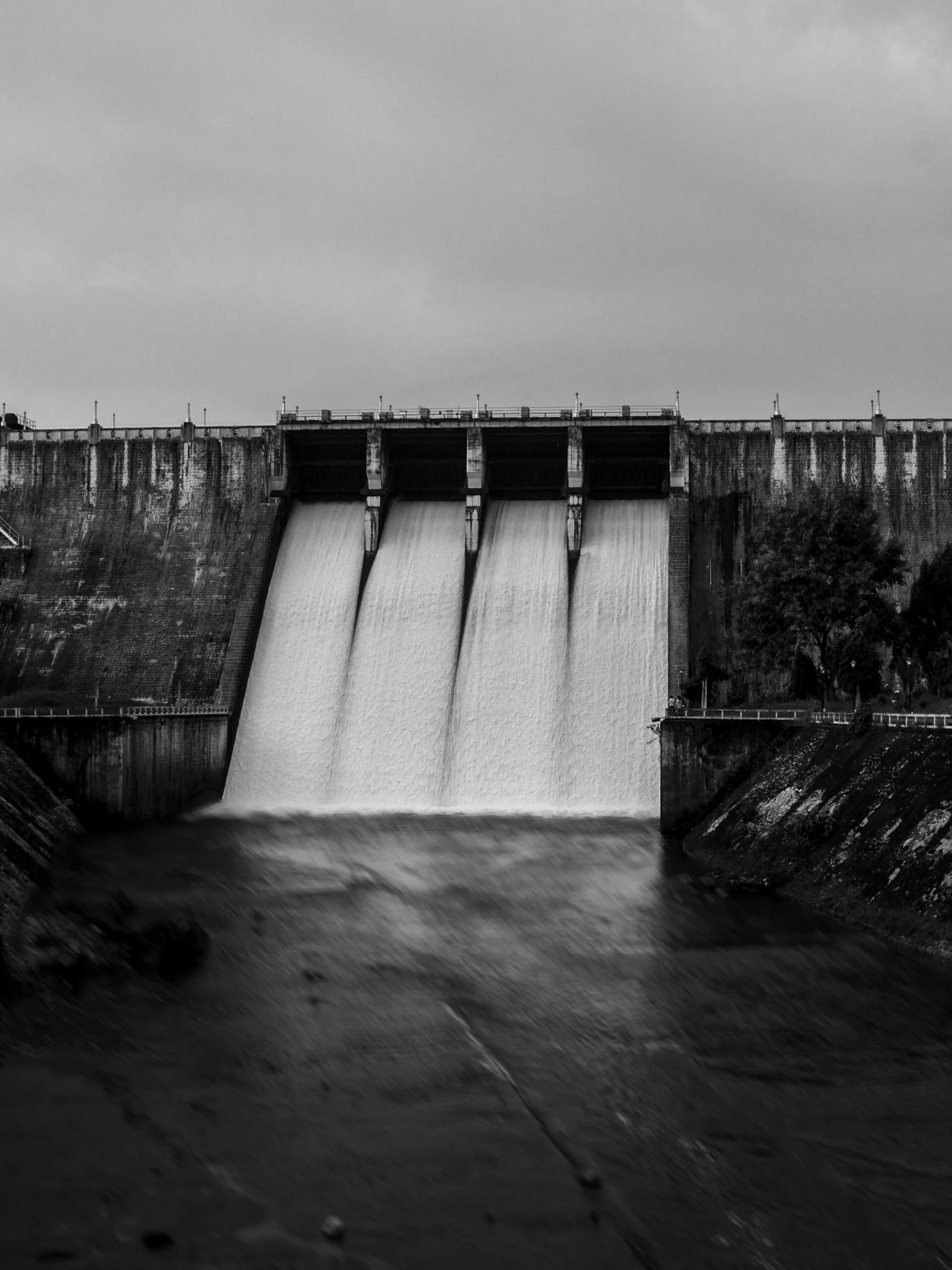
- Tamil Nadu’s Mettur Dam (Stanley Reservoir) has a capacity of 93.47 TMC - the main storage point for Kaveri water entering the state
- The Kaveri delta in Tamil Nadu irrigates approximately 900,000 hectares traditionally
- Average annual disputes over water releases: at least 3-4 formal CMA interventions per year in the past decade
- Bengaluru’s Kaveri water supply covers roughly 60% of its population; the rest depends on borewells and tankers
- Climate projections suggest increased rainfall variability in the Western Ghats catchment, making deficit years more frequent
The Groundwater Dimension
A dimension of the Kaveri dispute that receives less attention than the surface water conflict is the role of groundwater extraction in both states. Farmers in both Karnataka and Tamil Nadu have increasingly turned to borewells as surface water availability has become uncertain. The Kaveri basin’s aquifers are under significant stress in many parts of both states. In Tamil Nadu’s delta, groundwater salinity is increasing due to reduced freshwater recharge from the river. In Karnataka’s Mysuru and Mandya districts, intensive borewell drilling for sugarcane cultivation has lowered water tables substantially. The groundwater dimension is almost entirely missing from the legal framework governing the Kaveri dispute, which focuses exclusively on surface water. Integrating groundwater management into the basin’s governance architecture would require political consensus that is currently impossible to imagine given the state of the surface water dispute. See also our piece on India’s groundwater crisis for the national context.
The Path Forward: Harder Than More Water
The Kaveri dispute cannot be resolved purely through legal means. The Supreme Court has delivered its verdict. The CMA exists and has statutory powers. The allocation numbers are set. What remains is the political will to implement the allocation consistently, the institutional capacity to enforce releases without triggering political crises, and the willingness of both states to invest in water use efficiency that reduces demand pressure. Karnataka needs to address the shift to water-intensive crops in its irrigated districts and price water in a way that creates incentives for efficiency. Tamil Nadu needs to invest in the tank and channel systems in the delta that reduce reliance on Kaveri flows and could buffer against deficit years. Both states need to manage groundwater alongside surface water, not separately. The Kaveri dispute is, in the end, about the mismatch between agreed allocations and actual water availability - a mismatch that climate variability will only worsen over coming decades. Adjusting to that reality requires political courage of a kind that the dispute has, historically, not generated.
Why This Matters to You
The Kaveri dispute shapes farm livelihoods, city water supplies, and political cycles in two of India’s largest states. Track the Cauvery Water Management Authority’s annual water release orders, which are public documents. If you are a farmer or a citizen of Bengaluru, Mysuru, Thanjavur, or Nagapattinam, the water in your tap or your field depends on these decisions. Source: Supreme Court of India, Civil Appeal No. 2453/2007; Cauvery Water Management Authority Annual Reports; Central Water Commission Compendium of District-wise Ground Water Resource.
The Political Economy of Water Protests
Understanding why the Kaveri dispute generates such intense political mobilisation requires understanding the political economy of water in both states. In Karnataka, the Vokkaligas - a dominant agricultural community concentrated in the Old Mysore region where Kaveri irrigation is central to farming - are a key electoral constituency for multiple parties. Any Karnataka government that is seen to have “given away” Kaveri water to Tamil Nadu faces electoral consequences. In Tamil Nadu, the delta districts represent a significant voting bloc and the Kaveri is deeply symbolic - both as a life-sustaining resource for farmers and as a marker of Tamil identity and historical continuity with the Chola civilisation that built the Grand Anicut 2,000 years ago.
This political economy makes it essentially impossible for any state government to take an accommodating stance during water disputes without paying a domestic political price. The parties that gain from escalation - regional parties that can claim to defend the state’s interests - consistently outbid the parties that try to find workable compromises. The result is that the CMA functions in a political environment that incentivises non-compliance and rewards confrontation, making its task of administering a legally binding but politically contested allocation essentially impossible without central government enforcement capacity that the Union government is reluctant to deploy against state governments.
What you can do
- Share the evidenceSend this to one person who should know about this issue.Share on WhatsApp
- Give an afternoonTeach, mentor, clean up, or lend your professional skills.Ways to volunteer
- Tell us what's missingKnow a story, a fact we got wrong, or a solution worth spotlighting?Suggest a story
Politically neutral. Every claim sourced. Report a correction.

No comments yet