The Narmada: One River, Two Sides of India's Development Debate
The Narmada is the most-studied river in India's development history. Its dams displaced hundreds of thousands, delivered water to millions, and turned a regional conflict into the country's longest-running argument about who development is for.
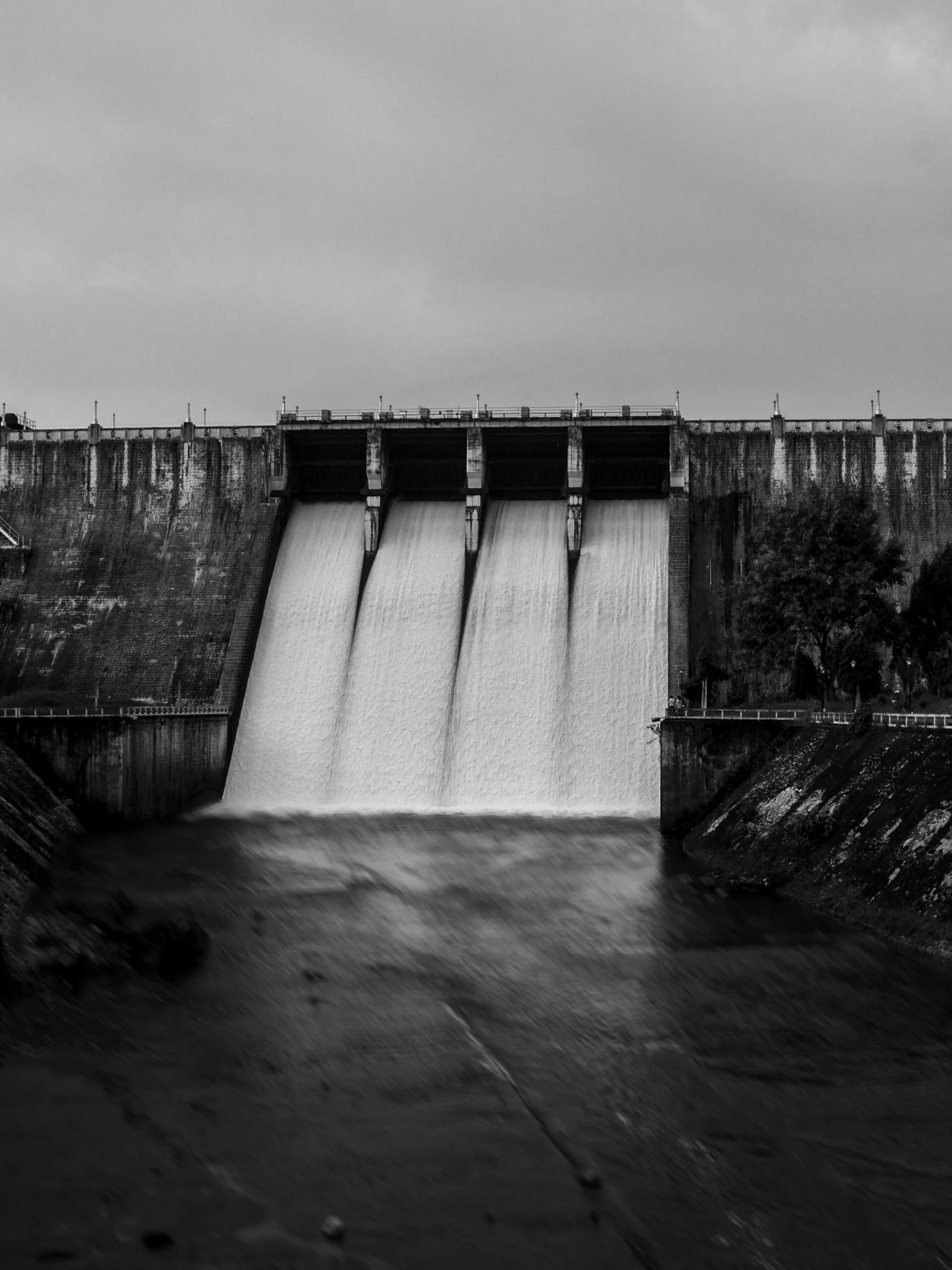
The Narmada is a thousand-kilometre river that rises in Madhya Pradesh, cuts westward through Maharashtra and Gujarat, and empties into the Arabian Sea at the Gulf of Khambhat. It is sacred in Hindu cosmology. It waters fields that feed tens of millions of people. And it is the subject of the longest-running, most-documented development conflict in Indian history, a conflict that started in the 1970s, produced a Supreme Court judgment that split the bench three ways, displaced hundreds of thousands of tribal people, and raised a question the country has still not answered: when development helps some citizens by harming others, what do we owe the ones who are harmed?
I do not think the answer is obvious. Anyone who says it is has probably not spent time on both sides of the argument. I have walked the submergence zone in Maharashtra with families who knew their village would be underwater within the year. I have also sat with farmers in Kutch whose drinking water finally came through a Narmada canal after three generations of waiting. Both groups are telling the truth about their own experience, and both groups have a legitimate claim on the state. That is what makes the Narmada argument so hard, and so important to get right.
The Sardar Sarovar and the dam plan
The Narmada Valley Development Project, conceived in the 1960s and formally approved in 1979, was and remains one of the largest river-basin development plans on Earth. The centrepiece is the Sardar Sarovar Dam in Gujarat, originally proposed at a height of 138.68 metres. Combined with dozens of smaller dams upstream, the system was designed to irrigate 18 lakh hectares of Gujarat farmland, supply drinking water to 173 towns and 9,633 villages across the three states, and generate 1,450 megawatts of hydropower.
On paper, this is a development case with unusually strong numbers. Gujarat is water-stressed in ways that most Indians underestimate. Kutch and Saurashtra face chronic drought. Drinking water access in rural Gujarat was, and in some districts still is, genuinely poor. The dam promised to fix all of this, and the promise was not empty. The people who drafted the plan were not cynics.
What the paper did not say, or said in footnotes buried under the irrigation projections, was the cost. Submergence of 245 villages across Madhya Pradesh, Maharashtra, and Gujarat. Displacement of approximately 320,000 people, the majority of them tribal. Loss of 13,000 hectares of forest, much of it old-growth. Irreversible disruption to downstream ecology and to the fishing economies of the lower Narmada.
The arithmetic, pro-dam activists argued, was net positive. Millions receive water, a few hundred thousand are relocated, the country moves forward. The anti-dam activists argued the arithmetic was wrong at both ends. The benefits were inflated, the costs were undercounted, and the rights of the displaced were not reducible to a number at all. Which reading is correct? Depends on what you are willing to count, and on whose experience you are willing to treat as real.
The Narmada Bachao Andolan
Medha Patkar, a social worker who had been working in tribal villages along the Narmada since 1985, founded the Narmada Bachao Andolan, the Save the Narmada Movement, in 1989. The movement’s position was not initially outright opposition to the dam. It was that displacement without adequate rehabilitation was a human rights violation, and that the Sardar Sarovar’s proposed rehabilitation package was neither adequate in design nor credibly fundable in execution.
The NBA’s methods were non-violent protest, satyagraha in the Gandhian tradition, extensive documentation of conditions in rehabilitation sites, and legal challenges at every level of the Indian judiciary. The organization’s discipline and Patkar’s moral authority, she fasted for weeks at a time, lived in villages about to be submerged, and famously stood in rising water as the reservoir filled during a monsoon, made the movement internationally visible in a way few Indian grassroots movements have managed before or since.
In 1991, under pressure from the NBA and a World Bank-commissioned independent review known as the Morse Report, which concluded that the project’s human and environmental costs had been dramatically understated, the World Bank withdrew financing. The Indian government continued construction with domestic funding. The domestic-funding model is worth noting, because it removed one of the last external audit mechanisms that might have slowed the project to allow rehabilitation to catch up.
The Supreme Court judgment of 2000
In 2000, the Supreme Court delivered its judgment in the Narmada Bachao Andolan petition. The court, split 2 to 1, allowed the dam to proceed but with conditions: construction would be stepped up in increments of five metres, with rehabilitation completed for the submergence zone at each increment, verified by an independent Grievance Redressal Authority before the next increment could proceed.
The dissent, by Justice S.P. Bharucha, argued that the rehabilitation plan was patently inadequate and that the court was abdicating its responsibility to actually verify conditions on the ground rather than trusting the state governments to self-report compliance. Reading the majority opinion and the dissent together is a useful exercise in how the same documented facts can support two credible legal conclusions. It is also a reminder that the court, like the country, was split on the underlying moral question, not just the legal one.
The rehabilitation conditions, by most independent accounts including the NBA’s and a subsequent Comptroller and Auditor General audit, were not met in several instances. Submergence proceeded ahead of rehabilitation. People were relocated to sites that lacked water, grazing land, or functioning schools. Some displaced families returned to their submerged villages during dry seasons to plant crops and then moved back to rehabilitation sites during the monsoon. The court’s conditions were a procedural compromise that only worked if somebody enforced them, and nobody did.
What the dam actually delivered
The Sardar Sarovar Dam was completed to its full height of 138.68 metres in 2017. The reservoir filled in 2019. The canal system is partially built, with several branches still incomplete in 2026, nearly two decades behind the original schedule.
What the dam has delivered:
- Drinking water to a substantial portion of the promised towns and villages, particularly in drought-prone Saurashtra and Kutch, which is a genuine and transformational achievement for rural Gujarat
- Irrigation to a portion of the promised hectares, with official estimates disputed and generally well below the original 18 lakh hectare target
- Power generation significantly below the 1,450 MW design capacity, because reservoir management prioritizes water supply over hydropower
- A functioning water transfer from the water-rich Narmada valley to water-poor Gujarat regions, which is a legitimate engineering success
What the dam did not deliver: the full irrigation potential due to canal completion delays, the full power generation because of the management tradeoffs, or the promised rehabilitation quality for the displaced. Is this a failure? Partially, and the partial nature of the success is part of what makes the argument so hard to settle. A total failure would be easy to condemn. A partial success that also produced a partial injustice is where the real debate lives.
The displaced, twenty years on
Follow-up studies on displaced populations, conducted by academic researchers, journalists, and in some cases Gujarat and Madhya Pradesh government audits, paint a consistent picture. A significant fraction of the 320,000 displaced people were not adequately rehabilitated. Tribal communities, who had been forest-dependent subsistence farmers with ecosystem knowledge built over generations, were resettled onto arid marginal land that did not support the agricultural model they knew. Cash compensation, where paid, was usually inadequate, and often delayed by years while bureaucratic paperwork made its way through multiple state governments.
The second generation of displaced families is now working as wage labour in cities, often as part of the same informal and gig economy I wrote about in my gig workers analysis, because the rehabilitation land could not support their parents’ livelihood model and the cities are where the jobs are. Whether this shift is loss or transition depends on who you ask. The displaced themselves, in nearly every survey I have seen, consider it loss.
What the argument is really about
The Narmada debate is often framed as “development versus environment” or “majority versus minority.” Both framings miss the structural issue. The real argument is about whether a cost-benefit calculation is an ethically adequate basis for forcing costs on specific people who have not consented to bear them.
The pro-dam position says yes, if the benefits are large enough and the costs are adequately compensated. The anti-dam position says no, because adequate compensation is not possible when what is being taken is a way of life, a spiritual connection to a specific stretch of river, and the ability to feed one’s family in a way that one’s parents and grandparents did.
Both positions are internally coherent. The empirical question, whether rehabilitation was in fact adequate, tilts the balance between them, and on the empirical question the weight of independent evidence strongly suggests the rehabilitation was not adequate for a meaningful fraction of the displaced. That changes the moral calculus whether you start from the pro or anti side of the argument.
What this means for the dams India is still building
India continues to build large dams, displace large numbers of people, and commission cost-benefit analyses that the affected populations dispute. The Polavaram project in Andhra Pradesh and Telangana. The Arunachal Pradesh hydroelectric projects. The Ken-Betwa river linking project. Each of these has its Narmada Bachao Andolan equivalent, less visible than Patkar’s movement but making the same arguments from the same moral position.
The Narmada experience, two decades on, offers specific lessons the country has not fully internalized:
- Rehabilitation plans need to be funded and executed ahead of submergence, not in parallel with it, so the displaced have somewhere real to go before the water rises
- Independent verification of rehabilitation is not optional and cannot be self-reported by the same state agencies doing the displacing
- The displaced have to be parties to the planning process, not recipients of a pre-decided plan, which means genuine consultation with tribal councils and village-level democratic structures
- Cost-benefit analyses that do not count the cost of lost traditional livelihoods, spiritual and cultural attachments to land, and intergenerational displacement are doing the arithmetic wrong
None of these are radical positions. They are procedural and they are cheap relative to the cost of a dam. They have not been implemented because the political economy of large dam projects is biased toward construction and against rehabilitation. Builders get paid on construction milestones. Nobody gets paid for rehabilitation completion. Even tools like the Right to Information Act, which were supposed to make state rehabilitation records visible to the public, have been used unevenly in dam-affected regions because the applicants are the same people trying to survive the displacement.
Two sides, one river, an open question
The Narmada flows. The dam generates power. Gujarat gets water, and in Kutch, where drinking water arrived a generation late but finally arrived, a real number of people had their lives materially improved by the project. Tribal villages on the submerged riverbanks do not exist anymore. Medha Patkar continues to work. Construction on the next large dam continues somewhere in the country this week. The question, what do we owe the people who pay the cost for others’ benefit, remains the question it was when I first started reading about it in the 1990s.
We have not answered it. The alternative development models some states are experimenting with, organic farming in Sikkim and parts of Andhra Pradesh, suggest that the country is at least willing to try different approaches in different places. Whether those approaches will scale to the size of the problem the Narmada represents is a separate and more difficult question. The Narmada remains one river with two sides of an argument that India is still having, and the next dam decision, like the last one, will be made in the shadow of an answer we never quite reached.
What you can do
- Share the evidenceSend this to one person who should know about this issue.Share on WhatsApp
- Give an afternoonTeach, mentor, clean up, or lend your professional skills.Ways to volunteer
- Tell us what's missingKnow a story, a fact we got wrong, or a solution worth spotlighting?Suggest a story
Politically neutral. Every claim sourced. Report a correction.

No comments yet