The Coaching Bill: What an Indian Family Actually Pays to Compete
India's entrance exams are formally free of tuition and effectively priced. The coaching economy that sits between a school syllabus and a rank list is the largest hidden education expense most families carry, and it decides outcomes before the exam begins.
In this story
India’s competitive exams are, on paper, an equaliser. One paper, one day, one rank list, no reference to who your parents are. That design is genuinely admirable, and it is also why the country has built one of the largest private tutoring industries in the world alongside it.
Because if the only thing that matters is the score, then anything that raises the score is worth buying. And what gets bought is coaching.
The gap coaching exists to fill
Entrance exams do not test the school syllabus as taught. They test it as applied, at speed, under time pressure, with question styles that school examinations never use. A student who has mastered the Class 12 board syllabus is not thereby prepared for a national entrance paper, and everyone in the system knows it.
That gap between what school teaches and what the exam demands is the entire commercial basis of the coaching industry. It is not a gap created by coaching centres. It is a gap created by an exam designed to discriminate finely among lakhs of candidates, sitting on top of a school system that, as India’s own 2026 audit found, frequently cannot deliver the basic syllabus at all.
Put those two facts together and coaching stops looking like a luxury purchase. For a family whose child attends a school where the teacher may not have mastered the subject, coaching is not an advantage. It is a substitute for the education the state was supposed to provide.
The exam is free to sit and expensive to pass. That is the whole story of access in Indian higher education.
Adding up the actual bill
Families rarely tally the full cost, because it arrives in pieces over two or three years. Set out together it is substantial.
- Coaching fees. Typically one to three lakh rupees a year for a serious entrance programme, higher at the well known institutes.
- Relocation. Where a family sends the child to a coaching hub, add hostel or rented room, mess charges, and travel home.
- Test series and material. Sold separately from the main course almost everywhere.
- Repeat years. A dropper year doubles the whole bill, and a cancelled exam forces one.
- Foregone earnings. Two years in which an eighteen year old earns nothing, which for many households is the largest item on this list.
A family in a district town funding one child through two years of residential coaching can be spending several years of household income. Much of it is borrowed, frequently against land or gold rather than through a bank, because education loans are hard to obtain for coaching, which is not a recognised educational institution.
That last detail matters and is rarely mentioned. The single largest education expense many families incur sits entirely outside the formal education finance system. No regulator sets its fees, no scholarship covers it, and no loan product is designed for it.
What the money actually buys
It is worth being precise, because coaching is often dismissed as rote drilling by people who did not need it.
What a good coaching programme sells is four things: a curriculum matched to the exam rather than the board, teachers who have taught that exam for years, a peer group operating at the same intensity, and repeated timed practice under realistic conditions. Those are legitimate educational inputs. A student who receives them will outperform an identical student who does not.
Which is exactly the problem. If the inputs work, and the inputs are priced, then the rank list is partly a ranking of what families could afford. The exam remains scrupulously fair on the day and the preparation was never fair at all.
The cost that is not financial
Coaching hubs concentrate teenagers away from their families, in shared accommodation, under sustained performance pressure, ranked publicly and repeatedly against their peers for two years.
The consequences of that arrangement have been visible for years in the suicide figures reported from India’s largest coaching centres, and in the mental health of students who return home having not cleared. India already has a mental health system that reaches almost nobody, a gap we covered in the crisis nobody talks about. A sixteen year old in a rented room in an unfamiliar city, told daily that their rank is their worth, is at the sharp end of that absence.
Several states have introduced coaching regulations covering minimum age, working hours, counsellor availability, and fee refunds. Enforcement is uneven, and the demand side is untouched: as long as the rank decides the life, families will pay whatever is asked and accept whatever conditions come with it.
The industry now has a stake in the status quo
An industry this size is not a neutral observer of exam reform. Coaching towns support hostels, mess kitchens, bookshops, printers, transport, and thousands of jobs. Large coaching companies are listed, funded, and advertise nationally.
Reforms that would reduce coaching dependence, such as an aptitude weighted paper, multiple sittings from a question bank, or weight given to school performance, all reduce the value of two years of drilling. It would be surprising if that did not shape which reforms get argued against most energetically.
Notably, the student movement of 2026 asked for exam integrity and accountability but made no demand about coaching costs, despite it being the largest expense its own constituency carries. We noted that gap in the five demands the movement actually made.
Who gets left out entirely
The coaching debate is usually framed around whether it is fair that some students can buy an advantage. That framing already assumes a family in the market. A large share of Indian households never enter it.
A first generation learner in a village has no coaching centre within reach, no household member who has sat a competitive exam, and no way to judge whether a course being sold locally is competent or a fraud. The decision is not between an expensive centre and a cheap one. It is between attempting the exam essentially unprepared or not attempting it.
This is where the online promise gets oversold. Recorded lectures are genuinely cheaper and genuinely useful for a motivated student with a device, reliable power, and data. They do not supply the peer group, the discipline of a timetable, or an adult who notices when a student stops turning up. The students most in need of structure are the least served by a model that supplies only content.
The result is that entrance exam success maps closely onto district, income and parental education, in a system explicitly designed to ignore all three. The rank list looks like a meritocracy and functions substantially as a map of who had access to preparation.
What would reduce the dependence
Close the syllabus gap
If the entrance paper tested what schools actually teach, the market for a parallel syllabus would shrink on its own. Every attempt at this has been resisted on the grounds that it lowers standards, which is an argument about discrimination between candidates, not about education.
Fund state run preparation
Several states run free coaching for disadvantaged candidates, and where it is properly staffed it works. Scaling it is far cheaper than most education schemes and directly targets the point at which family income converts into rank.
Publish outcomes honestly
Coaching advertising features the handful who cleared, never the denominator. A requirement to publish enrolment against results, in the same font size, would let families make an informed purchase for the first time.
Bring the spending inside the system
If families are going to spend this money regardless, then fee regulation, refund rules on cancelled exams, and access to education finance are all reasonable. At present the largest education market in the country operates almost entirely outside education policy.
What you can do about it
- As a parent: ask any centre for enrolment numbers alongside its success stories. Most will not give them, and that refusal is the answer.
- In your community: free evening study rooms and shared material cut the largest hidden cost, which is rent near a coaching hub.
- If you cleared one of these exams: a few hours a month mentoring a local candidate transfers the part money usually buys, which is knowing how the exam thinks.
- At state level: ask what free coaching exists, how many seats it has, and whether those seats were filled. The schemes usually exist and are usually underused because nobody knows about them.
An exam cannot be fairer than the preparation that precedes it. India built a scrupulously impartial three hour test and left the two years before it entirely to the market, then called the result merit.
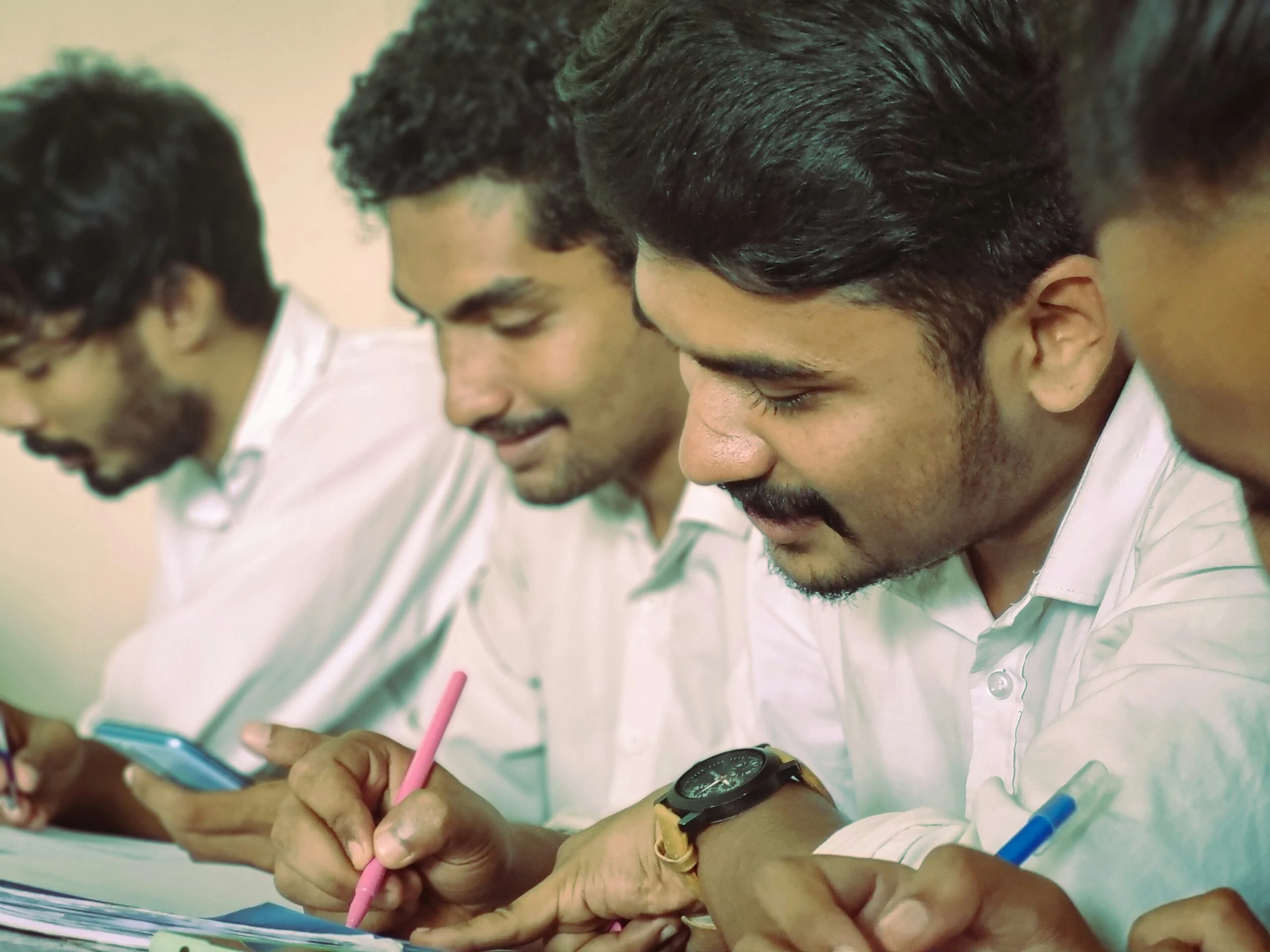
Featured photo by Aswin Thomas Bony on Unsplash.
What you can do
- Share the evidenceSend this to one person who should know about poverty.Share on WhatsApp
- Give an afternoonTeach, mentor, clean up, or lend your professional skills.Ways to volunteer
- Tell us what's missingKnow a story, a fact we got wrong, or a solution worth spotlighting?Suggest a story
Politically neutral. Every claim sourced. Report a correction.



No comments yet