West Bengal -- Industrial Decline and the Bhadralok Question
34 years of Left Front rule, the Tata Nano Singur incident, Bhadralok culture, and why West Bengal's economy lags behind its cultural legacy.
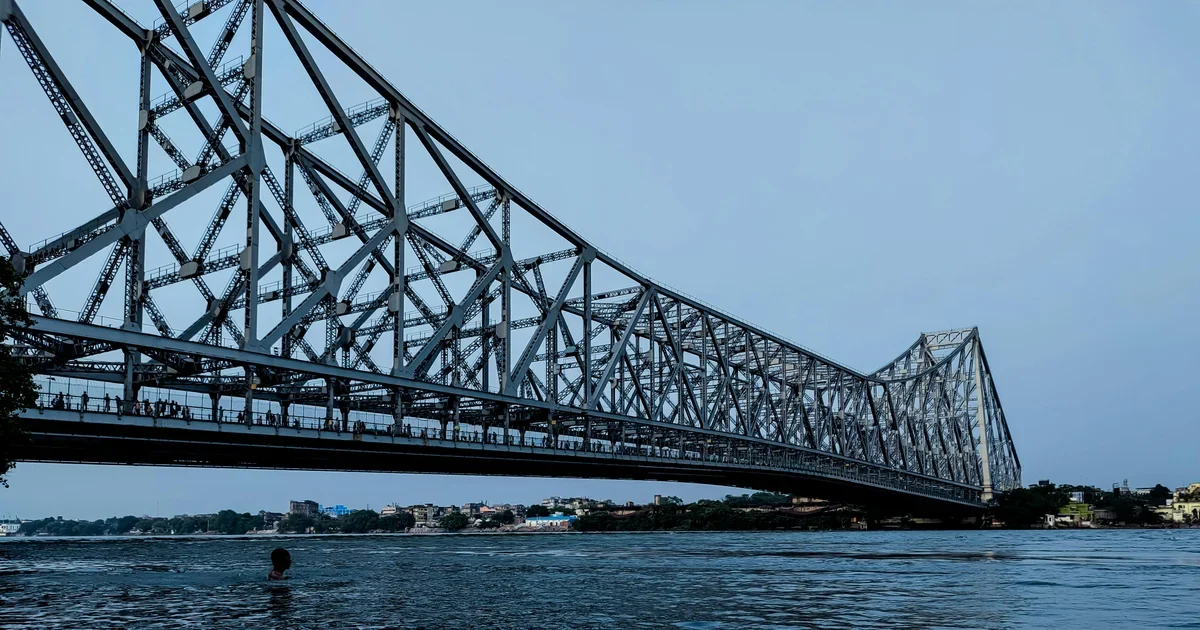
West Bengal sits at a crossroads that is hard to explain unless you have walked through the crumbling mills of Howrah, argued politics in a Kolkata adda, or watched the state’s budget figures against the national average year after year. It is a place of real contradictions: one of India’s most literate, culturally rich populations coexisting with per-capita income figures that lag well behind the national median. This series, One State One Story, tries to tell that contradiction honestly.
The Colonial Economy West Bengal Inherited
When India gained independence in 1947, West Bengal was the industrial heartland of the subcontinent. Jute dominated: the state processed roughly 80 percent of the world’s jute at one point, and the mills along the Hooghly from Naihati south to Uluberia employed hundreds of thousands of workers. Calcutta’s port was the busiest in South Asia. Heavy industry had taken root in the Durgapur-Asansol belt. The Damodar Valley Corporation, launched in 1948 as India’s answer to the Tennessee Valley Authority, was meant to power Bengal’s industrial future.
Partition in 1947 and again the refugee crisis of 1971 disrupted this inheritance severely. The 1947 partition separated West Bengal from the jute-growing districts that went to East Pakistan (later Bangladesh), while the mills remained on the Indian side. This structural mismatch - growing regions gone, processing capacity intact - was a slow-moving wound the industry never fully healed from. The 1971 war added millions of refugees to the state’s population, straining civic infrastructure in ways that successive governments struggled to address.
Industrial Flight: What the Data Shows
The story of west bengal industrial decline is often told as a post-1977 Left Front failure, but the trajectory begins earlier. According to data compiled by the Reserve Bank of India and the National Sample Survey, West Bengal’s share of India’s industrial output fell steadily from the late 1960s onward.
| Year | West Bengal Share of National Industrial Output |
|---|---|
| 1960-61 | ~20 percent |
| 1980-81 | ~11 percent |
| 2000-01 | ~6 percent |
The reasons were multiple and interlocking. Labour militancy in the late 1960s and early 1970s, under Congress governments that were themselves politically weakened, made Calcutta a difficult location for capital-intensive manufacturing. Factory lockouts and violent industrial disputes between 1968 and 1977 contributed to what economists later called a “flight of capital” from the state. A 1997 World Bank study on Indian states noted that West Bengal had the highest number of man-days lost to strikes in India through much of the 1970s. Investors who had choices - and large firms increasingly did - chose other states.
The Left Front Arrives: 1977
The Communist Party of India (Marxist) led Left Front government took power in June 1977, winning a landslide against the discredited Congress under the shadow of the Emergency. Chief Minister Jyoti Basu would govern the state for 23 years, a record in Indian democratic history. Buddhadeb Bhattacharjee succeeded him in 2000 and continued until 2011, completing 34 continuous years of Left Front rule.
What did 34 years change? Some things genuinely and substantially. Operation Barga (1978-81) is the clearest success story. Sharecroppers who had cultivated land for decades under informal arrangements were registered under this land reform programme. By the early 1980s, over 1.5 million sharecroppers had received legal recognition of their tenancy rights, according to state government records. Agricultural output in the 1980s grew faster in West Bengal than in most comparable states.
- Operation Barga (1978-81): 1.5 million sharecroppers received legal tenancy rights
- Panchayati raj: Block-level governance became more functional than most Indian states in the 1980s and 1990s
- Agricultural growth: West Bengal’s farm output in the 1980s grew faster than most comparable states
- Industrial stagnation: Per-capita NSDP fell from above national average (1970-71) to 82 percent of it by 2000-01
The ideological resistance to private capital within the Left Front was genuine, not merely rhetorical. Industrial licensing, which the central government controlled, was used by some in the party to argue against large private investment. The political economy of trade unionism - where the Centre of Indian Trade Unions (CITU), affiliated with the CPI(M), was the dominant union federation in the state - created a dynamic where maintaining union strength sometimes took priority over attracting new factories. This is not a Right-wing talking point; it is documented in academic work including Atul Kohli’s 1990 study “Democracy and Discontent” and subsequent research by economists at Jawaharlal Nehru University and the Indian Statistical Institute.
The Bhadralok Question: Class, Culture, and Politics
Any honest account of West Bengal’s political economy must engage with the Bhadralok. The term, literally meaning “respectable people” in Bengali, denotes a cultural and social class rooted historically in upper-caste Hindu Bengali households - Brahmin, Kayastha, Vaidya - who gained access to English education and colonial administrative positions in the 19th century. This class produced the Bengal Renaissance: Rammohan Roy, Bankim Chandra Chattopadhyay, Rabindranath Tagore, Swami Vivekananda, Jagadish Chandra Bose.
The Bhadralok preference was for the professions, government service, and increasingly, politics and academia. This cultural formation had real consequences for industrial investment.
The Bhadralok relationship with trade and commerce has been historically complicated. Sociologist Partha Chatterjee, in his 1993 work “The Nation and Its Fragments,” documents how Bengali upper-caste culture maintained a certain distance from mercantile activity that was associated with Marwari and other trading communities who dominated Calcutta’s commercial life. West Bengali capital tended not to invest in industry at scale the way Gujarati, Marwari, or Chettinad business communities did in their home regions.
The Left Front was, in significant ways, a Bhadralok formation in its leadership cadre even as it mobilised peasants and workers as its social base. The party secretariat of the CPI(M) in West Bengal was disproportionately drawn from educated upper-caste Bengali households. This is not a disqualification of their politics, but it helps explain certain features: the comfort with ideological debate over practical economic management, the pride in Bengal’s literary and cinematic culture as a substitute for economic development, and the relative comfort with a public sector-dominated economy that provided employment to educated middle-class Bengalis.
Film, Literature, and the Gap Between Prestige and Income
West Bengal’s cultural production is genuinely world-class by any reasonable standard. Rabindranath Tagore remains the only Indian Nobel laureate in Literature (1913). Satyajit Ray’s films - the Apu Trilogy, Charulata, Jalsaghar - are studied in film schools globally. Ritwik Ghatak and Mrinal Sen added to a cinematic tradition that rivals any regional film culture in the world.
The gap between this cultural prestige and west bengal economy reality is striking. West Bengal’s literacy rate of 77.1 percent (Census 2011) is above the national average of 74 percent, and Kolkata has historically had one of the highest newspaper readership rates of any Indian city. Yet according to data from the National Family Health Survey (NFHS-5, 2019-21), West Bengal’s per-capita monthly household expenditure was below the all-India median.
There is a concept in development economics sometimes called the “diploma disease” or credential trap: when educational systems produce graduates faster than the economy creates jobs that use those credentials, you get educated unemployment and frustration. West Bengal showed signs of this from the 1970s onward. A generation of graduates from Presidency College, Calcutta University, and Jadavpur University found government jobs scarce and private sector options limited, which both radicalised youth politics and sustained a culture where intellectual attainment was valued above entrepreneurial risk-taking.
The Singur Moment: Tata Nano and the Turn Against Industry
By the mid-2000s, Chief Minister Buddhadeb Bhattacharjee had concluded that West Bengal needed private industrial investment. The ideological shift within the CPI(M) was real and contested: sections of the party opposed his direction, but Bhattacharjee pushed forward with an agenda of Special Economic Zones and land acquisition for industry.
The Tata Motors Nano project at Singur became the defining episode. In 2006, the West Bengal Industrial Development Corporation acquired 997 acres of multi-crop agricultural land in Singur, Hooghly district, for the Nano factory. The state government used the Land Acquisition Act of 1894 - a colonial-era law that allowed compulsory acquisition for public purposes - to take land from farmers, many of whom contested both the compensation amount and the process.
Mamata Banerjee, then in opposition as the Trinamool Congress chief, led an agitation at Singur from 2006. The agitation’s moral argument was that fertile agricultural land should not be forcibly acquired for private industry without genuine farmer consent. The political subtext was that the Left Front was vulnerable on a land rights issue in rural Bengal - the same terrain where its Operation Barga had built its support base three decades earlier.
In September 2008, Ratan Tata announced the withdrawal of the Nano project from Singur, citing the continuing agitation and the impossibility of running a factory in an environment of sustained protest. The plant relocated to Sanand, Gujarat, where Chief Minister Narendra Modi had offered alternative land within days of Tata’s decision. The Nano launched from Gujarat in 2009.
- 2006: WBIDC acquires 997 acres in Singur for Tata Nano factory
- 2006-2008: Mamata Banerjee leads sustained agitation over farmer land rights
- September 2008: Ratan Tata announces withdrawal; plant moves to Sanand, Gujarat
- 2009: Nano launches from Gujarat; West Bengal loses 13,000 direct jobs (government estimates)
According to the Reserve Bank of India’s data on state-wise investment intentions (CMIE database), West Bengal’s share of private investment proposals in India remained below 4 percent throughout the 2006-2011 period, compared to Maharashtra’s 20-plus percent and Gujarat’s 15-plus percent. The Singur episode did not create this gap, but it reinforced it.
The Mamata Era: 2011 to the Present
Trinamool Congress won the 2011 assembly election decisively, ending 34 years of Left Front rule. Mamata Banerjee became Chief Minister with a majority that reflected genuine popular fatigue with the Left Front’s governance failures: the violence in Nandigram (2007, where a police firing on land acquisition protestors killed at least 14 people according to official figures), the Singur debacle, and a general sense of state machinery serving party interests over public ones.
What has the Trinamool era delivered economically? The picture is mixed, and supporters and critics disagree sharply on the interpretation of the data.
On the positive side: West Bengal’s GSDP growth rate in the years 2012-2019 was often cited in the range of 8-12 percent annually by the state government, though the methodology behind some of these figures was questioned by independent economists. The state’s fiscal deficit was brought under better control in the early Mamata years compared to the late Left Front period. Social welfare schemes - the Kanyashree programme for girls’ education, Swasthya Sathi health insurance - received national and international recognition. Kanyashree won a United Nations Public Service Award in 2017.
On the difficult side: private investment in manufacturing has not recovered in any structural sense. The Bengal Global Business Summit, held annually from 2015 onward, generates investment intent figures that critics argue bear limited relationship to actual investment materialisation. A 2019 report by the Federation of Indian Chambers of Commerce and Industry (FICCI) and KPMG noted that West Bengal’s ease of doing business ranking had improved in absolute terms but remained lower than industrial peers in western and southern India.
Political violence has remained a feature of West Bengal’s electoral landscape regardless of which party holds power - under the Left Front it was documented, and under Trinamool it has continued to be documented by human rights organisations including the Association for Democratic Reforms. Post-poll violence following the 2021 assembly election drew national attention and Supreme Court intervention.
The Bangladeshi migration question has been a running fault line in West Bengal’s politics since the 1970s, and it sharpened considerably under Trinamool governance. The Census 2011 recorded West Bengal’s population at approximately 91.3 million, with significant undocumented migration flows that neither state governments nor the central government have been able to quantify precisely. The BJP’s use of the National Register of Citizens (NRC) in Assam and its proposed extension to West Bengal has made this a politically explosive issue. Opposition critics argue the NRC exercise risks making Muslim Bengali residents stateless; government supporters argue undocumented immigration creates demographic and economic pressures. The data on actual numbers remains genuinely contested between different government departments and research institutions.
Kolkata: A City Between Two Histories
Kolkata was the capital of British India until 1911, when Delhi was proclaimed the new capital and the administrative centre shifted. The immediate economic consequence was a diversion of government spending and human capital away from Kolkata toward Delhi and eventually toward Mumbai as a financial hub.
The city remains one of South Asia’s most architecturally and culturally dense urban environments. The Victoria Memorial, the Howrah Bridge (opened 1943), the tram network (the oldest in Asia, dating to 1880), and the Metro (the first in India, inaugurated 1984) mark different phases of urban investment.
But Kolkata’s economic performance relative to other major Indian metros tells its own story. Mumbai’s per-capita income was approximately 2.5 times Kolkata’s by the 2011 Census period. Bangalore, which was a smaller and less developed city than Calcutta in 1970, had overtaken it on multiple economic indicators by 2010. Delhi’s transformation into a financial and government services hub further widened the gap.
The IT sector, which transformed Bangalore, Hyderabad, and Pune, arrived in Kolkata later and at a smaller scale. Salt Lake (Bidhannagar) developed as an IT hub in the 2000s, and companies including Wipro, TCS, and Cognizant established operations. But the ecosystem depth - the density of startups, venture capital, ancillary services - that made Bangalore the “Silicon Valley of India” never developed in Kolkata to the same degree. Infrastructure deficits, including persistent power supply issues through much of the 2000s, and the historically difficult labour environment contributed to this gap.
The Durga Puja Economy
One area where Kolkata genuinely punches above its weight is the Durga Puja festival economy. UNESCO’s 2021 recognition of Kolkata’s Durga Puja as an Intangible Cultural Heritage of Humanity reflected what the city’s residents have always known: the Pujas are not merely a religious festival but a civic and artistic event of extraordinary scale and creativity.
The Bengal Chamber of Commerce estimated the economic activity generated by Durga Puja in Kolkata at over Rs 45,000 crore annually in recent years (this figure is cited in multiple press reports from 2022-23 and includes retail, hospitality, transport, and artisan work). This cultural economy is real, but it is also seasonal and not a substitute for the sustained manufacturing and services employment that structural economic development requires.
What the Per-Capita Numbers Say
Let us be concrete about the west bengal economy data, because the conversation about the state often floats in abstractions. The numbers below come from MOSPI and RBI Handbook of Statistics on Indian States.
| State | Per-Capita NSDP (2021-22, approx.) |
|---|---|
| Goa | Rs 5,40,000+ |
| Maharashtra | Rs 2,40,000+ |
| Karnataka | Rs 2,20,000+ |
| Tamil Nadu | Rs 2,10,000+ |
| All-India Average | Rs 1,72,000 |
| West Bengal | Rs 1,08,000 |
This placed West Bengal below the national average by roughly 37 percent - a gap that has persisted and in some measures widened over the past two decades. Unemployment data tells a similar story. The Periodic Labour Force Survey (PLFS) 2020-21 showed West Bengal’s unemployment rate among persons aged 15 years and above was above the national average. Youth unemployment (15-29 years) has been a persistent concern, with educated urban youth facing a particular squeeze between aspirations and available opportunities.
Migration is one visible consequence: West Bengal sends significant labour migration to Delhi, Punjab, Kerala, and other states. The remittance economy - money sent home by workers employed outside the state - is a structural feature of West Bengal’s household income. This is not unique to Bengal; other states including Uttar Pradesh, Bihar, and Odisha show similar patterns. But for a state that was the industrial leader 60 years ago, it represents a significant reversal. The informal nature of much of this migration also means workers lack basic protections - a pattern visible across India, as documented in the analysis of gig workers and the absence of formal employment benefits that affects millions of Indians in precarious work.
What Can Change: The Structural Challenges
West Bengal has real assets that make pessimism about its future unwarranted.
- Geographic advantage: Borders with Bangladesh, Bhutan, Nepal, and three Indian states - a natural gateway to South Asia’s eastern economies once connectivity improves
- Agricultural strength: Largest producer of vegetables in India; major producer of fish, rice, and jute with significant food processing potential
- Education infrastructure: University of Calcutta, Jadavpur University, Indian Statistical Institute, IIT Kharagpur - high-quality graduate output even if retention is a problem
- BBIN opportunity: The Bangladesh-Bhutan-India-Nepal Motor Vehicles Agreement, when fully operational, could transform trade flows through Kolkata’s port
The political challenges are harder. Land acquisition for industry remains contentious. The business environment perception - whatever the current reality - carries the overhang of Singur and the Left Front era. Coalition politics at the national level means the state’s relationship with central government funding is partly determined by electoral alignment. West Bengal has historically received lower central investment than its population share might warrant, though this is a contested calculation. Transparency in government spending and allocation has also been an issue - not unique to West Bengal, but part of the broader challenge of accountability that tools like the Right to Information Act were designed to address across India.
Reading West Bengal Honestly
The temptation in writing about West Bengal is to pick a villain: the Left Front’s ideological anti-capitalism, or the Trinamool’s populist politics, or the central government’s neglect, or the Bhadralok’s cultural elitism, or the Marwari commercial dominance of Calcutta’s trading economy that some Bengali intellectuals have historically resented.
The more honest reading is that West Bengal’s predicament is over-determined - multiple causes compounding over decades, with no single reversible moment. Partition’s economic wound was real. The flight of capital from the 1960s had multiple authors. The Left Front’s genuine rural achievements came at a real industrial cost. The Singur episode reflected a genuine conflict between farmer rights and industrial need that the state had no good mechanism to resolve. Mamata Banerjee’s welfare programmes address real gaps; the governance deficits her critics describe are also real.
Culture alone does not pay wages. A state that takes legitimate pride in Tagore needs also to take honest stock of why a Bangalore startup ecosystem developed where Calcutta's did not.
That is the conversation West Bengal still needs to have with itself - one that neither hagiography of the Left nor uncritical celebration of the current government enables. The state has the human capital, the geographic position, and the institutional base to do better. Whether it will requires political choices that have not yet been made.
Sources and Data Notes
Economic data in this article draws on: Reserve Bank of India state finances publications; Ministry of Statistics and Programme Implementation (MOSPI) NSDP series; Census of India 2001, 2011; National Family Health Survey (NFHS-5) 2019-21; Periodic Labour Force Survey (PLFS) 2020-21; RBI Handbook of Statistics on Indian States; and Economic Survey of West Bengal (various years). Political history references include documented public events, official government records, and published academic work by Atul Kohli, Partha Chatterjee, and others cited in the text.
What you can do
- Share the evidenceSend this to one person who should know about governance.Share on WhatsApp
- Give an afternoonTeach, mentor, clean up, or lend your professional skills.Ways to volunteer
- Tell us what's missingKnow a story, a fact we got wrong, or a solution worth spotlighting?Suggest a story
Politically neutral. Every claim sourced. Report a correction.

No comments yet