LGBTQ+ Rights: India vs Philippines — Two Asian Democracies, Two Very Different Paths
India struck down Section 377 in 2018 via its Supreme Court. The Philippines has never passed a national anti-discrimination law despite 73% public support. Two Asian democracies, wildly different LGBT trajectories -- and what that gap reveals about courts versus legislatures in driving social rights reform.
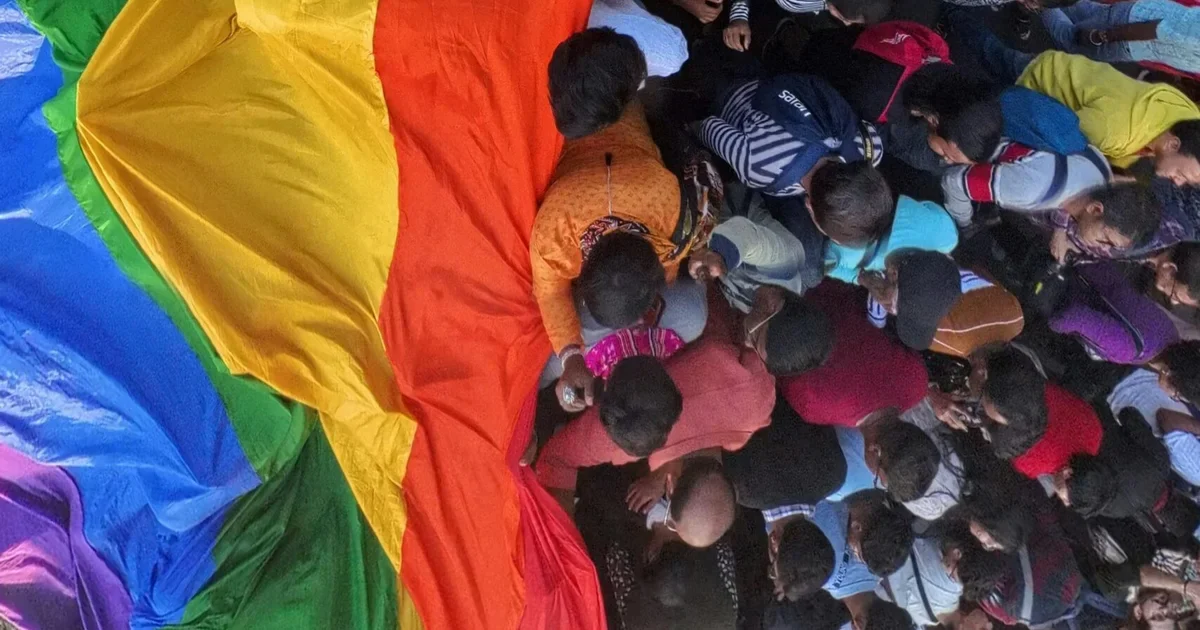
India and the Philippines share more than proximity on the map. Both are Asian democracies with deeply religious populations, colonial histories, and constitutional commitments to equality. Both have strong civil society traditions and a record of popular protest. Yet when it comes to the rights of LGBTQ+ citizens, the two countries have taken wildly different paths over the past three decades, and the divergence tells a story not just about law but about which institution carries the reform.
India decriminalised homosexuality in September 2018, when the Supreme Court struck down Section 377 of the Indian Penal Code, a relic of British colonial rule. The Philippines, despite being the most Westernised country in Southeast Asia and home to one of the region’s most visible queer communities, has never passed a single national anti-discrimination law protecting LGBTQ+ people. The Sexual Orientation, Gender Identity and Expression (SOGIE) Equality Bill has been introduced in every Congress since 2000 and has never made it to a vote on the floor of either chamber.
Understanding why one country moved and the other did not requires looking at two very different machinery of social change, the judiciary versus the legislature, and at the very different relationships each country’s religious establishment has with state power.
The India Story: A Court Leads Where Parliament Will Not
Section 377 of the Indian Penal Code was introduced in 1861 by the British colonial administration. It criminalised “carnal intercourse against the order of nature” and carried a maximum sentence of life imprisonment. The law was used unevenly, mostly as a tool of harassment rather than systematic prosecution, but its existence cast a legal shadow over every gay and lesbian person in India.
The first serious judicial challenge came in 2001 when the Naz Foundation, a Delhi-based HIV prevention NGO, filed a petition in the Delhi High Court arguing that Section 377 violated Articles 14, 15, and 21 of the Constitution, which guarantee equality before law, prohibition of discrimination, and the right to life and personal liberty respectively. The petition wound its way through the courts for seven years.
In July 2009, the Delhi High Court ruled in favour of the Naz Foundation, reading Section 377 down to exclude consensual same-sex acts between adults. Chief Justice A.P. Shah’s judgment was landmark not just for its outcome but for its reasoning: it drew directly on constitutional morality rather than social morality, arguing that the Constitution protects minorities from popular prejudice rather than enshrining it.
The victory was short-lived. In December 2013, the Supreme Court reversed the Delhi High Court ruling in Suresh Kumar Koushal v. Naz Foundation, reinstating Section 377 and finding that the High Court had overstepped. The SC’s reasoning was narrow, essentially saying that a “minuscule fraction” of the population could not claim a fundamental right, a position that provoked widespread criticism from legal scholars.
What followed was five years of sustained legal, civil society, and cultural pressure. In August 2017, a nine-judge Constitutional Bench delivered the landmark Puttaswamy judgment, recognising the right to privacy as a fundamental right under the Constitution. That judgment explicitly noted that sexual orientation was a component of identity and therefore protected.
The Puttaswamy judgment set the stage for what followed. On September 6, 2018, a five-judge Constitutional Bench of the Supreme Court delivered its verdict in Navtej Singh Johar v. Union of India. The judgment was unanimous. Chief Justice Dipak Misra, writing for himself and Justice Khanwilkar, held that Section 377 was unconstitutional insofar as it criminalised consensual same-sex relations between adults. Justice D.Y. Chandrachud’s concurrence, in particular, was comprehensive and direct: he called the Koushal judgment “incorrectly decided” and described the history of Section 377 as a history of state-sponsored discrimination rooted in colonial morality that had no place in a constitutional democracy.
The judgment drew on NALSA v. Union of India, a 2014 Supreme Court decision that had recognised transgender persons as a third gender and guaranteed them constitutional protections. NALSA established that gender identity was a matter of self-determination, not medical certification, a principle that the Navtej judgment built upon.
The Transgender Persons Act, 2019: A Landmark With Sharp Edges
Following the NALSA judgment, Parliament passed the Transgender Persons (Protection of Rights) Act in 2019. The Act was, by any measure, a significant step. It prohibited discrimination against transgender persons in employment, education, healthcare, and access to public facilities. It provided for social welfare schemes and for welfare boards at the state level.
But the Act drew severe criticism from within the transgender community and from legal scholars, and that criticism is worth taking seriously. The Act required transgender persons to apply to a District Magistrate for a certificate of identity, and the original version required medical examination before a certificate could be issued. After sustained advocacy, the 2020 Rules modified this to remove the requirement for surgery, but the process of obtaining state-certified identity remained bureaucratic and potentially humiliating. Critics argued it contradicted the NALSA principle of self-determination.
The Act also did not include protections against marital rape of a transgender person and carried penalties for offences against transgender persons that were lower than equivalent protections for cisgender women. These gaps remain open.
Supriyo Chakraborty: Marriage Equality Deferred
In October 2023, a five-judge Constitutional Bench of the Supreme Court ruled in Supriyo Chakraborty v. Union of India that there was no fundamental right to marriage equality under the Indian Constitution. The judgment was a 3-2 split on key questions. Chief Justice D.Y. Chandrachud, writing in dissent, argued that the right to marry was indeed a fundamental right. The majority held that it was for Parliament, not the courts, to create or recognise a new form of civil union.
The court did direct the government to constitute a committee to examine the rights of queer couples in areas such as joint bank accounts, insurance, pension, and succession, rights that do not require a change in marriage law but that currently accrue only to married or formally recognised partners. As of April 2026, that committee has not produced a public report.
The Supriyo judgment reflects a recurring tension in Indian constitutional law: the question of how far the judiciary should go in creating new rights without democratic legitimacy, and how far Parliament should be pushed to act. For the LGBTQ+ community, the judgment was a legal setback but also a signal, the SC acknowledged same-sex relationships as deserving of protection even as it declined to mandate marriage equality.
The Philippines Story: Visibility Without Protection
The Philippines presents a paradox that observers of Asian politics find instructive. It has one of the highest levels of LGBTQ+ visibility in Asia. Pageants featuring transgender women are mainstream entertainment. Gay and lesbian characters appear regularly on television. Pride marches in Manila draw tens of thousands. Filipino culture has a long tradition of openly gay men in entertainment and fashion, the bakla identity, which, while distinct from Western gay identity, has historically been more visible and more socially integrated than in most Asian countries.
And yet the Philippines has no law protecting LGBTQ+ people from discrimination in employment, housing, or services at the national level. Homosexuality was never criminalised under the Spanish colonial code or the American-era penal system that replaced it, so there was no Section 377 to strike down. The legal vacuum is the problem. Absence of criminalisation has not led to positive legal protection.
The SOGIE Bill: A Quarter Century of Failure
The Sexual Orientation, Gender Identity and Expression Equality Bill was first introduced in the Philippine Congress in 2000. It has been refiled in every Congress since. The bill would prohibit discrimination on grounds of sexual orientation, gender identity, and gender expression in education, employment, housing, and access to services. It provides for penalties for discriminatory acts and for the creation of a national anti-discrimination framework.
The bill has consistently failed to reach a floor vote in the Senate, and the reasons are not complicated. The Catholic Church in the Philippines is an institutional force with no parallel in most democracies. The Philippines is approximately 80 percent Catholic, and the Catholic Bishops’ Conference of the Philippines has consistently opposed the SOGIE bill, arguing that it would compel Catholic institutions to act against their doctrinal positions on sexuality and gender. The Iglesia ni Cristo (INC), a Filipino-origin Christian denomination with an estimated 3-4 million members, has also campaigned against the bill. Both organisations have strong relationships with elected officials and significant mobilisation capacity at election time.
Opposition to the SOGIE bill has also come from within the government. Under Rodrigo Duterte’s administration (2016-2022), the bill made some progress in the lower House but stalled in the Senate. Duterte himself made contradictory statements on LGBTQ+ rights over his term. Under Ferdinand Marcos Jr., who took office in 2022, the bill’s prospects have remained uncertain.
Divorce remains illegal in the Philippines for most citizens (Muslims are permitted civil divorce under the Code of Muslim Personal Laws), making it the only country in the world besides Vatican City where divorce is unavailable to the general population. This context matters: the legislature has not managed to legalise divorce despite decades of polling showing majority support, which signals something about how the religious lobby operates in Philippine legislative politics.
Transgender Recognition in the Philippines
For transgender Filipinos, the legal situation is particularly difficult. There is no law permitting legal gender recognition. The Supreme Court of the Philippines has ruled on multiple occasions, notably in Republic v. Silverio (2007) and Republic v. Cagandahan (2008), with conflicting outcomes. In Silverio, the Court refused to allow a post-operative transgender woman to change her legal sex on her birth certificate. In Cagandahan, the Court permitted a change for a person with intersex characteristics but specifically distinguished the case from transgender identity. The lack of any legislative framework means each case must be litigated individually, at enormous cost and uncertainty.
Healthcare access for transgender Filipinos is similarly constrained. There is no national protocol for gender-affirming care, and most public hospitals do not provide hormone therapy as a covered service. Private clinics in Manila and Cebu provide services, but they are expensive and inaccessible to most of the population.
The Comparison Matrix
A side-by-side comparison of where both countries stand as of 2026:
Issue | India | Philippines |
|---|---|---|
Decriminalisation | Yes, since Sept 2018 (Navtej Singh Johar) | Never criminalised (no law to repeal) |
Marriage equality | No. SC declined in Oct 2023 (Supriyo); deferred to Parliament | No. Constitutionally defined as between a man and a woman (Art. XV) |
Civil unions / partnerships | No legal framework; SC committee pending | No legal framework |
Adoption by same-sex couples | No | No |
National anti-discrimination law | No specific LGBTQ+ law; SC guidance only | No. SOGIE bill pending since 2000 |
Transgender legal identity | Third gender recognised (NALSA 2014); certificate process under 2019 Act | No legal recognition; case-by-case litigation |
Trans healthcare (public) | No national protocol; patchy state coverage | No national protocol |
Hate crime law | No specific provision | No specific provision |
Same-sex inheritance / pension rights | No (under review per Supriyo direction) | No |
Public opinion (support for acceptance) | 37% (Pew 2023, up from 22% in 2014) | 73% (Pew 2023) |
The public opinion data in the last row is striking and deserves a pause. Filipinos are significantly more accepting of homosexuality than Indians in survey data, yet the Philippines has made almost no legislative progress. India has lower public acceptance but has had the more significant legal movements. This is a direct illustration of the difference between judiciary-led reform and legislature-led reform: courts can move ahead of public opinion, while legislatures in democratically competitive environments typically cannot.
Why India Moved Faster: The Judiciary Route
India’s progress on LGBTQ+ rights has come almost entirely through the courts, not through Parliament. The Navtej judgment, the NALSA judgment, and the Puttaswamy judgment were all judicial acts. Parliament passed the Transgender Persons Act only after the courts had already laid the constitutional groundwork through NALSA.
This matters for understanding the nature and the limits of what India has achieved. Constitutional courts can strike down laws that violate fundamental rights. They are designed to be counter-majoritarian: they protect minorities from majority prejudice. When Chief Justice Misra wrote in Navtej that the Constitution protects individuals from the state and from popular morality, he was articulating exactly this function.
India’s religious landscape also differs from the Philippines in ways that are relevant here. Hinduism does not have a centralised clerical authority equivalent to the Catholic Bishops’ Conference. There is no single Hindu institution that can deploy the organisational and electoral weight that the CBCP deploys in the Philippines. While political parties in India have used cultural conservatism as electoral strategy, particularly around the repeal of Article 370 or the Citizenship Amendment Act, LGBTQ+ rights have not been a top-tier cultural mobilisation issue in the same way. The RSS and affiliated organisations have expressed opposition to same-sex marriage, but they did not file strong challenges against the Navtej petition.
The strategic choice made by Indian activists to pursue constitutional litigation rather than legislative lobbying was also crucial. The Naz Foundation’s legal team built a case that was specifically constructed around fundamental rights under Parts III and IV of the Constitution. That framing gave the courts the doctrinal tools to rule in their favour, and eventually, in 2018, they did.
Why the Philippines Lags: The Legislature Route and Religious Veto
The Philippines does not have an equivalent judicial path for two reasons. First, because homosexuality was never criminalised, there is no law to strike down: the path is legislative, not judicial. Second, the Philippine Supreme Court has historically been more deferential to legislative inaction on social rights issues than the Indian SC has been.
Legislative reform requires building majority coalitions in both chambers of Congress. In the Senate, which is the more conservative body, Catholic Church opposition has consistently prevented the SOGIE bill from achieving the committee endorsement needed for a floor vote. Senators who are personally supportive of the bill have cited constituent pressure and Church opposition as reasons for not pushing harder.
The ILGA-Asia 2024 report on the Philippines noted that the SOGIE bill had received committee approval in the lower House in 2021 but that Senate leadership did not schedule a vote before the Congress term ended. The bill lapsed and was refiled. This has happened multiple times across different legislatures.
Some cities and local governments in the Philippines have passed their own anti-discrimination ordinances: Quezon City, Manila, Cebu, and others. But these are local and unenforceable in employment contexts that span multiple jurisdictions. National legislation remains the gap.
What India Still Lacks: The Unfinished Agenda
India’s progress should not be overstated. The Navtej judgment decriminalised, it did not equalise. The list of rights that Indian LGBTQ+ citizens do not have remains substantial.
Marriage and Civil Unions
The Supriyo judgment in October 2023 declined to create a constitutional right to marriage equality. The majority judgment was careful to say it was not expressing a view on the desirability of marriage equality, only that it was not within the courts’ power to amend the Special Marriage Act. This leaves same-sex couples in India without any formal legal recognition. Two people who have been partners for twenty years have no legal standing in relation to each other: no hospital visitation rights, no inheritance presumption, no pension nomination right, no shared tax filing status.
Adoption
The Central Adoption Resource Authority (CARA) does not permit adoption by same-sex couples or by single individuals who identify as LGBTQ+, though the latter restriction is informal. The Juvenile Justice Act’s provisions on adoption have not been amended to include non-heterosexual partnerships.
Pension and Survivor Benefits
Public sector pension schemes, including the National Pension System and the Employee Provident Fund, recognise “family” for nomination purposes in ways that exclude same-sex partners. A government employee cannot nominate a same-sex partner as a survivor beneficiary in the same way a married spouse would be recognised. This is one of the specific gaps the Supriyo court directed the government committee to address.
Hate Crime Law
India has no hate crime legislation for sexual orientation or gender identity. Crimes motivated by anti-LGBTQ+ bias are prosecuted under general criminal law, without the enhanced sentencing that hate crime provisions would allow. The National Crime Records Bureau does not maintain a separate category for crimes against LGBTQ+ persons.
Trans Healthcare
The Transgender Persons Act requires the government to provide “medical care facility including sex reassignment surgery” under social welfare schemes, but no national protocol for gender-affirming care has been published. The Ministry of Health has not issued clinical guidelines for hormone therapy or gender-affirming procedures in the public health system. Access remains dependent on geography and hospital policy.
Public Opinion: What the Data Shows
The Pew Research Center has tracked public attitudes toward homosexuality in both countries over multiple surveys. The 2019 Pew Global Attitudes Survey found that 37 percent of Indians said homosexuality should be accepted by society, compared to 22 percent in 2014. The trend is upward, particularly among younger, urban, and educated respondents. The 2023 Pew survey placed Indian acceptance at 37 percent, broadly consistent with the 2019 figure, suggesting the initial surge post-Navtej has plateaued.
In the Philippines, the 2023 Pew figure shows 73 percent acceptance, one of the highest in Asia. Filipino public opinion has been broadly supportive of LGBTQ+ acceptance for at least a decade, which makes the legislative failure even more striking. It is not public opposition that is blocking the SOGIE bill: it is the specific organisational power of the Catholic Church operating through the Senate.
The India numbers reflect a country where progress is happening, but from a more cautious baseline. India’s acceptance rate of 37 percent is lower than most Western European countries and lower than most Latin American countries, but it is higher than Pakistan (3 percent) and significantly higher than Indonesia (9 percent). The trajectory matters as much as the current number.
Two Models, Two Lessons
The India-Philippines comparison offers two lessons about how social rights reform works in Asia.
The first is that a strong independent judiciary can be a more reliable route to rights for minorities than a legislature in a democracy where religious or cultural conservatism has significant mobilisation capacity. India’s Supreme Court moved on LGBTQ+ rights because activists built a case that was doctrinally airtight, because the constitutional framework gave the court the tools to act, and because the court had the institutional independence to act counter-majoritarian when the doctrine required it. This is not unique to LGBTQ+ rights: the same dynamic has played out on caste discrimination, women’s rights, and environmental law.
The second is that public acceptance of LGBTQ+ people does not automatically translate into legislative protection. The Philippines demonstrates that a society can be culturally accepting of queer visibility while failing to provide legal protection, because cultural acceptance and legislative outcomes are mediated by different institutional actors. Mainstream Filipino culture has accommodated the bakla for generations; the Senate still cannot pass a floor vote on anti-discrimination law.
For India, the lesson from the Philippines may be cautionary rather than reassuring. India has moved on decriminalisation precisely because the judiciary led. But on marriage equality, adoption, and hate crime law, the ball is now in Parliament’s court. And Parliament has shown no urgency. The Supriyo judgment’s direction to form a government committee has produced no public output in two years. The Transgender Persons Act has not been amended to address its most criticised provisions. The National Crime Records Bureau has not been asked to track anti-LGBTQ+ hate crimes.
The question for Indian advocates is whether the judiciary-led model has run its course, and whether the same civil society coalitions that built the Naz Foundation petition can build a legislative strategy capable of moving Parliament. That is a harder task, and the Philippines’ experience suggests it is not one that high public acceptance automatically makes easier.
What Comes Next: The Unwritten Chapters
In India, the most immediately achievable reforms do not require amending the Special Marriage Act. Pension nomination rights, hospital visitation rights, joint bank account access, and insurance nomination rights can all be addressed through administrative and regulatory changes without legislation. The Supriyo court directed exactly this. If the government committee produces recommendations and they are implemented, it would represent meaningful progress without requiring Parliament to pass a new law.
Transgender healthcare reform is similarly achievable through the Ministry of Health issuing national clinical guidelines, without primary legislation. Several state governments, including Kerala and Tamil Nadu, have made more progress on trans welfare at the state level, and their models could be adopted nationally.
In the Philippines, the SOGIE bill’s best chance may lie in winning Senate leadership support before a Congress term begins, rather than trying to pass it through committee. Some advocates have proposed a narrower anti-discrimination bill covering only employment and education, reasoning that a smaller bill has a better chance of passage. Whether that strategy works may depend on the 2025 midterm elections and who controls the Senate in the 20th Congress.
Both countries also operate in a regional context that is changing. Taiwan legalised same-sex marriage in 2019, becoming the first Asian country to do so. Thailand passed a marriage equality law in 2024, making it the second. The regional landscape is shifting, which may, over time, change the calculus for legislators in both India and the Philippines.
Conclusion: The Distance Between What Courts Can Do and What Parliaments Will Do
India and the Philippines are not mirror images. Their legal systems, their constitutional frameworks, and their religious institutions all differ in ways that have produced different outcomes. But they are similar enough, Asian democracies with religious majorities, strong civil society traditions, and competitive electoral politics, that comparing them illuminates what drives rights reform and what stops it.
India’s Supreme Court showed in 2018 what a court can do when it takes constitutional rights seriously and applies them consistently. The Navtej judgment is, by any international standard, a high-quality piece of constitutional reasoning. But the court can only do what courts do. It cannot appropriate budget funds for transgender healthcare. It cannot amend pension regulations. It cannot require Parliament to pass a marriage equality law, as the Supriyo majority made clear.
The Philippines shows what happens when the legislative route is the only route and the legislative route is blocked. The SOGIE bill is not a fringe proposal: it has support from human rights organisations, the United Nations, multiple government agencies, and the majority of the Filipino public. It has not passed because the Senate has not allowed it to pass, and the Senate has not allowed it to pass because of organised opposition from religious institutions with institutional political power.
For Indian readers, the comparison should prompt a harder question than “are we better than the Philippines?” The question worth asking is: now that the courts have given Indian LGBTQ+ citizens their constitutional dignity, what will Parliament give them? Because dignity without pension rights, hospital visitation, or adoption protections is a floor, not a ceiling. And the floor, in both countries, needs to be considerably higher.
The judiciary-led model of rights reform in India has a parallel track record in other domains. India’s Right to Information Act shows how legislation, once pushed through Parliament, can become a powerful accountability tool - but that law required years of grassroots civil society pressure before Parliament acted. LGBTQ+ advocates are at the beginning of a similar legislative campaign. And as the broader questions India must answer before 2030 make clear, the treatment of its minority communities, including its queer citizens, will be one measure of the kind of democracy India chooses to be.
Sources: Navtej Singh Johar v. Union of India (2018) 10 SCC 1; NALSA v. Union of India (2014) 5 SCC 438; Supriyo Chakraborty v. Union of India (2023); Pew Research Center, “The Global Divide on Homosexuality Persists” (2023); ILGA-Asia, State-Sponsored Homophobia Report 2024; Philippine Congress records, SOGIE Equality Bill House Bill versions (18th, 19th, 20th Congress); Republic v. Silverio G.R. No. 174689 (2007); Republic v. Cagandahan G.R. No. 166676 (2008).
What you can do
- Share the evidenceSend this to one person who should know about governance.Share on WhatsApp
- Give an afternoonTeach, mentor, clean up, or lend your professional skills.Ways to volunteer
- Tell us what's missingKnow a story, a fact we got wrong, or a solution worth spotlighting?Suggest a story
Politically neutral. Every claim sourced. Report a correction.


No comments yet