LGBTQ+ Rights in South Asia: Why Nepal Legalized Marriage and India Didn't
Nepal registered its first same-sex marriage in November 2023. India's Supreme Court declined to create marriage equality the same month. Eight countries, one region, wildly different legal realities. A country-by-country comparison of LGBTQ+ rights across South Asia, and what India can specifically learn from Nepal's judiciary-led path.
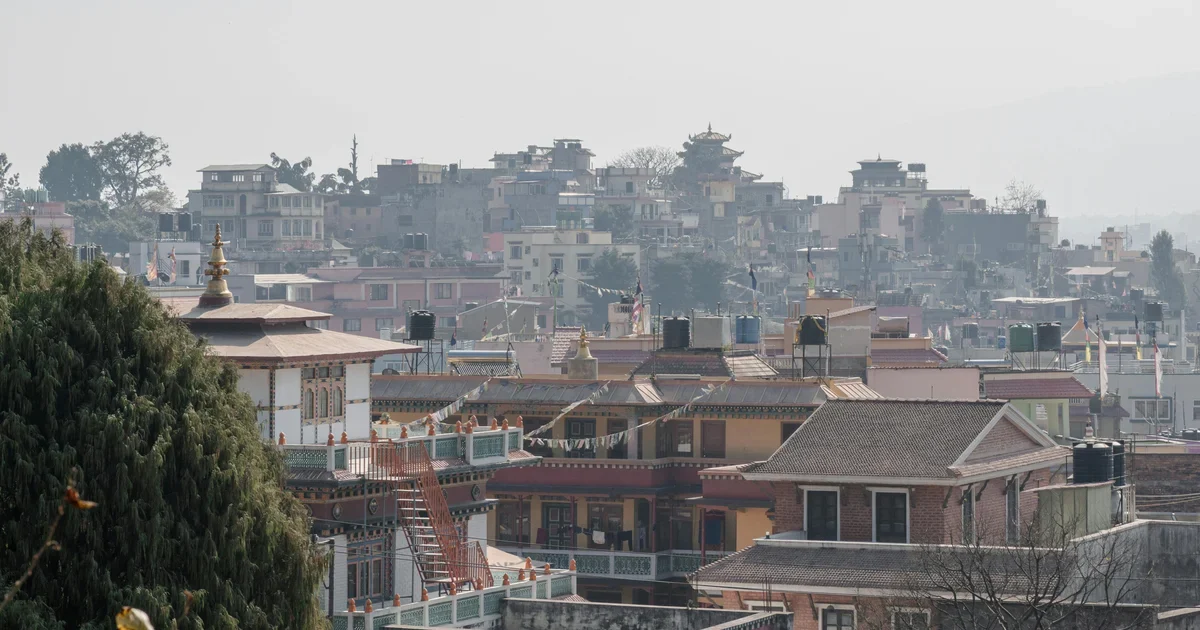
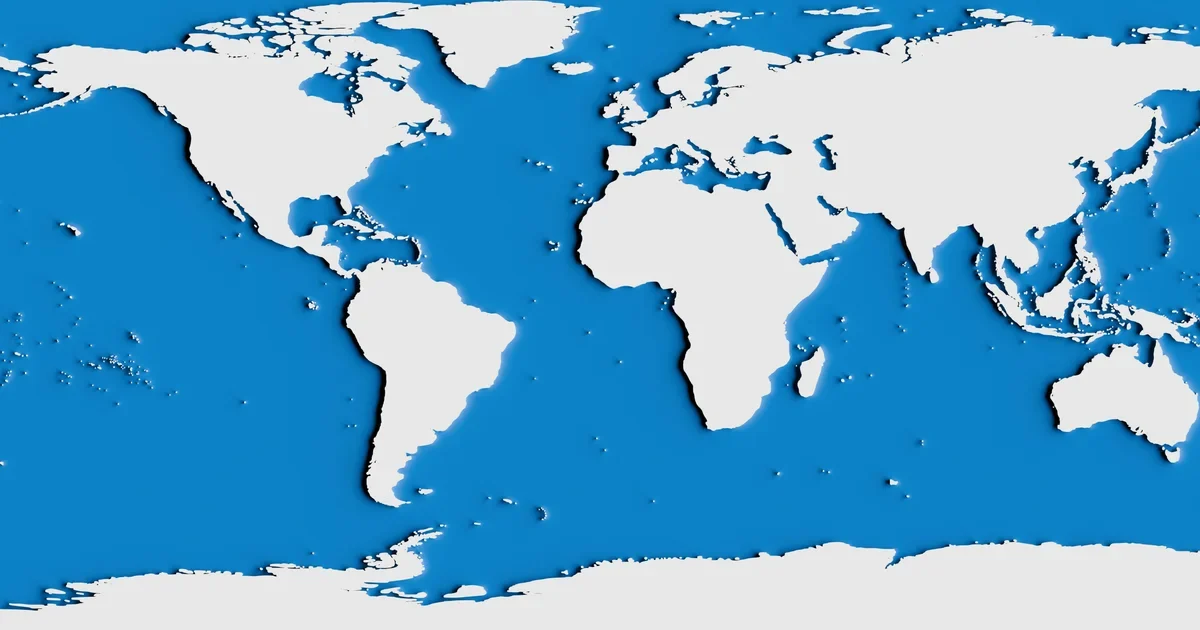
South Asia is often described as a monolith when it comes to social conservatism. That description has always been imprecise, but nowhere is the gap between perception and reality sharper than on LGBTQ+ rights. In November 2023, Nepal registered its first same-sex marriage. Roughly a month earlier, India’s Supreme Court had declined to create marriage equality by a 3-2 majority, sending the question back to Parliament. Eight countries, one region, wildly different legal realities.
This piece maps where each South Asian country stands, explains what drove Nepal to move first, and examines why India, despite decriminalizing same-sex conduct in 2018, has not followed. The comparison matters because India’s debate does not happen in a vacuum. Judges, activists, and legislators are watching one another across borders.
Country by Country: Where South Asia Stands
Nepal: First Across the Line
Nepal’s journey to marriage equality is not a story of sudden liberalism. It is a story of sustained judicial pressure over nearly two decades. In 2007, activist Sunil Babu Pant won a landmark ruling from the Nepal Supreme Court ordering the government to study legal recognition of same-sex relationships and to draft legislation accordingly. The government largely ignored the directive for years.
What changed was a second wave of litigation. In November 2023, the Supreme Court issued an interim order allowing same-sex couples to register marriages on a temporary basis while Parliament worked on a permanent legal framework. On November 29, 2023, Maya Gurung and Surendra Pandey became the first same-sex couple to register their marriage in Nepal’s Sindhupalchok district, making history for the entire region. The interim order did not give same-sex couples all the rights that heterosexual married couples receive, but it created a legal doorway that had not existed before.
Nepal’s constitution, adopted in 2015, already prohibited discrimination on the basis of sexual orientation and gender identity. Article 18 guarantees the right to equality; Article 12 recognizes a third gender category. These constitutional provisions gave advocates a strong textual hook that courts could work with. ILGA-Asia’s 2023 annual report noted Nepal as the single country in South Asia with a clear positive trajectory on both legal recognition and constitutional protection.
India: Decriminalized but Stalled
India’s story has two distinct chapters. In September 2018, a five-judge bench of the Supreme Court unanimously read down Section 377 of the Indian Penal Code in Navtej Singh Johar v. Union of India. Chief Justice Dipak Misra’s judgment called the colonial-era provision manifestly arbitrary and a violation of the right to dignity. Criminalisation of consensual same-sex conduct among adults was struck down.
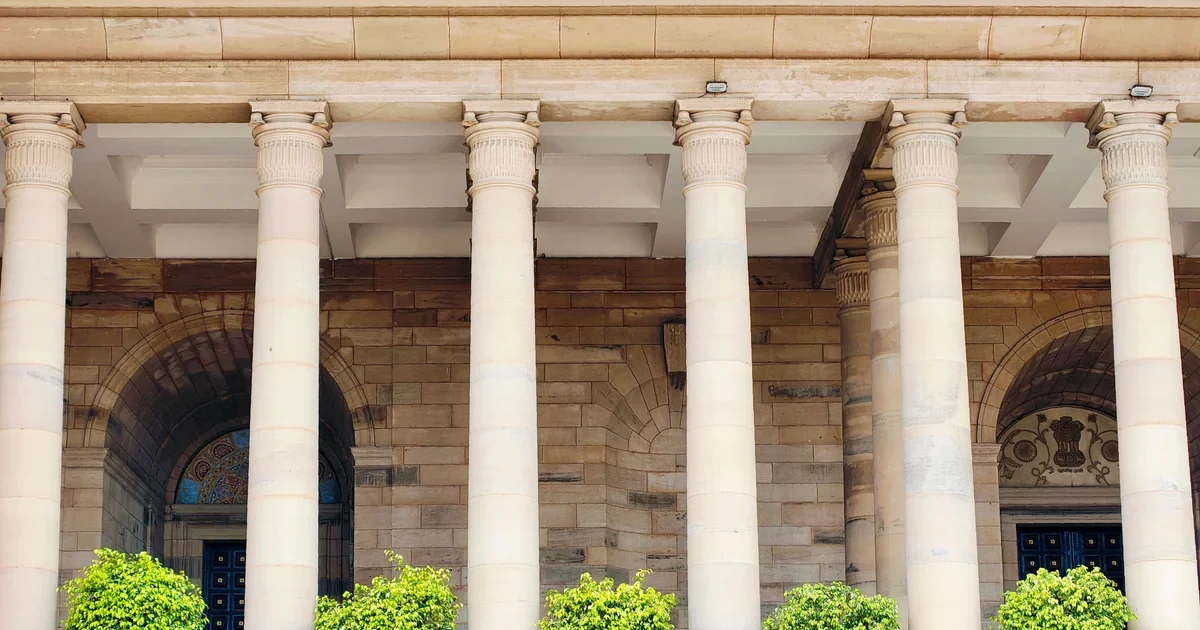
The second chapter opened in October 2023. In Supriyo Chakraborty v. Union of India, a five-judge Constitution Bench examined whether same-sex couples had a constitutional right to marry. The court voted 3-2 to say it did not have the authority to create marriage equality, describing the Special Marriage Act as Parliament’s domain. Justice D.Y. Chandrachud, writing in dissent, argued that the right to marry flows from Articles 14, 19, and 21 of the Constitution and that the court had both the power and the obligation to act. The majority disagreed. The court also declined to recognise civil unions or to give same-sex couples the right to adopt jointly.
The Pew Research Center’s 2023 Global Attitudes survey found that 53 percent of Indian respondents supported same-sex marriage, a figure that has risen consistently over the past decade. Public opinion and judicial outcome were, in this case, moving in different directions.
Pakistan: Progressive on Paper, Regressive in Practice
Pakistan’s Transgender Persons (Protection of Rights) Act 2018 was, at the time of its passage, considered one of the most progressive transgender rights laws in the world. It allowed individuals to self-identify their gender, prohibited discrimination in employment and housing, and created a mechanism for updating identity documents. International rights organisations praised it as a model.
The gap between the law on paper and lived reality was always significant. Enforcement was weak, and religious parties had opposed the law from the start. In May 2023, the Federal Shariat Court ruled that several provisions of the Act conflicted with Islamic law. In 2024, the court’s directives led to the stripping of key provisions, including the right to self-identify gender. Same-sex conduct remains criminalised under both the Pakistan Penal Code (Section 377, the same colonial provision that India struck down) and under the Hudood Ordinances, which carry severe punishments. ILGA-Asia’s reports classify Pakistan as one of the most restrictive environments in the region for LGBTQ+ persons.
Bangladesh: Recognition for Some, Criminalisation for Others
Bangladesh officially recognised hijras as a third gender in 2013, a policy decision that provided some transgender people with identity documentation and limited access to social benefits. It was presented as a social inclusion measure, and for a section of the community, it provided meaningful protection.
However, recognition of the hijra community has not translated into broader LGBTQ+ rights. Section 377 of the Bangladesh Penal Code remains intact and has been used to arrest gay men. Bangladesh has not had a serious parliamentary or judicial debate on decriminalisation. ILGA-Asia notes the contrast between the relatively progressive posture on hijra rights and the continued criminalisation of same-sex conduct. The two policies sit in legal tension with each other, and that tension has not been resolved.
Sri Lanka: Debate Without Resolution
Sri Lanka has seen the most serious legislative debate on decriminalisation in South Asia outside Nepal. A private member’s bill to repeal Section 365 of the Penal Code (Sri Lanka’s equivalent of Section 377) was introduced in Parliament in 2023. The bill attracted significant attention and drew both support from some progressive parliamentarians and fierce opposition from Buddhist clergy and conservative political blocs.
In 2023, the Supreme Court of Sri Lanka made an observation during a separate case suggesting that criminalisation of consensual same-sex conduct may be constitutionally questionable. This stopped short of a ruling but signalled that the courts were watching the issue. As of 2026, the private member’s bill has not passed. Same-sex conduct remains technically criminalised, though enforcement has been inconsistent. Sri Lanka presents a case of genuine political movement without legislative resolution.
Bhutan: Quiet Decriminalisation
Bhutan’s 2021 amendment to the Penal Code removed the provisions criminalising consensual same-sex conduct between adults. The change was remarkable for two reasons. First, it happened without significant public controversy. Second, it was passed by Parliament, not ordered by a court. Bhutan has no LGBTQ+ rights advocacy infrastructure comparable to India or Nepal, yet it moved faster than both on decriminalisation.
The decriminalisation does not include marriage equality or formal recognition of same-sex relationships. Anti-discrimination protections specific to sexual orientation and gender identity do not exist in law. But the removal of criminal penalties, achieved quietly through a parliamentary process, places Bhutan in a more advanced legal position than many of its neighbours on the basic question of whether same-sex intimacy is a crime.
Maldives: Criminalisation Under Islamic Law
The Maldives operates under a legal framework that draws heavily on Islamic law. Same-sex conduct is criminalised and can carry penalties including flogging and imprisonment. There is no domestic advocacy movement of any visible scale, and no parliamentary debate on reform. The Maldives presents the clearest example of a country where legal framework, state enforcement, and social norms are aligned against LGBTQ+ rights with no visible pressure for change in the near term.
Afghanistan: Criminalisation Under the Taliban
Since the Taliban’s return to power in August 2021, Afghanistan has moved sharply toward harshest-case enforcement. Same-sex conduct was already criminalised before 2021, but the Taliban’s interpretation of Sharia law permits capital punishment. The practical effect has been the disappearance of any visible LGBTQ+ presence in the country. Hundreds of activists and community members were evacuated by international organisations in the months following the Taliban’s takeover. Afghanistan is the extreme end of a spectrum that also includes Maldives and Pakistan.
The Regional Scorecard: A Comparison
The table below maps each country across five dimensions: decriminalisation of same-sex conduct, legal gender recognition beyond the binary, same-sex marriage, joint adoption rights, and explicit anti-discrimination protections.
Country | Decriminalised | Gender Recognition | Marriage Equality | Joint Adoption | Anti-Discrimination Law |
|---|---|---|---|---|---|
Nepal | Yes (2007 SC ruling) | Yes (third gender) | Yes (interim order, 2023) | No | Yes (constitution) |
India | Yes (2018) | Yes (third gender, limited) | No | No | Partial |
Bhutan | Yes (2021) | No | No | No | No |
Sri Lanka | No (debate ongoing) | No | No | No | No |
Bangladesh | No | Hijra only (2013) | No | No | No |
Pakistan | No | Rolled back (2024) | No | No | No |
Maldives | No | No | No | No | No |
Afghanistan | No (capital punishment) | No | No | No | No |
Sources: ILGA-Asia State-Sponsored Homophobia Report 2023; Nepal Supreme Court interim order November 2023; Pakistan Federal Shariat Court ruling 2024; Bhutan National Assembly amendment 2021.
Why Nepal Moved: The Judiciary as Driver
Nepal’s path to marriage equality is primarily a story about judicial activism combined with a constitutional framework that provided the necessary tools. Three factors stand out.
The Sunil Babu Pant precedent. The 2007 Supreme Court ruling in Sunil Babu Pant v. Government of Nepal is the foundation. The court did not simply decriminalise. It ordered the government to form a committee to study international standards and to draft legislation ensuring equal rights regardless of sexual orientation. This created a legal obligation that advocates could return to court to enforce. Over the next fifteen years, the government’s failure to comply became itself a basis for continued litigation.
Constitutional provisions as living tools. Nepal’s 2015 constitution explicitly prohibits discrimination based on sexual orientation. This is not a judicial interpretation of a silent text; it is an explicit guarantee. When lawyers argued for marriage equality in 2023, they had a direct constitutional hook. The court’s interim order granting temporary marriage registration was built on this foundation. It is much harder to resist a rights claim when the constitution explicitly names the protected characteristic.
Smaller legislative and political resistance. Nepal’s Parliament has fewer MPs whose electoral survival depends on publicly opposing LGBTQ+ rights. The country’s political parties, while not uniformly progressive, have not organised explicit anti-LGBTQ+ campaigns as an electoral strategy. The absence of organised political opposition gave the courts more room to act without triggering a constitutional crisis.
Why India Has Not Followed
India’s situation is structurally different from Nepal’s in ways that explain the gap, even when public opinion polling shows majority support for equality.
The Personal Law Patchwork
Marriage in India is not governed by a single uniform code. Hindu marriages are governed by the Hindu Marriage Act 1955. Muslim marriages are governed by personal law derived from religious texts. Christian marriages fall under the Indian Christian Marriage Act 1872. Parsi marriages have their own statute. Any change to marriage law that applies uniformly across all communities would require either amending each of these statutes or enacting a uniform civil code. The uniform civil code has been politically toxic for decades because it intersects with minority rights and religious freedom in ways that go far beyond the LGBTQ+ question.
The Special Marriage Act 1954 covers inter-religious marriages and civil marriages. Petitioners in the Supriyo case argued that the government should read gender-neutral language into this statute. The majority refused, holding that to do so would require rewriting the law, which is Parliament’s role. The court was not wrong as a matter of legal process. But the result was that the most obvious legislative vehicle for change was taken off the table.
Electoral Math in MP-Dominant States
India has 543 Lok Sabha constituencies. The largest state, Uttar Pradesh, returns 80 MPs. Bihar returns 40. Rajasthan returns 25. These are states where surveys consistently show lower acceptance of LGBTQ+ relationships compared to urban metros. Any party that wants a parliamentary majority must perform in these states. The calculation for party leadership is that publicly supporting marriage equality costs votes in key constituencies without adding enough votes elsewhere to compensate. This is an electoral arithmetic problem, not simply a moral one. Understanding this requires looking at how Indian electoral reform debates have evolved and why the incentive structure of first-past-the-post voting shapes social policy more than most observers acknowledge.
This dynamic is not unique to India. The United States took until the Supreme Court’s Obergefell v. Hodges ruling in 2015 to achieve national marriage equality precisely because Congress would not act. Courts resolved what legislatures could not politically afford to. India’s Supreme Court, in the Supriyo case, declined to play that role.
The Centre-State Complexity
Marriage and family law in India fall under the Concurrent List, meaning both Parliament and state legislatures have jurisdiction. Even if Parliament were to amend the Special Marriage Act, states could potentially use their powers over related areas to create friction. India’s federal structure adds a layer of political negotiation that Nepal’s more centralised system does not face in the same way.
What India Can Learn from Nepal’s Judicial Path
Nepal’s experience offers several specific lessons that Indian advocates and judges can study.
- Directions to legislate create accountability. The Nepal Supreme Court’s 2007 order directed the government to draft legislation. It did not try to legislate itself. This respected the separation of powers while keeping pressure on the executive. India’s Supreme Court issued no such direction in Supriyo. A direction to the Law Commission or to Parliament to examine the question within a time-bound framework would have preserved judicial deference while maintaining pressure for change.
- Constitutional text matters. Nepal’s explicit constitutional prohibition on sexual-orientation discrimination gave courts a direct textual basis. India’s Constitution contains no such explicit language. The argument must travel through Articles 14, 19, and 21 and their implied rights. Justice Chandrachud’s dissent in Supriyo constructed that argument carefully. Future litigation will build on his reasoning, but advocates need to understand that the textual gap is real and that amending the Constitution or winning a stronger reading of existing provisions are both long-term projects.
- Interim recognition changes facts on the ground. Nepal’s interim marriage registration order created a practical reality: couples are registered. Reversing that creates a concrete harm that is politically and legally harder to justify. India’s advocates might pursue interim or partial measures that create facts on the ground rather than seeking a single comprehensive ruling.
- The legislative route requires a coalition strategy. Nepal’s Parliament ultimately supported the constitutional framework that made judicial action possible. India’s advocates need to build a parliamentary coalition that can at minimum pass a resolution or a private member’s bill, even if it does not pass initially. The act of legislative debate changes public and political norms over time.
The Broader Picture: Regional Divergence
South Asia’s divergence on LGBTQ+ rights reflects a broader pattern: legal progress does not follow economic development, population size, or democratic status in predictable ways. Bhutan, the smallest economy in the region, decriminalised before India. Nepal, a country that experienced a civil war and multiple constitutional crises within living memory, achieved marriage equality before its much larger neighbour.
What predicts progress is a combination of constitutional tools, judicial willingness to use them, and a political environment where organised opposition is not decisive. On two of these three factors, Nepal was better positioned than India. On the third, India’s democracy is both its strength and the source of its inertia. A legislature that is accountable to constituencies can move when opinion moves, but it can also block change when constituencies are unevenly distributed across geography and ideology.
Pakistan’s story is a warning: progressive legislation without enforcement infrastructure or social consensus can be reversed. The Transgender Persons Act 2018 was hailed internationally, then substantially dismantled within six years. Laws that run too far ahead of institutional capacity and political will are vulnerable. Nepal’s slower, court-driven process, anchored in constitutional text, may prove more durable precisely because it moved more carefully.
For Indian advocates, the regional picture offers neither despair nor false optimism. Progress is possible in South Asia, and Nepal’s path proves it. But the route matters. Shortcut approaches that produce reversible wins may be less valuable than slower processes that build durable constitutional foundations. This has parallels with how grassroots movements in India have found that legal recognition, not just practical tolerance, determines long-term outcomes for marginalized communities.
What Comes Next for India
The Supriyo verdict did not close the door permanently. It identified the mechanism: Parliament must act. The question is whether advocates can shift the legislative conversation in the way that the judicial conversation has shifted since 2018.
Several developments are worth watching. First, the Law Commission of India has been asked by various parties to examine the Special Marriage Act. Any report that recommends inclusive language would put the question formally on the legislative agenda. Second, state-level governments in opposition-held states such as Kerala or Tamil Nadu could pass resolutions in favour of legislative change, building political pressure at the national level. Third, continued international attention to India’s position relative to its neighbours creates reputational costs that governments weigh over time.
The 2023 Pew survey finding that more than half of Indian respondents support marriage equality is not a mandate, but it is a floor. As younger cohorts who show even higher acceptance enter the electorate in larger numbers, the electoral calculus will slowly shift. The question is whether India’s institutions will lead that shift or follow it.
Nepal showed that a smaller country with clearer constitutional language and a willing judiciary can move before public opinion reaches consensus. India may need its public opinion to do more of the work before its institutions follow. Either way, the regional comparison has value: it shows that the choice is not between action and impossibility, but between different routes to the same destination.
Key Sources and Further Reading
- Nepal Supreme Court interim order on same-sex marriage registration, November 2023
- ILGA-Asia, State-Sponsored Homophobia Report 2023
- Pew Research Center, Global Attitudes Survey on Same-Sex Marriage, 2023
- Supreme Court of India, Supriyo Chakraborty v. Union of India, judgment dated October 17, 2023
- Supreme Court of India, Navtej Singh Johar v. Union of India, judgment dated September 6, 2018
- Pakistan Federal Shariat Court ruling on the Transgender Persons Act, 2024
- Bhutan National Assembly, Penal Code amendment, 2021
This article is part of our ongoing coverage of constitutional rights and regional politics. For more on India’s rights landscape, see our coverage of the Navtej Singh Johar verdict and of transgender rights legislation across South Asia.
What you can do
- Share the evidenceSend this to one person who should know about social justice.Share on WhatsApp
- Give an afternoonTeach, mentor, clean up, or lend your professional skills.Ways to volunteer
- Tell us what's missingKnow a story, a fact we got wrong, or a solution worth spotlighting?Suggest a story
Politically neutral. Every claim sourced. Report a correction.

No comments yet