ISRO vs NASA: How India Reached Mars for the Price of a Hollywood Movie
India reached Mars orbit on its first attempt in 2014 for $74 million. This article compares ISRO's Mangalyaan with NASA missions and explains why India's space programme costs so little.
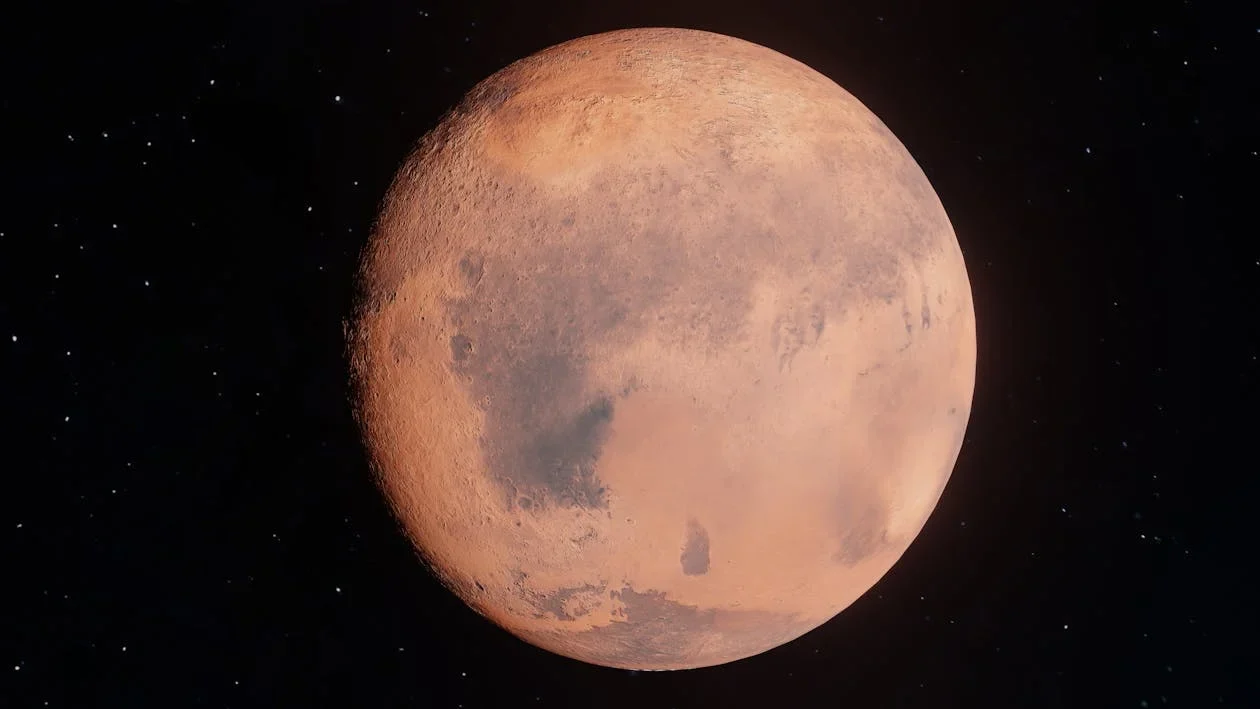
$74 Million to Mars
On September 24, 2014, at 7:17 AM IST, a room full of scientists at the Indian Space Research Organisation’s Telemetry, Tracking and Command Network in Bangalore erupted. Some wept. Some embraced. Some stood frozen, staring at screens that confirmed what the numbers were saying: India’s Mars Orbiter Mission (MOM), also called Mangalyaan, had entered Mars orbit.
India had become the first country in history to reach Mars on its maiden mission. The Soviet Union failed on its first attempt. The United States failed on its first attempt. The European Space Agency failed. China failed. Japan failed. Even combining all first-attempt Mars missions by all nations, the success rate was roughly 40%. India succeeded with a spacecraft that had been designed, built, and launched in just 15 months.
And it did so for $74 million, less than the production budget of the Hollywood film Gravity ($100 million), which is a movie about being in space. India actually went to space for less. The comparison was made by Prime Minister Narendra Modi at the time, and it stuck, because it captured something essential about India’s space programme that no technical statistic could: this was a country that had figured out how to do extraordinary things extraordinarily cheaply.
The image that went viral was not of the spacecraft. It was of the ISRO team, women scientists in saris, men in short-sleeved shirts, all of them beaming with pride in a control room that looked more like a university computer lab than NASA’s Mission Control. There were no Hollywood dramatics. No countdown with thousands watching in a stadium. Just a group of Indian scientists, most of them earning less than $40,000 a year, who had just beaten every space agency on Earth at the Mars game.
This single fact became the defining image of India’s space programme: a country where 270 million people lived below the poverty line at the time had just reached another planet for a budget that wouldn’t cover a major Hollywood movie. Critics asked whether a poor country should be spending money on space. The answer, when you look at the numbers, is that India’s space programme is one of the most cost-effective investments any government has ever made, returning far more in communications, weather forecasting, disaster management, and national security than it costs.
But to understand why ISRO and NASA are so fundamentally different, and what India’s approach reveals about a new model of space exploration, you need to understand their histories, their cultures, their funding, and their ambitions.
Two Space Programmes, Two Philosophies
Category | ISRO | NASA |
|---|---|---|
Founded | 1969 | 1958 |
Annual budget (2025) | ~$1.8 billion | ~$25.4 billion |
Budget as % of GDP | 0.04% | 0.10% |
Employees | ~17,000 | ~18,000 (+ 60,000 contractors) |
Total missions (all time) | ~130 | ~1,500+ |
Crewed missions | 0 (Gaganyaan planned 2026) | 166 (Space Shuttle + ISS + Apollo) |
Mars missions | 1 (succeeded on first try) | 20+ (first succeeded in 1964) |
Moon missions | 3 (Chandrayaan 1, 2, 3) | 30+ (Apollo + Artemis programme) |
Primary philosophy | Space for national development | Scientific exploration + national security |
Launch cost (per kg to LEO) | ~$1,500 (PSLV) | ~$2,720 (SpaceX Falcon 9) |
NASA’s budget is 14 times ISRO’s. Yet ISRO has achieved milestones that eluded agencies with far greater resources. The question isn’t whether NASA is better, it is, by almost every technical measure, the most capable space agency in human history. The question is what ISRO achieves per dollar, and on that metric, ISRO may be the most efficient space agency in human history.
The two agencies represent fundamentally different answers to the same question: why go to space? NASA’s answer, shaped by Cold War competition and scientific ambition, is: to explore, to discover, to push the boundaries of human knowledge. ISRO’s answer, shaped by poverty and practical need, is: to make life better for people on Earth. Both answers are valid. They produce very different programmes.
The Origin Stories
NASA: Born from Cold War Fear
NASA was created in 1958 as a direct response to the Soviet Union launching Sputnik in 1957. The United States was terrified. If the Soviets could put a satellite in orbit, they could put a nuclear weapon over any American city. The “Sputnik moment” triggered a national panic about technological inferiority that reshaped American education, defence spending, and scientific policy for a generation.
NASA was born not from curiosity about the cosmos but from existential military anxiety. Its first missions were explicitly designed to demonstrate American technological superiority over the Soviet Union. The Mercury programme, the Gemini programme, and eventually the Apollo programme were all framed in Cold War terms: beating the Russians.
President Kennedy’s 1961 declaration, “We choose to go to the Moon”, was a Cold War move, delivered to a Congress that was being asked to fund an unprecedented peacetime expenditure. The Apollo programme cost $25.4 billion ($200 billion in today’s dollars). At its peak, it employed 400,000 people and consumed 4.4% of the federal budget. It was the most expensive peacetime project in human history. When Apollo 11 landed on the Moon in 1969, it was a triumph of science, engineering, and national prestige. But it was also an arms-race victory dressed in a spacesuit.
After Apollo, NASA’s mission shifted. The Space Shuttle programme (1981-2011) aimed at making space access routine and reusable, a goal partially achieved but marred by two catastrophic disasters (Challenger in 1986, Columbia in 2003) that killed 14 astronauts. The International Space Station, built over 13 years at a cost exceeding $150 billion (shared among 15 nations), became the largest and most expensive structure ever built in space. The Hubble Space Telescope and the James Webb Space Telescope revolutionised our understanding of the universe. NASA’s Mars rovers, Spirit, Opportunity, Curiosity, Perseverance, have conducted the most detailed exploration of another planet in history.
NASA’s scientific output is unmatched by any institution on Earth. Its technology has transformed everything from satellite communications to weather forecasting to GPS to medical imaging. But its cost is also unmatched, and its model depends on the kind of sustained, massive government funding that only the world’s wealthiest nation can sustain.
ISRO: Born from National Need
ISRO’s origin story is the exact opposite of NASA’s in almost every dimension. It wasn’t born from military competition. It wasn’t born from fear. It was born from a question that Vikram Sarabhai, a physicist, industrialist, and visionary who is considered the father of India’s space programme, asked in the early 1960s: how can a newly independent, largely illiterate, desperately poor country use space technology to solve earthly problems?
Sarabhai was not interested in prestige missions. He was interested in communication satellites that could beam educational programmes to remote villages where no school existed. Weather satellites that could predict monsoon patterns for farmers whose livelihoods depended on rain arriving at the right time. Remote sensing satellites that could map India’s mineral resources, forest cover, water tables, and agricultural potential, information that a young nation with limited survey infrastructure desperately needed.
The early days were comically humble. India’s first rocket launch facility was established at Thumba, a fishing village near Thiruvananthapuram in Kerala. The first rockets were assembled in a church, St. Mary Magdalene Church, which ISRO had repurposed as a workshop. The nosecone of the first sounding rocket was transported to the launch pad on a bicycle. Rocket parts were carried in bullock carts. The “control room” was the church’s vestry.
When the first sounding rocket, a Nike-Apache purchased from the United States, launched on November 21, 1963, the entire programme had a budget that wouldn’t cover a single NASA engineer’s annual salary. The photo of a rocket component being carried on a bicycle beside a cow has become iconic, the starting point of a journey that would lead to Mars.
But Sarabhai’s vision was clear: India would use space for development, not for display. And that philosophy, build what you need, build it cheaply, build it yourself, has defined ISRO ever since. When Sarabhai died unexpectedly in 1971, his successors, Satish Dhawan, U.R. Rao, A.P.J. Abdul Kalam, K. Kasturirangan, maintained the same ethos. ISRO’s culture is not about exploration for its own sake. It’s about solving problems.
How ISRO Does More With Less
1. Frugal Engineering as Philosophy
ISRO’s cost advantage isn’t just about lower salaries (though that helps, an ISRO scientist earns roughly $20,000-40,000 per year, compared to $100,000-200,000 at NASA). It’s about a fundamentally different engineering philosophy that permeates every decision.
NASA’s culture is zero-defect, maximum-specification: every component is built to the highest possible standard, with extensive redundancy, triple-tested, and designed to exceed requirements by wide margins. This makes sense when you’re sending humans to space or building a telescope that has to work perfectly at the L2 Lagrange point, 1.5 million kilometres from any repair crew.
ISRO’s culture is optimal-cost: build to the specification the mission requires, not to the maximum possible. If a component needs to work for 6 months in Mars orbit, build it to last 6 months with a reasonable safety margin, don’t build it to last 20 years. If a mission can be accomplished with a smaller spacecraft that fits on a smaller rocket, don’t build a larger one for the sake of extra capacity you don’t need.
Mangalyaan is the perfect illustration. ISRO didn’t have a rocket powerful enough to send a spacecraft directly to Mars (a Hohmann transfer orbit). Instead of spending billions developing a new heavy-lift vehicle, ISRO’s engineers devised an ingenious workaround: they launched Mangalyaan into Earth orbit using the PSLV (a reliable but relatively small rocket), then used a series of orbital manoeuvres, six engine burns over 25 days, to gradually raise the orbit until the spacecraft had enough velocity to escape Earth’s gravity and head for Mars.
This trajectory was more complex, took longer, and required more precise navigation than a direct transfer. But it worked with the rocket ISRO already had, saving hundreds of millions in development costs. The spacecraft itself weighed just 1,350 kg, barely half the mass of NASA’s MAVEN mission, which reached Mars orbit the same week and cost $671 million, nine times more than India’s mission.
2. In-House Integration
NASA outsources heavily. Boeing, Lockheed Martin, SpaceX, Northrop Grumman, Raytheon, and dozens of smaller contractors build NASA’s hardware. Each layer of contracting adds cost, overhead, profit margin, and management complexity. The James Webb Space Telescope was originally budgeted at $1 billion and delivered at $10 billion, largely because of the contracting structure.
ISRO builds almost everything in-house. Its launch vehicles, satellites, ground systems, and mission operations are developed by ISRO’s own engineers at its network of centres across India, the Vikram Sarabhai Space Centre in Thiruvananthapuram (propulsion), the U.R. Rao Satellite Centre in Bangalore (satellites), the Satish Dhawan Space Centre in Sriharikota (launch), and the ISRO Telemetry, Tracking and Command Network in Bangalore (mission operations).
The most dramatic example of in-house capability is ISRO’s cryogenic engine. Cryogenic engines (which use liquid hydrogen and liquid oxygen) are the most complex and efficient rocket engines, essential for heavy-lift missions. In 1991, India signed a deal with Russia for cryogenic engine technology. The United States pressured Russia to cancel the deal, citing missile proliferation concerns. Russia backed out.
ISRO was forced to develop cryogenic engines from scratch. It took 20 years, multiple failures, and enormous persistence. The CE-20 cryogenic engine, which powers the upper stage of India’s GSLV Mk III (now called LVM3), is now operational and has successfully launched Chandrayaan missions. What began as a setback became ISRO’s greatest strategic advantage: India now has fully indigenous heavy-lift capability, dependent on no other country.
3. Reuse and Iteration
ISRO’s PSLV (Polar Satellite Launch Vehicle) is the workhorse of the Indian space programme. First launched in 1993, it has completed over 60 missions with a 95%+ success rate. Rather than constantly designing new rockets (as NASA’s different programmes have required, Saturn V, Space Shuttle, SLS, each a new design), ISRO iterates on proven platforms, extracting maximum value from established technology.
The PSLV exists in four variants (Standard, CA, XL, and QL) that share a common core but are configured differently depending on payload requirements. This modular approach means ISRO can offer customised launch solutions without the cost of entirely new vehicles. The same basic rocket that launched India’s first Moon mission has launched satellites for 34 countries.
At roughly $15 million per launch (compared to $67 million for a SpaceX Falcon 9 before Starship), ISRO offers the cheapest reliable ride to orbit on the planet, a position it has used to build a significant commercial launch business that generates revenue to fund future missions.
4. Talent Pool and Culture
India produces 1.5 million engineers annually. While questions about graduate quality persist, the top tier of Indian engineering talent is world-class, and ISRO gets the cream. Joining ISRO is intensely competitive: the acceptance rate for ISRO scientist positions is under 2%, comparable to elite institutions.
Many ISRO scientists could double or triple their income at Google, Amazon, Boeing, or in the Gulf. They stay because building rockets for India carries a meaning that a Silicon Valley salary cannot match. The culture at ISRO is closer to a national mission than a government job, scientists talk about their work with a passion and pride that is palpable. When Chandrayaan-3 landed on the Moon, ISRO scientists celebrated as if their own children had achieved something extraordinary. In a sense, they had.
The Missions That Define Each Agency
NASA’s Greatest Hits
- Apollo 11 (1969), First humans on the Moon. 400,000 people worked on the programme. Cost: $200 billion in today’s dollars. Neil Armstrong’s “one small step” remains the single most watched live broadcast in human history.
- Hubble Space Telescope (1990), Revolutionised our understanding of the universe. Discovered that the universe’s expansion is accelerating. Still operating 35 years later, despite a famously flawed mirror that required a daring space shuttle repair mission.
- Mars Rovers (2004-present), Spirit, Opportunity, Curiosity, Perseverance. Opportunity was designed for a 90-day mission; it lasted 15 years. Perseverance is currently collecting rock samples for future return to Earth. Collectively, the rovers have driven over 70 kilometres on Mars.
- James Webb Space Telescope (2021), The most powerful telescope ever built, observing the universe in infrared from the L2 Lagrange point. $10 billion over 25 years of development. Has already discovered the most distant galaxies ever observed and is rewriting our understanding of how the first stars and galaxies formed.
- Voyager 1 and 2 (1977-present), Both have left the solar system. Voyager 1, at 24 billion kilometres from Earth, is the farthest human-made object in existence. Still transmitting data on interstellar space. The Golden Record they carry, with sounds and images of Earth, is humanity’s message in a bottle to the cosmos.
ISRO’s Greatest Hits
- Aryabhata (1975), India’s first satellite. Built entirely in India, launched by Soviet rocket. Named after the 5th-century mathematician who calculated pi and proposed that the Earth rotates on its axis. Aryabhata operated for only 5 days before a power failure, but it proved India could build satellites.
- INSAT Series (1983-present), Communication and weather satellites that brought television, weather forecasting, telecommunications, and disaster warning to the entire Indian subcontinent. The most directly impactful space programme in terms of lives changed, hundreds of millions of Indians received their first television signal, their first accurate weather forecast, and their first disaster warning through INSAT satellites.
- IRS Series (1988-present), Indian Remote Sensing satellites that map India’s land use, water resources, forest cover, mineral deposits, and agricultural health. IRS data is used for urban planning, flood prediction, drought monitoring, and fisheries management. The practical value to India’s economy runs into billions of dollars annually.
- Chandrayaan-1 (2008), India’s first Moon mission. Discovered water molecules on the Moon’s surface using the Moon Impact Probe (MIP) and the Moon Mineralogy Mapper, a finding that changed lunar science globally and reignited international interest in the Moon. Cost: $54 million.
- Mangalyaan/MOM (2014), Mars on first attempt for $74 million. Made India the first Asian country to reach Mars orbit. Operated for 8 years (designed for 6 months). Returned data on Mars’s atmosphere and surface that contributed to international Mars science.
- Chandrayaan-3 (2023), Landed on the Moon’s south pole on August 23, 2023. First country to achieve a soft landing near the lunar south pole. Confirmed water ice in permanently shadowed craters. The Pragyan rover operated for 14 days, analysing lunar soil composition. Cost: $75 million. For comparison, NASA’s Artemis programme, which hasn’t yet landed humans on the Moon, has cost over $40 billion so far.
- PSLV-C37 (2017), Launched 104 satellites in a single mission, setting a world record at the time. Demonstrated ISRO’s precision orbital mechanics and its ability to serve as a commercial launch provider for the global market.
Where NASA Leads, and Why the Gap Matters Less Than You Think
It’s important to be honest about what ISRO cannot do, and may not be able to do for decades:
- Human spaceflight, NASA has sent 355 people to space across Mercury, Gemini, Apollo, Space Shuttle, and ISS missions. ISRO has sent zero. Gaganyaan, India’s first crewed mission, is planned for 2026 but has been delayed multiple times. Crewed spaceflight requires life-support systems, abort mechanisms, and safety margins that are orders of magnitude more expensive and complex than robotic missions. It also requires accepting the risk of losing astronauts, a risk that NASA has experienced twice with fatal consequences.
- Deep space exploration, Voyager, New Horizons (Pluto flyby), Juno (Jupiter), Cassini-Huygens (Saturn and Titan), NASA’s deep space portfolio is unmatched by any agency. ISRO has no missions beyond Mars orbit and no announced plans for outer solar system exploration.
- Space telescopes, Hubble and James Webb have no equivalent from any other space agency, including ESA. India has AstroSat, an excellent X-ray and ultraviolet telescope launched in 2015, but it’s not in the same category as NASA’s flagship observatories.
- Planetary science infrastructure, NASA’s Deep Space Network (three massive antenna complexes in California, Spain, and Australia that communicate with every deep-space mission), its fleet of Mars rovers, its sample-return missions, and its decades of accumulated planetary data represent an investment that no country can replicate quickly.
- Scale of R&D output, NASA funds not just its own missions but thousands of university research grants, technology development programmes, and industry partnerships. The technological spillover from NASA into the broader economy (Velcro, memory foam, scratch-resistant lenses, water purification systems, CAT scans) is one of the most productive R&D investments in history.
But here’s why the gap matters less than it appears: ISRO doesn’t need to replicate NASA. The two agencies are solving different problems. ISRO needs to provide affordable satellite launches for developing countries that can’t pay SpaceX prices. It needs to build and maintain the satellite constellation that a billion Indians depend on daily for weather forecasts, communications, navigation, and disaster warnings. It needs to develop technologies, reusable launch vehicles, space-grade electronics, advanced propulsion, that strengthen India’s industrial capability. And it needs to prove that space exploration doesn’t require a superpower’s budget.
On all of these objectives, ISRO is succeeding.
The Commercial Space Race
One area where the comparison is shifting rapidly is commercial space. SpaceX has dramatically reduced launch costs with reusable rockets, the Falcon 9’s first stage lands and is reflown, and Starship promises to reduce per-kg launch costs to as low as $10. ISRO’s cost advantage in commercial launches is narrowing as private players drive prices down globally.
India’s response is two-fold:
- SSLV (Small Satellite Launch Vehicle), Designed for the fast-growing small-satellite market (satellites under 500 kg). Can be assembled by a team of 6 in 72 hours (vs. months for larger rockets) and launches for under $10 million. This targets a market segment, quick, cheap, dedicated small-satellite launches, that SpaceX and other heavy-lift providers don’t serve efficiently.
- IN-SPACe, India’s space regulator, created in 2020, has opened the sector to private companies for the first time. Agnikul Cosmos (Chennai-based, developing a 3D-printed rocket engine) and Skyroot Aerospace (Hyderabad-based, successfully launched India’s first private rocket, Vikram-S, in 2022) are the frontrunners. Over 140 space-tech startups are now operating in India, working on everything from satellite manufacturing to ground systems to space debris removal.
The startup ecosystem that India has built in software and fintech is now extending to space. India is attempting to replicate what the US did with SpaceX: use government missions to anchor private companies, which then compete in the global market and drive costs down further. The model is promising, though India’s space startups are still at an early stage compared to their American counterparts.
What ISRO’s Success Means for India
ISRO is more than a space agency. It’s proof of concept for what India can achieve when institutional design, talent, and political will align, and when the mission is clear enough to resist bureaucratic bloat.
Consider what ISRO provides to ordinary Indians, often invisibly:
- Weather forecasting and disaster management, INSAT and INSAT-3D series satellites provide the real-time weather data that predicts cyclones and monsoons. India’s cyclone mortality has dropped by over 90% since satellite-based early warning systems became operational. When Cyclone Phailin hit Odisha in 2013, satellite tracking enabled the evacuation of 900,000 people; fewer than 50 died. A comparable cyclone in 1999, before adequate satellite coverage, killed over 10,000. The economic value of this single application, lives saved, property protected, agriculture preserved, exceeds ISRO’s entire budget many times over.
- Telecommunications, ISRO’s communication satellites enabled television and telephone access in India’s most remote areas, decades before terrestrial infrastructure could reach them. The SITE experiment (1975-76), which beamed educational TV programmes to 2,400 villages via satellite, was one of the world’s first uses of space technology for mass education.
- Navigation, NavIC (Navigation with Indian Constellation), India’s regional navigation satellite system, provides GPS-like positioning for the Indian subcontinent and surrounding region. It’s used for fishermen tracking (helping fishing boats navigate safely and avoid international maritime boundaries), disaster management, vehicle tracking, and military applications. NavIC ensures India is not dependent on the US-controlled GPS system.
- Agriculture and resource management, Remote sensing satellites map soil moisture, crop health, groundwater levels, forest cover, and land use across the entire country. This data supports drought prediction, crop insurance assessment (the PM Fasal Bima Yojana uses satellite imagery to assess crop damage), water resource management, and urban planning. Indian farmers receive crop advisories based on satellite data through their mobile phones.
- Education and telemedicine, ISRO’s EDUSAT (launched 2004) was the world’s first satellite dedicated exclusively to education, beaming classes and training programmes to remote schools, colleges, and professional development centres across India. Telemedicine programmes link rural health centres to specialist hospitals via satellite, enabling remote diagnosis and treatment.
NASA explores the universe. ISRO connects a country. Both are valid missions. They’re just answering different questions, and for a country of 1.4 billion people where hundreds of millions still lack reliable infrastructure, ISRO’s answer may be the more urgent one.
The Next Decade
Mission | ISRO | NASA |
|---|---|---|
Crewed spaceflight | Gaganyaan (planned 2026) | Artemis II (Moon flyby, 2025) |
Moon landing | Chandrayaan-4 (sample return, planned 2028) | Artemis III (crewed landing, 2026+) |
Mars | Mangalyaan-2 (under development) | Mars Sample Return (under review, budget issues) |
Venus | Shukrayaan (planned 2028) | VERITAS/DAVINCI+ (2030s) |
Space station | Bharatiya Antariksh Station (planned 2035) | ISS decommission 2030, commercial successors |
Reusable launch vehicle | RLV-TD testing ongoing | SpaceX Starship (partially operational) |
Solar observation | Aditya-L1 (operational since 2024) | Parker Solar Probe (operational) |
India’s ambitions are growing. Gaganyaan, if successful, will make India the fourth country to independently send humans to space (after Russia, the US, and China). The Bharatiya Antariksh Station, planned for the 2030s, would give India a permanent human presence in orbit. ISRO is developing a reusable launch vehicle (RLV-TD has completed atmospheric test flights) that could further reduce launch costs. India’s semiconductor manufacturing ambitions will feed directly into space-grade electronics, reducing dependence on imported components.
Aditya-L1, India’s first solar observation mission, reached the Sun-Earth L1 Lagrange point in January 2024 and is returning data on solar winds and coronal mass ejections, information critical for protecting satellites and terrestrial infrastructure from solar storms. It was built for a fraction of what equivalent solar observation missions cost other agencies.
The Bicycle and the Rocket
In 1963, India’s first sounding rocket was transported to its launch site at Thumba on a bicycle. The nosecone was carried on the bicycle’s rear rack. A bullock cart carried the rocket body. The “mission control” was a converted church. The launch team numbered in the dozens. The budget was negligible.
In 2023, India landed a spacecraft on the Moon’s south pole, a feat that Russia’s Luna-25, launched the same month with decades more experience and a larger budget, failed to achieve when it crashed into the lunar surface. India’s Chandrayaan-3 landed successfully, deployed a rover, and confirmed the presence of water ice near the lunar south pole, information that could be critical for future human settlement.
The distance between the bicycle and the Moon is the distance India has travelled in 60 years. It did it with a fraction of the budget, a fraction of the workforce, and a fraction of the global attention. No other country’s space programme has covered so much ground with so little. And no other space programme so thoroughly embodies the principle that necessity, not abundance, is the mother of invention.
NASA asks: what’s out there? ISRO asks: how can what’s out there help the people down here? Both questions matter. But in a world where 3 billion people still lack reliable internet, where rivers are polluted because we can’t monitor them from above, where children go hungry because logistics fail and resources are misallocated, where cyclones kill thousands because warning systems don’t exist, ISRO’s question might be the more important one to answer first.
India didn’t reach Mars to prove it could. It reached Mars to prove that any country can, if it chooses ingenuity over expenditure, need over prestige, and purpose over spectacle.
The bicycle got to the Moon. That’s not just India’s story. That’s a model for the world.
This article is part of unite4india’s “India vs World” series, how India compares with other nations, and what the comparison reveals.
What you can do
- Share the evidenceSend this to one person who should know about this issue.Share on WhatsApp
- Give an afternoonTeach, mentor, clean up, or lend your professional skills.Ways to volunteer
- Tell us what's missingKnow a story, a fact we got wrong, or a solution worth spotlighting?Suggest a story
Politically neutral. Every claim sourced. Report a correction.


No comments yet