Ranked 105th on the Hunger Index, 5th Largest Economy: India's Wealth-Hunger Paradox
India ranks 105th of 127 on the 2024 Global Hunger Index despite being the 5th largest economy. This article explains what the index measures and why the gap exists.
The Number
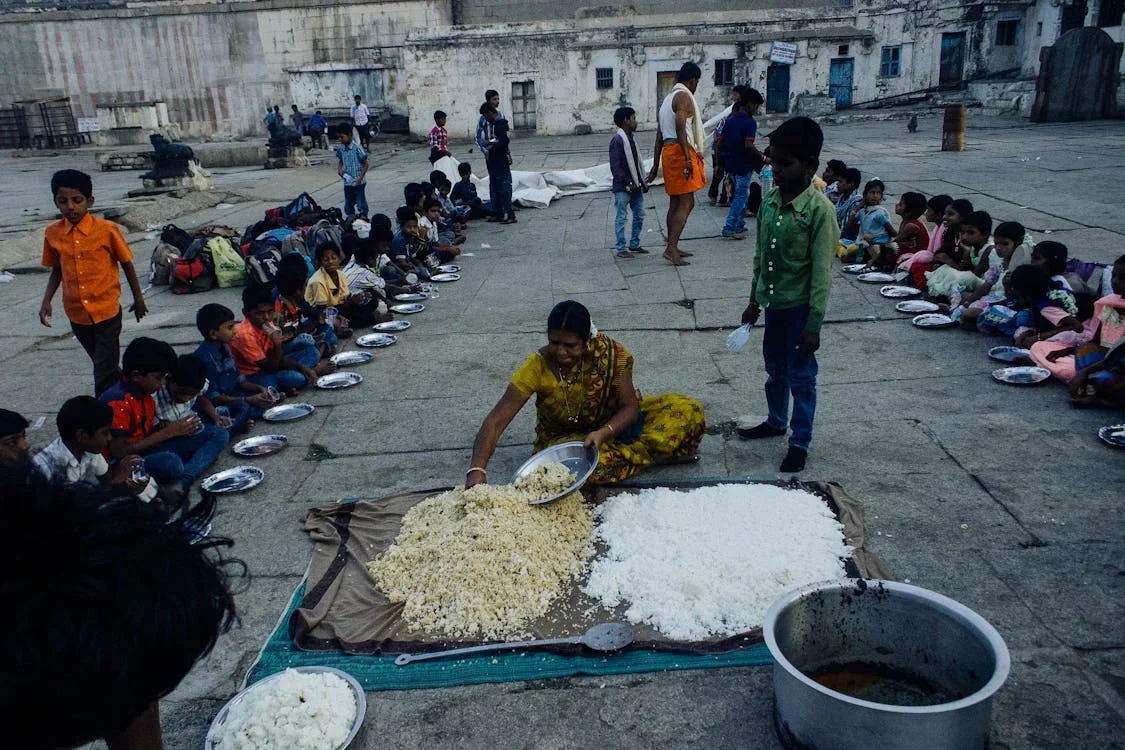
India is the world’s 5th largest economy by GDP. It is ranked 105th out of 127 countries on the Global Hunger Index 2024, behind Bangladesh (81st), Nepal (68th), Sri Lanka (57th), and Myanmar (72nd). The countries ranked near India on the hunger list include Ethiopia, Niger, and Guinea-Bissau. These are not countries India compares itself to when discussing economic ambition, space programmes, or digital infrastructure. But on the metric that matters most, whether citizens can eat, India sits in their neighbourhood.
The dissonance is staggering. India’s GDP crossed $3.7 trillion in 2024. Its space programme has reached Mars. Its digital payment system processes 14 billion transactions a month. Its IT industry exports over $200 billion annually. Its billionaires are among the richest people alive. And yet, 190 million Indians, more than the entire population of Germany and France combined, do not get enough calories to sustain basic health.
How does a country with the resources, the technology, the agricultural output, and the administrative capacity of India fail to feed its own children? This is not a question about poverty. India has reduced absolute poverty significantly over the past two decades. This is a question about priorities.
What the Hunger Index Actually Measures
The Global Hunger Index (GHI) is often misunderstood. India’s government has repeatedly questioned the methodology, calling the index “erroneous” and “not based on ground reality.” Before examining India’s performance, it’s worth understanding exactly what the GHI measures, and what it doesn’t.
The GHI doesn’t measure food production. India produces enough food to feed its population and then some. It doesn’t measure whether food is available in markets. It is available. It doesn’t even measure poverty in a direct sense.
The GHI measures four things:
Indicator | India’s Score | What It Means | Global Context |
|---|---|---|---|
Undernourishment | 13.7% | 190 million Indians don’t get enough calories | China: 2.5%, Brazil: 2.5% |
Child wasting (low weight-for-height) | 18.7% | Among the worst in the world, acute malnutrition | China: 1.9%, Brazil: 1.6% |
Child stunting (low height-for-age) | 31.7% | 1 in 3 children permanently affected in growth | China: 4.2%, Brazil: 5.6% |
Child mortality (under 5) | 2.9% | Improving, but still 29 per 1,000 births | China: 0.7%, Brazil: 1.4% |
The most damning number is child wasting: 18.7%. This means nearly one in five Indian children under five years old are acutely malnourished, dangerously thin for their height. This isn’t about poverty alone. It’s about what children eat, when they eat, whether pregnant mothers have access to nutrition, whether clean water is available (diarrhoeal diseases prevent nutrient absorption even when food is consumed), and whether the healthcare system catches malnutrition before it becomes irreversible.
India’s child wasting rate is not just bad by global standards. It is worse than sub-Saharan Africa’s average (6.3%). A child in Niger, one of the poorest countries on Earth, is statistically less likely to be wasted than a child in India. This fact alone demolishes the argument that India’s hunger problem is simply a function of poverty.
Child stunting at 31.7% means that roughly 50 million Indian children under five are permanently shorter than they should be, not because of genetics, but because of chronic undernutrition during the first 1,000 days of life (conception to age two). Stunting is not just a height issue. Stunted children have impaired cognitive development, lower educational attainment, reduced earning capacity as adults, and higher susceptibility to chronic disease. The economic cost of stunting, in lost productivity, increased healthcare spending, and reduced GDP growth, is estimated at 2-3% of GDP annually. India is literally paying trillions of rupees for the malnutrition it refuses to prevent.
The Government’s Response to the GHI
India’s government has consistently questioned the GHI methodology. The Ministry of Women and Child Development issued official statements calling the index “an incomplete picture” that relies on “a small sample size” for child nutrition indicators. Specific objections include:
- The undernourishment estimate is based on Food and Agriculture Organisation (FAO) food balance sheets, which the government argues don’t capture India’s actual food consumption patterns.
- The child nutrition data comes from India’s own National Family Health Survey (NFHS), which the government claims has sampling limitations.
- The index doesn’t account for India’s massive food distribution programmes (PDS, PM-GKAY) which have expanded significantly.
Some of these objections have merit. The FAO’s food balance sheet methodology does have limitations, and India’s food distribution efforts are genuinely among the largest in the world. But the core data on child wasting and stunting comes from India’s own government surveys, the NFHS is conducted by the Ministry of Health and Family Welfare. Disputing the GHI means, in effect, disputing India’s own data.
More importantly, the debate about methodology, while legitimate in academic terms, becomes a distraction from the fundamental reality: whether India’s GHI rank is 95th or 105th, whether child wasting is 15% or 18.7%, the fact remains that tens of millions of Indian children are malnourished in a country that produces surplus food. The argument about whether the problem is “very bad” or merely “bad” is not an argument worth having when children are suffering.
The Paradox Explained
India Produces Enough Food
India is the world’s largest producer of milk (over 230 million tonnes annually), the second-largest producer of rice and wheat, and among the top producers of fruits, vegetables, sugarcane, and pulses. The country’s granaries overflow, literally. In 2023, over 50 million tonnes of food grains sat in Food Corporation of India (FCI) warehouses while 190 million Indians went hungry. In some years, grain has rotted in government storage because the warehouses were full and the distribution system couldn’t move it fast enough.
India is also a major food exporter. In 2023, India exported over $50 billion worth of agricultural products, including rice (India is the world’s largest rice exporter), spices, seafood, and processed food. The country exports food while its own children starve, a fact that development economists find both tragic and preventable.
The problem isn’t production. It’s distribution, access, and, crucially, the quality of what’s distributed.
Distribution Failure
India’s Public Distribution System (PDS) provides subsidised grain to over 800 million people, the world’s largest food security programme by any measure. Under the National Food Security Act (2013), eligible households receive 5 kg of grain per person per month at ₹1-3 per kg (essentially free). During COVID-19, the PM Garib Kalyan Anna Yojana (PM-GKAY) provided additional free grain, and the programme has been extended multiple times.
The scale is impressive. The ambition is genuine. And the system leaks. Estimates of waste and diversion range from 15% to 40% depending on the state and the methodology used. Grain meant for the poor has been found rotting in warehouses, diverted to black markets, mixed with inedible material, or simply recorded as “distributed” without reaching the intended beneficiaries.
The leakage has reduced significantly with technological improvements, Aadhaar-linked beneficiary identification, point-of-sale machines at fair-price shops, GPS tracking of grain trucks, but it hasn’t been eliminated. In Bihar and Jharkhand, the most hunger-affected states, the PDS still struggles with last-mile delivery, fraudulent beneficiary lists, and shop owners who sell subsidised grain at market prices.
More fundamentally, the PDS model assumes that the problem is calories. Give people rice and wheat, and hunger is solved. But hunger is not just about calories. It’s about nutrition.
Nutrition vs. Calories: The Hidden Crisis
India’s food programmes provide cereals, rice, wheat, and increasingly millets. What they don’t adequately provide are proteins, fats, vitamins, and minerals. A child who eats enough rice to feel full can still be severely malnourished because their diet lacks eggs, milk, fruits, vegetables, legumes, and animal proteins.
This distinction is critical because India’s malnutrition crisis is not primarily a calorie crisis, it’s a micronutrient crisis. Indian children are deficient in iron (causing anaemia), vitamin A (causing blindness and immune deficiency), zinc (impairing growth), iodine (affecting cognitive development), and protein (preventing muscle and brain development). These deficiencies can coexist with adequate calorie intake. A child can be overweight and malnourished simultaneously, what nutritionists call the “double burden of malnutrition.”
India’s vegetarian culture, combined with the high cost of protein relative to income, means that the poorest Indians have among the lowest protein consumption rates in the world. The average Indian consumes roughly 50 grams of protein per day, below the global recommendation of 56 grams for an adult male and far below the levels consumed in countries with similar or lower GDPs. The poorest 30% of Indians consume even less, as little as 30-35 grams daily.
The cultural dimension complicates solutions. In several Indian states, providing eggs in school meals, one of the cheapest, most effective interventions for child nutrition, has been politically controversial because of vegetarian sensibilities. Madhya Pradesh and Karnataka have faced protests from vegetarian groups opposing egg distribution in government-run child nutrition programmes. The result: children go without a cheap, proven source of protein because of adult ideology.
The Maternal Health Gap
Child malnutrition begins before birth. This is the single most important fact about India’s nutrition crisis, and the one that policy most consistently ignores.
Malnourished mothers produce underweight babies who are already behind at birth. India has one of the world’s highest rates of anaemia in pregnant women, over 50% of pregnant Indian women are anaemic, meaning their blood doesn’t carry enough oxygen to support their own health, let alone the development of a foetus. When mothers don’t receive adequate nutrition during pregnancy, children are born stunted, and stunting is largely irreversible after age two.
The mechanism is biological but the cause is social. Indian women eat last in most households. Studies consistently show that in Indian families, men eat first, then children, then women. Women serve food to others and eat what remains. During pregnancy, when a woman’s nutritional needs increase by 300-500 calories daily, many Indian women actually eat less because of traditional beliefs that restricting food intake leads to smaller babies and easier deliveries. These beliefs are medically wrong but culturally persistent.
This creates a generational cycle. Stunted girls grow up to be malnourished women who give birth to stunted children who grow up to be malnourished adults. Breaking this cycle requires intervening at the maternal stage, not just at the child stage, ensuring that adolescent girls are well-nourished before they become pregnant, that pregnant women receive adequate nutrition and healthcare, and that newborns are breastfed exclusively for six months (India’s exclusive breastfeeding rate is only about 55%).
The Sanitation Connection
Malnutrition is not just about food intake. It’s about nutrient absorption. A child who eats adequately but suffers from repeated bouts of diarrhoea will still be malnourished because their body cannot absorb nutrients from the food they eat.
India’s sanitation crisis directly drives malnutrition. Despite the significant achievements of the Swachh Bharat Mission (which has built over 100 million toilets since 2014), open defecation persists in many rural areas. Contaminated water causes diarrhoeal diseases that kill an estimated 100,000 Indian children under five every year and leave millions more in a state of chronic intestinal inflammation (called environmental enteropathy) that prevents nutrient absorption.
The link between sanitation and stunting is so strong that some researchers argue that improving sanitation would do more to reduce child malnutrition than any food programme. A landmark study by Dean Spears at the Research Institute for Compassionate Economics found that differences in sanitation explain a significant portion of the difference in child height between Indian and African children, Indian children are shorter, on average, not because they eat less but because they are exposed to more fecal contamination.
Where It’s Worst
- Jharkhand, 42% of children under 5 are stunted. Rich in minerals (iron ore, coal, bauxite), poor in nutrition. Tribal populations in remote districts face extreme food insecurity despite living in resource-rich territory, the wealth from mining goes to corporations and the state government, not to the communities who live on the land.
- Bihar, India’s poorest state by per capita income, with some of the worst child health indicators in Asia. Bihar’s Anganwadi (child nutrition centre) system, which is supposed to provide supplementary nutrition to children under six, is chronically underfunded and understaffed. A 2022 survey found that many Anganwadi centres in Bihar were open for less than two hours a day.
- Madhya Pradesh, Tribal populations in the Vindhya and Satpura ranges face extreme food insecurity despite living in forest-rich regions that traditionally provided diverse nutrition through hunting and gathering. Deforestation and displacement by mining and dam projects have destroyed traditional food systems without replacing them with alternatives.
- Uttar Pradesh, India’s most populous state (220 million people), where even moderate malnutrition rates translate to tens of millions of affected children. The sheer scale of the problem in UP exceeds the capacity of state institutions to address it.
- Gujarat, One of India’s wealthiest and most industrialised states, with child stunting rates (33.3%) matching sub-Saharan Africa. Gujarat demolishes the argument that economic growth automatically fixes malnutrition. The state’s GDP has grown rapidly for two decades; its children’s heights have not kept pace. Economic growth without nutrition-specific interventions does not solve malnutrition.
- Maharashtra, Home to Mumbai, India’s financial capital, and also to Melghat, a tribal district where child malnutrition deaths are reported every year despite being just 350 km from Mumbai’s gleaming towers. The contrast is India’s hunger paradox in miniature: extreme wealth and extreme deprivation coexisting within a single state.
What’s Working
Not everything is failure. Some interventions show genuine results, and some states have demonstrated that India’s hunger problem is solvable:
- POSHAN Abhiyaan (National Nutrition Mission), Launched in 2018, targets stunting reduction through real-time monitoring of children at Anganwadi centres using smartphones and the ICDS-CAS (Common Application Software) platform. Where implemented properly, it has improved data quality, identified at-risk children earlier, and enabled targeted interventions. But implementation varies wildly between states.
- Mid-Day Meal Scheme (PM-POSHAN), Feeds 120 million schoolchildren daily, making it the world’s largest school feeding programme. Proven to improve attendance, nutritional outcomes, and learning. Tamil Nadu’s mid-day meal model, which provides not just cooked food but eggs, milk, fruits, and nutrient supplements, is a global benchmark and has been studied by countries across the developing world.
- Kerala and Tamil Nadu, Both states have child malnutrition rates comparable to middle-income countries like Brazil or Mexico, proving that state-level policy can solve what national averages hide. Kerala’s success is built on decades of investment in primary healthcare, women’s education, and decentralised governance. Tamil Nadu’s success combines universal mid-day meals with a strong Anganwadi system, high rates of institutional delivery, and relatively high female literacy.
- Egg and milk supplementation, States that have added eggs and milk to school meals and Anganwadi nutrition programmes show measurable improvement in child health indicators. Odisha, Andhra Pradesh, and Telangana have all seen reductions in child wasting after introducing eggs in Anganwadi supplementary nutrition. The evidence is clear: animal protein makes a measurable difference, and the cost (₹5-7 per egg) is trivial relative to the benefit.
- Fortified rice, The government has begun distributing fortified rice (enriched with iron, folic acid, and vitamin B12) through the PDS and mid-day meal programmes. Early evidence suggests improvements in anaemia rates, though long-term impact data is still being collected.
- Direct Benefit Transfer (DBT), Cash transfers to pregnant and lactating mothers under the Pradhan Mantri Matru Vandana Yojana provide ₹5,000 for the first child. While the amount is modest, the direct-to-bank-account mechanism (enabled by Aadhaar and UPI) reduces leakage compared to in-kind transfers.
What Other Countries Did
India’s hunger problem is not unique. Many countries have faced similar challenges and solved them:
- Brazil, Reduced hunger from 10.7% (2001) to under 2.5% (2014) through the Bolsa Família conditional cash transfer programme, which provided money to poor families contingent on children attending school and receiving health check-ups. Brazil attacked hunger from multiple angles simultaneously: cash transfers, school meals, agricultural support for smallholders, and community health workers.
- Bangladesh, Despite being poorer than India in per capita terms, Bangladesh has lower child stunting (28% vs 31.7%) and dramatically lower child wasting (9.8% vs 18.7%). Bangladesh’s advantage comes from higher female literacy, better sanitation coverage, more effective community health worker programmes (the BRAC model), and higher breastfeeding rates.
- Vietnam, Reduced child stunting from 56% (1990) to 19% (2020) through a combination of economic growth, agricultural diversification, universal healthcare, and targeted nutrition programmes for ethnic minorities.
- China, Reduced child stunting from 31% (2000) to 4.2% (2022) through massive investment in rural infrastructure, agricultural modernisation, and a healthcare system that provides universal prenatal and child nutrition services. China’s child wasting rate (1.9%) is one-tenth of India’s.
In each case, the solution was not a single programme but a coordinated, multi-decade effort that treated nutrition as a national priority, not a welfare scheme but a development imperative.
The Question
India can send a spacecraft to Mars for less than the cost of a Hollywood film. It can build a digital payment system used by 300 million people. It can produce the youngest chess world champion in history. It can send its brightest students to the world’s best universities.
But it cannot ensure that one in three children grows to their full height. It cannot prevent one in five children from being dangerously underweight. It cannot guarantee that a pregnant woman in Jharkhand or Bihar receives the 300 extra calories per day that her growing foetus needs.
The wealth exists. The food exists. The educated workforce exists. The administrative machinery exists. What doesn’t exist, yet, is the political priority to make child nutrition a non-negotiable national mission, the way India made UPI a mission, or space a mission, or nuclear weapons a mission, or highway construction a mission.
India treats hunger as a welfare problem, something to be managed through subsidies and ration cards. It needs to treat hunger as a development emergency, something that, if left unsolved, will undermine every other achievement the country pursues. A malnourished child cannot learn. A stunted adult cannot be maximally productive. A nation where 31.7% of children are physically and cognitively impaired by preventable malnutrition cannot fully benefit from its demographic dividend.
India’s hunger problem isn’t about scarcity. It’s about choice. And every year India spends ranked 105th on the hunger index while celebrating its 5th-place GDP ranking, the choice becomes harder to defend and the consequences grow more severe.
The children who are stunted today will be adults in 2040. Their reduced capacity, physical, cognitive, economic, will cost India trillions. The investment required to prevent stunting is a fraction of that cost. The arithmetic is simple. The politics, apparently, is not.
This article is part of unite4india’s “India in Numbers” series, one powerful statistic, unpacked with context.
What you can do
- Share the evidenceSend this to one person who should know about this issue.Share on WhatsApp
- Give an afternoonTeach, mentor, clean up, or lend your professional skills.Ways to volunteer
- Tell us what's missingKnow a story, a fact we got wrong, or a solution worth spotlighting?Suggest a story
Politically neutral. Every claim sourced. Report a correction.


No comments yet