Transgender Lives in India: What the Law Promises and What Daily Life Looks Like
Since the 2014 NALSA ruling India has recognised a third gender, and 40,618 certificates have been issued. What the law promises, how jobs, housing and health care look on the ground, and what works.
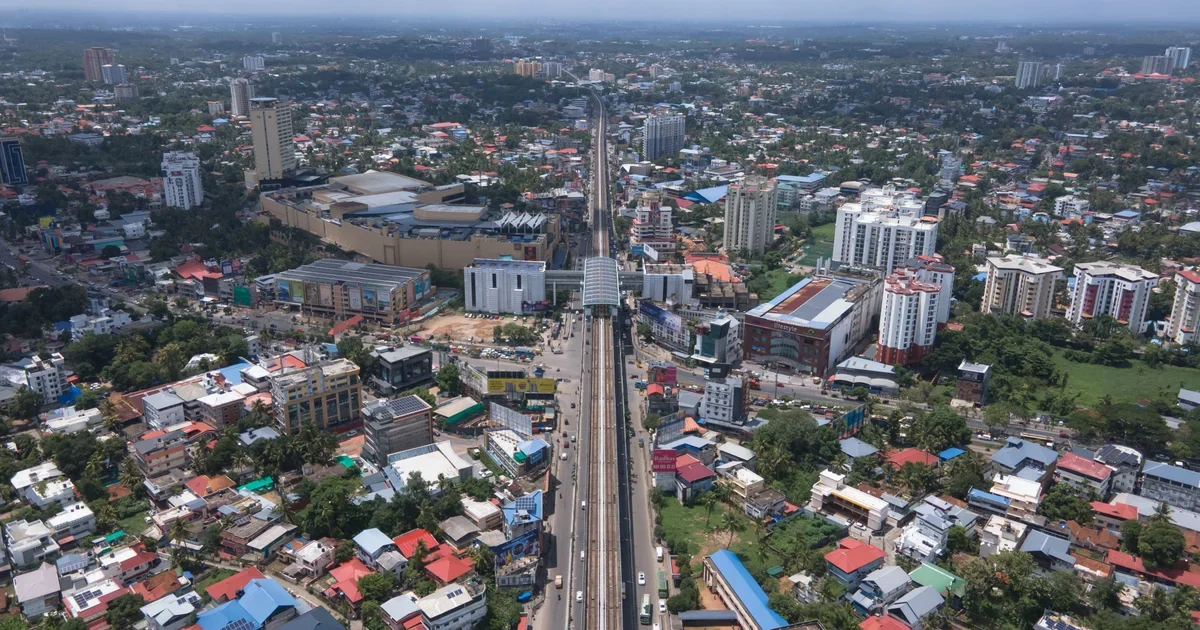
Photo by albin thomas on Pexels
In this story
What is life like for transgender people in India today?
For most, it is a gap between a promise and a practice. On paper, India is ahead of many countries. Its Supreme Court recognised a third gender in 2014, Parliament passed a law in 2019, and a national portal lets people apply for an identity certificate online. In daily life, many transgender people still lose their homes at 14 or 15, find it hard to rent a room, are turned away from jobs, and meet doctors who do not know how to treat them.
This article looks at that gap. It does not repeat the legal comparisons we have already published, such as what Europe did that India has not, why Nepal legalised marriage and India did not, or how India and the Philippines compare. Those pieces ask what the law says across borders. This one asks a narrower, more local question: what happens to a transgender person in an Indian town, in a family, at a hospital counter or at a job interview, and what has been shown to help.
A note on language. We use transgender as an umbrella term, as the law does. It includes trans women, trans men, hijras, kinnars, aravanis, jogtas and others. Not everyone uses the same word, and the legal definition is itself under debate, as discussed below.
How many transgender people are there in India?
Nobody knows exactly. The 2011 Census counted 487,803 people in its “other” category, as noted by Ideas for India. That was not a dedicated count of transgender people. Some may have ticked male or female out of fear or habit, and others in the category may not be transgender at all. Community groups and researchers believe the real number is higher. The Census did not give a way to answer honestly, and the families who fill the form are often the very people from whom a transgender person is hiding.
A better measure of recent change is the number of people who have come forward to claim a legal identity. On the National Portal for Transgender Persons, as of September 2026, there had been 48,579 applications for a certificate of identity and 40,618 certificates issued, with 2,299 pending, according to the same Ideas for India analysis of portal data. Maharashtra led, with 6,924 applications and 5,817 certificates. Sikkim recorded 42 applications and 39 certificates. Nine states and union territories, including Goa, Meghalaya and Nagaland, show no applications at all in the portal data. Those zeroes are more likely to reflect weak outreach and fear than an absence of transgender people.
National Portal, September 2026 | Number |
|---|---|
Applications received | 48,579 |
Certificates issued | 40,618 |
Pending | 2,299 |
State with most applications | Maharashtra (6,924) |
The portal numbers are administrative counts and not a measure of how many transgender people live in India. They show how many have been willing and able to take part in the system.
What does the law say?
The NALSA judgment, 2014
In National Legal Services Authority v. Union of India (April 2014), the Supreme Court recognised transgender people as a “third gender” and held that every person has the right to decide their own gender identity. It directed the Union and the states to treat transgender people as socially and educationally backward classes for admission and public jobs, and to run health, social welfare and awareness programmes. The principle at its heart is self-identification: your gender is what you say it is, not what a doctor or an official certifies.
The Transgender Persons (Protection of Rights) Act, 2019
Parliament’s answer came in 2019. The Act bans discrimination in education, jobs, health care, housing and public services. It lets a person apply to a district magistrate for a certificate of identity as a transgender person, and, after surgery, for a revised certificate. It sets up a National Council for Transgender Persons and requires establishments to have a complaints officer. It also created offences for abuse and for forcing a transgender person into begging or bonded labour. Critics noted from the start that it did not provide the reservation the Supreme Court had indicated, and that its penalties for abuse were lower than those for comparable crimes against women.
The 2026 amendment
In March 2026 Parliament passed the Transgender Persons (Protection of Rights) Amendment Act. According to a summary of the Act, it was introduced on 13 March, passed by the Lok Sabha on 24 March and the Rajya Sabha on 25 March, and received the President’s assent on 30 March. Reports of the debate are also available from All India Radio.
The amendment makes several changes:
- It narrows the legal definition to certain socio-cultural identities such as hijra, kinner, aravani and jogta, and removes categories such as trans men, trans women and genderqueer people.
- It replaces the 2019 route of self-perceived identity with a process in which a state or union territory medical board examines the applicant, and the district magistrate issues the certificate only after the board’s recommendation.
- It creates new, tougher criminal offences, including for kidnapping, causing grievous hurt, and using force, deceit or undue influence to make someone present as transgender.
The government’s reason, as reported, is to stop the misuse of welfare benefits and make sure they reach genuine beneficiaries. Critics, including medical groups, rights lawyers and community organisations, argue that a medical test turns identity into a disease and departs from the self-identification principle in NALSA. They also fear that the criminal provisions could cover consensual medical care and family support. In May 2026 the Supreme Court issued notice to the Centre and the states on nine petitions challenging the Act and, according to the same summary, did not stay it. As of the latest reports we found, the Act had not been brought into force by the Centre. Readers should check the current position before relying on any rule here, since both the court case and the notification may have moved since.
We do not take a side in a case that is pending. What matters for readers is this: the rules for getting a certificate may change, and that affects access to every benefit that depends on one, including health cover.
Why do so many transgender people lose their family first?
The law cannot be understood without the family, because that is where the exclusion starts. Many transgender young people are pushed out of the home, or leave to escape violence, as teenagers. Some join a hijra community, known as a gharana, led by a guru who gives shelter and a sense of belonging. For many it is the first place where they are welcomed. It can also be a place of strict hierarchy and, for some, of exploitation. A small Mumbai study cited by Ideas for India, in which all 20 transgender women interviewed lived away from their families, shows the pattern, though the author warns that a sample of 20 cannot be generalised.
The result is a chain. Leaving home early means leaving school early. Leaving school early means limited job options. With few jobs open to them, many are pushed into begging or sex work, as reported by the NHRC-linked study below. Poverty and stigma then make it harder to rent a room or see a doctor. Each link makes the next one more likely.
What about jobs?
The most cited national evidence is a study done by the Kerala Development Society for the National Human Rights Commission in 2018. As summarised by the Asia Pacific Forum, the study found that about 92 percent of transgender people were deprived of the right to take part in any form of economic activity, and that even qualified applicants were refused jobs. Other coverage of the same study reports that only 6 percent of those surveyed were employed, and that mostly in private firms or NGOs. These are old numbers and the sample was drawn from particular regions, so they should be read as a warning about the scale of the problem and not an exact current count.
The barriers are not hard to name. A job application needs a name and a gender on a document. An interviewer may refuse to hire someone whose documents do not match their appearance. Colleagues may harass. Toilets are a daily issue; few workplaces have a gender-neutral one. And the first job often depends on a degree the person was never able to finish.
Kochi Metro: a good idea with a hard lesson
In 2017 Kochi Metro Rail Limited hired 23 transgender persons as part of its Kudumbashree-run workforce, the first time a government-owned company in Kerala gave bulk employment to the community, as reported at the time by The Better India and others. It was a visible, welcome signal. A later report found that more than a third of the 21 then still employed had left, and linked the exits to a basic obstacle: they could not find housing near their workplace. The lesson is that a job offer is not enough. The job, the room, the commute and the people around you have to work together.
What about housing?
Housing is one of the most reported problems. Landlords refuse to rent to transgender tenants, or demand much higher rent, or threaten eviction after neighbours object. Without proof of address or a steady income, a transgender person has few ways to push back. The Kochi Metro experience shows how housing can undo an employment programme. Short-stay shelters help in a crisis, but a shelter is not a home.
Government shelters under the Garima Greh scheme, part of the SMILE programme, offer temporary accommodation, food, training and counselling. The Ministry’s figures as of December 2024, reported by Ideas for India, show 18 operational Garima Grehs across 15 states and union territories, with 414 residents in all. Maharashtra had the most, with three shelters and 72 residents. With the number of people likely to need such shelter, 18 homes are a start, not a system.
What about health care?
Health care for transgender people has three parts: ordinary care, gender-affirming care, and mental health. All three face obstacles.
- Ordinary care. A person who is misgendered, stared at or refused treatment is likely to stay away until an illness is serious. A 2017 study of 50 transgender people in Tamil Nadu found discrimination in health facilities, even though the state is known for its policies.
- Gender-affirming care. Surgery and hormone therapy are expensive in private hospitals, and few government hospitals offer them. The 2019 Act says government should provide this care, but availability varies widely.
- Mental health. Rejection, bullying and harassment take a toll. Counselling that is informed and affordable is rare.
On the insurance side, the Ayushman Bharat TG Plus package provides health cover of up to Rs 5 lakh a year to eligible transgender persons, but a transgender certificate is required to claim it. That makes the certificate process central to health access, and it is why the debate over the 2026 amendment matters beyond the legal arguments.
What works? Examples from states and communities
Tamil Nadu: a welfare board since 2008
Tamil Nadu set up the Aravanigal (Transgender) Welfare Board in April 2008, according to a UNDP case study of the board. It has 22 members, and seven of eight non-official members must come from the transgender community. The state is also reported to be the first to offer free gender-affirming surgery in government hospitals. The record is mixed. The UNDP study says the board funded limited schemes, and later reports cite low budgets and weak use of funds. The 2017 study mentioned above found that use of the surgery programme was far below what it should be. The Tamil Nadu story shows the value of putting community members on the board, and the limits of a board without money.
Kerala: a state policy in 2015
Kerala released its State Policy for Transgenders in November 2015, as described by the Centre for Law and Policy Research. It proposed a State Transgender Welfare Board, District Transgender Justice Committees, and measures on education, health and employment. Kerala has since introduced schemes on pensions, scholarships and skills, and has been reported as a leader in several. It also supplies the Kochi Metro example above, which is both a success and a caution.
Garima Greh shelters
Garima Greh homes, often run with community organisations, give shelter, skills training and a path to a job or a degree. Their reach is still small, as the figures above show, but they follow a good model: run by the community, with practical outcomes.
Community-led groups
Much of what works on the ground is local. Community organisations run helplines, legal clinics, health camps, skills training and cooperative businesses. Some transgender-led cafes, tailoring groups and catering collectives have given members a steady income and a place to work together. Hijra and transgender communities have also formed their own groups to help members get documents, apply for pensions and deal with the police. A community group knows who needs help before any official does.
State models at a glance
Model | What it did | What to watch |
|---|---|---|
Tamil Nadu, welfare board (2008) | Board with reserved community seats; free gender-affirming surgery in government hospitals reported | Low budgets, weak use of funds, low uptake |
Kerala, state policy (2015) | Welfare board, district justice committees, education and health measures | Housing gaps undid some job gains |
Kochi Metro hiring (2017) | 23 transgender persons hired in one batch | Staff left when they could not find a room |
Garima Greh (Centre, SMILE) | Shelter, food, skills, counselling | 18 homes in 15 states and UTs, 414 residents (Dec 2024) |
Read together, the four models say the same thing from different angles. Recognition is the easy part. What changes a life is the follow-through: a budget that is actually spent, a landlord who says yes, a clinic that treats a patient with respect, and a certificate that arrives within days, not months.
Applying for a certificate: what to expect
On the national portal, an applicant creates an account, fills in personal details, uploads proof of identity and a photograph, and submits. The district magistrate’s office reviews the file, and an approved certificate can be downloaded. The portal says processing takes up to 30 days. The practical hurdles are less about the form and more about access: a person without a smartphone, a stable address or digital skills may need help, and a person who has hidden their identity from their family may fear a visit from an official. Community groups often help applicants through the steps, and a visit to the district social welfare office can resolve a stuck application. The 2,299 pending cases on the portal are a reminder that speed matters, since a pending file is a benefit not yet received.
What the examples share
- Community voice in decisions. The Tamil Nadu board’s reserved seats for community members are the model.
- Money and follow-through. Boards and schemes without budgets do not change lives.
- Joined-up support. A job, a room and a safe commute must come together.
- Simple documents. The fewer the steps to a certificate, the more people take up the benefit.
- Education early. Keeping a transgender teenager in school is the cheapest way to open job doors later.
What gaps are still open?
- The identity process. If the 2026 amendment comes into force as passed, access to a certificate, and so to benefits, will depend on a medical board. Its effect on take-up and privacy remains to be seen.
- Reservation. The NALSA ruling pointed to reservation as a backward class. No central law has delivered it so far, and states vary.
- Enforcement. Complaints officers and grievance systems exist on paper. Few workplaces or colleges have trained staff.
- Police. Reports of harassment and extortion by police are common in community accounts. Training and accountable complaint channels are needed.
- Data. There is no reliable count, so budgets for services are guesses.
- Shelter and housing. The number of shelters is small and rental discrimination is widespread.
What you can do
- If you are a family member: keep a child at home and in school. Listen first. Support from one adult changes the path of a young person’s life. Counsellors and community groups can help parents learn.
- If you are an employer: hire on skill. Update forms to allow a third gender or a preferred name. Provide a safe toilet, set up a complaints process, and train managers. Offer help with housing for a new employee.
- If you are a landlord or housing society: rent on the same terms you would to anyone else. Refusing a tenant because of gender identity is discrimination.
- If you are a teacher or school head: stop bullying quickly, allow students to use the name they choose, and make sure no one is forced out.
- If you are a doctor or nurse: use the person’s name and pronoun. Learn about gender-affirming care and refer when you cannot provide it.
- If you are a citizen: support community-run groups and shelters with donations, time or skills. Share accurate information. Challenge jokes and slurs.
- If you need help: the National Portal (transgender.dosje.gov.in) handles certificate applications, and the Tele-MANAS helpline (14416) offers free mental health support. Community organisations can help with local documents and legal support.
Frequently asked questions
Is being transgender legal in India?
Yes. The Supreme Court recognised a third gender in 2014 and affirmed the right to self-identify. The 2019 Act bans discrimination. Both are now affected by the 2026 amendment, which is under challenge.
How do I get a transgender certificate?
Under the 2019 framework you apply on the National Portal, with documents, and the district magistrate issues a certificate. The portal says processing should take up to 30 days. The 2026 amendment would add a medical board step once it is in force. Check the portal for the current process.
Why does the certificate matter?
Many benefits depend on it, including the Ayushman Bharat TG Plus health cover, pensions in some states, and access to shelter and training schemes.
Is there reservation for transgender people?
The Supreme Court said in 2014 they should be treated as a backward class for admissions and jobs. Implementation varies by state, and the 2019 Act did not provide for it. Check your state’s rules.
What is the difference between this article and your other pieces on LGBTQ+ rights?
Our earlier pieces compare India’s laws with those of Europe, Nepal and the Philippines. This one looks at daily life, local examples and what helps.
Where can a transgender person in distress find shelter?
Garima Greh shelters operate in 15 states and union territories. The Ministry of Social Justice or the state social welfare department can give the nearest address. Community organisations also run safe spaces.
The bottom line
India recognised a third gender before many richer countries, and 40,618 people now hold a certificate under the national portal. Yet the daily facts are harsh: family rejection, closed doors in the job market, hard-to-find rooms and unequal health care. What has worked is local and practical: Tamil Nadu’s board with community seats, Kerala’s policy, Garima Greh shelters, and community-led groups that provide help before any scheme does. The challenge now is to keep the identity process simple and respectful of the principle the Supreme Court set in 2014, and to build the jobs, rooms and clinics that make a certificate worth having.
What you can do
- Share the evidenceSend this to one person who should know about social justice.Share on WhatsApp
- Give an afternoonTeach, mentor, clean up, or lend your professional skills.Ways to volunteer
- Tell us what's missingKnow a story, a fact we got wrong, or a solution worth spotlighting?Suggest a story
Politically neutral. Every claim sourced. Report a correction.



No comments yet