How Barefoot College is Solving India's Energy Problem
Barefoot College in Tilonia, Rajasthan, has trained over 1,500 rural grandmothers as solar engineers across 93+ countries, proving that communities — not corporations — hold the key to ending energy poverty in India and beyond.
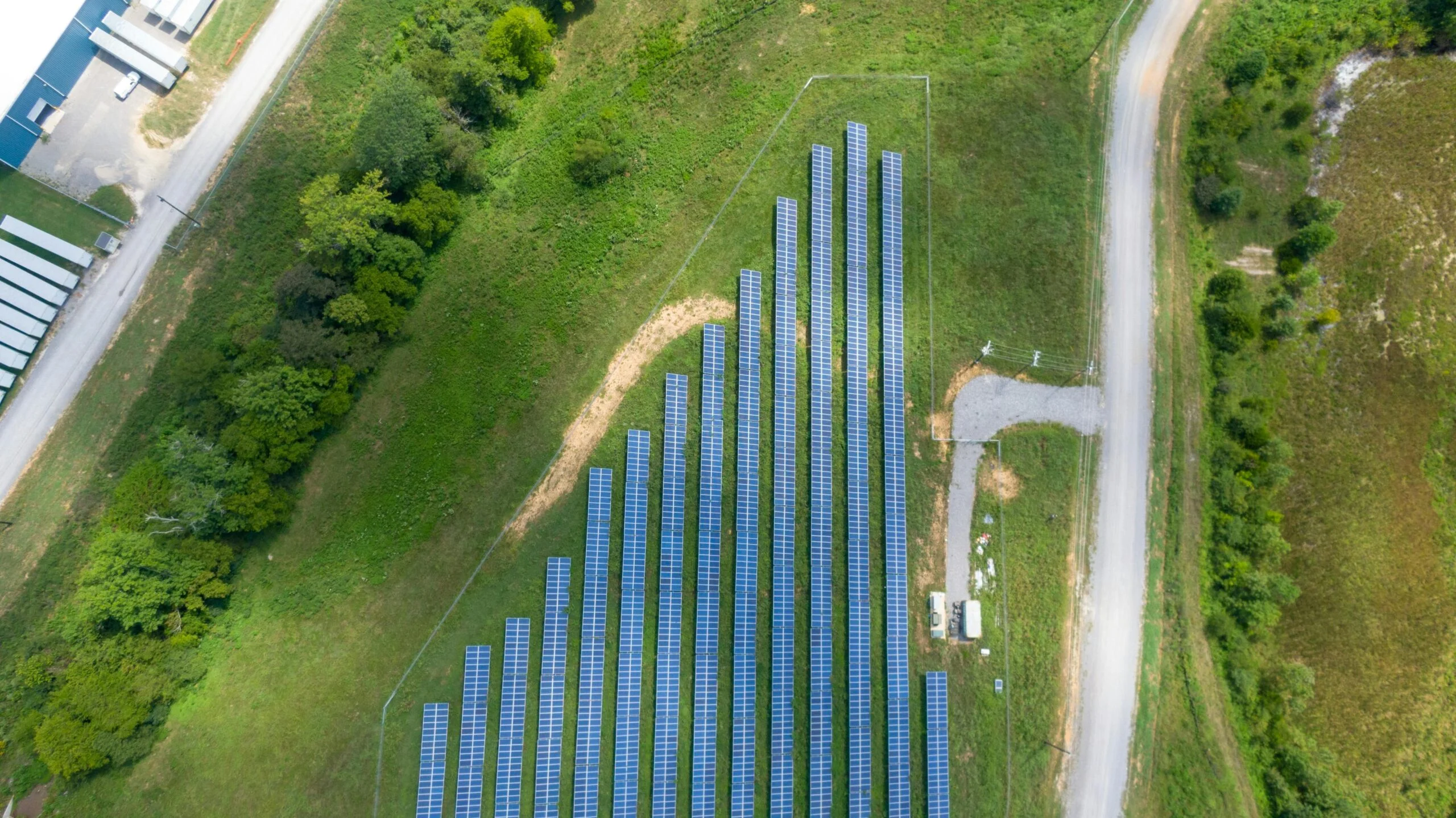
In the vast, sun-scorched landscapes of rural Rajasthan, a quiet revolution has been unfolding for more than five decades. It does not involve billion-dollar power plants, multinational energy corporations, or armies of university-trained engineers. Instead, it is powered by grandmothers - women who have never been to school, who cannot read or write, but who can now build, install, and repair solar lighting systems that bring electricity to villages that the modern grid has forgotten.
This is the story of Barefoot College, an institution that has fundamentally challenged every assumption about development, education, and who gets to be called an engineer. Founded in 1972 by Sanjit “Bunker” Roy in the small village of Tilonia, Rajasthan, Barefoot College has become one of the most remarkable grassroots movements in modern India - and its impact now stretches across more than 93 countries worldwide.
India has made extraordinary progress in electrification over the past two decades. The government’s Saubhagya scheme, launched in 2017, declared near-universal household electrification by 2019. But the reality on the ground tells a different story. According to the World Bank and the Council on Energy, Environment and Water (CEEW), hundreds of millions of Indians still experience energy poverty - not because a wire does not reach their village, but because the electricity that flows through it is unreliable, unaffordable, or both.
In many rural areas, power supply is limited to a few hours a day. Voltage fluctuations damage appliances. Entire regions depend on kerosene lamps for lighting after dark - lamps that produce toxic fumes, cause house fires, and cost families a significant portion of their meagre income. The International Energy Agency has estimated that indoor air pollution from kerosene and biomass fuels contributes to nearly one million premature deaths in India every year. This persistent rural-urban divide extends well beyond electricity into digital access and economic opportunity.
- Over 200 million Indians still lack reliable electricity access, despite official electrification figures.
- Kerosene dependence costs rural families up to 30% of their monthly income on fuel for lighting alone.
- Health impacts from kerosene fumes include respiratory infections, eye disease, and burns - disproportionately affecting women and children.
- Children’s education suffers dramatically: without evening light, study hours are cut short, and exam performance drops.
- Women’s safety is compromised in villages without streetlighting, limiting mobility after dark.
The conventional response to this crisis has been top-down: build bigger power plants, extend the grid, subsidise electricity bills. But these solutions are slow, expensive, and often fail to reach the most remote communities. Barefoot College asked a fundamentally different question: What if the solution already exists within the community itself?
Bunker Roy did not set out to build a college. A graduate of one of India’s most elite institutions - St. Stephen’s College in Delhi - Roy was expected to join the Indian Administrative Service or pursue a comfortable urban career. Instead, he was profoundly affected by the Bihar famine of 1966 and chose to live and work among India’s poorest communities.
In 1972, Roy established the Social Work and Research Centre in Tilonia, Rajasthan, which would eventually become known as Barefoot College. The institution was built on Mahatma Gandhi’s principles of self-reliance (swadeshi and swaraj) and the philosophy that rural communities possess enormous knowledge, skill, and resilience that formal education systems fail to recognise.
The “barefoot” in Barefoot College is deliberate. It refers to China’s Barefoot Doctors programme of the 1960s, where rural villagers were trained to provide basic healthcare in their own communities. Roy applied the same logic across multiple domains: if rural people could be trained as doctors, why not as engineers, architects, teachers, and water testers?
The core philosophy rests on several radical premises:
- Communities are the solution, not the problem.
- The poor are not objects of charity; they are agents of change.
- Traditional knowledge and practical skills are as valid as university degrees.
- Development must be owned and driven by the community, not imposed from outside.
- Women - particularly older women - are the most reliable agents of lasting change.
No one at Barefoot College earns more than the minimum wage. There are no hierarchies based on qualifications. Decisions are made collectively. The campus itself was designed and built by local artisans, powered by solar energy, and governed by a system of village councils. Every element of Barefoot College is a living demonstration of its philosophy.
The most celebrated programme at Barefoot College is the Solar Mamas initiative - a model so powerful that it has been replicated across six continents. The premise is deceptively simple: select middle-aged and elderly women from off-grid villages, train them as solar engineers, and send them home to electrify their communities.
But why grandmothers? Why not young men with formal education? Roy’s answer, honed over decades of experience, is both practical and profound.
Young, educated men leave. They migrate to cities in search of jobs, wages, and status. Their training investment walks out of the village. Grandmothers, on the other hand, have deep roots in their communities. They have raised families, earned the trust and respect of their neighbours, and have no desire to leave. They are, in Roy’s words, “the most stable, most committed, most motivated people in the village.”
There is also a transformative dimension. In many rural Indian communities, older women are treated as economically unproductive - past their prime, dependent on family. When a grandmother returns from Tilonia as a certified solar engineer, capable of wiring an entire village, the social dynamics shift dramatically. She becomes a provider, a problem-solver, a leader. Her status in the family and community is transformed irreversibly.
The Solar Mamas training programme is a six-month residential course held at Barefoot College’s campus in Tilonia. Women travel from their villages - sometimes from other countries entirely - to learn the craft of solar engineering.
What makes this programme extraordinary is its pedagogy. Many trainees are illiterate. They have never attended school. Conventional teaching methods - textbooks, written exams, lectures - are useless. Barefoot College has developed an entirely hands-on, visual, colour-coded learning system that bypasses literacy altogether.
- Colour-coded circuits: Electronic components are identified by colour rather than text. Red wires, blue connectors, green circuits - trainees learn to assemble complex solar systems by matching colours and shapes.
- Learning by doing: From day one, trainees work with real components. They solder circuit boards, assemble charge controllers, wire solar panels, and build LED lighting systems. Theory follows practice, not the other way around.
- Peer learning: Women who have completed the training return as mentors, teaching the next cohort in their own language using their own experience. This creates a self-sustaining knowledge chain.
- Testing through assembly: Assessment is practical - can you build a working solar lantern? Can you diagnose a faulty charge controller? Can you install a home lighting system? If yes, you are an engineer.
By the end of six months, each Solar Mama can fabricate, install, repair, and maintain solar home lighting systems, solar lanterns, and charge controllers. She returns to her village equipped with a toolkit, spare parts, and the knowledge to electrify up to 100 homes.
The village itself sets up a Solar Committee - a local governance body that collects small monthly fees from households to fund maintenance and replacement parts. This ensures long-term sustainability without dependence on external funding or government support.
The results of the Solar Mamas programme are staggering in their scale and depth. According to Barefoot College’s own reporting, verified by independent evaluations from the UNDP and World Bank:
- Over 1,500 Solar Mamas have been trained since the programme’s inception.
- Villages across 93+ countries have been electrified through the Barefoot model.
- Over 100,000 households in India alone have received solar lighting through Barefoot-trained engineers.
- Children’s study time has increased by an average of 2-3 hours per night in electrified villages, directly improving school performance and examination results.
- Kerosene expenditure drops to zero in solar-electrified homes, saving families between 1,000 and 2,500 rupees per month.
- Health outcomes improve dramatically as kerosene fumes are eliminated - respiratory infections, eye problems, and burn injuries decline significantly.
- Income generation increases as villagers can pursue economic activities after dark - weaving, sewing, food processing, and small-scale manufacturing.
- Women’s empowerment is perhaps the most profound impact. Solar Mamas report increased respect from family members, greater decision-making power within the household, and a transformed sense of self-worth.
A 2015 evaluation by the United Nations Development Programme found that Barefoot College’s model was among the most cost-effective rural electrification programmes in the developing world, delivering sustained energy access at a fraction of the cost of grid extension or diesel generators.
While solar energy is Barefoot College’s most visible programme, the institution’s work extends far beyond electricity. Roy understood from the beginning that energy poverty is inseparable from water scarcity, lack of education, poor health, and economic marginalisation. Barefoot College addresses all of these through interconnected programmes - a model that other leading education NGOs working in rural India have also adopted in various forms.
Water
Barefoot College trains barefoot water testers and installs rainwater harvesting systems across Rajasthan and other arid regions. Villages learn to test their own water quality, maintain hand pumps, and build check dams for groundwater recharge. Over 3 million litres of rainwater are harvested annually at the Tilonia campus alone.
Education
Barefoot College runs night schools for children who work during the day - tending livestock, helping with farming, or performing household chores. These schools operate in the evening using solar lighting, ensuring that child workers are not denied education. Over 75,000 children have attended Barefoot night schools. The college also operates day care centres to free mothers for productive work.
Health
Barefoot doctors are trained to provide basic preventive and curative healthcare in their own villages. They learn to treat common illnesses, administer first aid, monitor nutrition, and refer serious cases to district hospitals. This programme has been particularly impactful in areas where the nearest government health centre is hours away on foot.
Handicrafts and Livelihoods
Women artisans at Barefoot College produce traditional Rajasthani crafts - block-printed textiles, tie-dye fabrics, embroidered goods - that are sold through fair-trade networks. This provides dignified income without requiring migration to urban factories.
Communication
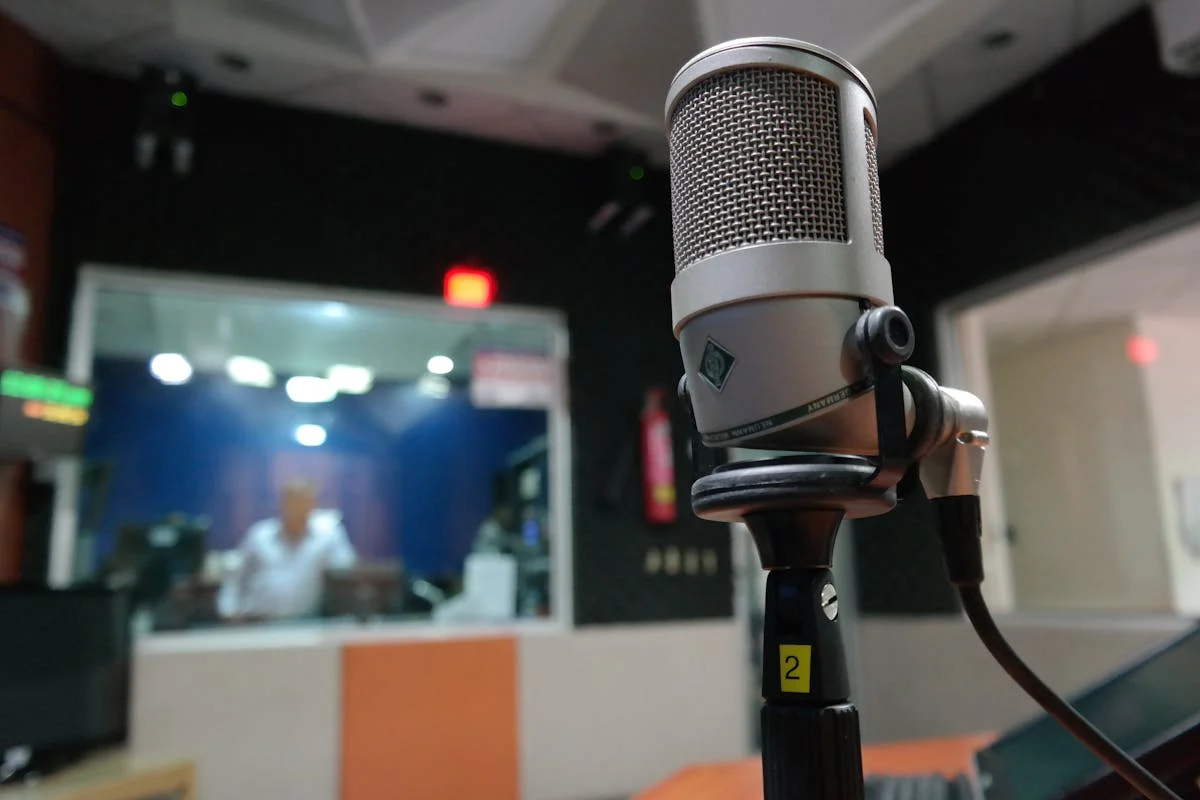
Barefoot College operates a community radio station and puppet theatre troupe that disseminate information about health, governance, rights, and environmental issues in local dialects. These communication channels ensure that knowledge reaches communities in forms they can understand and trust.
In 2005, Barefoot College took a bold step: it began inviting women from other developing countries to Tilonia for Solar Mama training. The first international cohort included women from Ethiopia, Sierra Leone, and Afghanistan. Since then, the programme has expanded to more than 93 countries across Africa, Asia, Latin America, and the Pacific Islands.
The stories that emerge from this international programme are extraordinary.
In Zanzibar, Tanzania, a group of grandmothers returned from Tilonia to electrify their fishing villages. For the first time, children could study at night, and fishermen could repair nets after dark. The women became local celebrities - proof that age and illiteracy are no barriers to technical mastery.
In Fiji and Vanuatu, Pacific Island women trained at Barefoot College brought solar power to remote atolls that were entirely dependent on expensive imported diesel. The economic savings were transformative, freeing community funds for healthcare and education.
In Colombia and Guatemala, indigenous women from mountainous communities trained as solar engineers and returned to electrify villages that national grids had bypassed for decades. These women became advocates for indigenous rights and environmental conservation alongside their technical roles.
In Burkina Faso, Solar Mamas trained at Barefoot College electrified over 1,000 homes in a single year. The government took notice and began partnering with the programme to accelerate rural electrification.
Barefoot College has also established regional training centres in Africa - including a major campus in Zanzibar - to reduce the need for international travel and allow South-South knowledge transfer. This decentralised approach embodies the Barefoot philosophy: solutions should be local, not dependent on a single institution.
The true impact of the Solar Mamas model cannot be captured in electrification statistics alone. When a grandmother returns to her village as a solar engineer, the ripple effects touch every aspect of community life.
Education improves. With solar lighting, children study longer. Teachers can prepare lessons in the evening. Night schools become possible. Examination pass rates climb. Parents see the tangible benefits of education and invest more in their children’s schooling.
Health outcomes shift. Kerosene fumes disappear from homes. Burns from oil lamps - a leading cause of injury among rural children - decline sharply. Village health workers can operate clinics in the evening. Medicines that require refrigeration can be stored in solar-powered coolers.
Income rises. Evening economic activity becomes possible. Women weave, sew, and process food after dark. Small shops extend their hours. Mobile phones - essential for market information, banking, and communication - can be charged locally instead of requiring expensive trips to distant towns.
Gender dynamics transform. The Solar Mama’s technical competence challenges deeply entrenched patriarchal assumptions. If a grandmother can be an engineer, what else is possible? Daughters and granddaughters see new models of female capability. Husbands and sons adjust their expectations. Village councils begin including women in decision-making.
Self-governance strengthens. The Solar Committee - the village body that manages the solar system - becomes a model for collective decision-making. Communities that manage their own electricity develop the confidence and organisational capacity to address other challenges: water, roads, schools, healthcare.
Bunker Roy has articulated his philosophy in numerous forums, most famously in his 2011 TED Talk, which has been viewed over 4 million times. His message is consistent and provocative: the development industry has it backwards.
“The biggest problem is that the so-called experts come in with solutions from outside. They don’t listen. They don’t learn. They assume that because someone is poor and illiterate, they have nothing to offer. That is the greatest arrogance of the development world.”
Roy has received extensive recognition for his work. He was named one of Time magazine’s 100 most influential people in 2010. He is an Ashoka Fellow - part of the global network of leading social entrepreneurs. Barefoot College has received the UNESCO Education for All Award, the St. Andrews Prize for the Environment, and numerous other accolades.
His vision extends beyond energy or even development. Roy is challenging the very definition of knowledge. In a world that increasingly equates expertise with formal credentials, Barefoot College demonstrates that competence is not the monopoly of the credentialed. A grandmother with six months of hands-on training can outperform a university graduate who has never soldered a circuit board.
No development model is without challenges, and Barefoot College faces several that deserve honest examination.
Sustainability of equipment: Solar panels have a lifespan of 20-25 years, but batteries and charge controllers need replacement every 3-5 years. Ensuring that villages can afford and source replacement components without external support remains an ongoing challenge. The Solar Committee fee model works well in many communities, but in the poorest villages, even small monthly contributions can be burdensome.
Funding model: Barefoot College relies on a mix of government grants, international aid, corporate partnerships, and individual donations. While the institution has been remarkably successful at attracting funding - partners include the Indian government, the European Union, and numerous foundations - long-term financial sustainability requires constant effort. The recent global contraction in development aid poses real risks.
Scaling without losing roots: As Barefoot College expands internationally and establishes regional training centres, there is an inherent tension between scale and philosophy. The intimacy of the Tilonia campus - where trainees live, learn, and eat together - is difficult to replicate in larger institutional settings. Roy himself has warned against the “NGO-ification” of the Barefoot model, where growth leads to bureaucracy, hierarchy, and disconnection from communities.
Technology evolution: The solar technology taught at Barefoot College is deliberately simple and robust. But as solar technology rapidly evolves - with new panel chemistries, smart inverters, and battery storage systems - the college must continuously update its curriculum while maintaining its commitment to accessible, hands-on learning.
Political challenges: In some countries, Solar Mamas have faced resistance from local power structures - both political and commercial - that benefit from the status quo. Kerosene distributors, diesel generator operators, and politicians who control electrification budgets do not always welcome community-driven alternatives.
India’s energy transition is among the most consequential in the world. The country has set ambitious targets for renewable energy - 500 GW of non-fossil fuel capacity by 2030 - and has made remarkable progress in large-scale solar deployment. But the Barefoot College model offers lessons that mega-projects cannot.
Decentralised energy works. Not every village needs to wait for the grid. Off-grid and micro-grid solar solutions, maintained by trained local technicians, can deliver reliable power faster and more cheaply than grid extension in remote areas. India’s policy framework should actively support decentralised models alongside centralised ones.
Women-led development delivers results. Every metric - sustainability, cost-effectiveness, community ownership, social impact - improves when women are placed at the centre of development interventions. India’s energy programmes should systematically integrate women as technicians, managers, and decision-makers, not just beneficiaries.
Community ownership ensures sustainability. Top-down programmes create dependency. When communities own, manage, and maintain their energy systems, they develop organisational capacity that extends far beyond electricity. Policymakers should design programmes that build local capacity rather than creating permanent reliance on government maintenance.
Practical training beats academic credentials. India’s skilling programmes remain excessively focused on classroom instruction and certification. The Barefoot model demonstrates that hands-on, competency-based training - accessible to illiterate adults - can produce world-class technicians. Skill development policies should embrace non-traditional pedagogies.
For individuals, organisations, and governments inspired by the Barefoot model, there are several paths forward.
- Direct support: Barefoot College accepts donations through its website (barefootcollege.org) and partners with corporate sponsors for specific programmes. Funding a Solar Mama’s training - approximately USD 5,000 for six months - electrifies an entire village.
- Replication: Barefoot College actively supports the establishment of regional training centres and has published its methodologies for adaptation. Governments and NGOs can partner with the college to establish local Barefoot-style training programmes.
- Policy advocacy: Supporting policies that recognise community-based technicians, fund decentralised energy solutions, and prioritise women’s participation in energy programmes amplifies the Barefoot model’s impact at systemic scale.
- Volunteering: Professionals with relevant skills - solar engineering, electronics, project management, fundraising - can contribute time and expertise to Barefoot College’s programmes.
- Storytelling: Sharing the stories of Solar Mamas - through media, social networks, and educational institutions - challenges assumptions about who can be an engineer and what development should look like.
The claims and figures in this article are drawn from publicly available sources, including:
- Barefoot College Annual Reports - Available at barefootcollege.org
- World Bank - Reports on energy access in South Asia and decentralised renewable energy
- United Nations Development Programme (UNDP) - Evaluations of the Solar Mamas programme and community-based development models
- Council on Energy, Environment and Water (CEEW) - Research on energy poverty and access quality in India
- International Energy Agency (IEA) - Global energy access data and health impact assessments
- Bunker Roy’s TED Talk (2011) - “Learning from a Barefoot Movement” - Available on TED.com
- Time Magazine - “The 100 Most Influential People” (2010), profile of Bunker Roy
- UNESCO - Education for All Award citation for Barefoot College
The story of Barefoot College is ultimately a story about trust - trusting communities to solve their own problems, trusting grandmothers to master technology, trusting that the most powerful solutions are often the simplest. In a world obsessed with scale, speed, and sophistication, Barefoot College reminds us that the most radical act of development is to step back and let people lead.
India’s energy future will be shaped by massive solar farms, offshore wind installations, and green hydrogen plants. But it will also be shaped - perhaps more profoundly - by grandmothers with soldering irons, lighting up one village at a time.
What you can do
- Share the evidenceSend this to one person who should know about solutions.Share on WhatsApp
- Back what worksVolunteer time or skills with groups doing this work.Ways to volunteer
- Tell us what's missingKnow a story, a fact we got wrong, or a solution worth spotlighting?Suggest a story
Politically neutral. Every claim sourced. Report a correction.
No comments yet