How Cricket Bridges India's Deepest Divides
Cricket, played by an estimated 300 million Indians, cuts across caste, religion and class in gully lanes and stadiums. This article asks why a sport can unite people when policy struggles.
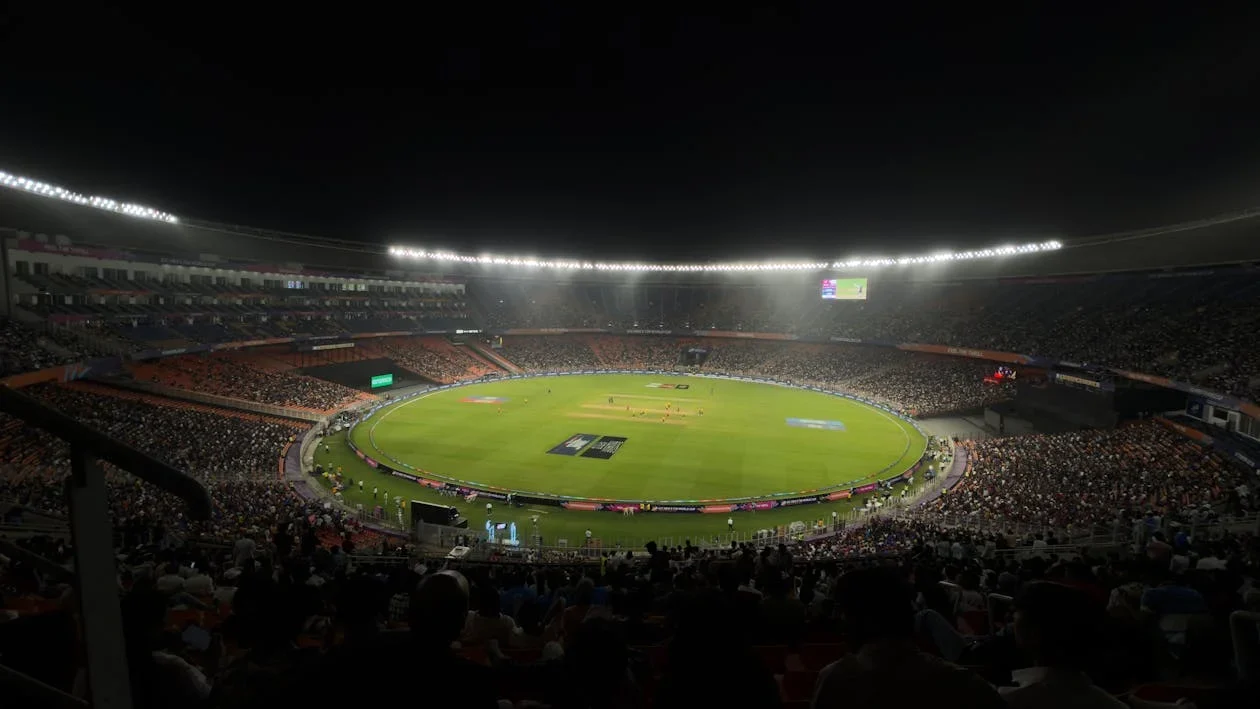
1.4 Billion People, One Game
When India plays cricket, something strange happens. The chai wallah and the CEO watch the same ball. The Dalit teenager in a Dharavi lane and the Brahmin professor in a South Delhi apartment clench their fists at the same moment. A Muslim shopkeeper in Hyderabad and a Sikh farmer in Amritsar high-five strangers they would never otherwise speak to.
For a few hours, the caste system, religious fault lines, regional rivalries, and class barriers that define daily Indian life simply dissolve. No other force in India, not politics, not Bollywood, not even food, achieves this with such regularity and such intensity.
The question is: why can a sport do what decades of policy, legislation, and social reform have struggled to accomplish?
The Gully Cricket Equalizer
India’s cricket story doesn’t begin in stadiums. It begins in gullies, the narrow lanes between buildings where children from every background play with taped tennis balls and makeshift bats. In these lanes, the only thing that matters is whether you can bat, bowl, or catch. Your surname, your religion, your father’s income, none of it counts.
An estimated 300 million Indians play some form of cricket regularly. That’s more than the entire population of the United States. Most of them play on streets, in fields, on rooftops, and in parking lots. This isn’t organized sport, it’s a daily social ritual that cuts across every demographic line India has.
Sociologists call this a “levelling mechanism”, an activity where social hierarchies are temporarily suspended. India has very few of these. Cricket is the most powerful one.
From Colonial Game to National Religion
Cricket arrived in India as a tool of colonial power. The Bombay Pentangular tournament (1892-1946) was literally organized along communal lines, Hindu, Muslim, Parsi, European, and “The Rest.” The sport was designed to divide.
But something remarkable happened after independence. India flipped the script. The same grassroots energy that drives community radio and local organizing took hold of cricket. The sport moved from elite clubs to every street corner. It became the one thing a newly independent, deeply fractured nation could agree on.
When Kapil Dev lifted the 1983 World Cup at Lord’s, it wasn’t just a sporting moment. It was the first time post-independence India collectively believed it could beat the world at something. The celebrations that followed didn’t check caste certificates or voter IDs.
The IPL Effect: Caste Doesn’t Have a Jersey Number
The Indian Premier League, launched in 2008, added a new dimension. For the first time, an Indian from Tamil Nadu was cheering for a team that included a player from Punjab, coached by an Australian, and owned by a Bollywood star. Regional identities, traditionally one of India’s sharpest divides, got scrambled.
More importantly, the IPL created visible proof that merit could override background. MS Dhoni, a small-town ticket collector’s son from Ranchi, became India’s most successful captain. Jasprit Bumrah came from a family that couldn’t afford coaching fees. Ravindra Jadeja’s father sold snacks at a bus stand.
These aren’t just sports stories. In a country where your last name still determines your access to opportunities, these are stories of barriers being broken, the same kind of barrier-breaking that India’s startup ecosystem represents in a different arena.
The Numbers Behind the Unity
Metric | Number | What It Means |
|---|---|---|
Cricket viewers in India | 900+ million | More than any other shared cultural experience |
IPL 2025 viewership | 600+ million unique viewers | Largest annual sporting event audience on Earth |
Gully cricket players | ~300 million | More than most countries’ total populations |
Languages in cricket commentary | 12+ | Hindi, Tamil, Telugu, Kannada, Bengali, and more |
Women’s cricket growth | 300% viewership increase since 2020 | Breaking gender barriers in sport |
But Is This Unity Real?
Here’s the uncomfortable question. Does cricket actually reduce prejudice, or does it just pause it?
Research from sociologist Ashis Nandy suggests that cricket creates what he calls “temporary communitas”, a fleeting sense of shared identity that doesn’t necessarily translate into changed behavior once the match ends. The same fans who hugged each other after a World Cup win go back to their segregated neighborhoods, their caste-based marriage preferences, their communal voting patterns.
And cricket itself isn’t immune to India’s inequalities:
- Access, Professional cricket infrastructure is concentrated in metros. A talented child in rural Jharkhand or tribal Chhattisgarh has almost no path to the national team compared to a child in Mumbai or Delhi.
- Caste in the dressing room, Former players have spoken about caste-based cliques in domestic cricket teams. The BCCI has no public data on the caste composition of its teams.
- Gender gap, Women’s cricket gets a fraction of the investment, viewership, and media coverage. The structural barriers women face in business exist in sport too.
- Class barrier, Cricket coaching academies charge ₹2-5 lakh per year. For families earning ₹20,000 a month, professional cricket remains a pipe dream.
What Cricket Teaches India About Itself
Despite these contradictions, cricket reveals something important about Indian society: the desire for unity is real, even if the structures for achieving it are broken.
When a billion people voluntarily choose to care about the same thing at the same time, without coercion, without government mandate, without social pressure, that tells us something. It tells us that the divisions we accept as permanent are actually choices. If they can be suspended for cricket, they can be suspended for other things too.
The question India must ask itself is not “why does cricket unite us?” but “why does only cricket unite us?”
Why can’t education create the same levelling effect? Why can’t public transport, public parks, or public health? Why is a cricket stadium the only place where a Dalit and a Brahmin sit in the same row without anyone noticing?
The Road Ahead
India’s cricket ecosystem is evolving in ways that could either deepen or challenge its role as the great equalizer:
- Women’s Premier League (WPL), Launched in 2023, it’s creating the same aspirational pathway for girls that IPL created for boys. The first generation of WPL stars is already inspiring millions.
- Digital access, Free streaming on JioCinema brought IPL to hundreds of millions who couldn’t afford TV subscriptions. India’s digital divide is narrowing, and cricket is one of the forces pulling people online.
- Grassroots programs, BCCI’s talent hunt programs are reaching tier-2 and tier-3 cities. But they haven’t reached villages yet.
- Disability cricket, India’s blind cricket team has won multiple World Cups. The deaf cricket team is rising. These athletes challenge the deepest assumptions about who gets to play.
Cricket alone won’t fix India’s social fractures. But it proves something that no policy document or political speech has been able to demonstrate: when Indians choose to see each other as equals, they can.
The 22 yards of a cricket pitch might be the most democratic space in India. The challenge is making the rest of the country look like that.
What you can do
- Share the evidenceSend this to one person who should know about solutions.Share on WhatsApp
- Back what worksVolunteer time or skills with groups doing this work.Ways to volunteer
- Tell us what's missingKnow a story, a fact we got wrong, or a solution worth spotlighting?Suggest a story
Politically neutral. Every claim sourced. Report a correction.



No comments yet