Festival of Languages: How India's Multilingual Heritage Strengthens National Identity
India's 22 official languages and thousands of dialects are a foundation of national identity, not a barrier. This article celebrates that multilingual heritage.
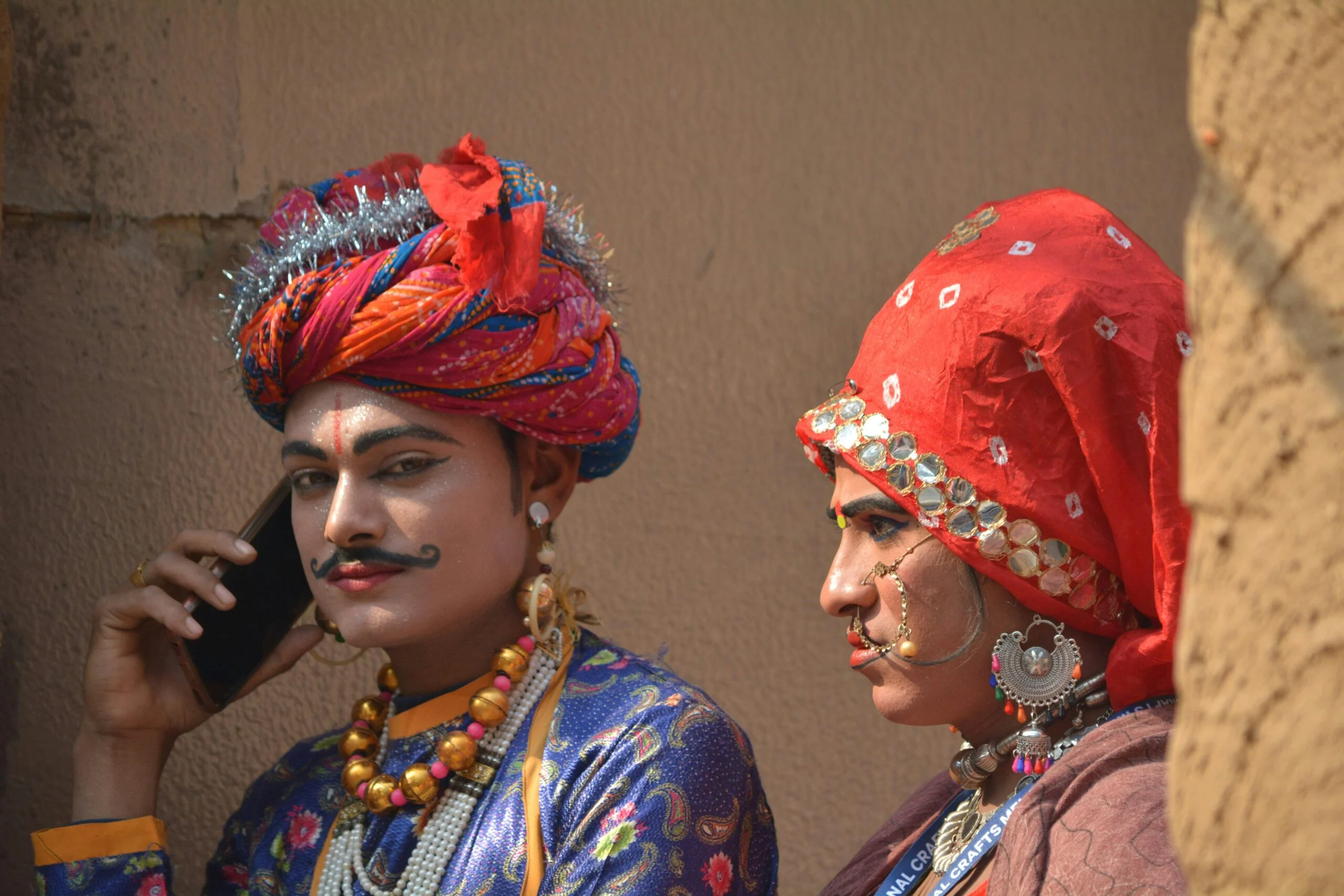
India speaks in 22 officially recognized languages, written in 13 different scripts. Beyond these, over 19,500 dialects pulse through villages, cities, markets, and homes across the country. Most nations would see this linguistic diversity as a barrier. India has turned it into a foundation of national identity.
Every language in India carries centuries of literature, philosophy, science, and oral tradition. When a grandmother in Kerala tells a story in Malayalam, when a street vendor in Varanasi negotiates in Bhojpuri, when a software engineer in Bengaluru switches between Kannada, Hindi, and English in a single conversation, that is India’s multilingual heritage in action. It is not a problem to be solved. It is a strength to be celebrated.
22 Languages, One Constitution
The Eighth Schedule of the Indian Constitution lists 22 languages: Assamese, Bengali, Bodo, Dogri, Gujarati, Hindi, Kannada, Kashmiri, Konkani, Maithili, Malayalam, Manipuri, Marathi, Nepali, Odia, Punjabi, Sanskrit, Santali, Sindhi, Tamil, Telugu, and Urdu. Each has its own literary tradition, grammar, script, and cultural ecosystem.
Tamil literature dates back over 2,000 years to the Sangam period. Sanskrit gave the world foundational texts in mathematics, astronomy, medicine, and philosophy. Bengali produced a Nobel laureate in literature. Urdu poetry shaped the cultural identity of an entire subcontinent. Kannada, Telugu, and Malayalam each have their own film industries that rival Bollywood in creativity and output.
These are not minor dialects clinging to survival. They are living, thriving languages with millions of speakers, modern media ecosystems, and growing digital presence.
The Three-Language Formula: A Uniquely Indian Approach
India’s education system uses what is called the three-language formula. Students learn their mother tongue, Hindi (or the regional language in Hindi-speaking states), and English. The idea is practical: a child in Tamil Nadu learns Tamil, Hindi, and English. A child in Gujarat learns Gujarati, Hindi, and English. A child in Assam learns Assamese, Hindi, and English.
The result is a population where multilingualism is the norm, not the exception. According to the 2011 Census, over 26 percent of Indians speak two or more languages. In urban areas, trilingualism is common. India may be the most naturally multilingual large nation on earth.
This multilingualism creates cognitive flexibility, cultural empathy, and economic mobility. An Indian professional who speaks Tamil at home, Hindi with colleagues from other states, and English with international clients is not unusual, it is standard.
Languages as Bridges, Not Walls
The fear that linguistic diversity divides people has been proven wrong in India repeatedly. The reorganization of Indian states along linguistic lines in the 1950s and 1960s, creating Karnataka, Andhra Pradesh, Maharashtra, and others, was controversial at the time. Critics warned it would fragment the nation. Instead, it gave people political representation in their own language, strengthened regional governance, and reduced linguistic resentment.
Today, Bollywood songs mix Hindi with Punjabi, Tamil, and English. South Indian films are dubbed and streamed across the country. A Telugu film like RRR wins global recognition. A Malayalam film like Jallikattu represents India at the Oscars. Marathi theatre influences Hindi cinema. Assamese folk music finds audiences on YouTube.
Cross-linguistic collaboration is not new in India. It is the natural way creative and intellectual life has always worked here.
Digital India in Every Language
The digital revolution has accelerated India’s multilingual identity rather than homogenizing it. When smartphones reached rural India, people did not switch to English. They demanded content in their language.
Google added support for all 22 scheduled languages. Voice search in Hindi, Tamil, Bengali, and Telugu exploded. YouTube became the world’s largest platform for regional language content. WhatsApp messages flow in Devanagari, Gurmukhi, Odia, and Bangla scripts. News apps like Dailyhunt serve content in 14 languages.
The internet did not kill India’s linguistic diversity. It gave every language a global stage.
Government initiatives have followed. The Digital India programme includes language localization across government portals. Aadhaar registration, voter ID applications, and pension forms are available in multiple languages. The UMANG app provides government services in 13 languages. The National Education Policy 2020 explicitly promotes mother-tongue instruction in early education.
Stories of Cross-Linguistic Collaboration
The Translation Movement
India has one of the most active literary translation ecosystems in the world. Organizations like the Sahitya Akademi (India’s national academy of letters) publish translations between Indian languages, not just into English. A Kannada novel becomes available in Marathi. An Assamese poem collection is translated into Tamil. This inter-language translation strengthens the fabric of Indian literature and ensures that stories travel across linguistic borders within the country.
Multilingual Media
Indian news channels, streaming platforms, and publications operate across multiple languages by design. A newspaper group like Dainik Bhaskar publishes in Hindi across 12 states with regional editions that reflect local dialects and concerns. Sun TV Network operates channels in Tamil, Telugu, Kannada, and Malayalam. Amazon Prime and Netflix invest heavily in regional language content because they know India’s audience is fundamentally multilingual.
Grassroots Language Preservation
Communities across India are working to preserve endangered languages and dialects. In the Andaman Islands, activists document the languages of indigenous tribes before they are lost. In Arunachal Pradesh, which alone has over 30 distinct languages, community-driven dictionary projects are preserving oral traditions. The People’s Linguistic Survey of India, led by Ganesh Devy, has documented over 780 languages, many of which had never been formally recorded.
Language and Economic Growth
India’s multilingual workforce is an economic asset. Companies serving the Indian market need employees who understand regional languages, cultural nuances, and local consumer behavior. A marketing campaign that works in Mumbai may fail in Chennai if it does not account for Tamil cultural context.
The localization industry, translation, subtitling, voice-over, content adaptation, is a growing sector. India’s language diversity creates jobs in content creation, education, technology, and customer service that do not exist in monolingual economies.
India’s IT services industry, which serves global clients, benefits from a workforce comfortable with linguistic complexity. Engineers who routinely switch between three or four languages are naturally better at understanding diverse user needs and building products for global markets.
Challenges That Remain
India’s multilingual heritage is not without challenges. Hindi-English dominance in national media and corporate culture can marginalize speakers of other languages. Students in non-Hindi states sometimes face disadvantages in competitive exams that prioritize Hindi and English. Tribal and endangered languages lack institutional support and digital tools.
The tension between a common national language and regional linguistic pride has been a recurring political issue. The solution has always been the same: respect for diversity, not imposition of uniformity.
India’s strength lies not in forcing everyone to speak one language, but in creating systems where every language has space to thrive. The three-language formula, state-level linguistic autonomy, and digital localization are all expressions of this principle.
A Heritage Worth Celebrating
Every language that survives in India carries within it a unique way of seeing the world. The Tamil concept of aruL (divine grace), the Hindi idea of jugaad (creative problem-solving), the Bengali notion of adda (intellectual conversation), the Urdu sensibility of tehzeeb (refined culture), these concepts do not translate perfectly because they are rooted in specific linguistic and cultural contexts.
When a language dies, an entire way of understanding human experience dies with it. India’s commitment to preserving its linguistic diversity is not just cultural nostalgia. It is an investment in the richness of human thought.
The festival of languages that India celebrates every day, in its classrooms, markets, films, songs, courtrooms, and living rooms, is proof that diversity does not weaken a nation. It makes it irreplaceable.
One Nation, Many Flavors: How India’s Food Heritage Unites a Diverse Country
Open Source Bharat: How Indian Developers Are Building Technology for Public Good
Smart Villages: How Technology Is Closing the Urban-Rural Divide in India
Photo by AMOL NAKVE on Pexels
What you can do
- Share the evidenceSend this to one person who should know about solutions.Share on WhatsApp
- Back what worksVolunteer time or skills with groups doing this work.Ways to volunteer
- Tell us what's missingKnow a story, a fact we got wrong, or a solution worth spotlighting?Suggest a story
Politically neutral. Every claim sourced. Report a correction.



No comments yet