Microfinance in India: How Small Loans Create Big Change
Explore microfinance India success stories from Grameen Foundation, Bandhan Bank, Rang De, and SEWA Bank. Learn how small loans, women-led savings groups, and peer-to-peer lending platforms are lifting millions out of poverty and creating lasting change across rural India.
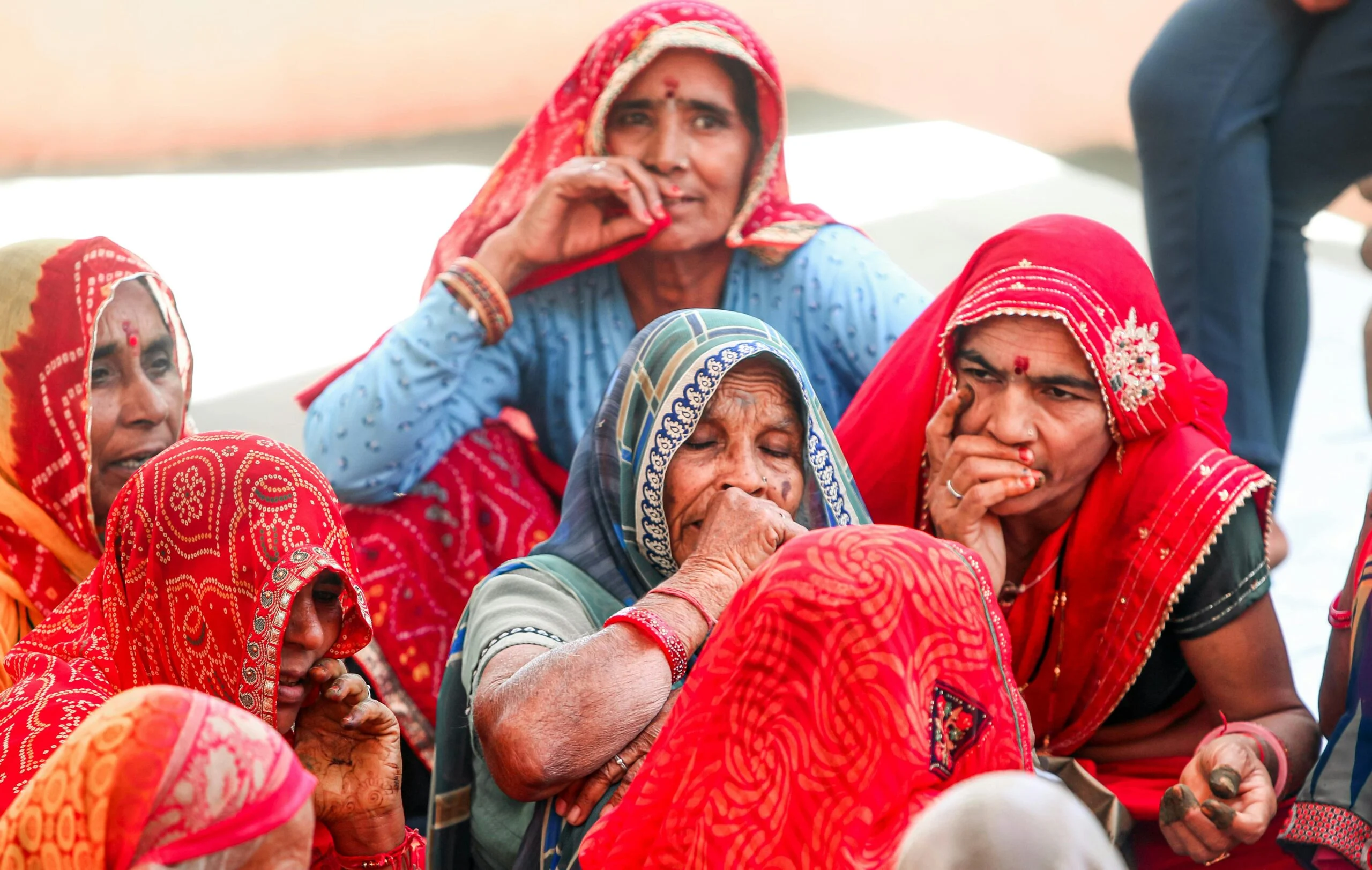
The Problem: 190 Million Indians Still Locked Out of the Banking System
India has made remarkable strides in financial inclusion over the past decade. The Jan Dhan Yojana scheme alone has opened over 50 crore bank accounts since 2014. Yet beneath these headline numbers lies a stubborn reality: approximately 190 million Indians remain completely unbanked, with no access to formal savings accounts, credit, insurance, or any regulated financial product.
For these families, overwhelmingly concentrated in rural and semi-urban India, the only source of credit when a medical emergency strikes, a crop fails, or a daughter’s education needs funding is the local moneylender. These informal lenders charge interest rates ranging from 36% to an astonishing 120% per year. A farmer who borrows Rs 10,000 at planting season may owe Rs 15,000 or more by harvest time. When the harvest falls short, the debt rolls over, compounding into a trap that can persist across generations.
The consequences are devastating and measurable. According to the National Crime Records Bureau, over 10,000 farmers and agricultural labourers died by suicide in 2021 alone, with indebtedness cited as a leading cause. Women in landless households, who often lack any identity documentation or collateral, face the sharpest exclusion. They cannot open accounts, cannot prove creditworthiness, and cannot escape cycles of dependency on predatory lending.
This is the gap that microfinance was designed to fill. Not as charity, but as a structured, sustainable financial bridge that treats the poor not as beneficiaries but as customers capable of managing credit responsibly. Over the past three decades, a diverse ecosystem of microfinance institutions, cooperative banks, peer-to-peer platforms, and self-help group federations has emerged across India to prove that small loans, when delivered with the right design, create outsized impact.
This article spotlights four organisations doing this work at scale, examines the sector-wide numbers, acknowledges the hard lessons learned from past crises, and shows you exactly how to participate.
Grameen Foundation India: Digital Literacy and Microsavings for Rural Women
The Grameen model, originally pioneered by Nobel laureate Muhammad Yunus in Bangladesh, has been adapted and deployed in India through the Grameen Foundation’s India programme. The core philosophy remains unchanged: target the poorest women, organise them into small groups, provide tiny loans without collateral, and use peer accountability to ensure repayment.
But Grameen Foundation India has evolved well beyond simple microcredit. Recognising that a loan alone cannot break the poverty cycle if the borrower lacks the knowledge to use it productively, the organisation has invested heavily in two complementary pillars: microsavings and digital financial literacy.
Microsavings: Building the Foundation Before the Loan
Before any loan is disbursed, Grameen Foundation India works with women’s groups to establish regular savings habits. Members contribute small amounts, sometimes as little as Rs 10 per week, into a group fund. This serves multiple purposes. It builds a financial cushion that reduces the need for emergency borrowing. It creates a track record of financial discipline. And it gives women a sense of ownership and agency over household finances, often for the first time in their lives.
The microsavings component has proven to be just as transformative as the loans themselves. Research consistently shows that access to safe savings reduces household vulnerability to shocks more effectively than credit alone. When a family has even Rs 5,000 saved, they are far less likely to pull a child out of school or skip medical treatment when faced with an unexpected expense.
Digital Financial Literacy: Bridging the Smartphone Gap
India’s digital payments revolution, powered by UPI, has been extraordinary. But for rural women who have never used a smartphone, who may be functionally illiterate, and who have been excluded from formal systems their entire lives, a QR code might as well be written in a foreign language. Grameen Foundation India runs extensive digital financial literacy programmes that teach women to use mobile banking apps, make UPI payments, check account balances, and identify fraud.
These are not one-time workshops. They are sustained engagements, often running over several months, with hands-on practice sessions and follow-up support. The trainers are typically local women who have themselves graduated from the programme, creating a peer-learning model that builds trust and relevance.
Impact at Scale
Grameen Foundation India has served over 500,000 families across some of India’s most underserved states, including Bihar, Jharkhand, Uttar Pradesh, and Madhya Pradesh. The organisation reports that women who complete the full programme, covering savings, credit, and digital literacy, see average household income increases of 30-40% within two years. More importantly, their children’s school attendance rates improve, healthcare utilisation increases, and the reliance on informal moneylenders drops sharply.
Bandhan Bank: From NGO to Universal Bank, Serving 3.5 Crore Customers
If there is a single institution that embodies the full arc of India’s microfinance story, from grassroots NGO to regulated universal bank, it is Bandhan. Founded in 2001 by Chandra Shekhar Ghosh as a small non-governmental organisation in Kolkata, Bandhan began by providing microloans to women in West Bengal’s rural hinterlands. The model was simple: groups of 15-20 women would collectively guarantee each other’s loans, eliminating the need for collateral that no one in the group possessed.
The Transformation: NGO to Bank
By 2014, Bandhan had grown into one of India’s largest microfinance institutions, serving millions of borrowers with a near-perfect repayment rate. When the Reserve Bank of India invited applications for new universal banking licences that year, Bandhan was among the successful applicants. In August 2015, Bandhan Bank officially launched, becoming the first microfinance institution in India’s history to receive a universal banking licence.
This was not merely a corporate milestone. It fundamentally changed what Bandhan could offer its customers. As a bank, it could accept deposits, offer savings accounts, provide insurance products, and access cheaper wholesale funding, all of which allowed it to lower interest rates and expand its product range for the same low-income women it had always served.
The Numbers That Define Bandhan
Today, Bandhan Bank serves over 3.5 crore customers, which translates to 35 million individuals, across more than 6,000 banking outlets in 35 states and union territories. The numbers reveal the institution’s continued commitment to its microfinance roots:
- Average loan size: Approximately Rs 40,000, confirming that Bandhan continues to serve customers at the bottom of the economic pyramid rather than drifting upmarket.
- Women borrowers: Over 98% of micro-loan borrowers are women, maintaining the gender-focused model that has been central to microfinance’s success globally.
- Repayment rate: Consistently above 99%, a figure that demolishes the myth that the poor are unbankable or unreliable borrowers.
- Geographic reach: Bandhan has a particularly strong presence in India’s eastern and northeastern states, including West Bengal, Assam, Bihar, and Tripura, regions historically underserved by mainstream banks.
Beyond Credit: The Full Financial Inclusion Stack
Bandhan’s evolution into a universal bank has allowed it to offer micro-insurance products, recurring deposit schemes designed for irregular income earners, and small business loans for borrowers who have outgrown the standard microfinance product. This graduation pathway, from microsavings to microcredit to small business lending to full banking services, represents the ideal trajectory for financial inclusion.
Rang De: India’s First Social Peer-to-Peer Lending Platform
While institutions like Bandhan and Grameen operate within traditional financial structures, Rang De has pioneered an entirely different approach: social peer-to-peer lending that directly connects individual investors with low-income borrowers across India.
Founded in 2008 by Smita and Ram NK, Rang De was inspired by a simple question: what if ordinary Indians could lend small amounts directly to farmers, artisans, and students, at rates far below what moneylenders charge, while still earning a modest return on their investment?
How the Model Works
The mechanics are elegantly simple. Social investors, who can be anyone with as little as Rs 100 to spare, browse borrower profiles on the Rang De platform. Each profile includes the borrower’s location, livelihood, loan purpose, and the field partner organisation that has vetted them on the ground. The investor selects a borrower, transfers funds, and receives repayments over the loan tenure, typically 12-24 months.
The critical innovation is in the pricing. Investors lend at approximately 2% annual interest, which is essentially a nominal return that keeps the model sustainable without seeking profit. Rang De adds its operational margin, and the borrower ultimately pays between 8-10% annual interest. Compare this to the 36% minimum, and often 60-120%, charged by informal moneylenders, and the transformative potential becomes clear.
A farmer borrowing Rs 25,000 for seeds and fertiliser through Rang De pays roughly Rs 1,500 in interest over a year. The same loan from a moneylender would cost Rs 9,000 to Rs 30,000 in interest. That difference, Rs 7,500 to Rs 28,500, goes directly back into the household economy: better food, school fees paid on time, a small savings buffer built up.
Scale and Reach
Since its founding, Rang De has facilitated over 1 lakh loans (100,000+) across 23 states in India. The platform serves borrowers in sectors where formal credit is hardest to access:
- Agriculture: Crop loans, equipment purchases, irrigation investments
- Dairy: Cattle purchase, feed, veterinary care
- Education: School and college fees, vocational training, skill development courses
- Small business: Working capital for tailoring units, grocery shops, street food vendors, handicraft producers
The repayment rate on Rang De loans consistently exceeds 95%, reinforcing the evidence that low-income borrowers, when offered fair terms, are exceptionally reliable. The platform has also built a community of over 15,000 social investors, many of whom relend their returned capital into new loans, creating a virtuous cycle of impact.
Transparency and Trust
One of Rang De’s distinctive strengths is radical transparency. Every loan is visible on the platform. Investors can track repayments in real time. Field partners are rated and reviewed. This openness has built a level of trust that is rare in the development sector and has allowed Rang De to grow almost entirely through word-of-mouth and organic community building.
SEWA Bank: The Pioneer That Started It All
Long before microfinance became a global movement, long before Grameen Bank won the Nobel Prize, a cooperative bank in Ahmedabad was quietly proving that the poorest working women in India could be trusted with financial services. The Self-Employed Women’s Association (SEWA) Cooperative Bank was founded in 1974 by Ela Bhatt, making it one of the oldest microfinance institutions in the world and certainly the oldest women’s cooperative bank in India.
Who SEWA Bank Serves
SEWA Bank’s members are among the most economically vulnerable workers in India’s informal economy: street vendors, home-based workers (bidi rollers, garment stitchers, incense stick makers), domestic workers, construction labourers, and agricultural labourers. These are women who earn daily wages, have no employment contracts, no social security, no health insurance, and no access to formal banking.
What makes SEWA Bank remarkable is not just that it provides financial services to these women, but that it is owned and governed by them. As a cooperative, every depositor is a member-owner with voting rights. The bank’s board is composed of working women elected by their peers. This is not financial inclusion delivered from above; it is financial inclusion built from within.
The Full Product Suite
SEWA Bank offers a comprehensive range of financial products designed for the specific realities of informal sector workers:
- Savings accounts: With flexible deposit options that accommodate irregular and unpredictable income flows, allowing deposits as small as Rs 5.
- Microloans: For working capital, equipment, housing repairs, and emergency needs, with repayment schedules that align with borrowers’ earning patterns.
- Insurance: Health, life, and asset insurance products developed specifically for informal workers who fall outside all employer-provided coverage.
- Pension: SEWA Bank was among the first institutions in India to offer pension products to informal sector workers, recognising that women who work until their bodies give out deserve security in old age.
The Legacy
Over its five decades of operation, SEWA Bank has served hundreds of thousands of women across Gujarat. But its influence extends far beyond its direct membership. SEWA Bank demonstrated, decades before the global microfinance movement gained momentum, that poor women are not a risk to be managed but an opportunity to be served. Its cooperative governance model has inspired similar institutions across India and the developing world. And its integrated approach, combining financial services with organising, advocacy, and capacity building, remains a blueprint for holistic economic empowerment.
The Big Picture: India’s Microfinance Sector in Numbers
The four organisations profiled above are part of a vast and growing ecosystem. India’s microfinance sector is now one of the largest in the world, and the aggregate numbers are staggering.
Portfolio and Reach
According to the Microfinance Institutions Network (MFIN), the total microfinance loan portfolio in India stands at approximately Rs 3.6 lakh crore (around $43 billion). This portfolio is distributed across banks, non-banking financial companies (NBFCs), small finance banks, and not-for-profit microfinance institutions.
The sector serves over 7 crore active borrowers (70 million+), of whom approximately 97% are women. This overwhelming female concentration is not accidental. It reflects decades of evidence showing that loans to women generate higher returns for the household: women are more likely to invest in children’s education, nutrition, and healthcare, and are statistically more reliable in repayment.
The SHG-Bank Linkage Programme: India’s Unique Contribution
India’s most distinctive contribution to the global microfinance landscape is the Self-Help Group (SHG)-Bank Linkage Programme, facilitated by the National Bank for Agriculture and Rural Development (NABARD). Unlike the Grameen model where an MFI acts as the intermediary, the SHG-Bank Linkage model connects groups of 10-20 women directly with commercial banks.
The numbers from NABARD’s latest data are remarkable:
- 119 lakh SHGs (11.9 million self-help groups) have active savings accounts with banks
- Total savings deposits by SHGs: Rs 47,240 crore
- Total outstanding credit to SHGs: Over Rs 1.5 lakh crore
- Average savings per SHG: Approximately Rs 39,700
These groups represent roughly 14-15 crore women (140-150 million) who are part of the formal financial system through the SHG route. The programme has been particularly transformative in southern states like Andhra Pradesh, Telangana, Tamil Nadu, and Kerala, where SHG penetration is highest and where the impact on women’s economic and social empowerment has been most extensively documented.
Beyond the Numbers: What Changes
The impact of microfinance extends well beyond income metrics. Studies by institutions including the World Bank, IFMR LEAD, and J-PAL South Asia have documented the following patterns among microfinance borrowers compared to non-borrowers in similar demographics:
- Higher likelihood of children, especially girls, completing secondary education
- Greater investment in preventive healthcare and nutrition
- Increased women’s participation in household financial decisions
- Reduced dependence on informal moneylenders by 40-60%
- Higher rates of asset ownership (livestock, equipment, housing improvements)
- Greater participation in local governance institutions like gram panchayats
Challenges and Hard Lessons: What Can Go Wrong
No honest assessment of microfinance in India can ignore the sector’s failures and the painful lessons they have taught. The most significant crisis occurred in Andhra Pradesh in 2010, and its consequences reshaped the entire regulatory landscape.
The Andhra Pradesh Crisis of 2010
By the late 2000s, several large MFIs operating in Andhra Pradesh had prioritised rapid growth over responsible lending. Multiple MFIs were lending to the same borrowers, creating dangerous levels of over-indebtedness. Aggressive recovery practices, including alleged harassment and coercion, contributed to a series of borrower suicides that drew national media attention and political outrage.
The Andhra Pradesh government responded with an ordinance that effectively shut down microfinance operations in the state. Repayment rates collapsed overnight. SKS Microfinance (now Bharat Financial Inclusion), which had recently completed a high-profile IPO, saw its portfolio devastated. The crisis wiped out billions in value and shattered public trust in the sector.
The Lessons Learned
The AP crisis forced the microfinance sector and its regulators to confront several uncomfortable truths:
- Multiple lending is dangerous: When several MFIs compete for the same borrowers without sharing data, over-indebtedness becomes inevitable. The solution has been credit bureau reporting, now mandatory for all MFIs, which allows lenders to check a borrower’s existing obligations before extending new credit.
- Growth incentives can distort mission: When MFI staff are evaluated and compensated based on disbursement targets, the pressure to lend can override the responsibility to assess whether the borrower can repay. Leading institutions have since shifted to portfolio quality metrics rather than pure volume targets.
- Regulation is essential: The RBI’s subsequent regulatory framework for MFIs, including caps on interest rates, limits on borrower indebtedness, and mandatory credit bureau reporting, has created a more stable operating environment. The creation of the Self-Regulatory Organisation for microfinance has added another layer of accountability.
- Client protection must be active, not passive: Industry codes of conduct, borrower grievance mechanisms, and independent audits of lending practices have become standard, though enforcement remains uneven.
Ongoing Challenges
Even with improved regulation, the sector continues to face challenges. Rural areas in central and eastern India remain underserved compared to the south and west. Climate change is increasing agricultural risk, making farm loans more vulnerable to default. The COVID-19 pandemic caused significant stress on microfinance portfolios as lockdowns disrupted the livelihoods of the very borrowers the sector serves. And the fundamental tension between commercial sustainability and social mission, between growing a loan book and protecting vulnerable borrowers, will never fully disappear.
These challenges are not reasons to dismiss microfinance. They are reasons to engage with it more thoughtfully, to support institutions that demonstrate genuine commitment to client welfare, and to advocate for regulatory frameworks that protect borrowers while enabling innovation. The economic deprivation that microfinance seeks to address is also closely linked to broader social inequalities rooted in caste, poverty, and access to education in modern India.
How You Can Participate: Actionable Next Steps
If you have read this far and want to move from awareness to action, here are concrete, verified ways to participate in India’s microfinance ecosystem.
1. Lend Directly Through Rang De
The most direct way for an individual to support microfinance in India is through Rang De (rangde.org). You can start with as little as Rs 100. Browse borrower profiles, select someone whose story resonates, and lend. You will receive your principal back over the loan tenure, and you can relend it to another borrower, compounding your impact over time. The platform handles all due diligence through its network of vetted field partners.
This is not a donation. It is a social investment. Your money works, returns, and works again.
2. Support SHG Federations
Several organisations work to strengthen Self-Help Group federations at the block, district, and state level. These federations provide training, market access, and institutional support to individual SHGs. Organisations like PRADAN (Professional Assistance for Development Action), Kudumbashree in Kerala, and SERP/Velugu in Andhra Pradesh/Telangana accept donations and volunteer engagement.
Supporting SHG federations is a high-leverage intervention because a single federation may support hundreds of SHGs representing thousands of women.
3. Advocate for Policy
Financial inclusion is ultimately a policy issue. Support organisations like MFIN (Microfinance Institutions Network) and Sa-Dhan (the association of community development finance institutions) that engage with regulators to create borrower-friendly frameworks. Write to your MP about expanding the NABARD SHG-Bank Linkage Programme. Advocate for digital infrastructure in rural areas that enables mobile banking.
4. Bank with Institutions That Walk the Talk
If you are choosing a bank for your savings or fixed deposits, consider institutions like Bandhan Bank or other small finance banks (Equitas, Ujjivan, Jana) whose core mandate is financial inclusion. Your deposits become the raw material for loans to underserved borrowers. This is perhaps the most effortless form of participation: your money earns interest while simultaneously funding microloans.
5. Volunteer Your Skills
Microfinance institutions and SHG federations need volunteers with skills in accounting, digital literacy training, marketing, and technology. If you have professional expertise in any of these areas, reach out to organisations like SEWA, Grameen Foundation India, or your state’s SHG promotion programme. Even a few hours per month of remote mentorship can make a meaningful difference.
The Road Ahead: From Micro to Macro Impact
Microfinance alone will not end poverty in India. No single intervention can. But over three decades, the sector has demonstrated something that matters profoundly: that the poor, and poor women in particular, are not passive recipients of aid but active economic agents who, given fair access to financial tools, will lift themselves and their families out of poverty with remarkable consistency and determination.
The 99% repayment rate at Bandhan is not a statistical curiosity. It is a statement about human dignity and capability. The 119 lakh SHGs saving Rs 47,000 crore are not a government programme statistic. They represent 150 million women who decided, collectively, that they would no longer depend on moneylenders, landlords, or anyone else for their financial security.
The organisations spotlighted in this article, Grameen Foundation India, Bandhan Bank, Rang De, and SEWA Bank, represent different models, different scales, and different eras of India’s microfinance journey. What unites them is a shared conviction that financial exclusion is not inevitable, that it is a solvable problem, and that the solution begins with trusting the poor with small amounts of capital and the freedom to decide how to use it.
Every Rs 100 lent through Rang De, every SHG meeting held under a neem tree in rural Bihar, every woman who checks her bank balance on a smartphone for the first time, these are the micro-moments that, accumulated across millions of lives, create macro-level change. India’s microfinance story is far from complete. But its direction is clear, and there is room for every one of us to be part of it.
Related reading: Learn how India’s government is investing in the next generation through the ICDS programme, the country’s largest child welfare scheme, which serves over 8 crore beneficiaries through 13.9 lakh Anganwadi centres.
What you can do
- Share the evidenceSend this to one person who should know about solutions.Share on WhatsApp
- Back what worksVolunteer time or skills with groups doing this work.Ways to volunteer
- Tell us what's missingKnow a story, a fact we got wrong, or a solution worth spotlighting?Suggest a story
Politically neutral. Every claim sourced. Report a correction.



No comments yet