NEP 2020 Explained: What's Changing in Indian Education
NEP 2020 explained simple: India's biggest education overhaul in 34 years covers the new 5+3+3+4 school structure, mother-tongue instruction, flexible college degrees with multiple exit points, and vocational training from Class 6.
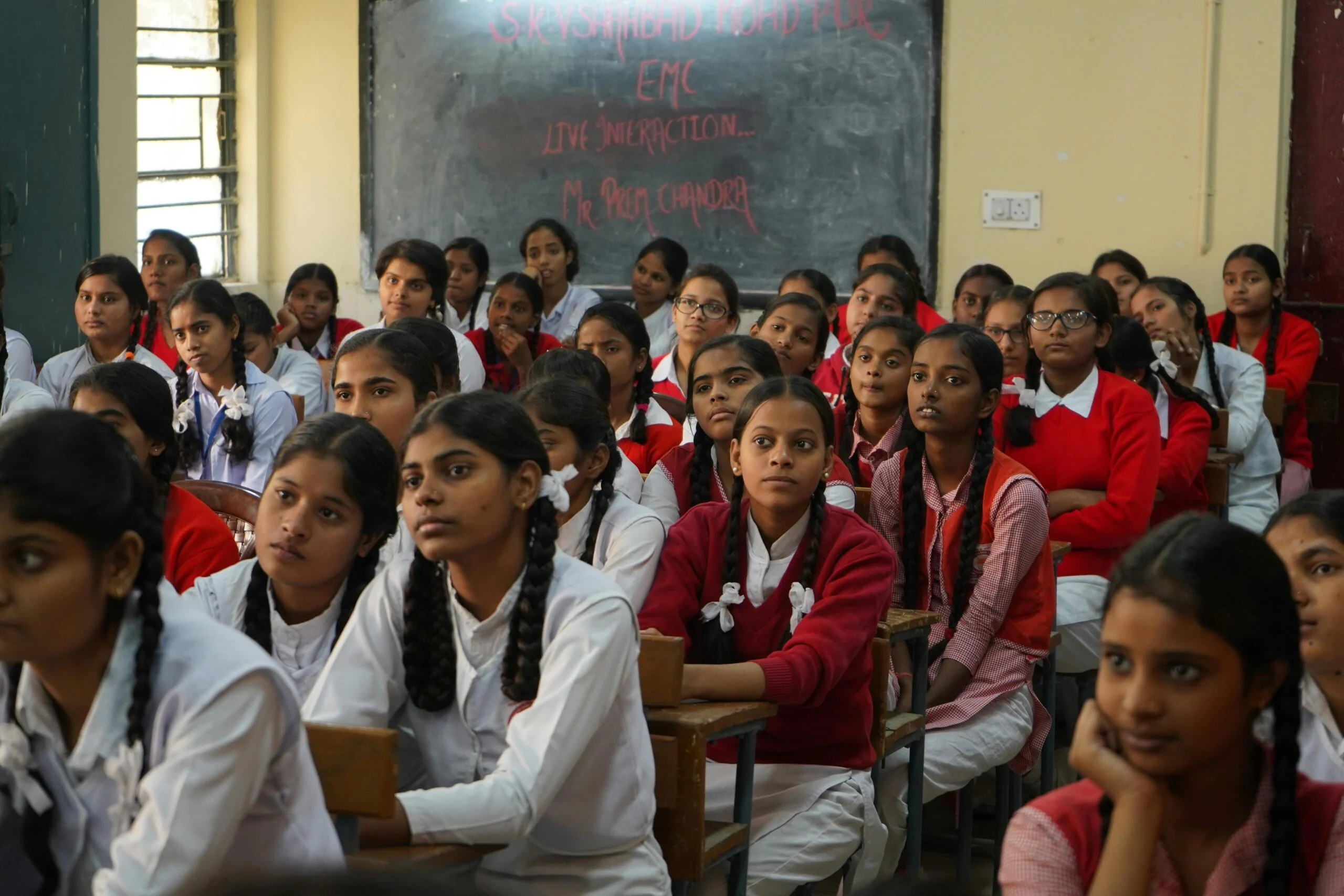
In July 2020, India approved a new National Education Policy - the first major update to its education system in 34 years. Called NEP 2020, this policy replaces the old National Education Policy of 1986 and aims to completely reshape how children learn, from pre-school all the way through college and beyond. Whether you are a student, a parent, or a teacher, these changes will affect you. This article breaks down what NEP 2020 actually says, what is changing on the ground, and what challenges remain.
What Is NEP 2020?
NEP stands for National Education Policy. Think of it as the government’s master plan for education in India. It sets the direction for everything - what students learn, how teachers teach, how exams work, and how colleges and universities are run.
India’s previous education policy was written in 1986 (with a small update in 1992). That means for over three decades, the country was running its schools and colleges on rules designed for a very different world - a world before the internet, before smartphones, and before India became one of the fastest-growing economies on the planet.
NEP 2020 was drafted by a committee led by Dr. K. Kasturirangan, a former chairman of the Indian Space Research Organisation (ISRO). The committee consulted lakhs of people across the country before finalising the policy. The Union Cabinet approved it on 29 July 2020.
The policy is not a law that forces states to follow it overnight. Education is on the “Concurrent List” in India’s Constitution, which means both the central government and state governments share responsibility. So each state can adopt and adapt the policy at its own pace. This is an important detail we will come back to later.
The Biggest Changes in NEP 2020
1. New School Structure: 5+3+3+4 Replaces 10+2
For decades, Indian schooling followed the 10+2 system - ten years of school (Class 1 to 10) plus two years of higher secondary (Class 11 and 12). NEP 2020 replaces this with a 5+3+3+4 structure that covers ages 3 to 18. Here is how it breaks down:
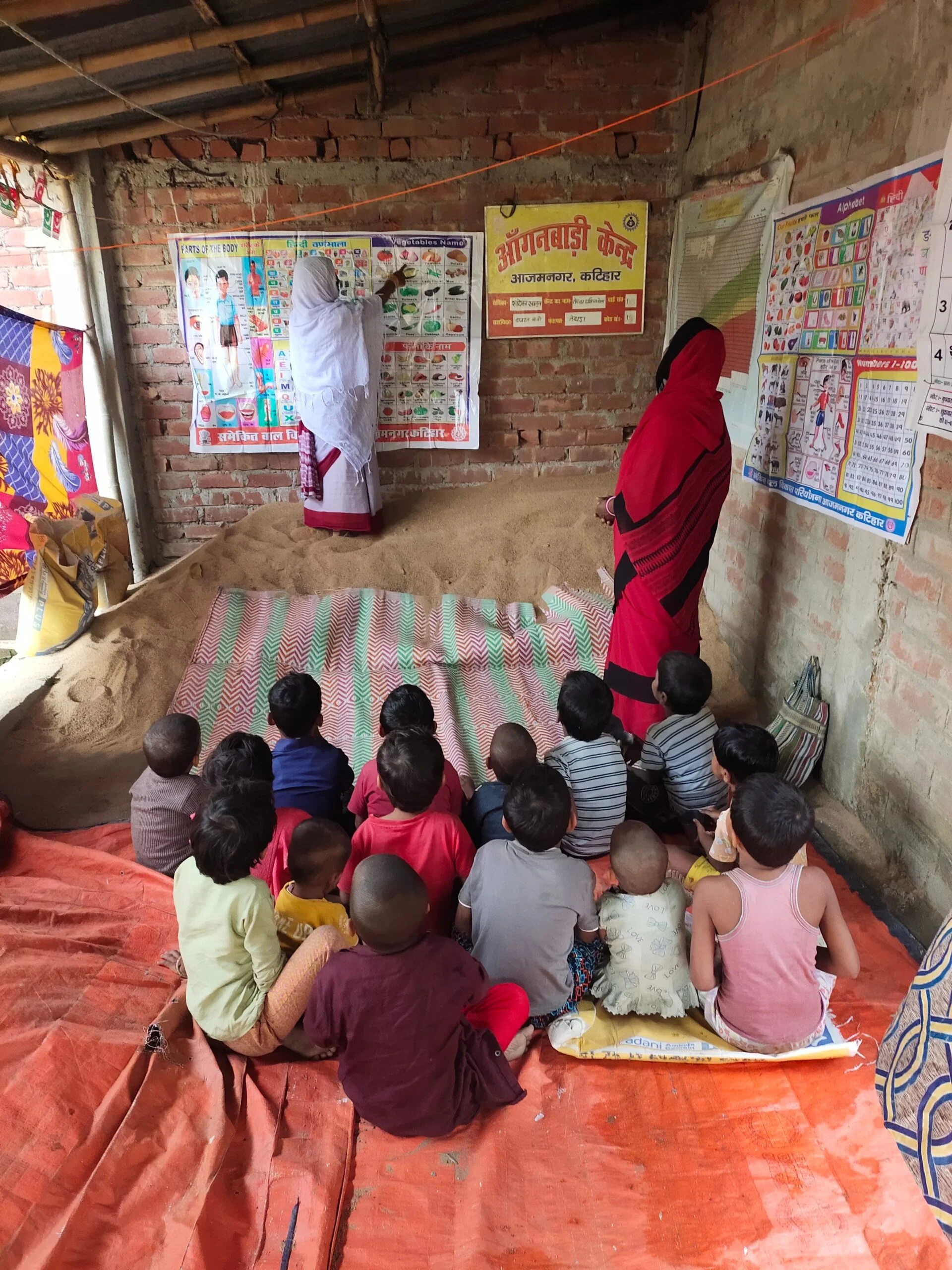
- Foundational Stage (5 years, ages 3–8): Three years of pre-school or anganwadi plus Classes 1 and 2. The focus is on play-based and activity-based learning. No textbooks, no exams - just building curiosity and basic skills like reading, counting, and social interaction.
- Preparatory Stage (3 years, ages 8–11): Classes 3 to 5. Children start with light textbooks and are introduced to subjects like science, mathematics, and social studies through experiments, storytelling, and exploration.
- Middle Stage (3 years, ages 11–14): Classes 6 to 8. More formal subject-based teaching begins. Students also get their first taste of vocational skills and coding.
- Secondary Stage (4 years, ages 14–18): Classes 9 to 12. Students can choose subjects across streams - no more rigid “Science, Commerce, Arts” boxes. A student could study physics alongside music or economics alongside computer science.
The biggest shift here is bringing early childhood education into the formal system. Previously, pre-school was considered “optional” or “informal.” NEP 2020 recognises that the years between ages 3 and 6 are critical for brain development and makes structured learning at this stage a priority.
2. Mother Tongue or Local Language as Medium of Instruction
NEP 2020 recommends that children be taught in their mother tongue, home language, or regional language at least until Class 5 (and ideally until Class 8). Research from around the world shows that children learn better and understand concepts more deeply when taught in a language they speak at home.
This does not mean English will disappear from schools. English can still be taught as a subject. The policy also promotes the three-language formula, where students learn three languages during school - ideally their mother tongue, Hindi (in non-Hindi-speaking states) or another Indian language (in Hindi-speaking states), and English. However, the policy clarifies that no language will be imposed on any state. This last point has been a source of considerable debate, especially in southern states like Tamil Nadu and Karnataka.
3. Board Exams: Less Stress, More Understanding
Board exams have long been one of the most stressful experiences for Indian students. NEP 2020 does not eliminate board exams, but it proposes redesigning them to test core competencies rather than rote memorisation. The idea is that students should show they understand a concept and can apply it, rather than simply reproducing textbook paragraphs from memory.
Key changes to assessment include:
- Board exams may be offered twice a year so students can take the best score.
- Exams will be more application-based and less about memorising facts.
- A new National Assessment Centre (PARAKH) - short for Performance Assessment, Review, and Analysis of Knowledge for Holistic Development - will set standards for all school boards across India, so that a “90%” means roughly the same thing whether you studied in CBSE, ICSE, or a state board.
- Regular formative assessments (ongoing tests, projects, and activities throughout the year) will carry more weight, reducing the “do-or-die” pressure of a single final exam.
4. Flexible Higher Education: 4-Year Degrees and Multiple Exit Points
One of the most talked-about changes in NEP 2020 is the restructuring of undergraduate degrees. Currently, most bachelor’s degrees in India are three years long. NEP 2020 introduces a four-year multidisciplinary bachelor’s degree with the option to leave at different points:
- After 1 year: You receive a Certificate.
- After 2 years: You receive a Diploma.
- After 3 years: You receive a Bachelor’s Degree.
- After 4 years: You receive a Bachelor’s Degree with Honours (including a research project).
This is a game-changer for students who need to leave college early due to financial problems, family responsibilities, or other reasons. Under the old system, if you dropped out after two years of a three-year degree, you had nothing to show for it. Under NEP 2020, you walk away with a recognised Diploma.
The policy also introduces the Academic Bank of Credits (ABC). Think of it like a bank account, but instead of money, it stores your academic credits. If you earn credits at one university but need to move to another city, you can transfer those credits and continue your degree elsewhere. This makes education more flexible and student-friendly.
5. One Regulator for All Higher Education
India’s higher education system is currently governed by multiple bodies - the University Grants Commission (UGC) for universities, the All India Council for Technical Education (AICTE) for engineering and management colleges, and the National Assessment and Accreditation Council (NAAC) for quality assurance, among others. This overlapping structure often creates confusion and red tape.
NEP 2020 proposes replacing all of these with a single umbrella body called the Higher Education Commission of India (HECI). HECI would have four verticals:
- National Higher Education Regulatory Council (NHERC): The single regulator for all higher education (except medical and legal education).
- National Accreditation Council (NAC): For quality assurance and accreditation.
- Higher Education Grants Council (HEGC): For funding and grants.
- General Education Council (GEC): For setting academic standards and curriculum frameworks.
The goal is to simplify regulation, reduce bureaucracy, and make it easier for good institutions to grow while holding poor-quality ones accountable. However, as of now, the full transition to HECI has not yet been completed, and both UGC and AICTE continue to function.
6. Vocational Education from Class 6
In many countries, students learn practical, job-related skills alongside academic subjects. In India, vocational education has traditionally been seen as a “lesser” option - something for students who could not make it in academics. NEP 2020 aims to change this mindset.
Under the new policy, vocational education begins in Class 6. Students will be exposed to skills like carpentry, gardening, pottery, electrical work, coding, and more through hands-on projects and internships with local artisans and businesses. The idea is not to turn every student into a carpenter, but to help students develop respect for all kinds of work and discover practical skills they enjoy.
The policy sets a target: by 2025, at least 50% of all learners in school and higher education should have exposure to vocational education. This is an ambitious goal, and progress has been uneven across states.
7. Ambitious Targets: 50% GER and 6% GDP
NEP 2020 sets two headline targets that reveal just how far India needs to go:
- Gross Enrolment Ratio (GER) in higher education: The policy aims to raise GER from the current level of about 27% to 50% by 2035. GER measures the percentage of the eligible age group (18–23 years) that is enrolled in higher education. At 27%, India lags behind countries like China (over 50%) and Brazil (over 50%). Reaching 50% means nearly doubling the number of students in colleges and universities within about 15 years - a massive undertaking that requires new institutions, more teachers, and vastly more funding.
- Education spending: The policy recommends that India spend 6% of its GDP on education. Currently, India spends roughly 3% to 3.5% of GDP on education. Doubling this would mean hundreds of thousands of crores of additional funding every year. While the 6% target has been recommended since the Kothari Commission of 1966, India has never achieved it. The gap between education policy ambitions and actual government spending priorities remains a central challenge across sectors.
Key Facts About NEP 2020
- Approved on 29 July 2020 by the Union Cabinet of India, making it the third education policy after 1968 and 1986.
- Drafted by Dr. K. Kasturirangan Committee, which submitted its report in May 2019 after nearly two years of consultations.
- Covers the entire education spectrum - from pre-school (age 3) to doctoral research - unlike earlier policies that focused mainly on school or higher education separately.
- Not legally binding on states. Since education is a concurrent subject, states have the autonomy to implement it in their own way and at their own pace.
- Proposes coding and computational thinking from Class 6 onwards, recognising the growing importance of digital literacy.
- Aims to make India a global study destination by allowing top-ranked foreign universities to set up campuses in India, a move meant to reduce the outflow of students (and money) to foreign countries.
Where Does Implementation Stand?
NEP 2020 is a policy, not a law, so implementation depends on action by both the central and state governments. Here is a snapshot of where things stand as of early 2026:
What Has Been Done
- CUET (Common University Entrance Test): Introduced in 2022, CUET is now the gateway for admission to most central universities. It standardises admissions and reduces the “marks race” that saw students needing 99%+ cutoffs at colleges like Delhi University.
- Academic Bank of Credits (ABC): Launched and operational. Millions of students have registered on the ABC portal, though actual credit transfers between institutions are still uncommon in practice.
- National Curriculum Framework (NCF): New curriculum frameworks for the Foundational Stage and School Education have been released. NCERT has begun developing new textbooks aligned with the 5+3+3+4 structure.
- Multidisciplinary education: Several universities have started offering four-year undergraduate programmes with multiple exit points. The University of Delhi, for example, introduced a four-year undergraduate programme (FYUP) - its second attempt after an earlier version was scrapped in 2014.
- PM SHRI Schools: The central government launched the PM Schools for Rising India (PM SHRI) scheme to upgrade around 14,500 schools as model NEP-implementing schools across the country.
- Foreign universities: Regulations have been notified to allow top-ranked foreign universities to set up campuses in India. A few have begun exploratory steps, though no full-fledged campus is operational yet.
Where Challenges Remain
- Uneven state adoption: States governed by different political parties have adopted NEP 2020 at very different speeds. States like Karnataka, Madhya Pradesh, and Uttar Pradesh have moved faster, while Tamil Nadu and Kerala initially expressed reservations, particularly around the language policy. Some states have since started implementing parts of the policy while voicing continued concerns about certain provisions.
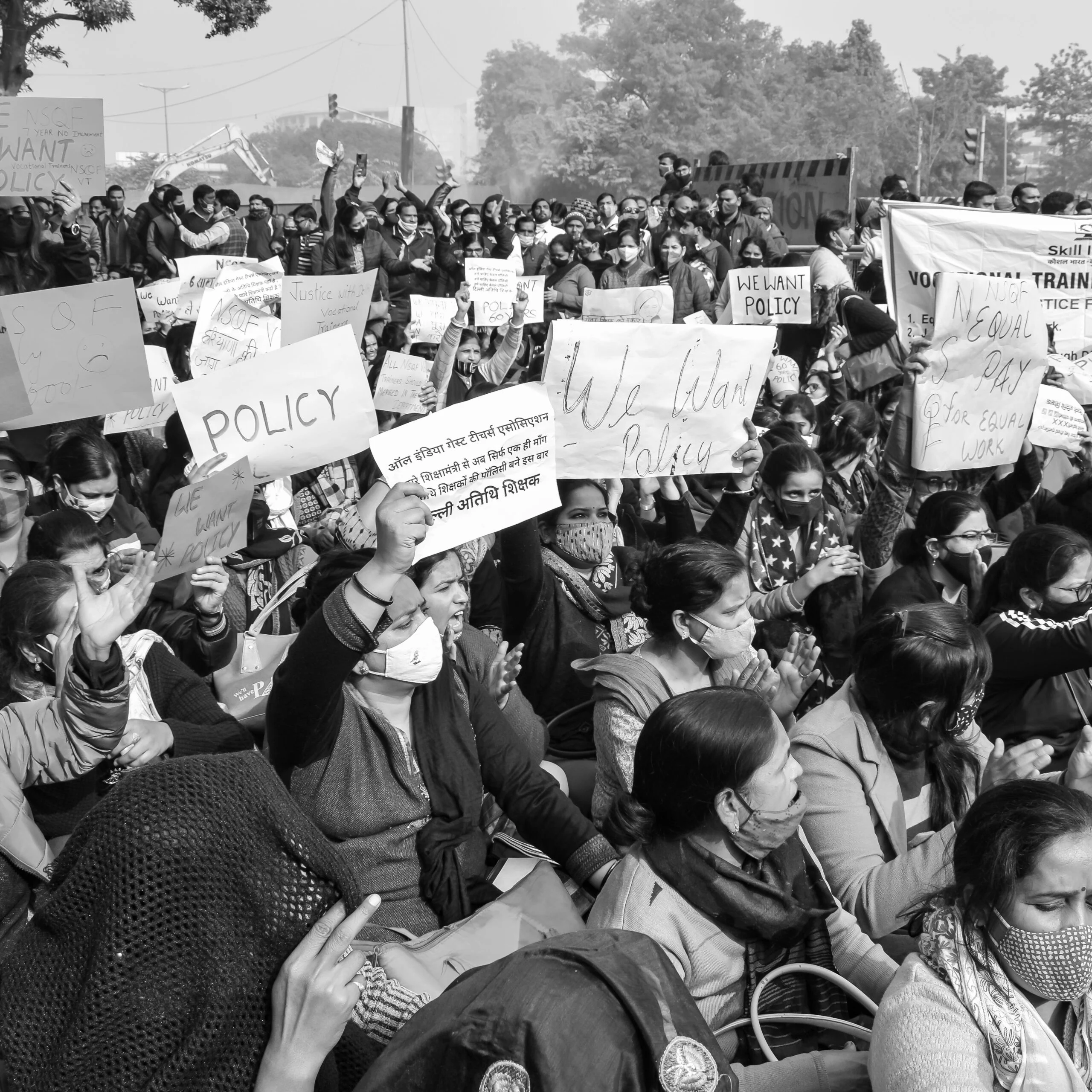
- Teacher training: NEP 2020 envisions a complete overhaul of teacher education, including a new four-year integrated B.Ed. degree as the minimum qualification by 2030. India currently has a massive shortage of trained teachers, especially in rural areas. Retraining millions of existing teachers and producing enough new ones is one of the biggest challenges.
- Funding gap: The 6% of GDP target remains distant. Without significantly more money, many of the policy’s ambitious goals - from universal pre-school to 50% GER - will be difficult to achieve. State governments, which bear a large share of education spending, often face tight budgets.
- Digital divide: The policy’s emphasis on technology, coding, and online learning assumes a level of digital access that millions of students in rural and tribal areas still do not have. Bridging this gap requires massive investment in infrastructure. The same rural communities struggling with agrarian distress often lack the digital infrastructure needed to make NEP 2020 a reality for their children.
- HECI formation: The proposed single regulator for higher education has not yet been formally established. UGC and AICTE continue to operate, though some of their functions have been updated to align with NEP 2020’s spirit.
Criticism and Debate
No policy of this scale is without criticism. Here are the main concerns raised by educationists, opposition parties, and state governments:
Language Policy Concerns
The recommendation to use mother tongue as the medium of instruction until Class 5 has been widely praised in principle. However, critics point out several practical problems:
- India has hundreds of languages and dialects. In a single classroom in a city like Mumbai, students may speak Marathi, Hindi, Gujarati, Tamil, and Urdu at home. Which “mother tongue” does the teacher use?
- Many parents, especially from economically weaker backgrounds, actively want English-medium education for their children because they see it as a path to better jobs. Mandating local-language instruction without improving the quality of local-language schools could widen inequality rather than reduce it.
- The three-language formula has been controversial for decades. Several southern states see it as a way to impose Hindi. NEP 2020 says no language will be imposed, but trust remains low.
Centralisation vs. State Autonomy
Some state governments argue that NEP 2020 centralises too much power with the Union government. Proposals like a single national regulator (HECI), a common entrance test (CUET), and national curriculum frameworks are seen by some states as encroachments on their constitutional right to shape education policy. States like Tamil Nadu and Kerala have been vocal about protecting their educational models, which they believe have produced strong outcomes.
Implementation Without Funding
Critics note that while the policy is visionary, the government has not backed it with matching increases in education spending. The 6% GDP target is repeated in the document, but annual budgets have not shown a clear trajectory toward that figure. Without money, the policy risks becoming a document of good intentions rather than real change.
Equity and Access
Educationists worry that some NEP provisions could benefit urban, middle-class students while leaving behind rural, Dalit, Adivasi, and minority students. For example, the emphasis on technology and coding is great for students with internet access and devices, but irrelevant for the millions who study in schools without electricity. Similarly, the multiple exit points in higher education, while useful, could be misused by institutions to push out disadvantaged students with lesser credentials rather than supporting them through completion.
Private Sector Role
The policy encourages greater involvement of the private sector and philanthropy in education. Some educators see this as opening the door to further commercialisation and fee hikes, especially in higher education, where private institutions already outnumber government ones. Others argue that government funding alone cannot meet India’s education needs and that responsible private participation is necessary.
How NEP 2020 Compares to the Old System
To make the changes clearer, here is a side-by-side comparison of key features:
Feature | Old System (NEP 1986) | New System (NEP 2020) |
|---|---|---|
School structure | 10+2 | 5+3+3+4 (ages 3–18) |
Pre-school | Not part of formal education | Integrated into Foundational Stage |
Medium of instruction | No clear recommendation | Mother tongue until at least Class 5 |
Subject choice in school | Rigid streams (Science/Commerce/Arts) | Flexible - mix and match subjects |
Undergraduate degree | 3 years | 4 years with multiple exit points |
Higher education regulator | Multiple (UGC, AICTE, NAAC) | Single body (HECI) proposed |
Vocational education | Separate track, often stigmatised | Integrated from Class 6 for all students |
Education spending target | 6% of GDP (never achieved) | 6% of GDP (reiterated) |
GER target | No specific target | 50% by 2035 |
What This Means for Students and Parents
If you are a student currently in school, many of these changes are already starting to appear. New textbooks, more project-based learning, and flexibility in subject choices are gradually being introduced. If you are in college, you may have already encountered the Academic Bank of Credits or the four-year degree option.
For parents, the key takeaway is that the education system is shifting from “memorise and score” to “understand and apply.” This means children may need different kinds of support - less drilling of textbooks and more encouragement to explore, ask questions, and develop skills. The integration of vocational education also means that students who are good with their hands or have practical talents will finally get recognition within the mainstream system.
However, the pace of change varies enormously depending on where you live. Students in a PM SHRI school or a well-funded private school in a city may experience NEP 2020’s benefits sooner. Students in under-resourced government schools in rural areas may have to wait longer, unless state governments and local bodies accelerate implementation and funding.
Frequently Asked Questions (FAQ)
1. Does NEP 2020 make education free?
NEP 2020 does not make all education free. It builds on the Right to Education Act (RTE), which already guarantees free education from ages 6 to 14. The policy extends the vision to early childhood education (ages 3 to 6) and calls for greater investment to make quality education accessible. However, it does not cap fees for private schools or colleges.
2. Will English be removed from schools?
No. NEP 2020 does not remove English from schools. It recommends that the primary medium of instruction until Class 5 should be the child’s mother tongue or local language, but English continues to be taught as a subject. In higher classes and in higher education, English will remain widely used. The three-language formula includes English as one of the three languages students learn.
3. Is the 10+2 system already gone?
Not entirely. The transition from 10+2 to 5+3+3+4 is gradual. Most states still operate on the 10+2 framework in practice, but the curriculum and textbooks are being updated to align with the new structure. The Foundational Stage (pre-school integration) and the flexibility in subject choice at the secondary level are the areas where changes are most visible so far.
4. Can I transfer credits between universities now?
The Academic Bank of Credits (ABC) system is live, and students can register on the portal to store their credits digitally. In theory, this allows credit transfer between institutions. In practice, many universities are still developing policies for accepting transfer credits, so the process is not yet seamless. Over time, as more institutions join the system and develop clear transfer policies, this should become easier.
5. When will all changes be fully implemented?
NEP 2020 does not have a single deadline. Different provisions have different timelines. For example, the vocational education target was set for 2025, the GER target is 2035, and the teacher education overhaul is expected by 2030. Full implementation across all states and all levels of education will likely take a decade or more, depending on political will and funding. Much like the need for comprehensive electoral reforms, translating policy into practice requires sustained commitment from all levels of government.
The Bottom Line
NEP 2020 is arguably the most ambitious education reform India has attempted. Its vision - flexible learning, skill-based education, early childhood focus, and a less stressful exam system - is widely praised. The challenge, as always, lies in execution. India is a vast, diverse country where the quality of education varies wildly from one state to another, from one district to another, and even from one school to another within the same city.
The policy’s success will be measured not by how good it looks on paper, but by whether a child in a rural government school in Jharkhand or Odisha gets the same quality of foundational education as a child in a well-funded school in Delhi or Bengaluru. That will require not just policy but sustained political commitment, massive investment, and an army of well-trained, well-paid, and motivated teachers.
For now, NEP 2020 has opened the door to a very different kind of Indian education. Whether India walks through that door fully remains to be seen.
What you can do
- Share the evidenceSend this to one person who should know about education.Share on WhatsApp
- Give an afternoonTeach, mentor, clean up, or lend your professional skills.Ways to volunteer
- Tell us what's missingKnow a story, a fact we got wrong, or a solution worth spotlighting?Suggest a story
Politically neutral. Every claim sourced. Report a correction.

No comments yet