Youth Leading Change: How Student-Led NGOs Are Solving India's Toughest Problems
India has over 600 million people under 25, and many are building student-led NGOs, from the Robin Hood Army to campus drives, to tackle local problems.
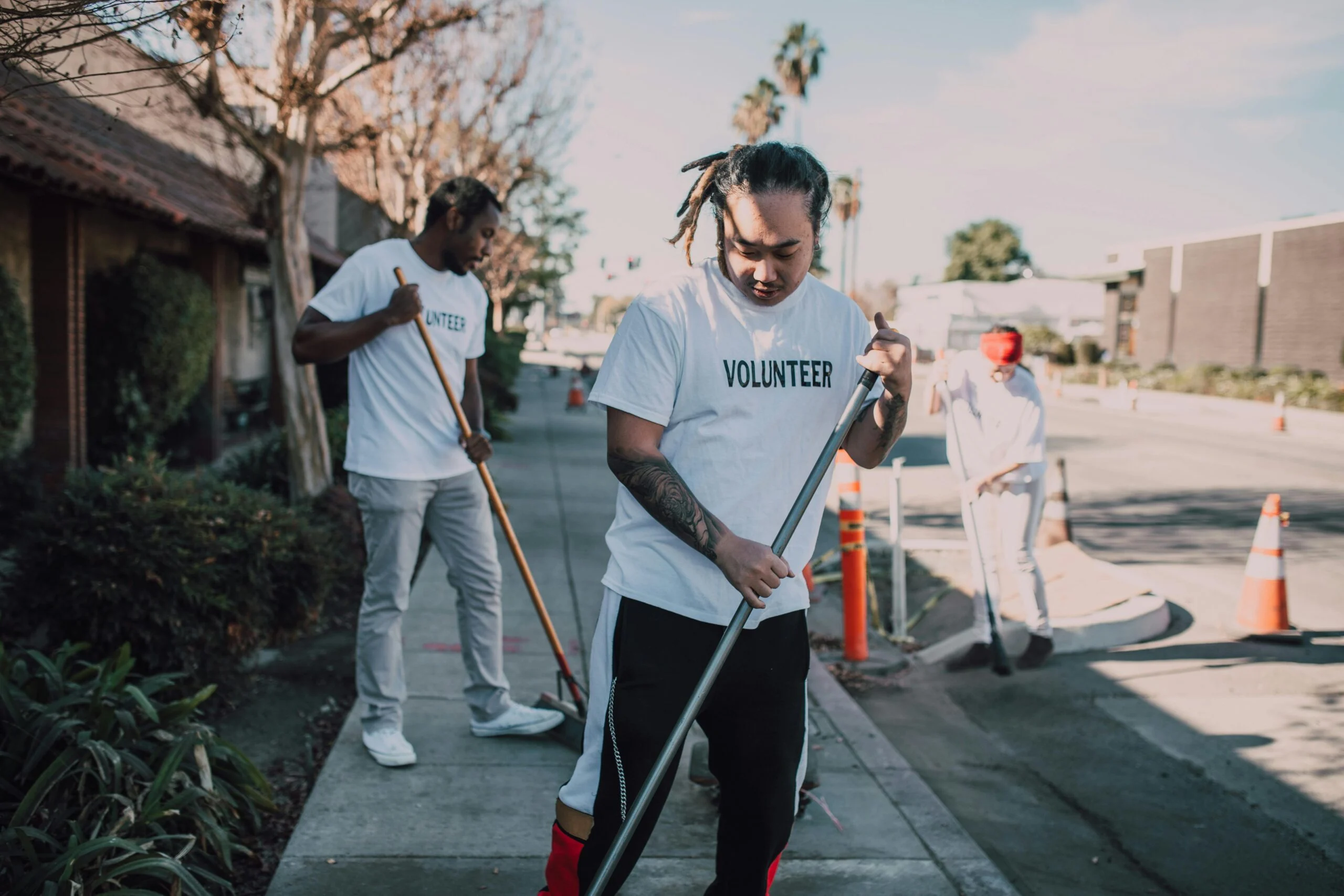
India has the world’s largest youth population. Over 600 million people are under 25. And a growing number of them are not waiting for the government or established institutions to fix the problems they see around them. They are building their own organizations.
From campus food drives that have scaled into national movements to student-founded NGOs running in dozens of cities, young Indians are redefining what civic engagement looks like. These are not symbolic efforts. They are solving real problems: hunger, educational inequality, mental health stigma, and sanitation gaps that affect millions. Alongside government programs like skill development initiatives transforming rural India, these youth-led movements are creating change from the ground up.
The Robin Hood Army: Fighting Hunger, One City at a Time
What started as a weekend project by two friends in Delhi has become one of India’s most recognizable volunteer movements. Neel Ghose and Anand Sinha founded the Robin Hood Army (RHA) in 2014 with a simple idea: collect surplus food from restaurants and distribute it to the hungry.
Today, the Robin Hood Army operates in over 200 cities across India and 12 countries. It has served more than 80 million meals since its founding. The entire operation runs without a single paid employee. Every Robin Hood, as volunteers call themselves, gives their time for free.
What makes the model work is its decentralized structure. Any college student or young professional can start a local chapter. There is no registration fee, no hierarchy, no bureaucracy. You find surplus food, you find people who need it, you connect the two. The simplicity is the point.
RHA’s Mission Koala, launched during the pandemic, identified and provided mid-day meals to children who lost school lunch access when campuses shut down. Volunteers mapped clusters of out-of-school children in their neighborhoods and coordinated deliveries for months.
Making A Difference (MAD): From Street to School
Prakash Ramsinghani was 19 when he started visiting a traffic signal in Pune to teach children who worked there as vendors and beggars. That was 2006. Today, Making A Difference (MAD) operates in 23 cities with over 3,500 active volunteers who teach more than 4,000 underprivileged children every week.
MAD’s model relies entirely on college volunteers. Students commit to teaching at community centers, shelters, or open spaces for at least one year. The curriculum covers basic literacy, numeracy, English, and life skills. But the bigger impact is in what happens around the teaching: mentorship, career guidance, and a consistent adult presence in children’s lives. MAD joins a growing list of NGOs transforming rural education across India.
One of MAD’s most important innovations is its fellowship program. Outstanding volunteers can apply for a two-year fellowship where they lead city operations, train new volunteers, and design curriculum. This creates a pipeline of young leaders who stay connected to grassroots education even as they enter professional careers.
SECMOL: Reinventing Education in Ladakh
The Students’ Educational and Cultural Movement of Ladakh (SECMOL) was founded in 1988 by Sonam Wangchuk, the real-life inspiration behind the film 3 Idiots. The organization was born from a painful statistic: in the late 1980s, over 95% of students in Ladakh were failing their board examinations.
Wangchuk, then a fresh engineering graduate, realized the problem was not the students. The curriculum was designed for urban India and taught in languages Ladakhi children did not speak at home. SECMOL built an alternative school near Leh where students who had failed the mainstream system could learn through hands-on, experiential methods in their own language first.
SECMOL’s campus runs entirely on solar energy, an approach that echoes Barefoot College’s solar energy training model in Rajasthan. Students build their own furniture, grow food in greenhouses, and manage the campus infrastructure. The organization’s advocacy work eventually convinced the Ladakh administration to reform the public education system, resulting in pass rates climbing from under 5% to over 75%.
Youth Feed and Campus Food Rescue Networks
College canteens across India waste enormous amounts of food every day. Several student groups have organized systematic food rescue operations to redirect this waste. Youth Feed, active across multiple campuses in Maharashtra, collects leftover canteen food and distributes it to nearby slum communities within hours.
What distinguishes these campus food rescue networks from occasional drives is their regularity. Volunteers operate on fixed schedules: same time, same pickup point, same distribution routes. This reliability means recipient communities can count on the food showing up, reducing the panic and uncertainty that comes with food insecurity.
At IIT Bombay, the Daan Utsav initiative coordinates annual donation drives but has also established permanent food collection points that operate year-round. Similar models exist at IIT Delhi, BITS Pilani, and several NITs.
iCall: Breaking the Mental Health Stigma
India has one psychiatrist for roughly every 400,000 people. In rural areas, the ratio is worse. Formal mental health care is unaffordable and inaccessible for most Indians. Student-led mental health initiatives are trying to fill this gap.
iCall, started at the Tata Institute of Social Sciences (TISS) in Mumbai, provides free telephone and email-based counseling services. While the core team includes trained professionals, much of the outreach, awareness campaigns, and initial screening happens through student volunteers trained in psychological first aid.
On campuses, student-led groups like Connecting Trust (IIT Kanpur), Saathi (IIM Ahmedabad), and Manas Foundation chapters offer peer counseling, stress management workshops, and safe spaces for students dealing with academic pressure, family conflict, or identity-related struggles.
The significance of these peer-led initiatives is cultural. Many young Indians are more willing to speak to a fellow student about their problems than to visit a clinic. Breaking the first barrier, getting someone to talk, is often the hardest part.
Enactus India: Social Enterprise on Campus
Enactus is a global network, but its India chapters have produced some remarkable student-led social enterprises. The format is straightforward: teams of students identify a community problem, build a sustainable business model to solve it, and compete nationally and internationally.
Enactus teams from Indian colleges have created biodegradable sanitary pads for rural women, mushroom farming collectives for tribal communities, recycled-fabric fashion brands employing women from urban slums, and water purification systems using locally available materials.
The model works because it forces students to think beyond charity. The solutions have to be financially sustainable. This means understanding supply chains, pricing, distribution, and marketing, skills that students carry into their careers regardless of whether they stay in the social sector.
Safecity: Mapping Street Harassment
Safecity (now Red Dot Foundation) started as a platform where women could anonymously pin incidents of sexual harassment on a public map. Founded by ElsaMarie D’Silva, the initiative gained massive traction on college campuses where student volunteers organized awareness drives and data collection campaigns.
Campus chapters at colleges across Mumbai, Delhi, and Bangalore trained students to facilitate safety audits of their neighborhoods. The data collected through the platform has been used by municipal authorities to improve street lighting, increase police patrols in high-risk zones, and design safer public transport routes.
Student volunteers at Safecity do not just collect data. They also run workshops on consent, bystander intervention, and legal rights. The approach treats safety as a community responsibility rather than an individual burden.
Young Leaders for Active Citizenship (YLAC)
YLAC addresses a different problem: the disconnect between India’s youth and its democratic processes. Founded by Raunaq Singh and Rohini Nilekani, YLAC runs fellowship programs that train young people in policy analysis, legislative processes, and civic participation.
Fellows work directly with Members of Parliament, analyzing bills, drafting policy briefs, and attending committee meetings. The program has placed over 600 young fellows in legislative offices, giving them firsthand experience of how laws are made and why citizen participation matters.
YLAC also runs campaigns around voter registration, RTI awareness, and budget literacy. Their voter education drives on college campuses have helped register thousands of first-time voters who otherwise would not have participated in elections.
Why Student-Led Organizations Succeed Where Others Struggle
Several patterns explain why student-led NGOs in India have achieved scale and impact that surprises even established development organizations.
Zero overhead. Most student organizations run without office space, paid staff, or administrative costs. Volunteers use their own phones, their campus infrastructure, and social media for coordination. This means almost every rupee donated goes directly to the cause.
Built-in recruitment pipeline. Every year brings a new batch of students to campus. This natural turnover, which would kill most organizations, actually works in their favor because they have designed for it. Leadership transitions happen every 1-2 years, with outgoing members training incoming ones.
Digital native operations. Students coordinate through WhatsApp groups, Instagram stories, and Google Sheets. They do not need expensive CRM software or project management tools. This digital fluency lets them scale communication and logistics across cities faster than traditional NGOs.
Peer credibility. A 20-year-old volunteer explaining mental health to a 19-year-old student is more effective than a government pamphlet. The same applies to teaching: children respond differently to a college volunteer who shows up every Saturday compared to a bureaucratic program that changes staff every quarter.
The Challenges They Face
Student-led organizations are not without problems. The biggest challenge is sustainability after graduation. Many campus initiatives die when their founding batch graduates. Those that survive, like Robin Hood Army and MAD, have deliberately built systems that outlast any individual leader.
Funding is another persistent issue. Most student organizations rely on crowdfunding, small donations, and occasional CSR grants. They rarely have the institutional relationships needed for large-scale funding. Some, like Enactus projects, solve this by building revenue-generating models. Others depend on the goodwill of their volunteer base.
There is also the question of impact measurement. How do you prove that your teaching sessions at a traffic signal are making a long-term difference? Student organizations are getting better at tracking outcomes, but rigorous data collection is hard when your entire team is volunteering between classes.
How You Can Get Involved
If you are a college student, the easiest path is to join an existing organization. Robin Hood Army, MAD, Enactus, and NSS (National Service Scheme) have chapters across most major campuses. Check their websites or campus notice boards.
If you are a working professional, many of these organizations need mentors more than they need money. Offering your professional skills, whether in design, accounting, legal compliance, or technology, can help a student-led NGO operate more effectively than a cash donation.
If you want to start something new, begin small. Pick one problem in your neighborhood. Find five friends who care about it. Show up consistently. The organizations profiled here all started exactly this way: a handful of young people who decided that waiting for someone else to fix the problem was not good enough.
India’s toughest problems, hunger, educational inequality, mental health, gender safety, environmental degradation, will not be solved by any single policy or institution. They will be solved by millions of young people choosing to act. And that is already happening.
What you can do
- Share the evidenceSend this to one person who should know about education.Share on WhatsApp
- Back what worksVolunteer time or skills with groups doing this work.Ways to volunteer
- Tell us what's missingKnow a story, a fact we got wrong, or a solution worth spotlighting?Suggest a story
Politically neutral. Every claim sourced. Report a correction.
No comments yet