Gujarat -- The Model That Built a Narrative
A data-driven examination of the Gujarat Model: what GDP growth, NFHS malnutrition data, NCRB farmer records, and court findings actually show.
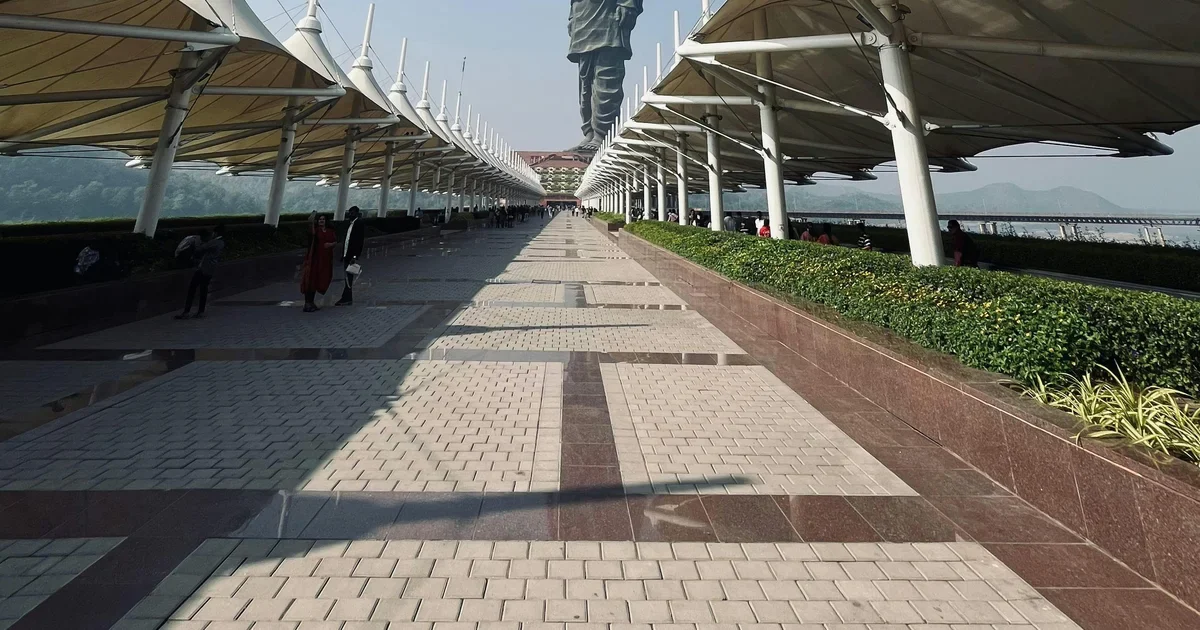
Since 2002, and with renewed force after 2014, the phrase “Gujarat Model” has circulated through Indian political and economic discourse as shorthand for effective governance. Proponents point to highway construction, power sector reform, investor summits, and GDP growth. Critics argue that the model prioritised optics and capital-friendly policy over human development. This article does not argue a political position. It examines what the available data actually shows - on poverty, education, health, labour, agrarian distress, communal violence, and industrial investment - and asks whether a single state’s story, told selectively, can become a national template.
What the “Gujarat Model” Claims
The Gujarat Model, as articulated by its advocates, rests on four pillars. First, a strong track record of industrial investment, particularly in petrochemicals, pharmaceuticals, textiles, and ports. Second, uninterrupted electricity supply achieved after 2003 through the Jyotigram scheme, which separated agricultural and domestic feeders. Third, infrastructure spending on roads, irrigation, and urban connectivity. Fourth, a streamlined bureaucracy that facilitated ease of doing business through single-window clearances and the Vibrant Gujarat investor summits, held biennially from 2003 onward.
These are real achievements. Gujarat’s per-capita income grew from approximately Rs 22,000 in 2001-02 to over Rs 70,000 by 2011-12, according to state GDP data compiled by the Reserve Bank of India. Industrial output grew substantially. The state accounts for nearly 17 percent of India’s total manufacturing output. The port of Mundra, developed by the Adani Group under long-term concession agreements with the Gujarat government, became the largest commercial port in India by volume, handling over 150 million metric tonnes annually by 2022-23, per data from the Ministry of Ports, Shipping and Waterways.
None of this is fabricated. The question is whether industrial GDP growth and infrastructure provision translate into broad human development, and what the costs of the model were for those who did not benefit from it.
HDI and Human Development: A More Complicated Picture
Gujarat’s position on the Human Development Index (HDI) has persistently lagged behind its per-capita income rank. The UNDP India Human Development Report 2011 placed Gujarat 11th among major states on the composite HDI score, behind Kerala, Delhi, Himachal Pradesh, Goa, and Punjab, states with lower per-capita incomes in some cases. A 2016 working paper by the Institute for Human Development (IHD), New Delhi, tracking HDI trends across Indian states from 1990 to 2011, found that Gujarat’s HDI improvements in health and education were slower than comparable states at similar income levels.
Child malnutrition is a particularly sharp data point. The National Family Health Survey (NFHS-4, 2015-16) found that 38.5 percent of children under five in Gujarat were stunted, compared to a national average of 38.4 percent. Among children aged 6-59 months, 62.6 percent were anaemic, above the national average of 58.6 percent. NFHS-5 (2019-21) showed some improvement: stunting fell to 25.1 percent in Gujarat against a national average of 35.5 percent, a meaningful improvement, though Gujarat’s own progress in earlier decades had been slow relative to its income growth. The NFHS-5 data is publicly available from the Ministry of Health and Family Welfare.
The Global Hunger Index methodology, which draws on NFHS data among other sources, has consistently ranked India poorly, and Gujarat’s child anaemia and undernutrition figures contribute to that outcome. The disconnect between high per-capita income and persistent malnutrition is documented in a 2012 paper by economist Jean Dreze and Reetika Khera in the Economic and Political Weekly, which specifically examined Gujarat alongside other high-growth states.
Female Labour Force Participation: What PLFS Data Shows
One of the most cited critiques of the Gujarat Model concerns female labour force participation (FLFP). India’s Periodic Labour Force Survey (PLFS) provides the most granular state-level data available. According to PLFS 2022-23 (released by the Ministry of Statistics and Programme Implementation), Gujarat’s female worker population ratio (WPR) in rural areas was 43.5 percent, above the national rural average of 41.5 percent. In urban areas, Gujarat’s female WPR was 20.8 percent, below the national urban average of 25.4 percent.
The urban gap is significant. Gujarat is one of India’s most urbanised states, with over 42 percent of its population in cities, per Census 2011. The concentration of women in informal and home-based work in the textile and embroidery sectors - classified as self-employed or unpaid family workers in the PLFS framework - means that headline WPR numbers may overstate economic autonomy. A 2019 study by the Self-Employed Women’s Association (SEWA), headquartered in Ahmedabad, documented that a majority of women in the informal textile supply chain earned below the state minimum wage, with median monthly incomes under Rs 3,000 for bidi rollers and home-based embroidery workers at the time of the survey.
The PLFS data also shows that wage employment among women, as opposed to self-employment, remains low in Gujarat’s urban centres. The pattern suggests a model of industrialisation that absorbed female labour at the bottom of supply chains without generating formal employment at scale for women. Informal sector workers across India face structural wage gaps - a dynamic explored in depth in the context of India’s gig economy workforce, where labour absorption without benefits has become a nationwide pattern.
Farmer Suicides: What NCRB Records Show
The National Crime Records Bureau (NCRB) publishes annual data on accidental deaths and suicides, including a specific category for farmers and agricultural labourers. According to NCRB data for 2013-2022 (the most recent decade with consistent methodology), Gujarat recorded between 580 and 980 farmer suicides per year, with an average of approximately 732 per year across that decade. The data is publicly available in the NCRB’s annual “Accidental Deaths and Suicides in India” report series.
Two important caveats apply. First, NCRB data on farmer suicides has been contested by researchers, including P. Sainath and the Nagpur-based Vidarbha Jan Andolan Samiti, who argue that states underreport by classifying farm deaths under other causes, particularly where the deceased was a female or a tenant farmer. Second, Gujarat’s absolute numbers are lower than Maharashtra, Telangana, Karnataka, and Madhya Pradesh, which have historically dominated national farmer suicide statistics.
What the NCRB data does not support is the claim that the Gujarat Model eliminated agrarian distress. The Saurashtra cotton belt - particularly districts like Amreli, Rajkot, and Surendranagar - recorded persistent debt-related distress through the 2000s and 2010s. A 2007 report by the National Bank for Agriculture and Rural Development (NABARD) on Saurashtra found that average farm household debt exceeded Rs 70,000, well above the national average, driven by groundwater depletion and input cost inflation for Bt cotton cultivation.
NFHS-4 (2015-16) found 38.5 percent of children under five in Gujarat were stunted -- compared to a national average of 38.4 percent. Child anaemia stood at 62.6 percent, above the national figure of 58.6 percent.
The 2002 Violence: What Official Records Establish
Any account of the Gujarat Model must reckon with the communal violence of February and March 2002. This section relies entirely on findings from official commissions of inquiry and court records, not political commentary.
The National Human Rights Commission (NHRC) conducted a suo motu inquiry into the Gujarat violence and submitted its final report in May 2002. The NHRC found prima facie evidence of state failure to prevent violence and protect affected populations, noted delays in deploying the army and the Rapid Action Force, and criticised the state’s initial relief camp policies. The report is a public document and is referenced in subsequent Supreme Court proceedings.
Official casualty figures from the Gujarat government placed deaths at 1,044, of which 790 were Muslim and 254 were Hindu. Independent estimates compiled by journalists and civil society organisations, including a report by the Concerned Citizens Tribunal (co-chaired by retired Justice V.R. Krishna Iyer and Justice P.B. Sawant), placed the figure higher, but courts have not adjudicated on total death toll methodology. The Supreme Court of India, in its order of April 12, 2004, transferred nine sensitive cases from Gujarat courts to courts in Maharashtra, citing concern about fair trial in the originating jurisdiction.
In 2012, a Special Investigation Team (SIT) appointed by the Supreme Court submitted its report finding no evidence of criminal conspiracy at the highest levels of state government. The SIT’s closure report was challenged in court by Zakia Jafri, widow of former Congress MP Ehsan Jafri, who was killed in the Gulberg Society massacre. In June 2022, the Supreme Court of India upheld the SIT’s findings and dismissed the challenge. That ruling represents the current final judicial determination on the question of higher-level conspiracy, and this article records it as such.
What remains undisputed in court records is the scale of displacement: approximately 150,000 people were in relief camps at the peak of the violence, per Gujarat government data presented before the Supreme Court. The violence destroyed property and livelihoods across districts including Ahmedabad, Vadodara, Godhra, and Anand.
The economic consequence is documented but rarely cited in Gujarat Model discussions. A 2002 report by the Federation of Indian Chambers of Commerce and Industry (FICCI) estimated the violence caused direct economic losses of approximately Rs 2,500 crore in Gujarat, accounting for destroyed property, halted production, and trade disruption. The long-term investment climate impact during 2002-03 was noted by multiple credit rating agencies, though Gujarat recovered investment inflows by 2004-05.
Dholera SIR: Promised Smart City, Current Status
The Dholera Special Investment Region (SIR) is perhaps the most ambitious single infrastructure project associated with the Gujarat Model’s legacy. Announced in 2009 under the Delhi-Mumbai Industrial Corridor (DMIC) project, Dholera was to become a planned city of 2 million people, covering 920 square kilometres in the Gulf of Khambhat region of Ahmedabad district.
As of 2024, the project remains substantially incomplete relative to original timelines. According to a report by the Comptroller and Auditor General of India (CAG) tabled in the Gujarat Legislative Assembly in 2021, land acquisition for Dholera had been partially completed, but the infrastructure buildout - trunk roads, water supply, sewage, power - had progressed well below projected targets. The CAG report noted cost overruns and delays in the Special Purpose Vehicle responsible for Dholera, the Dholera Industrial City Development Limited.
Villagers from 22 villages in the Dholera SIR zone have documented displacement from agricultural and pastoral land. A 2019 investigation by The Wire cited official land acquisition records showing that farmers received compensation at rates that many contested as below market value, with some cases pending before the Gujarat High Court at the time of publication. The semiconductor fabrication plant announced by Vedanta-Foxconn for Dholera was subsequently shifted to the Sanand area of Gujarat after Vedanta’s international financing difficulties, though in 2024 Tata Electronics announced a separate semiconductor facility in the Dholera SIR zone. These facts are drawn from official press releases and Ministry of Electronics and Information Technology announcements.
Dholera’s story illustrates a pattern visible in several flagship Gujarat Model projects: ambitious announcement, significant land acquisition, slower than promised delivery, and tangible costs for communities displaced by the development process.
The Adani Port Ecosystem: Public Record Facts
The relationship between the Gujarat state government and the Adani Group is a matter of public record through government contracts, land lease agreements, and parliamentary disclosures. This section records verifiable facts from those public records.
The Mundra Port and Special Economic Zone (MPSEZ) was awarded an initial concession by the Gujarat Maritime Board in 1995, and expanded significantly under subsequent Gujarat government approvals. By 2023-24, Adani Ports and Special Economic Zone Ltd (APSEZ), a listed company, operated ports at Mundra, Hazira, Dahej, and Tuna in Gujarat, handling approximately 60 percent of Gujarat’s total cargo, per APSEZ’s annual report for FY 2023-24.
Land allocation to APSEZ in the Mundra SEZ area has been the subject of a 2013 inquiry by the Gujarat government itself, following a complaint by the National Alliance of People’s Movements. The inquiry noted that land classified as wasteland had been allocated at concessional rates. The Gujarat High Court, in a 2016 order, directed the state government to review land classification procedures for port-adjacent allocations, though it stopped short of invalidating the grants.
The Adani Group’s diversification from ports into power, airports, coal, and media has been extensively documented in financial press and regulatory filings. A January 2023 short-seller report by Hindenburg Research alleged accounting irregularities and stock manipulation, claims the Adani Group denied. A Supreme Court-appointed expert committee in May 2023 found no definitive evidence of manipulation and recommended SEBI examine specific transactions. SEBI’s investigation was ongoing as of the end of 2024. These facts are drawn from SEBI filings and Supreme Court orders, which are public documents.
The Gujarat Model’s association with the Adani Group is relevant to any honest analysis because it raises a structural question: when state infrastructure policy consistently benefits a small number of conglomerate actors, the distributional consequences differ materially from broad-based industrial development.
Tribal Displacement: Documented Evidence
Gujarat’s Scheduled Tribe population, concentrated in districts like Narmada, Valsad, Dangs, Tapi, and Chhota Udaipur, has been disproportionately affected by large infrastructure projects. The Sardar Sarovar Dam on the Narmada river is the most extensively documented case.
The Sardar Sarovar Project’s resettlement record is documented across multiple official sources. The World Bank, which withdrew financing from the project in 1993 following an independent review (the Morse Commission Report), found that rehabilitation commitments were not being met at the time of withdrawal. The Supreme Court of India, in its October 2000 judgment in Narmada Bachao Andolan v. Union of India, permitted raising the dam height subject to phased resettlement. Subsequent monitoring by the Grievance Redressal Authorities for Gujarat, Madhya Pradesh, and Maharashtra found persistent gaps in land-for-land resettlement through the 2000s and 2010s.
A 2008 report by the Government of India’s Ministry of Tribal Affairs estimated that approximately 40,000 tribal families were displaced or affected by the Sardar Sarovar project across three states. Of these, Gujarat’s own affected population was smaller, as most displacement occurred in Madhya Pradesh. However, the project’s benefits - irrigation water and power - were distributed primarily to districts in central and north Gujarat, raising equity concerns documented by researchers at the Centre for Social Studies, Surat. Community-led microfinance and self-help networks, documented across India in the work of India’s Self-Help Group movement, represent one of the few bottom-up financial tools available to displaced agricultural communities seeking livelihood recovery.
Beyond Narmada, the construction of the Dholera SIR, SEZ expansions in Mundra, and industrial corridors in South Gujarat have affected tribal and small-farm communities. The Forest Rights Act 2006, which requires gram sabha consent for forest land diversion, was cited in multiple Gujarat High Court cases between 2010 and 2020 as having been bypassed in project approvals. These are documented in court records, not advocacy claims.
Surat’s Industrial Base: A Genuine Success Story
Fair analysis requires acknowledging where the Gujarat Model delivered concrete, broad-based gains. Surat is the clearest example.
Surat processes approximately 90 percent of the world’s rough diamonds, employing an estimated 600,000 to 700,000 workers in polishing units as of 2022-23, according to the Gems and Jewellery Export Promotion Council (GJEPC). The industry generated exports of approximately $24 billion in FY 2022-23. The diamond cutting and polishing workforce is predominantly from the Saurashtra region, representing one of the most significant instances of rural-to-urban labour absorption in any Indian city.
Surat’s textile sector is equally significant. The city produces an estimated 30 million metres of synthetic fabric per day, serving both domestic and export markets. The concentration of power looms - estimated at over 500,000 units in the Surat-Navsari belt - represents an industrial ecosystem built over four decades, predating the formal Gujarat Model policy frame. Gujarat’s power sector reform, which delivered reliable electricity to Surat’s industrial areas, is genuinely credited with enabling the expansion of this sector through the 2000s and 2010s.
The Surat Municipal Corporation has also been cited as a model of urban governance reform. Following the 1994 plague epidemic, the municipal body undertook systematic solid waste management reforms that earned it international recognition. The city ranked first in the Swachh Survekshan for several years in the 2010s. These achievements are real and documented in government surveys.
The Modi Years as Chief Minister: Economic Data
Narendra Modi served as Chief Minister of Gujarat from October 2001 to May 2014, a period of approximately 12.5 years. Assessing his specific contribution to Gujarat’s economic trajectory requires separating pre-existing trends from policy-induced changes.
Gujarat’s industrial base was already substantial before 2001. The state had been a major industrial hub since the 1960s, with Ahmedabad’s textile mills and Vadodara’s petrochemical complex (IPCL and GSFC) established under earlier development plans. The economic liberalisation of 1991 accelerated private investment across India, and Gujarat, with its coastline, entrepreneurial communities, and existing infrastructure, was well-positioned to benefit from that liberalisation before Modi became Chief Minister.
What can be attributed to the Modi-era administration with reasonable confidence: the Jyotigram electricity scheme (2003), the Vibrant Gujarat summits starting 2003, improvements in the ease of doing business rankings (Gujarat ranked first or second among states in the World Bank’s Doing Business in India survey for several years from 2009 onward), and the completion of the Narmada canal network that expanded irrigation coverage in Saurashtra and Kachchh. The canal expansion in Saurashtra - bringing water to districts that historically lacked it - is among the most tangible and broadly beneficial infrastructure achievements of the period.
Gujarat’s Gross State Domestic Product (GSDP) grew at an average of approximately 10.2 percent per year in real terms between 2001-02 and 2011-12, according to data from the Reserve Bank of India’s State Finances report series. This compares to a national average of approximately 7.8 percent during the same period. The gap is real, though economists including Maitreesh Ghatak (London School of Economics) and Sanjoy Chakravorty (Temple University) have noted in academic papers that Gujarat’s growth was faster than the national average even in the 1990s, before the Modi government took office, making it difficult to isolate the effect of the 2001 policy change from longer-run structural advantages.
Claims vs. Data: A Summary Assessment
The Gujarat Model, as a political narrative, makes claims that the data partially supports and partially contradicts. The table below summarises the key claims and the available evidence.
Claim | Data | Source |
|---|---|---|
Fastest-growing state GDP | Faster than national average, not the fastest among all states in every year | RBI State Finances reports |
Zero-load-shedding state | Jyotigram achieved this for non-agricultural feeders from 2006 | Gujarat Energy Development Agency |
Best human development indicators | Ranked 11th among major states on HDI; child malnutrition above national average in NFHS-4 | UNDP India HDR 2011; NFHS-4 2015-16 |
No communal violence after 2002 | Major incidents in 2002; smaller incidents in 2008 (Dangs) and 2012 (Vadodara) documented in NCRB data | NCRB; NHRC |
Investment-friendly climate | Vibrant Gujarat MoUs converted to actual investment at estimated 25-30 percent, per CMIE data | Centre for Monitoring Indian Economy |
The conversion rate for Vibrant Gujarat MoUs deserves elaboration. A 2013 analysis by the Centre for Monitoring Indian Economy (CMIE) found that of the investment intentions announced at Vibrant Gujarat summits between 2003 and 2011, actual capital expenditure corresponded to roughly 25-30 percent of the announced figures. This pattern is not unique to Gujarat - MoU conversion rates at similar summits in Rajasthan, West Bengal, and Andhra Pradesh showed comparable gaps - but it qualifies the summit as a branding exercise as much as an investment generation mechanism. Transparency tools like the Right to Information Act remain the primary mechanism through which citizens can verify whether announced investments translate into actual public expenditure.
Why the Narrative Was Built and How It Travelled
The Gujarat Model narrative served a specific political purpose after 2012 and especially through the 2014 general election. The argument was not merely that Gujarat had developed - it was that the Gujarat Chief Minister’s governance style was the reason for that development, and that this style could be replicated nationally.
The media infrastructure that amplified this narrative is itself a subject of study. A 2014 report by the Editors Guild of India noted the absence of critical local media in Gujarat, a state where major Gujarati-language dailies - Sandesh, Gujarat Samachar - had adopted pro-administration editorial postures. National media coverage of Gujarat Model claims was largely uncritical before 2013, when the Economic and Political Weekly and the Hindu Business Line began publishing data-driven counter-analyses.
The intellectual architecture of the narrative drew on genuine achievements - Jyotigram, port development, road construction - and presented them as evidence of a complete development model, eliding data on malnutrition, communal violence, agrarian distress, and displacement. This selective presentation is not unique to Gujarat or to the BJP; ruling parties in every Indian state build similar narratives around their most favourable data points.
What made Gujarat different was the scale of national projection. When a state’s governance record becomes the explicit mandate of a national electoral campaign, the quality of the underlying evidence matters more, because it has consequences beyond the state’s borders. Policies and approaches adopted nationally on the basis of the Gujarat template - land acquisition reform, special investment region legislation, investor summit diplomacy - carry the assumptions embedded in the original model.
What an Honest Reckoning Looks Like
Gujarat’s record is neither a development miracle to be replicated without question nor a complete failure. It is a mixed outcome that reflects the priorities and trade-offs of a particular political economy approach.
The genuine gains: significant industrial investment, improved power infrastructure, road connectivity, diamond and textile sector employment at scale in Surat, port capacity at Mundra and Hazira, Narmada canal coverage extending to water-stressed districts.
The genuine gaps: below-average performance on human development indicators relative to income levels, persistent child malnutrition in tribal belts and urban slums, documented tribal displacement from large infrastructure projects, agrarian distress in the cotton belt, concentration of industrial benefits in a small number of conglomerate actors, and the unresolved legacy of the 2002 violence on community trust and minority economic participation.
Development analysis is most useful when it is honest about both. Gujarat offers real lessons in power sector reform, port development, and single-window clearance systems. It also offers cautionary lessons about the limits of capital-led growth that bypasses investment in nutrition, public health, education, and equitable land processes.
India is large enough, and diverse enough, that no single state model is a complete template. The states that lead on human development - Kerala on health and education, Himachal Pradesh on school attendance, Tamil Nadu on maternal mortality reduction - used different policy mixes, with stronger emphasis on public provisioning alongside private investment. The states that lead on industrial growth - Maharashtra, Karnataka, Telangana, Gujarat - share some approaches but differ on others.
The Gujarat story is worth studying in full, not in excerpt. That means accepting the data on malnutrition alongside the data on GDP. It means citing the NHRC report on 2002 alongside the SIT’s 2012 finding. It means acknowledging that 150,000 displaced people represent a human cost, even when the broader economy grew. A state’s narrative should be able to carry the weight of all its facts.
Sources and References
- National Family Health Survey (NFHS-4, 2015-16; NFHS-5, 2019-21), Ministry of Health and Family Welfare, Government of India
- Periodic Labour Force Survey (PLFS 2022-23), Ministry of Statistics and Programme Implementation, Government of India
- National Crime Records Bureau, “Accidental Deaths and Suicides in India” annual reports, 2013-2022
- National Human Rights Commission, Report on Gujarat Violence, May 2002
- Supreme Court of India, Narmada Bachao Andolan v. Union of India, October 2000
- Supreme Court of India, SIT orders and Zakia Jafri petition, 2004-2022
- Comptroller and Auditor General of India, Report on Dholera SIR, tabled in Gujarat Legislative Assembly, 2021
- Reserve Bank of India, State Finances: A Study of Budgets, annual series
- UNDP India Human Development Report 2011
- Institute for Human Development (IHD), “Human Development Across Indian States” working paper, 2016
- Gems and Jewellery Export Promotion Council (GJEPC), annual export data, FY 2022-23
- Centre for Monitoring Indian Economy (CMIE), investment tracking data, 2013
- NABARD, report on agricultural indebtedness in Saurashtra, 2007
- World Bank / Morse Commission, Independent Review of Sardar Sarovar Project, 1992
- FICCI, estimate of economic losses from Gujarat violence, 2002
- Ministry of Ports, Shipping and Waterways, port traffic data, 2022-23
- Adani Ports and SEZ Ltd, Annual Report FY 2023-24
- Dreze, Jean and Reetika Khera, “Regional Patterns of Human and Child Deprivation in India,” Economic and Political Weekly, 2012
What you can do
- Share the evidenceSend this to one person who should know about governance.Share on WhatsApp
- Give an afternoonTeach, mentor, clean up, or lend your professional skills.Ways to volunteer
- Tell us what's missingKnow a story, a fact we got wrong, or a solution worth spotlighting?Suggest a story
Politically neutral. Every claim sourced. Report a correction.

No comments yet