MaharashtraTwo Indias in One State
Maharashtra holds India's wealthiest city and its most distressed farmland. A factual look at the urban-rural divide, Vidarbha farmer suicides, Marathwada drought, and the politics shaping it all.
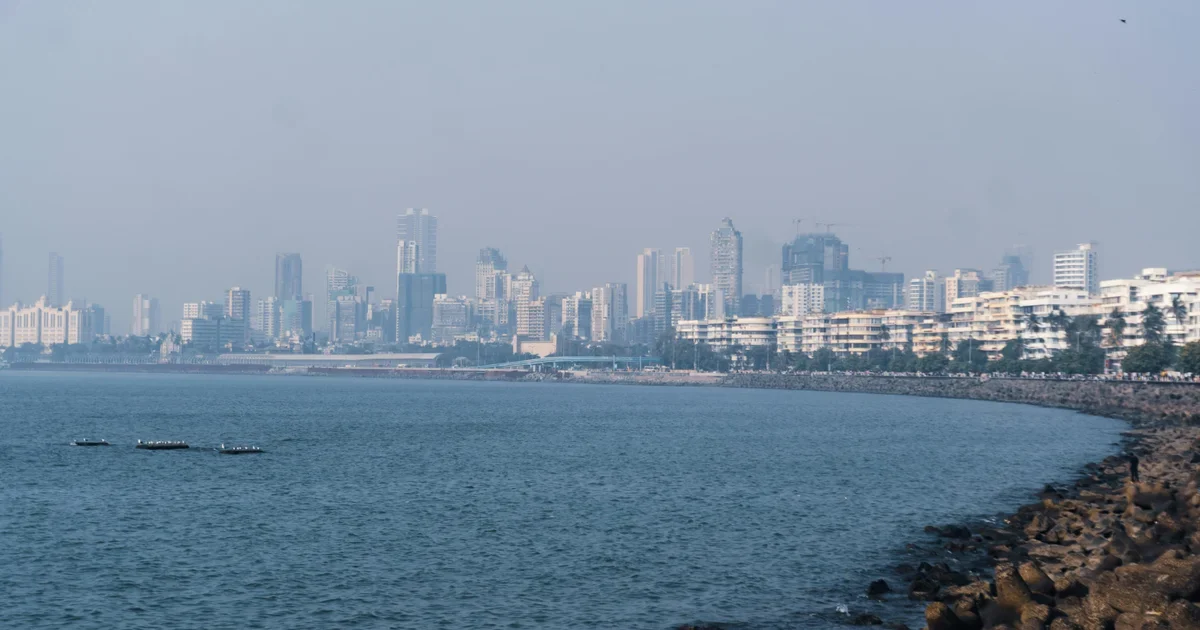
The Maharashtra urban rural divide is among the starkest in India. On one side stands Mumbai, the city that generates roughly 6.16% of India’s GDP and processes nearly 70% of the country’s financial transactions. On the other side, in the parched fields of Vidarbha and Marathwada, farmers end their lives in numbers that have made Maharashtra a persistent headline in NCRB’s annual reports on agrarian distress. This is not a tale of simple inequality. It is a story of how one state can hold its richest and its most desperate citizens simultaneously, separated not just by distance but by policy, politics, and decades of skewed investment.
Key Data Points at a Glance
- Mumbai Metropolitan Region: approximately 6.16% of India’s GDP
- Maharashtra farmer suicides in 2021: 3,536 (NCRB) - 37.5% of national total
- Maharashtra farmer suicides in 2020: 3,828 (NCRB)
- Maharashtra farmer suicides in 2019: 3,927 (NCRB)
- Western Maharashtra irrigated coverage: 60-70% in sugar belt districts
- Vidarbha irrigated coverage: 12-15% in cotton-growing districts
- Pune IT workforce: over 500,000 professionals (NASSCOM 2023)
- NSE market capitalisation (2023): over Rs 350 lakh crore
- 2024 Maharashtra assembly result: Mahayuti 230 seats, MVA 50 seats (out of 288)
Mumbai: India’s Financial Engine
Mumbai’s status as India’s financial capital is not rhetoric. The city is home to the Bombay Stock Exchange (BSE), the National Stock Exchange (NSE), and the Reserve Bank of India’s headquarters. According to the Brihanmumbai Municipal Corporation’s data, the Mumbai Metropolitan Region (MMR) contributes approximately 6.16% of India’s total GDP, a figure that represents more economic output than several Indian states combined.
The banking and financial services sector drives Mumbai’s dominance. The city hosts the registered offices of most major Indian banks, insurance companies, and asset management firms. The NSE, consistently ranked among the world’s top exchanges by trading volume, processes equity derivatives contracts that dwarf those of many global counterparts. As of 2023, the NSE’s combined market capitalisation crossed Rs 350 lakh crore, making Mumbai’s exchanges central to the savings and pensions of over 90 million registered investors across India.
Beyond finance, Mumbai’s port handles a significant share of India’s containerised cargo. The city’s film and media industry, collectively called Bollywood, generates an estimated Rs 190 billion annually and exports Indian culture to 140 countries. The Dharavi township, often cited as Asia’s largest informal economy cluster, generates an estimated Rs 6,500 crore annually through small-scale manufacturing, leather goods, pottery, and garments.
Yet Mumbai’s wealth is intensely concentrated. The city has among the highest per capita income of any Indian metropolis, while simultaneously hosting one of Asia’s largest slum populations. The 2011 Census estimated that 42% of Mumbai’s population lived in slums, occupying only 8% of the city’s land area. That gap between aggregate wealth and lived reality defines Mumbai’s character and foreshadows what exists at the state level between urban Maharashtra and its agrarian hinterland.
Pune’s Tech Belt: The Second Growth Story
Pune has emerged as Maharashtra’s second growth story and one of India’s most consequential technology hubs. The city’s transformation from a pensioner’s retreat and college town to an IT and manufacturing powerhouse represents one of the cleaner examples of deliberate industrial policy paying off.
According to NASSCOM’s 2023 State of Technology Report, Pune ranks among India’s top five IT export cities, with a tech workforce exceeding 500,000 professionals. The city hosts over 1,600 IT and IT-enabled services companies, including major global captive centres for companies like Infosys, Wipro, Cognizant, Capgemini, and Deutsche Bank. The Rajiv Gandhi Infotech Park in Hinjewadi and the Magarpatta City township represent purpose-built IT infrastructure that has attracted sustained foreign investment through the 2000s and 2010s.
Pune’s automotive sector runs parallel to its IT growth. The Pimpri-Chinchwad industrial corridor hosts Tata Motors, Bajaj Auto, Force Motors, and numerous tier-1 and tier-2 auto component suppliers. India’s National Automobile Testing and Research and Development Project Centre (NATRiP) operates facilities here. The auto-IT-education triangle has made Pune a city of genuinely middle-class aspirations, with property prices in premium areas now rivalling parts of Mumbai.
The Pune Metropolitan Region’s gross domestic product has grown consistently above the national average over the past decade, making it Maharashtra’s most dynamic urban economy outside Mumbai. Combined, the Mumbai-Pune corridor represents an industrial and service economy that few Indian states can match in aggregate size or sophistication.
Vidarbha: Where the Debt Never Ends
Drive east from Nagpur and within two hours the landscape changes completely. The expressways give way to state highways. Cotton fields stretch to the horizon. The villages are quieter than they should be for their size. This is Vidarbha, the eastern region of Maharashtra, and for over two decades it has been synonymous with one of India’s most painful agricultural crises.
Vidarbha’s agrarian distress is rooted in the cotton economy. The region’s farmers grow primarily cotton on rain-fed land, with limited irrigation coverage relative to the rest of Maharashtra. When cotton prices fall, or when monsoon rains arrive late or not at all, the economics of a small farm collapse quickly. Input costs, primarily seeds, fertilisers, and pesticides, are paid upfront. Credit for these inputs typically comes from local moneylenders at rates far above formal bank rates, since institutional credit rarely reaches small farmers in time for sowing season.
The National Crime Records Bureau (NCRB) has tracked farmer suicides in India since the mid-1990s. Maharashtra has consistently appeared among the states with the highest absolute numbers. According to the NCRB’s Accidental Deaths and Suicides in India report for 2021 (the most recent year with district-level publication), Maharashtra recorded 3,536 farmer suicides that year, representing approximately 37.5% of all farmer suicides nationally. The Vidarbha districts, particularly Yavatmal, Amravati, Washim, and Wardha, account for a disproportionate share of these numbers year after year.
For context: the NCRB 2020 report recorded 3,828 farmer suicides in Maharashtra. The NCRB 2019 report recorded 3,927 farmer suicides in the state. The pattern over the 2015-2021 period shows Maharashtra consistently above 3,000 farmer suicides per year. These are not anomalies. They are the output of a structural condition: rain-fed agriculture, informal debt, price volatility, and thin government support systems.
Yavatmal district has become a specific symbol of this crisis. The P. Sainath reporting from Vidarbha in the early 2000s, later collected in public journalism archives, documented how the Bt cotton revolution raised input costs for farmers who were then locked into purchasing proprietary seeds each season. The promised yield gains did not always materialise, particularly in dry years. Farmers who borrowed to adopt the new inputs found themselves in deeper debt when the crops underperformed. The government’s own Vidarbha Jan Andolan Samiti has documented that many families who lost farmers to suicide remained in debt years after the death, with widows sometimes having to sell assets to service obligations their husbands had taken.
The Maharashtra government has run successive loan waiver schemes since 2008, including a Rs 34,000 crore scheme announced in 2017. The 2017 scheme followed a major farmer protest and fast-unto-death by farm leader Raju Shetti. But agricultural economists and field researchers have consistently noted that one-time waivers do not address the structural causes of distress: lack of irrigation, low crop price support, inadequate rural credit infrastructure, and the mismatch between farming input costs and output price realisations. A loan waiver clears a slate without removing the chalk. Some researchers point to alternative farming models as a longer-term path; India’s experience with organic farming in Sikkim and zero-budget natural farming in Andhra Pradesh offers examples of states that have tried to reduce farmer dependence on chemical inputs and commercial debt.
Marathwada: The Drought Belt
While Vidarbha’s crisis is tied to cotton debt, Marathwada’s distress has a simpler, more elemental dimension: water. The eight districts of Marathwada (Aurangabad, Beed, Latur, Osmanabad, Nanded, Hingoli, Parbhani, and Jalna) form a region that the India Meteorological Department (IMD) has classified as drought-prone or highly drought-prone for most of the past three decades.
The India Meteorological Department (IMD)‘s district-level rainfall data shows that Marathwada districts regularly receive below-normal or deficient rainfall during the southwest monsoon. The 2012 and 2015 droughts were particularly severe, with the IMD recording deficient rainfall in all eight districts simultaneously. The Central Water Commission’s data on reservoir storage for the Marathwada region has repeatedly shown reservoirs at below 20% capacity heading into the pre-monsoon months, which creates a cascading shortage that hits drinking water before it reaches irrigation.
In drought years, Latur and Osmanabad districts have required government-operated water trains, where railway rakes carry drinking water to villages that have exhausted local sources. This infrastructure, where a government literally sends trains loaded with water to keep people alive, represents a governance challenge unlike anything faced by the Mumbai or Pune administrations. The Maharashtra government’s Jalayukt Shivar Abhiyan, launched in 2015 under Chief Minister Devendra Fadnavis, was specifically designed to address Marathwada’s water scarcity through watershed development, de-silting of water bodies, and construction of small check dams. By its end in 2019, the scheme claimed to have made approximately 16,000 villages water-sufficient, though independent evaluations offered more qualified assessments of the programme’s reach and durability.
Marathwada also carries a historical grievance. The region was part of the Nizam’s Hyderabad state until 1956 and joined Maharashtra during the States Reorganisation. Marathwada’s communities have long argued that the region received less industrial investment, less irrigation infrastructure, and fewer government facilities than western Maharashtra because it came to the state late and lacked the political networks that older parts of Maharashtra had built over decades. This sentiment feeds directly into the Maratha reservation movement that became the dominant political story of the late 2010s.
The Maratha Reservation Movement
The Maratha community constitutes an estimated 30-32% of Maharashtra’s population and has historically dominated the state’s political class, cooperative sugar institutions, and agricultural landownership. Yet by the 2010s, a significant portion of the community, particularly in Marathwada and rural western Maharashtra, had fallen behind economically. The combination of land fragmentation over generations, agricultural distress, and the declining returns from farming had pushed many Maratha families below economically secure thresholds.
The demand for reservations in government jobs and education for Marathas, to be classified under the Socially and Educationally Backward Classes (SEBC) category, gathered force through the 2010s. A trigger point came in July 2016, when a 15-year-old girl was allegedly raped and murdered in Kopardi village in Ahmednagar district. The accused were from a community that already had reservations. The Maratha community responded with massive silent marches across the state through 2016 and 2017, with participation numbering in the hundreds of thousands, some estimates suggesting over a million marchers in single events.
The Devendra Fadnavis government enacted legislation granting Marathas 16% reservation in 2018. The Bombay High Court upheld the law in 2019. But the Supreme Court of India stayed the reservations in 2020 and then struck down the Maharashtra SEBC Act in May 2021, ruling that it violated the 50% ceiling on reservations established in the Indra Sawhney case (1992). The court held that Maharashtra had not demonstrated the exceptional circumstances required to breach the constitutional limit.
The movement resurfaced with renewed intensity in 2023 under the leadership of Manoj Jarange-Patil, a community activist from Antarwali Sarati village in Jalna district. Jarange-Patil’s hunger strikes drew massive crowds to Jalna and later to Mumbai, demanding Kunbi caste certificates for Marathas to qualify for OBC reservations under an existing category. His fasts became political crises for the state government, forcing multiple rounds of negotiation. The movement exposed the OBC political dynamic: existing OBC communities, organised through a wide range of caste associations, fiercely opposed Maratha inclusion in their reservation quota, fearing dilution of their share. The political tension between Maratha and OBC interests became one of the defining fault lines of Maharashtra politics heading into the 2024 assembly elections. For a deeper look at how India counts its backward communities, see our analysis of why India must finally conduct a caste census.
The Sugar Lobby and Cooperative Politics
No account of Maharashtra’s political economy is complete without the cooperative sugar sector. The state is India’s second largest sugar producer, with over 200 operational cooperative and private sugar factories concentrated in Pune, Solapur, Satara, Sangli, Kolhapur, and Ahmednagar districts. This sugarcane belt, irrigated by the Krishna and Bhima river systems, represents Maharashtra’s most politically powerful agricultural constituency.
The cooperative sugar factory model, developed through the 1950s and 1960s under the influence of leaders like Vasantrao Naik and Yashwantrao Chavan, created an institutional structure where successful politicians controlled the factories and the factories controlled the credit, the FRP (Fair and Remunerative Price) distribution to farmers, and the employment rolls of thousands of workers. The factory chairmanship became the standard entry point into Maharashtra’s political class. Both the NCP and Congress parties drew heavily from cooperative sugar leaders, which is why western Maharashtra remained a stronghold of these parties even as the BJP expanded across other parts of India.
The political economy of sugar explains much about why irrigation investment in Maharashtra has been concentrated in western districts rather than Vidarbha or Marathwada. The sugar lobby’s proximity to government ensured that Krishna-basin irrigation projects received priority. The Jalyukta Shivar programme for Marathwada was partly an attempt to correct this imbalance, but decades of differential investment cannot be reversed quickly.
The sugar lobby also helps explain the complexity of the Shiv Sena split in 2022. Eknath Shinde’s faction drew support partly from MLAs whose constituencies included areas where local cooperative and business networks had aligned with the Shinde camp against Uddhav Thackeray’s leadership.
Political Turbulence 2022-2024: The Shiv Sena Split
Maharashtra’s political crisis of June 2022 was among the most dramatic state-level ruptures in Indian political history. The Maha Vikas Aghadi (MVA) government, a coalition of the Shiv Sena (led by Uddhav Thackeray), the NCP (led by Sharad Pawar), and the Congress party, had been in power since November 2019 after the Shiv Sena broke its post-election alliance with the BJP over the chief ministership.
In June 2022, Eknath Shinde, then a senior Shiv Sena cabinet minister, left Mumbai with a group of rebel MLAs and flew to Surat, then Guwahati, taking shelter in BJP-governed states. By the time the rebellion stabilised, Shinde had 40 out of 55 Shiv Sena MLAs with him, which exceeded the two-thirds threshold required under the Tenth Schedule (anti-defection law) to avoid disqualification. Shinde’s faction claimed the Shiv Sena name and symbol, and Governor Bhagat Singh Koshyari invited Shinde to form a government, which he did with BJP support. Devendra Fadnavis, who had briefly sworn in as a government that lasted hours in 2019, returned as Deputy Chief Minister under Shinde.
Uddhav Thackeray challenged the rebel faction’s legitimacy before the Supreme Court. The Speaker recognised the Shinde faction as the real Shiv Sena. The Election Commission of India, after a quasi-judicial process, assigned the Shiv Sena name and the bow-and-arrow election symbol to the Shinde faction in February 2023. Thackeray’s faction was directed to use a different name and symbol.
The Supreme Court, in its judgment of May 11, 2023, ruled that the Governor’s decision to call Shinde to form a government without first testing the floor of the House was unconstitutional. The court held that the floor test should have been conducted before any change of government. However, the court declined to restore the Thackeray government, ruling that the political process had already moved too far forward and that reinstating a government that lacked a working majority would serve no constitutional purpose. The bench referred the broader questions about the Tenth Schedule and Speaker’s powers to a larger constitutional bench.
In July 2023, the NCP itself split, with Ajit Pawar, the senior NCP leader and Sharad Pawar’s nephew, leading a faction into the Shinde-BJP government as Deputy Chief Minister alongside Fadnavis. The Election Commission assigned the NCP name and clock symbol to Ajit Pawar’s faction in February 2024. Maharashtra thus entered the 2024 assembly elections with both the Shiv Sena and NCP split into competing factions, each claiming the original party’s identity and legacy.
The 2024 Maharashtra assembly elections, held in November 2024, returned the Mahayuti alliance (Shinde Sena, BJP, Ajit NCP) with a decisive majority. The Mahayuti won 230 of 288 seats. The MVA (Thackeray Sena, Congress, Sharad NCP) won 50 seats. The result settled, at least electorally, the question of which political configuration Maharashtra’s voters preferred, though the legal battles over party symbols and MLAs’ validity under the anti-defection law continued before the courts.
The Maharashtra Urban Rural Divide: Numbers and Scale
Region | Irrigated Area | Per Capita Income (relative) | Primary Economy |
|---|---|---|---|
Mumbai city | Not applicable | 8x state average (poorest districts) | Finance, services, port |
Pune Metro | Not applicable | Above national average | IT, auto manufacturing |
Western Maharashtra sugar belt | 60-70% | Above rural average | Sugarcane, cooperatives |
Vidarbha cotton belt | 12-15% | Below state average | Rain-fed cotton |
Marathwada | Below 20% | Below state average | Sorghum, pulses, cotton |
The contrast between Mumbai-Pune and Vidarbha-Marathwada is not a problem unique to Maharashtra. Every large Indian state has its prosperous zones and its distress zones. But Maharashtra’s contrast is particularly sharp because the gap is so wide and because the state has, for most of its existence, had the resources to address the imbalance but has struggled with the political will to do so consistently.
Consider some numbers. The Maharashtra Economic Survey and Planning Commission data show that Mumbai city’s per capita income is over eight times that of the state’s poorest districts in Vidarbha and Marathwada. The Human Development Index scores for Mumbai and Pune rank among India’s highest for any urban district. The HDI scores for Nandurbar, Osmanabad, and Gadchiroli rank among Maharashtra’s lowest, comparable to national averages for less developed states.
Irrigation coverage tells a similar story. Western Maharashtra’s sugar belt has irrigated area coverage of 60-70% in some districts. Vidarbha’s irrigated area is estimated at 12-15% in cotton-growing districts. This means Vidarbha farmers are almost entirely dependent on rainfall while their counterparts three hours away by road have assured water supply for their crops. That single fact, more than almost anything else, explains the differential in farmer income and debt vulnerability between the two regions.
Infrastructure investment has followed the same gradient. The Mumbai-Pune Expressway, the Nagpur-Mumbai Samruddhi Mahamarg (completed 2022-23), and the expanding metro networks in both cities represent connectivity investments that serve the urban economy. Rail freight and road connectivity in Vidarbha and Marathwada remain thinner, raising the cost of transporting agricultural produce to markets and limiting the establishment of agro-processing industries that could generate rural employment.
What Holds This State Together
Despite the divide, Maharashtra functions as a coherent state for several reasons. The Marathi language and cultural identity is a genuine binding force. The Warkari pilgrimage tradition, which draws millions of people from Vidarbha, Marathwada, and western Maharashtra to Pandharpur each year, is one of the most powerful expressions of shared identity that any Indian region possesses. The Vari does not separate farmer from city dweller. It brings them together in one of the world’s largest pedestrian pilgrimages.
The state’s cooperative institutions, for all their capture by powerful political interests, have also functioned as channels that kept agricultural regions connected to credit and markets. The cooperative dairies, sugar factories, and banking federations created institutional links between Maharashtra’s cities and its villages that purely market-based systems might not have maintained.
The Nagpur bench of the Bombay High Court, one of India’s most active high court benches on environmental and tribal rights issues, has provided legal recourse to communities in eastern Maharashtra that would otherwise have had to travel to Mumbai for justice. The bifurcated high court structure acknowledges that a state this large and diverse cannot be administered from a single centre.
The Nagpur winter session of the Maharashtra legislature, held annually at Nagpur rather than Mumbai, is another institutional recognition of Vidarbha’s distinct interest in having state government physically present in the region at least once a year. These are small concessions, but they signal that Maharashtra has, at least formally, accepted that its eastern and western halves have different needs.
The Road Ahead: Convergence or Continued Divide?
The fundamental question for Maharashtra is whether its urban wealth can be channelled into rural transformation at a pace fast enough to prevent continued distress. The Vidarbha Irrigation Development Corporation (VIDC) and Marathwada Statutory Development Board are supposed to ensure that a fixed percentage of the state’s development budget flows to these regions, but implementation audits by the Maharashtra legislature’s committees have repeatedly found shortfalls in actual disbursements versus allocations.
The Samruddhi Mahamarg connecting Mumbai and Nagpur via 12 districts is genuinely significant infrastructure for Vidarbha’s connectivity to India’s western markets. If the corridor generates the agro-processing and logistics zones its planners envisioned, it could begin to shift the economic geography of the state. But highways alone do not transform agricultural economies. Water, extension services, price support, and rural credit infrastructure must accompany the roads.
India’s central government schemes, particularly PM-KISAN (Pradhan Mantri Kisan Samman Nidhi), which provides Rs 6,000 per year directly to farmers’ bank accounts, represent a base-level income support that partially reduces the severity of debt distress. Maharashtra has an estimated 12 million farmer beneficiaries enrolled in PM-KISAN. But Rs 6,000 per year is a supplement, not a solution, for families whose annual farming income is below Rs 50,000.
Climate change adds a layer of urgency. IMD’s climate projections for central India indicate increased variability in monsoon rainfall, with more intense wet events and longer dry spells. For rain-fed agriculture in Vidarbha and Marathwada, this means greater yield volatility and larger debt swings for farmers who have no buffer. The Maharashtra government’s adoption of climate-resilient agriculture practices, including pulses and oilseed promotion over cotton in particularly water-scarce areas, is a direction that agricultural economists recommend, but changing crop patterns on millions of small farms takes time and requires consistent policy support across multiple government cycles.
Maharashtra has had the resources to address the urban-rural imbalance for decades. The constraint has rarely been money. It has been the political calculus of who benefits from directing those resources where.
Conclusion: One State, Two Speeds
Maharashtra’s story resists simple narratives. It is not simply a state that has failed its poor. It is a state that has generated enormous national wealth while leaving significant parts of its own territory and population behind. Mumbai’s contribution to India’s tax revenues subsidises welfare schemes that reach Vidarbha. Pune’s IT exports earn foreign exchange that supports the rupee’s stability, which affects agricultural import and export pricing across the country. The connections between the two Maharashtras are real, even if they are mediated by market forces and government policy in ways that do not always benefit the weaker end.
The political turbulence of 2022 to 2024 was in part a product of these tensions. The Maratha reservation movement was driven by communities caught between the aspiration of urban Maharashtra and the economic reality of rural Maharashtra. The Shiv Sena split reflected factional competition over which political grouping would capture the state’s development agenda and patronage networks going forward. Neither of these conflicts was purely about identity or loyalty. Both were about who gets to govern a state with significant resources and profound internal inequality.
India cannot become a developed nation while Maharashtra’s farmers continue to die by suicide in numbers that appear in NCRB reports year after year. Maharashtra cannot sustain its urban growth indefinitely while its agricultural hinterland generates migrants and grievances rather than prosperity and food security. The two Indias within one state need each other. The question is whether the political system, in its current form, is capable of building the bridges. The same concentration of wealth that defines Maharashtra’s urban economy mirrors India’s national inequality problem, where the top 1% now owns 40% of the country’s wealth.
Data sources referenced in this article: NCRB Accidental Deaths and Suicides in India (2019, 2020, 2021); India Meteorological Department district rainfall data; NASSCOM State of Technology Report 2023; National Stock Exchange market capitalisation data; Maharashtra Economic Survey; Central Water Commission reservoir storage data; Supreme Court of India judgment in Subhash Desai vs Principal Secretary, Governor of Maharashtra & Others (2023); Election Commission of India orders on Shiv Sena and NCP symbols (2023-24).
What you can do
- Share the evidenceSend this to one person who should know about governance.Share on WhatsApp
- Give an afternoonTeach, mentor, clean up, or lend your professional skills.Ways to volunteer
- Tell us what's missingKnow a story, a fact we got wrong, or a solution worth spotlighting?Suggest a story
Politically neutral. Every claim sourced. Report a correction.
No comments yet