Understanding MGNREGA: India's Largest Employment Guarantee
MGNREGA is India's flagship rural employment programme guaranteeing 100 days of wage employment per year to every rural household, making it the largest public works programme in the world.
What is MGNREGA?
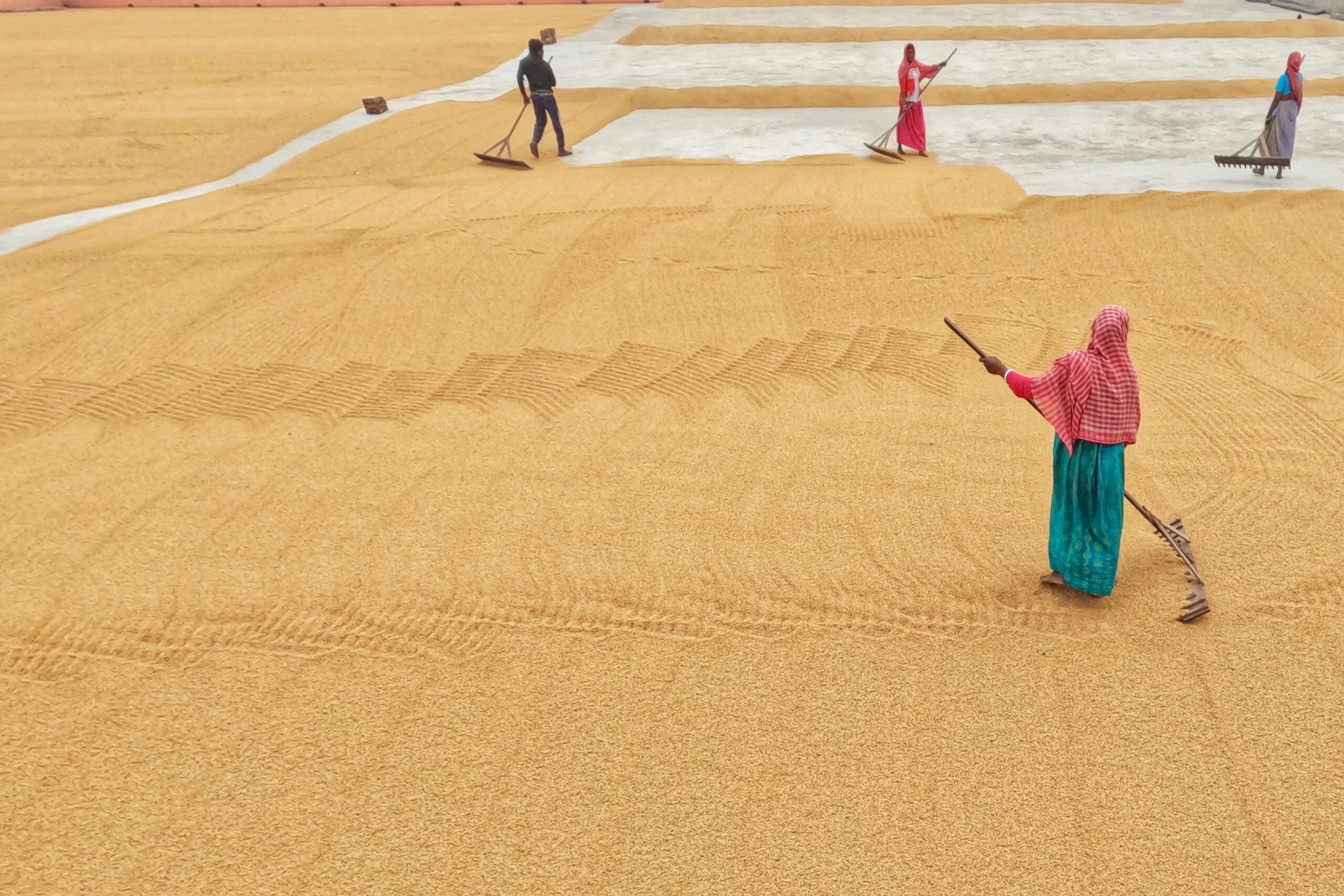
The Mahatma Gandhi National Rural Employment Guarantee Act (MGNREGA) is one of the most ambitious social security and public works programmes ever undertaken by any government in the world. Enacted by the Indian Parliament on 23 August 2005 and coming into force on 2 February 2006, MGNREGA legally guarantees 100 days of wage employment in a financial year to every rural household whose adult members volunteer to do unskilled manual work.
The Act was initially implemented in 200 of India’s most economically backward districts and was expanded to cover all rural districts across the country by April 2008.
MGNREGA is demand-driven rather than supply-driven. Any adult member of a rural household can demand work, and the state government is legally obligated to provide employment within 15 days. This legal guarantee transforms employment from a privilege into a right.
Unlike previous employment programmes where the government decided when and where work would be provided, MGNREGA places the power in the hands of the rural worker. If the government fails to provide work within the 15-day period, the applicant is entitled to an unemployment allowance, fundamentally altering the relationship between the state and its most vulnerable citizens.
The programme is jointly funded by the Central Government and the State Governments. The Central Government bears the entire cost of unskilled manual labour, 75 percent of the material cost, and certain administrative expenses. The State Governments bear 25 percent of the material cost, the cost of unemployment allowance, and additional administrative expenses.
This cost-sharing arrangement ensures that both tiers of government have a stake in the programme’s success. For a broader look at how the Union Budget allocates funds to social sector programmes including MGNREGA, see our explainer on India’s budget and social sector spending.
Step 1: The Job Card
Every rural household is entitled to a Job Card, which is a legal document that records the household’s demand for work, the employment provided, and wages paid. The Job Card is issued free of cost and remains valid for five years.
The Gram Panchayat is responsible for issuing Job Cards within 15 days of receiving an application. As of recent data, over 15 crore Job Cards have been issued across the country, making it one of the largest identity and entitlement databases in the world.
Step 2: Demanding Work
An adult member of a registered household can demand work by submitting a written application to the Gram Panchayat or the Programme Officer at the Block level. The application must specify the time period for which work is sought, and a minimum of 14 days of continuous work must be requested.
Upon receiving the application, a dated receipt is issued to the applicant, which serves as a legal proof of the demand for work.
Step 3: Work Allocation
Employment must be provided within 15 days of the date on which work is demanded. The work site must be within a radius of five kilometres from the applicant’s residence. If work is provided beyond five kilometres, additional transportation and living expenses are to be paid.
The types of permissible works under MGNREGA include water conservation and harvesting structures, drought-proofing activities including afforestation, irrigation canals, provision of irrigation facility to land owned by households belonging to Scheduled Castes and Scheduled Tribes, renovation of traditional water bodies, land development, flood control and protection works, rural connectivity through all-weather roads, and any other work notified by the Central Government.
Step 4: Wage Payment
Wages must be paid within 15 days of the work being done. If wages are not paid within this period, workers are entitled to compensation under the Payment of Wages Act, 1936.
Wages are paid directly into the bank or post office accounts of the workers to reduce leakage and corruption. Since 2014, the government has increasingly pushed for payments through the Aadhaar-Based Payment System (ABPS), which links wage payments to Aadhaar-seeded bank accounts.
Step 5: Social Audit
One of the most innovative features of MGNREGA is the mandatory social audit. Every work executed under the scheme must be audited by the Gram Sabha, providing a mechanism for community-level transparency and accountability.
Social Audit Units have been established in most states, with trained resource persons who facilitate the audit process. The social audit examines whether work was actually done, whether the correct wages were paid, and whether the assets created are of acceptable quality. States like Andhra Pradesh and Telangana have set exemplary standards in conducting regular and rigorous social audits.
MGNREGA operates at a scale that is difficult to comprehend. The programme is present in every rural district of India, covering approximately 2.69 lakh Gram Panchayats across 34 States and Union Territories.
In any given financial year, the programme generates employment for approximately 10 crore or more workers. During the COVID-19 pandemic year of FY2020-21, the number of unique workers who availed employment under the scheme crossed 11 crore, highlighting the programme’s role as a critical safety net during times of crisis.
Metric | Figure |
|---|---|
Guaranteed employment per household | 100 days per financial year |
Women beneficiaries | 55%+ nationally (80%+ in Kerala, Tamil Nadu) |
Wage payment mandate | Within 15 days of work |
FY2023-24 budget allocation | Approx. Rs 60,000 crore (actual spend higher) |
Average daily wages | Rs 220 to Rs 300 (varies by state) |
COVID peak employment (FY2020-21) | 389 crore person-days |
To understand MGNREGA, one must understand the India of the early 2000s. While the country was experiencing rapid economic growth, averaging over 7 percent GDP growth during the early years of the new millennium, this growth was deeply uneven. The benefits were concentrated in urban centres and in sectors like information technology, services, and manufacturing.
Rural India, home to nearly 70 percent of the population at the time, was facing an acute agrarian crisis. The period between 1997 and 2005 witnessed a wave of farmer suicides across states like Maharashtra, Andhra Pradesh, Karnataka, and Punjab. The National Crime Records Bureau data showed that over 1.5 lakh farmers took their own lives during this period.
The causes were manifold: falling commodity prices, rising input costs, mounting indebtedness, failure of monsoons, and the withdrawal of institutional credit. The agrarian distress led to massive distress migration from rural to urban areas, with millions of landless labourers and marginal farmers moving to cities to work in construction, domestic service, and the informal economy under exploitative conditions.
Previous employment programmes like the National Rural Employment Programme (NREP), the Rural Landless Employment Guarantee Programme (RLEGP), and the Jawahar Rozgar Yojana (JRY) had been in operation since the 1980s. However, these were supply-driven programmes, often marred by corruption, leakages, and poor targeting.
The idea of a legally enforceable right to work had been advocated by economists like Jean Dreze and activists associated with the Right to Food Campaign and the Mazdoor Kisan Shakti Sangathan (MKSS) in Rajasthan. The National Advisory Council, chaired by Sonia Gandhi, played a central role in drafting the legislation. The Act was passed with broad bipartisan support, though some economists expressed concerns about its fiscal implications and the potential for creating dependency.
Poverty Reduction and Income Security
Multiple studies have demonstrated MGNREGA’s contribution to poverty reduction. A study published in the journal World Development estimated that MGNREGA was responsible for a significant reduction in poverty rates in the districts where it was initially implemented.
The programme provides a critical income floor for the rural poor, particularly during the lean agricultural season when alternative employment is scarce. Research by the Institute for Human Development found that MGNREGA wages constituted between 20 and 40 percent of the annual household income for the poorest quintile of rural households.
Women’s Empowerment
MGNREGA mandates that at least one-third of the beneficiaries must be women. In practice, women’s participation has consistently exceeded 55 percent nationally, and in states like Kerala and Tamil Nadu, it has crossed 80 percent.
The programme offers women equal wages for equal work, provides creche facilities at worksites with more than five children, and offers employment close to home. Studies by the Institute of Social Studies Trust and the Centre for Equity Studies have documented how MGNREGA wages have given women greater bargaining power within households, increased their financial independence, and enhanced their participation in local governance structures.
Asset Creation and Rural Infrastructure
MGNREGA is not just an employment programme; it is also a programme for creating productive rural assets. Over the years, the programme has created millions of assets across categories including water conservation structures, rural connectivity, land development, drought-proofing, and irrigation infrastructure.
A study by the Indian Institute of Science estimated that MGNREGA works contributed to a measurable increase in groundwater recharge in several districts of Rajasthan and Madhya Pradesh. The convergence of MGNREGA with other schemes like the Pradhan Mantri Awas Yojana (housing) and the Swachh Bharat Mission (sanitation) has further enhanced the value of assets created.
Reduction in Distress Migration
By providing employment during the lean season, MGNREGA has played a role in reducing distress migration from some of the most migration-prone regions. Studies conducted in Rajasthan and Madhya Pradesh found a decline in seasonal migration during periods of high MGNREGA employment generation.
However, the evidence on this is mixed, with some researchers arguing that the programme’s impact on migration is limited when wages are too low or work availability is inadequate.
Delayed Wage Payments
Perhaps the most persistent criticism of MGNREGA is the chronic delay in wage payments. Despite the legal mandate of payment within 15 days, actual payment timelines have averaged 50 days or more in several states, according to analyses by the People’s Action for Employment Guarantee (PAEG) and LibTech India.
The shift to electronic Fund Management Systems (eFMS) and the Aadhaar-Based Payment System has, in some cases, worsened delays rather than resolving them, due to technical glitches, rejected transactions, and incorrect Aadhaar seeding. A 2022 study by LibTech India found that delayed payments affected nearly 71 percent of all MGNREGA transactions in certain states.
Inadequate and Stagnant Budgets
While the programme is demand-driven in theory, in practice, budgetary allocations have often constrained its reach. In FY2023-24, the revised estimates showed an expenditure of approximately Rs 86,000 crore against an initial budget estimate of Rs 60,000 crore, indicating chronic underfunding at the budgetary stage.
The average person-days of employment generated per household has hovered around 45 to 50 days, well short of the guaranteed 100 days.
Corruption and Leakages
Despite the transparency mechanisms built into the Act, corruption remains a significant challenge. Common forms of irregularities include the creation of fake Job Cards, inflated muster rolls (attendance records), payment to ghost workers, and siphoning of material costs.
While the digitisation of records and the social audit mechanism have reduced certain types of leakages, new forms of corruption have emerged in the digital ecosystem, including manipulation of geo-tagged photographs of work sites and collusion between local functionaries and payment agencies.
Aadhaar-Related Payment Failures
The mandatory linking of MGNREGA payments with Aadhaar has led to a new category of problems. Workers whose Aadhaar numbers are incorrectly seeded, whose biometric authentication fails (common among manual labourers whose fingerprints are worn), or who have multiple bank accounts linked to the same Aadhaar face rejected payments.
Research by Dreze, Khalid, Khera, and Somanchi documented numerous cases of legitimate workers being denied wages due to Aadhaar-related failures, leading to what they termed “pain without gain.” The systemic exclusion of marginalised workers through digital systems echoes broader patterns of caste-based discrimination in India’s laws and labour practices.
Inadequate Wages
MGNREGA wages are notified separately by the Central Government and are not linked to minimum wages under the Minimum Wages Act. In many states, MGNREGA wages are lower than the prevailing market wages for unskilled labour and even lower than the state-notified minimum wages.
This gap reduces the programme’s attractiveness and its effectiveness as an income support mechanism. Economists have argued for linking MGNREGA wages to inflation-indexed minimum wages to restore the programme’s original intent.
Kerala and Tamil Nadu: Models of Implementation
Kerala has consistently been among the top-performing states in MGNREGA implementation. The state has achieved high levels of women’s participation (over 90 percent), relatively timely wage payments, and effective convergence with other development programmes.
Kerala’s success is attributed to strong Panchayati Raj institutions, high levels of social awareness, an active civil society, and robust administrative capacity. The state has also innovated within the programme, using MGNREGA labour to create community assets like organic farms and public parks.
Tamil Nadu is another exemplary state, known for its high work completion rates, effective social audit mechanisms, and the creation of durable assets. The state’s history of implementing large-scale employment and nutrition programmes since the 1960s has created an administrative culture that supports programme delivery.
Bihar and Uttar Pradesh: The Struggle for Effective Implementation
In contrast, states like Bihar and Uttar Pradesh, which arguably have the greatest need for MGNREGA given their high poverty rates and large rural populations, have struggled with implementation. Common problems include low awareness among potential beneficiaries, weak Panchayati Raj institutions, high levels of corruption, delayed payments, and poor quality of assets created.
In Bihar, independent surveys have found that many eligible households do not even possess Job Cards, and among those who do, actual employment provided falls far short of demand. Uttar Pradesh has similarly faced criticism for low person-days of employment generated per household and for widespread irregularities in muster rolls.
The COVID-19 pandemic and the sudden national lockdown imposed in March 2020 triggered the largest reverse migration in India’s history. Tens of millions of migrant workers, rendered jobless overnight, walked hundreds of kilometres to return to their villages. When they arrived, MGNREGA emerged as the single most important source of livelihood for these returning workers.
In FY2020-21, MGNREGA generated approximately 389 crore person-days of employment - the highest ever since its inception. The total budget allocation rose to over Rs 1.11 lakh crore under the Atmanirbhar Bharat package.
The number of households that availed employment rose to over 7.5 crore, and in several states, the average person-days generated per household increased significantly. The government responded by increasing the MGNREGA wage by Rs 20 per day and by enhancing the budget allocation.
The pandemic experience underscored two critical lessons. First, MGNREGA’s demand-driven design allowed it to scale up rapidly in response to a crisis, something that supply-driven programmes cannot do. Second, despite its flaws, MGNREGA remains the most important formal safety net for rural India, and its capacity to absorb labour shocks is unmatched by any other programme.
Critics, including some prominent economists and policymakers, argue that the programme creates dependency and discourages productive employment, that the assets created are of poor quality and have limited economic value, that the fiscal cost is unsustainable, and that direct benefit transfers (DBT) would be a more efficient way of providing income support to the rural poor.
Former Chief Economic Adviser Arvind Subramanian, in the Economic Survey of 2015-16, raised questions about MGNREGA’s effectiveness and suggested that it be converted into a direct income support scheme.
Defenders of MGNREGA, including economists like Jean Dreze, Reetika Khera, and Sudha Narayanan, counter that the programme has demonstrable positive impacts on poverty reduction, women’s empowerment, and rural infrastructure. They argue that the problems with MGNREGA are problems of implementation rather than design, and that the solution lies in strengthening the programme rather than replacing it.
The debate also extends to the question of whether India needs an urban employment guarantee. With increasing urbanisation and the growth of the urban informal economy, several state governments and civil society organisations have called for extending the MGNREGA model to urban areas. States like Rajasthan and Kerala have already launched urban employment programmes modelled on MGNREGA.
Budget Adequacy
The single most important reform is ensuring that the programme is adequately funded. Independent estimates suggest that meeting the full demand for 100 days of work would require an annual allocation of Rs 1.5 to 2 lakh crore. The practice of under-budgeting and then releasing additional funds through supplementary demands has created a cycle of payment delays and rationing of work.
Timely Payments
The government must address the systemic causes of payment delays, including bottlenecks in the Fund Management System, rejected Aadhaar-based transactions, and delays in administrative approvals. Technology solutions, including real-time payment tracking dashboards and automated alerts for delayed payments, should be universally implemented.
Expanded Scope of Work
The permissible list of works under MGNREGA should be expanded to include climate-resilient agriculture, ecosystem restoration, urban greening, waste management, and disaster preparedness infrastructure. The convergence of MGNREGA with other national programmes should be deepened and systematised.
Urban Employment Guarantee
The extension of the employment guarantee to urban areas is an idea whose time has come. The Rajasthan government’s Indira Gandhi Shahri Rozgar Guarantee Yojana, launched in 2022, offers a potential model for a national urban programme that would provide a safety net for the growing urban precariat.
Strengthening Social Audits
Social audits must be made genuinely independent, adequately resourced, and conducted at regular intervals. The Andhra Pradesh model, where an independent Social Audit Society conducts audits with trained local resource persons, should be replicated across all states.
- Ministry of Rural Development, Government of India – The nodal ministry responsible for MGNREGA implementation and policy (rural.nic.in)
- NREGA Portal (nrega.nic.in) – The official MIS providing real-time data on employment generated, wages paid, assets created, and expenditure
- Centre for Science and Environment (CSE) – Extensive research on the environmental and water conservation impacts of MGNREGA works
- LibTech India – Seminal work on payment delays, Aadhaar-related exclusions, and transparency in MGNREGA
- People’s Action for Employment Guarantee (PAEG) – A coalition tracking MGNREGA implementation and advocating for programme strengthening
- Jean Dreze and Reetika Khera – Leading scholars whose academic and journalistic work has shaped public understanding of MGNREGA
MGNREGA is not just a government programme. It is a statement of India’s constitutional commitment to the right to life with dignity. Its future will be determined not merely by budgetary allocations and administrative efficiency, but by the political will to honour a promise made to the 800 million Indians who live in rural areas.
What you can do
- Share the evidenceSend this to one person who should know about poverty.Share on WhatsApp
- Give an afternoonTeach, mentor, clean up, or lend your professional skills.Ways to volunteer
- Tell us what's missingKnow a story, a fact we got wrong, or a solution worth spotlighting?Suggest a story
Politically neutral. Every claim sourced. Report a correction.

No comments yet