Punjab -- From Breadbasket to Drug Crisis
Punjab fed India through the Green Revolution. Today it faces groundwater collapse, farm debt, a drug crisis, and the largest youth exodus in its history.
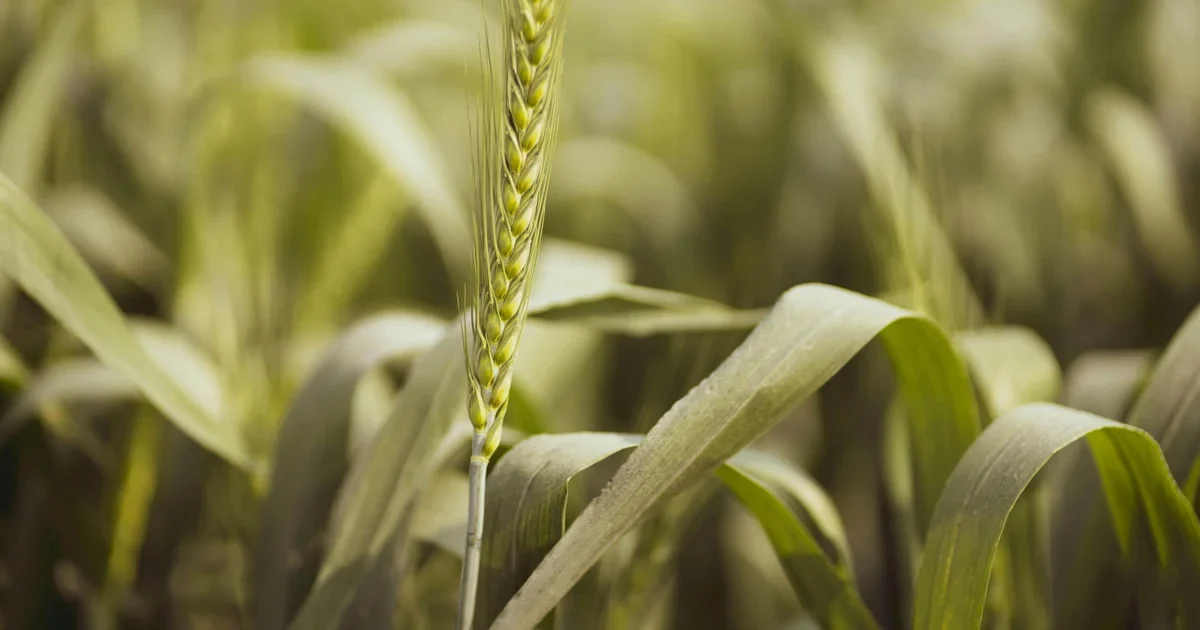
Punjab was once the symbol of India’s most ambitious agricultural transformation. The state fed a nation. Its farmers produced wheat and rice in volumes that kept hunger at bay for hundreds of millions of people during one of India’s most vulnerable decades. Today, that same state is grappling with a groundwater emergency, a stagnant farm income crisis, a documented drug epidemic, and the largest wave of youth emigration in its history.
This is not a story of failure alone. It is the story of what happens when a short-term policy triumph is never followed by the structural reforms it needed to survive.
The Green Revolution: Triumph Built on Borrowed Time
In the mid-1960s, India faced the prospect of famine. The central government, dependent on food aid from the United States under PL-480 agreements, was in a politically humiliating position. The Green Revolution changed that. By introducing high-yielding variety (HYV) seeds developed largely by Norman Borlaug and adopted under the leadership of agronomist M.S. Swaminathan, India turned its agricultural output around inside a decade.
Punjab became the laboratory and the engine of this transformation. By the 1980s, Punjab had the highest per-capita income among all Indian states. Tractors replaced bullocks. Tube-wells replaced rain.
| Metric | Punjab’s Contribution (Peak) |
|---|---|
| Share of India’s geographic area | ~1.5% |
| Share of FCI wheat procurement | 40–50% |
| Share of FCI rice procurement | 25–30% |
| Per-capita income rank (1980s) | Highest in India |
What was not visible in those headline numbers was the cost accumulating beneath the surface - literally beneath the surface. The Green Revolution’s productivity miracle depended on two inputs that were consumed far faster than they could be replenished: water and soil nutrients.
The Groundwater Crisis: A Data-Backed Emergency
Rice cultivation in Punjab requires enormous quantities of water. A single kilogram of paddy demands approximately 3,000 to 5,000 litres under Punjab’s agro-climatic conditions. Punjab’s annual rainfall is around 700 millimetres, concentrated in the monsoon months. That rainfall cannot sustain two water-intensive crops - wheat and paddy - in a year-round rotation on the same land.
Approximately 79 percent of Punjab's administrative blocks were classified as over-exploited by 2017, according to the Central Groundwater Board of India.
A 2012 study published in Geophysical Research Letters, using NASA’s GRACE satellite data, estimated that groundwater in northwestern India (a region dominated by Punjab and Haryana) was depleting at approximately 4 centimetres per year during 2002 to 2008. Subsequent assessments show the depletion continuing at similar or accelerating rates.
In the Malwa region - central and southern Punjab - the water table in many districts has dropped by 30 to 100 feet over the past three decades, according to Punjab government groundwater surveys. Farmers who once reached water at 10 feet now bore 200 feet or deeper.
The Punjab Preservation of Sub-Soil Water Act, enacted in 2009, tried to delay paddy transplanting to align with monsoon onset. The law has had measurable impact on transplantation dates, but it has not reversed the depletion trajectory. The structural problem - growing a water-hungry crop in a water-scarce ecosystem - remains unaddressed.
Soil Degradation and the Chemical Treadmill
The Green Revolution’s productivity gains depended heavily on chemical fertilisers, primarily nitrogen in the form of urea. According to data from the Directorate of Agriculture, Punjab, the state used approximately 220 kilograms of fertiliser per hectare in 2020-21, compared to a national average of around 130 kilograms per hectare.
- Declining soil organic carbon levels across irrigated districts (Punjab Agricultural University surveys)
- Falling micronutrient availability in soils under continuous wheat-rice rotation
- Reduced beneficial microbial populations in over-irrigated zones
- Annual stubble burning destroying organic matter and contributing to northern India’s air quality crises
Lower soil health means farmers need more fertiliser to maintain the same yield - a treadmill that raises costs without raising returns. The National Green Tribunal and Supreme Court have repeatedly directed Punjab to curb stubble burning. The practice continues at scale because the underlying economics have not changed.
The Farm Income Trap
Punjab’s farmers are caught between rising input costs and a pricing system that has not kept pace. The Minimum Support Price for wheat has risen over the decades, but the rate of increase has been slow relative to input cost inflation. A 2018 report from the Commission for Agricultural Costs and Prices (CACP) noted that the cost of cultivation for wheat in Punjab had risen faster than MSP increments in several years, narrowing real profit margins.
A National Bank for Agriculture and Rural Development (NABARD) survey published in 2018 estimated that about 53 percent of agricultural households in Punjab were indebted, with average debt levels among the highest in India. Informal lending from commission agents (arhtiyas), embedded in the grain procurement system, ties many farmers into debt cycles that are difficult to escape.
The Periodic Labour Force Survey (PLFS) data shows that the average monthly income of a farming household in Punjab, while higher than the national average in absolute terms, has not grown fast enough in real terms to sustain the debt levels many households carry. Small and medium farmers - those holding between one and five acres - have been particularly squeezed by land fragmentation through inheritance.
Why Crop Diversification Has Not Worked
Experts and policy papers have for decades recommended that Punjab diversify away from the wheat-rice monoculture. Horticulture, oilseeds, pulses, maize - all have been proposed. The central and state governments have run diversification schemes. None have achieved scale.
The reason is structural and rational from the farmer’s perspective. Wheat and paddy come with a guaranteed purchase price through MSP and a functioning procurement infrastructure. Maize or vegetables do not. When a farmer switches to tomatoes and the market price collapses, the loss can be catastrophic.
Breaking this trap requires either extending MSP guarantees to a broader range of crops, building cold-chain and processing infrastructure for alternatives, or both. These are large public investments that would take years to show results. The political will to sustain them across electoral cycles has been absent.
The Drug Crisis: What Verified Data Shows
The drug problem in Punjab is real, documented, and serious. It is also frequently sensationalised in ways that obscure what is actually known versus what is estimated. The evidence base matters here because the response should follow the evidence.
The most cited official study is the 2015 report by the All India Institute of Medical Sciences (AIIMS), commissioned by the Punjab government under a Supreme Court order. The AIIMS study surveyed 2,895 drug users across the state and estimated that Punjab had approximately 232,856 regular drug users, of whom about 8.6 percent were opioid-dependent.
| Data Source | Finding | Year |
|---|---|---|
| AIIMS Punjab Drug Survey | ~232,856 regular drug users; 8.6% opioid-dependent | 2015 |
| PGIMER Chandigarh / NDDTC | ~200,000 opioid-dependent individuals | 2021 |
| NCRB Crime in India | 16,688 NDPS cases registered in Punjab | 2022 |
The 2021 Punjab Opioid Dependence Survey, conducted by PGIMER Chandigarh in collaboration with the National Drug Dependence Treatment Centre, estimated approximately 200,000 opioid-dependent individuals out of a total population of roughly 30 million. That is roughly 0.67 percent of the population, or approximately one in 150 people. Among men aged 15 to 35 in rural areas, the concentration is considerably higher than the state average.
National Crime Records Bureau data shows Punjab consistently ranking among the top states for NDPS cases registered. In 2022, Punjab registered 16,688 cases. High case registration can reflect both actual prevalence and the intensity of law enforcement activity, so interpretation requires care.
The geographic corridor matters. Punjab’s border with Pakistan runs along Amritsar, Tarn Taran, Gurdaspur, and Ferozepur districts. Drug trafficking through this border - primarily heroin connected to Afghanistan’s opium production - has been documented in multiple BSF seizure reports. The supply-side pressure from cross-border trafficking interacts with the demand-side vulnerability created by economic distress and unemployment.
What the data does not support is the often-quoted claim that “every second household” has a drug addict. That formulation, widely used in political speeches, is not backed by the AIIMS or PGIMER survey findings. Presenting verified data without amplification is important when the subject involves stigma and social consequences for an entire state and its people.
Economic Stress and Drug Use: The Documented Connection
Research on substance use disorders consistently finds that economic stress, unemployment, and the absence of social support structures are strong predictors of both initiation and continuation of drug use. The same economic marginalisation that drives India’s gig workers into precarious livelihoods affects rural Punjab’s youth in different but equally structural ways.
Young men from farming families who inherit land too small to be economically viable, carry debt from tractor or tube-well loans, and face limited formal employment in the state’s industrial sector represent a vulnerable population. The Punjab government’s OOAT (Out Patient Opioid Assisted Treatment) programme, initiated under AAP governance after 2022, has expanded to over 200 clinics as of 2023-24, providing buprenorphine-naloxone treatment.
Youth Migration to Canada: Scale and Causes
Punjab is the single largest source state for emigration to Canada in India’s recent migration history. Immigration, Refugees and Citizenship Canada (IRCC) data shows that India became the top source country for new permanent residents starting from 2016, sending over 100,000 permanent residents annually by 2022-23. Punjab accounts for a disproportionate share of Indian emigrants to Canada, particularly through the student visa pathway.
Various estimates suggest 40 to 60 percent of Indian international students in Canada have Punjabi backgrounds, though precise provincial-level data is not publicly disaggregated to that level by the Canadian government. Passport issuances in Jalandhar, Amritsar, and Ludhiana have been among the highest in India on a per-capita basis.
- Economic drivers: Stagnant farm income, limited industrial employment, high relative wages in Canada’s service and logistics sectors
- Social drivers: Network effects - once a community has critical mass in a destination, migration becomes socially reinforced
- Infrastructure: Visa consultancy businesses have proliferated in Punjab’s towns, reducing friction for aspiring emigrants
- Consequence: The Doaba region shows demographic asymmetry - older populations, declining school enrolments, land values inflated by remittances but worked by ageing or migrant labour
The consequences within Punjab are debated. Remittances have supported rural consumption and housing investment. But the systematic loss of young, educated, and aspirational Punjabis creates a brain and energy drain with long-term consequences for the state’s civic life. The pattern of young people leaving distressed rural economies is not unique to Punjab - community-level institutions in rural India have tried, with uneven success, to create the local anchors that slow such migration.
The Farm Laws of 2020-21: Punjab at the Centre
The three farm laws passed by the Indian Parliament in September 2020 became the flashpoint for one of the largest sustained protest movements in independent India’s history. Punjab was not just the state most vocally opposed - it was the state where the laws posed the most concrete threat to an existing livelihood structure.
The three laws were: the Farmers’ Produce Trade and Commerce (Promotion and Facilitation) Act, the Farmers (Empowerment and Protection) Agreement on Price Assurance and Farm Services Act, and the Essential Commodities (Amendment) Act. The government’s stated rationale was to free farmers from dependence on state-controlled APMC mandis and allow contract farming with corporate buyers.
Punjab farmers’ resistance was rooted in a specific and rational fear. The APMC mandi system and MSP-based procurement was their primary protection against price volatility. A farmer growing wheat in Gujarat with diverse market access might benefit from mandi deregulation. A Punjab farmer whose entire income depended on FCI procurement at MSP had good reason to fear that private buyers would eventually undercut the de facto price floor.
The protest that began at Delhi’s borders in November 2020 was led by the Samyukta Kisan Morcha (SKM), an umbrella body of over 40 farm unions with Punjab as their base. Farmers camped at Singhu, Tikri, and Ghazipur borders for over 13 months. Prime Minister Narendra Modi announced repeal of all three laws in November 2021, ahead of assembly elections in Punjab and Uttar Pradesh.
What the Protest Revealed About Punjab’s Political Economy
The farm law protest revealed something important about how Punjab’s agricultural economy is embedded in a political structure. The arhtiya system, the APMC infrastructure, and the relationships between farmer unions, state politicians, and grain traders are deeply interconnected. Any reform to agricultural markets in Punjab necessarily touches all of these simultaneously.
The government’s failure to provide credible institutional alternatives - a national farm income insurance scheme, expanded MSP to more crops, guaranteed cold-chain procurement for perishables - meant the laws arrived as a subtraction without a replacement. The political economy of reform in agriculture requires compensating losers while creating winners. The 2020 farm laws did not do that adequately.
Sikh Political Economy and the Question of Federalism
Punjab’s challenges cannot be understood without reference to its political history and the Sikh political economy that shapes public life. These governance failures are part of a wider pattern that India’s Right to Information Act has been one of the few tools ordinary citizens can use to hold accountable.
The post-1947 history of Punjab includes the 1966 reorganisation that created a Punjabi-speaking majority state, the Anandpur Sahib Resolution of 1973 that articulated a federal vision for greater state autonomy, the insurgency and counter-insurgency violence of the 1980s and early 1990s, and the return to democratic stability that followed.
The Anandpur Sahib Resolution’s demand for state autonomy over subjects like agriculture, water, and trade remains politically resonant in Punjab even today. The farm law protests revived the federalism argument: that the central government had legislated on subjects that state governments believed should remain within state jurisdiction.
The Shiromani Akali Dal (SAD), the dominant Punjabi political party tied historically to the SGPC, broke with its long-standing BJP alliance over the farm laws. Harsimrat Kaur Badal resigned from the Union Cabinet in protest. The Aam Aadmi Party’s landslide victory in the 2022 Punjab assembly elections - winning 92 of 117 seats - represented a rejection of both the Congress and the Akali-BJP combine.
The Water-Energy-Food Nexus: A Policy Failure That Is Still Accelerating
One of the least-discussed dimensions of Punjab’s agricultural crisis is how the groundwater problem is inseparable from energy policy. Punjab provides highly subsidised or free electricity to farmers for running tube-well pumps. This subsidy - a major political commitment that no party has dared to remove - directly incentivises groundwater over-extraction. The more electricity a farmer uses to pump groundwater, the lower the marginal cost of the next litre drawn. There is no price signal that communicates the true long-term cost of depleting an aquifer.
The Punjab State Power Corporation Limited (PSPCL) carries large financial losses from the agricultural power subsidy. The state government compensates PSPCL from its budget, which means fiscal resources that could fund diversification programmes, rural credit reform, or industrial investment are being channelled into a subsidy that accelerates the very environmental problem it was never designed to cause.
Breaking this nexus is one of the most politically dangerous acts an elected government in Punjab can attempt. Any reform to agricultural electricity pricing is immediately framed as an attack on farmers - and in a state where the farm lobby is as organised and politically powerful as it is in Punjab, that framing has real electoral consequences. The AAP government, which came to power partly on a promise of free electricity for households, is not in a position to reduce farm power subsidies. The result is a policy trap: a subsidy that harms the long-term interests of the very farmers it claims to help, sustained by short-term political calculus on all sides.
The Canal Water Question and Inter-State Water Disputes
Punjab’s water crisis has an additional layer that is often under-reported: the Sutlej-Yamuna Link (SYL) canal dispute with Haryana. Under a 1981 agreement mediated by the central government, Punjab was to share its river water with Haryana through the SYL canal. Punjab has refused to build its portion of the canal, and the dispute has been litigated through the Supreme Court for decades without final resolution.
The political economy of this dispute is complex. Punjab’s farmers argue they have no surplus river water to share - a claim that is partly supported by hydrological data showing declining river flows. Haryana argues it has a legal entitlement. The central government has been unable to enforce compliance. Meanwhile, the groundwater continues to deplete because the surface water that would reduce extraction pressure remains politically locked.
This inter-state water politics is not unique to Punjab. Similar disputes exist across India’s river basins. But in Punjab, where water is the fundamental constraint on agricultural sustainability, the inability to resolve the SYL dispute for over four decades represents a failure of cooperative federalism that compounds the state’s ecological predicament.
What Would Systemic Change Look Like?
Punjab’s crises are connected, not separate. The groundwater depletion and soil health decline drive the income trap. The income trap, combined with limited alternative employment, creates the conditions for social distress including drug use. Youth migration is both a response to economic stagnation and a feedback loop that reduces the human capital available to change it.
Credible systemic change would require at minimum:
- A serious, funded crop diversification programme backed by guaranteed procurement for alternative crops, not just advisory
- A significant reduction in paddy cultivation in groundwater-depleted zones, with income compensation to affected farmers during the transition
- Clean-up and formalisation of agricultural credit to reduce arhtiya dependence
- Industrial investment in food processing, logistics, and manufacturing to absorb the non-farming workforce
- A public health approach to drug dependence treatment at the scale the problem demands
None of these are technically complicated. They are politically and fiscally complicated. They require central-state cooperation at a time when the two levels of government have often been at odds over Punjab. They require sustained investment across electoral cycles rather than the short-term announcements that characterise Indian agricultural policy.
Punjab’s people have shown, repeatedly, that they are capable of extraordinary resilience and mobilisation. The same energy that built the breadbasket of India and sustained a year-long protest at the borders of Delhi can be directed toward rebuilding the state’s agricultural economy on more sustainable ground. That will require government policy that deserves such trust. So far, that policy has not fully arrived.
Featured image: Photo by Dhally Romy on Pexels (pexels.com). Used under the Pexels License.
What you can do
- Share the evidenceSend this to one person who should know about governance.Share on WhatsApp
- Give an afternoonTeach, mentor, clean up, or lend your professional skills.Ways to volunteer
- Tell us what's missingKnow a story, a fact we got wrong, or a solution worth spotlighting?Suggest a story
Politically neutral. Every claim sourced. Report a correction.

No comments yet