Heatwaves in India: The Outdoor Workers Nobody Counts
India's heat deaths are undercounted, and the people most exposed are the ones who work outdoors. What Ahmedabad's heat action plan and cool roofs show.
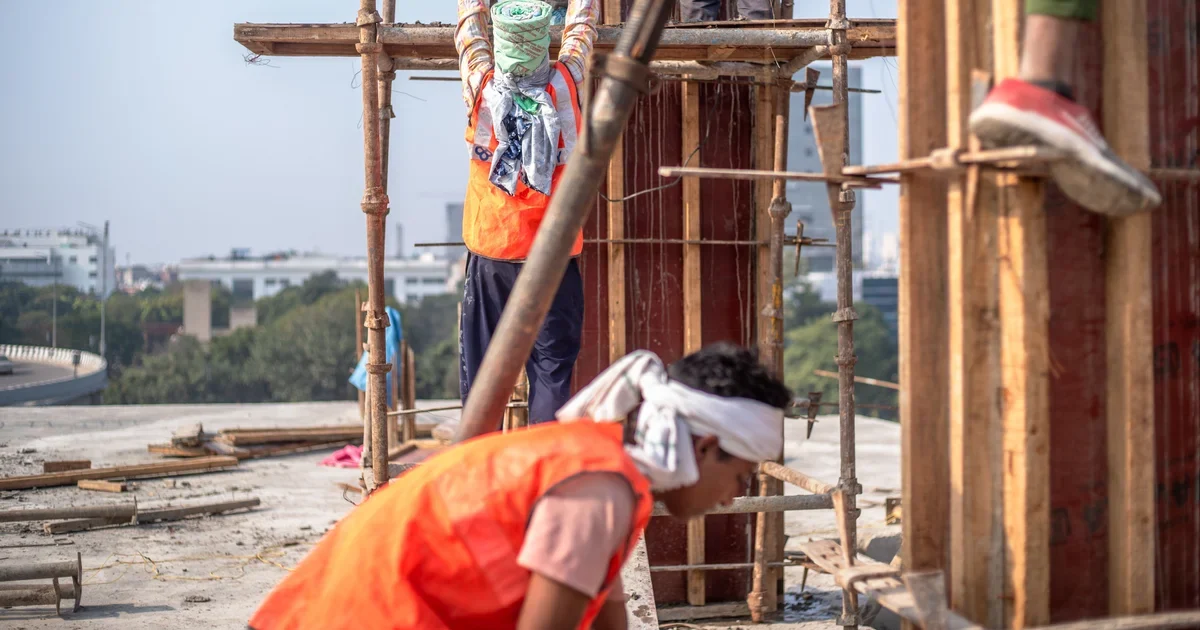
Photo by Infinity lifespaces on Pexels
In this story
How many people does heat kill in India?
Nobody knows, and that is the first problem. India’s official heat death numbers are small, inconsistent and widely believed to be far below the truth. Three government sources that count the same thing give three different answers. Between 2015 and 2020, the National Crime Records Bureau (NCRB) listed 8,171 deaths from heat and sunstroke, the health ministry’s National Centre for Disease Control (NCDC) recorded 3,812, and the India Meteorological Department (IMD) recorded 3,436 heatwave deaths, according to a review by The Quint. The same event can be missing from one list and present in another.
The gap between official counts and independent estimates is wider. Public health researcher Dileep Mavalankar of the Indian Institute of Public Health, Gandhinagar, has said the true toll is at least ten times the official count, as reported by DT Next. In summer 2025, the NCDC reported 14 confirmed heat deaths against 7,192 suspected heatstroke cases, while a media review by the HeatWatch project found at least 84 suspected heat deaths in the same months, according to DT Next. Three counts, three answers, and none of them is likely to be complete.
Why are heat deaths so hard to count?
Heat rarely appears on a death certificate. A person who collapses on a construction site in May may be recorded as having died of a heart attack, kidney failure or a stroke. Heat triggers these events, especially in people who already have a weak heart, diabetes or kidney disease, but the certificate names the final medical cause and not the temperature. Many outdoor workers die at the work site or at home, and not in a hospital. Many are migrants whose families are far away, and the death is never connected to the heatwave on the news.
Public health agencies, as a result, count only deaths that are clearly labelled as heatstroke. Researchers who look at total deaths during a heatwave compared with a normal period (excess mortality) find far more. In Ahmedabad, the 2010 heatwave, with a maximum of 46.8 degrees Celsius, was linked to about 1,344 excess deaths in May alone, according to the peer-reviewed evaluation of the city’s heat plan. That number is the kind that never appears in a daily bulletin.
Why does it matter whether we count them?
What is not counted is not funded. A state with five recorded heat deaths a year will not build cooling centres for the thousands of people at risk. Poor data also hides who is dying. If the toll falls mostly on daily wage workers, street vendors and the elderly poor, then the response has to be built around them, and not around a general advisory to stay indoors.
Who is most exposed to extreme heat?
The people at the greatest risk are those who cannot stay indoors. India has hundreds of millions of workers whose job is in the open air, and heat reaches them first.
- Construction workers carry bricks, mix cement and work on rooftops and scaffolds, often at midday, on piece rates that reward working through the heat. Many live in tin sheds on the site, which hold heat through the night.
- Farm workers harvest wheat and sugarcane in the hottest months and cannot postpone the work when the crop is ready. Farm labour is the largest source of employment affected, according to labour studies.
- Street vendors and hawkers stand at the same spot from morning to night, with little shade, and often without access to a clean toilet or drinking water.
- Delivery riders and drivers work for platforms that push for quick deliveries. A rider on a motorcycle at 44 degrees faces both heat and tarmac glare, and has no fixed place to rest.
- Waste pickers, sanitation workers, brick kiln workers, salt pan workers and rickshaw pullers spend long hours in the sun and often in dirty, hot conditions.
- People in tin-roof homes in slums do not escape the heat at night. A metal roof can make a room hotter inside than the air outside.
Others are vulnerable for biological reasons: older people, small children, pregnant women and people with chronic illness. The risk is not equal even within a family. A woman who cooks over a stove in a closed kitchen all afternoon takes on heat that the rest of the household does not.
What does heat do to the body and to the economy?
When the air is hot and humid, the body cannot lose heat through sweat, and its core temperature rises. Heat exhaustion causes dizziness, nausea and cramps. Heatstroke, when the core temperature crosses about 40 degrees, is a medical emergency that can kill within hours. Repeated heat exposure over weeks also damages the kidneys, a worry for farm and construction workers in hot regions.
Heat cuts work output, too. The International Labour Organization estimated in 2019 that India lost about 4.3 per cent of working hours to heat stress in 1995, and projected that this would rise to 5.8 per cent by 2030, equal to about 34 million full-time jobs, as summarised by Down To Earth. The loss lands on the people with the least cushion: workers paid by the day lose income when they cannot work, and those paid by the piece lose pay when they slow down.
What is a heat action plan, and does it work?
A heat action plan (HAP) is a city or state plan to prepare for extreme heat before it arrives, rather than to react after the deaths. A good plan has early warnings, trained health staff, public cooling places, drinking water points, changed working hours and a long-term effort to make homes and cities cooler.
What did Ahmedabad do?
After the 2010 heatwave, Ahmedabad became the first city in South Asia to adopt a heat action plan, prepared by the Ahmedabad Municipal Corporation with the Indian Institute of Public Health Gandhinagar, the Natural Resources Defense Council and other partners. The plan was launched in 2013. Its core was simple. The city linked IMD forecasts to a colour-coded alert system, so that a forecast of extreme heat triggered specific actions. Hospitals prepared beds and cooling equipment. Health workers were trained to spot heat illness. Messages went out through phone, television and newspapers, with advice on drinking water and staying cool. Parks, temples and public buildings stayed open for shade, and water points were set up in the city.
A pilot evaluation in the Journal of Environmental and Public Health compared the years after the plan (2014 and 2015) with a baseline of 2007 to 2010. It estimated about 1,190 deaths avoided each year in the post-plan period, as described in the published evaluation. The study is a pilot, it compares two time periods, and its authors note limits such as other changes over those years. A different summary cites a larger figure of about 2,380 deaths avoided, so the exact number is still debated. The direction of the finding is consistent: the plan was associated with fewer deaths on hot days, and the city’s risk at 47 degrees fell sharply compared with the earlier period.
Have other states followed?
Yes. Many states and hundreds of cities and districts now have heat action plans. An overview of plans since 2013 by IMPRI describes a shift from emergency response to longer-term adaptation in the better plans. Quality varies a great deal. Some plans are detailed, with a budget, named officials and a way to track results. Others are a short document of advisories that gather dust until a heatwave hits.
The common weak points are money, enforcement and focus on workers. Many plans say little about the people who cannot stop working, and few commit funds to cooling shelters, water points or compensation for lost wages.
What protects outdoor workers?
Heat guidance for the general public (drink water, stay indoors at noon) is useless to someone whose job is outdoors. Worker protection has to change how and when work is done.
Can work hours be shifted?
Yes, and this is the simplest and cheapest step. The Centre has written to states urging them to protect outdoor workers, with advisories that call for rescheduling work away from peak afternoon heat, adding rest breaks, shaded rest areas and drinking water, as reported by Deccan Herald. Odisha has restricted outdoor work for about four hours at midday during the hottest weeks, from April to mid-June, according to OdishaBytes. Reports describe violations by contractors, which shows the limit of orders that no one checks.
A shifted schedule works only if the worker is not punished with lost pay. A day-wage worker who stops at noon needs the contractor to adjust the hours, or a wage guarantee, so that she does not lose a day’s income. Guidelines that tell workers to rest without paying them for it make the problem worse. Workers’ groups have been pushing for binding protections, an effort covered by Mongabay India, since an advisory is not a legal duty.
How important are water, shade and rest?
Very. A water point within a short walk of every work site, shade or a rest shelter, a break each hour in the hottest weeks and oral rehydration salts at hand cost little. A construction site can be required to provide them as a condition of a permit. Cooling centres in labour hubs, such as the corners where daily wage workers wait for contractors, give people a place to cool down before they start work.
What about delivery riders and vendors?
Platforms can adjust delivery time promises in extreme heat, set up rest points with water for riders, and stop penalising delays on red-alert days. Municipal bodies can allow shaded vending spots, provide public water points and keep public toilets open. Both are low-cost changes that depend on a decision, not on new technology.
How do cool roofs help?
For millions of families, the home itself is the source of heat. A tin or asbestos roof in a slum heats up in the sun and radiates heat into the room all afternoon and evening. Sleeping through a hot night is hard, and for the old and the young it is dangerous.
Cool roofs are a simple fix. A coat of reflective white paint or special coating on the roof, or a layer of reflective material, bounces back much of the sun’s heat. The Mahila Housing Trust (MHT), a women-led organisation based in Ahmedabad, trained women from slum communities to install cool roofs in their neighbourhoods. Reports on the programme vary by source, putting the fall in indoor temperatures at around three to six degrees Celsius, as covered by The Better India, and more than 20,000 homes in Ahmedabad have benefited. The figures come from pilot and organisation reports, not an independent trial, so treat the exact drop with care. The direction is clear, and the cost is small compared with air conditioning, which poor families cannot afford.
What makes the MHT model distinctive is who runs it. Women in the community are trained as local leaders, and they spread the idea door to door. This follows the logic of the women’s groups we covered in our piece on how India’s self-help groups became the world’s largest microfinance network: people trust a neighbour more than a government notice.
Traditional building methods give further options, such as thick walls, courtyards, shaded verandas and ventilation. We looked at these in how Indian homes are beating summer heat without AC. A building code that requires heat-smart design in low-cost housing would help more families than any single scheme.
Can money protect workers on the days they cannot work?
Advice to rest during extreme heat runs into a plain fact: a day without work is a day without pay. For a vendor or a labourer, the choice on a 45-degree afternoon is between risk to health and a hungry evening. Ahmedabad has tested one answer. Alongside cool roofs and misting bus stops, the city’s climate work has included a heat insurance pilot for informal women workers, which pays out when temperatures cross a set threshold, as described by Down To Earth. The payment is designed to replace part of the income lost on the hottest days, so that a woman can stay home and still feed her family.
It is early days, and the schemes are small. Still, the idea matters because it addresses the real barrier. An advisory tells a worker what to do. Insurance or a wage guarantee gives her the means to do it. Both are needed, and neither works alone.
Why are cities getting hotter than the countryside?
Cities trap heat. Concrete, asphalt and glass absorb sunlight by day and release it slowly at night, so the air stays warm long after sunset. Tree cover and open water, which cool the air, shrink as roads and buildings spread. Air conditioners, which cool one room, push hot air outdoors and raise the street temperature for those who cannot afford one. This is known as the urban heat island effect.
The effect is not shared equally. Richer neighbourhoods tend to have more trees, parks and air conditioning, while poorer neighbourhoods have narrow lanes, tin roofs and little green. A heatwave in a dense low-income settlement can feel several degrees hotter than the same day in a leafy colony a few kilometres away. A city that wants to protect its people has to measure heat street by street, find the hottest pockets and put cooling, such as trees, water points and cool roofs, there first.
Hot nights are a particular danger. When the temperature does not fall after dark, the body has no chance to recover, and the risk of death rises, especially for older people and those with heart or kidney disease. Planning for night-time relief, with ventilation, safe terraces, and cooling centres that stay open late, is part of a serious plan.
What else do cities need to do?
- Count heat deaths properly. Use excess mortality, train doctors to record heat as a cause or contributing factor and publish district data in one national system.
- Fund the plans. Every heat action plan should have a budget line, named officers and a public report after each summer.
- Protect outdoor workers by law. Make rest breaks, water, shade and midday limits legal duties for employers, with wage protection and inspections.
- Cool the homes of the poor. Support cool roofs, ventilation and heat-smart design in housing schemes.
- Plant shade and keep water open. Trees along streets, public water points, misting at bus stops and open public buildings.
- Warn people in time, in their own language. Colour-coded alerts that reach workers’ phones and labour hubs and not only newspapers.
- Look after the power grid. Cooling needs reliable electricity. Our article on India’s power outages compared with Japan shows what happens when the lights go off during a heatwave.
What can you do?
- Check on neighbours. Older people living alone, pregnant women and families in tin-roof homes may need water or a cool place. A phone call can matter.
- Know the signs of heatstroke. High body temperature, confusion, hot dry skin or heavy sweating, fast pulse, vomiting and fainting. Move the person to shade, cool the body with wet cloths and water, and call 108 for an ambulance.
- Put out water. A matka or a bucket of water with a cup outside your gate or shop is a simple public service for delivery riders, postmen and passers-by.
- Be a fair employer. If you hire workers for construction, painting or farm work, move hard work to early morning and evening, pay for the full day and provide water and shade.
- Be a kind customer. Do not push delivery riders on hot afternoons. Tip them, and allow time.
- Paint your roof white or add a reflective coating, and help a neighbour with a tin roof do the same. Many resident welfare associations and NGOs run cool roof drives.
- Ask your local body for its heat action plan. Find out if one exists, whether it has a budget and where the cooling centres are. Raise it at ward meetings.
- Support groups that organise informal workers, so that heat protection becomes a right and not a favour.
Frequently asked questions
How many people die of heat in India every year?
Official numbers range from a few hundred to a couple of thousand and vary by agency. Experts say the true number is many times higher because heat is rarely recorded as a cause of death.
Who is most at risk from a heatwave?
Outdoor workers such as construction labourers, farm workers, street vendors and delivery riders, along with older people, young children and people living in tin-roof homes.
What is a heat action plan?
A plan prepared before summer that links forecasts to actions: early warnings, hospital readiness, cooling spaces, water points and changed working hours.
Did Ahmedabad’s heat action plan work?
A pilot evaluation estimated about 1,190 deaths avoided per year after the plan began in 2013, though other estimates differ and the study has limits.
Are there rules to protect workers from heat?
The Centre has issued advisories, and some states, such as Odisha, restrict midday outdoor work in the hottest weeks. There is no single binding national law, and enforcement is uneven.
What is a cool roof?
A roof treated with reflective paint or material that bounces back sunlight and lowers indoor temperatures by several degrees.
What should I do if someone collapses in the heat?
Move them to shade, cool them with water and wet cloth, give small sips of water if they are conscious, and call 108 for an ambulance.
The bottom line
Heatwaves in India are not only a weather story. They are a story about who gets to stay indoors. The people who build the cities, grow the food and deliver the parcels carry the highest risk and appear least in the data. Ahmedabad showed in 2013 that a city can organise itself to save lives, and cool roofs show that a bucket of reflective paint and a trained neighbour can change a family’s summer. The work left is to count the dead honestly, write worker protection into law and make sure the plans reach the street corner where the day-wage worker waits for a contractor.
Sources: Ahmedabad Municipal Corporation and partners, Ahmedabad Heat Action Plan (2013 onwards); Journal of Environmental and Public Health, pilot evaluation of Ahmedabad’s heat action plan (2018); National Crime Records Bureau, National Centre for Disease Control and India Meteorological Department heat mortality data (via the linked reviews); International Labour Organization, Working on a Warmer Planet (2019); Union government advisories on heat and outdoor workers; Mahila Housing Trust programme reports.
What you can do
- Share the evidenceSend this to one person who should know about poverty.Share on WhatsApp
- Give an afternoonTeach, mentor, clean up, or lend your professional skills.Ways to volunteer
- Tell us what's missingKnow a story, a fact we got wrong, or a solution worth spotlighting?Suggest a story
Politically neutral. Every claim sourced. Report a correction.


No comments yet