India's Domestic Workers: Millions of Women, No National Law
Estimates of India's domestic workers range from 4 million to over 50 million. Why they differ, the missing national law, and what states and unions do.
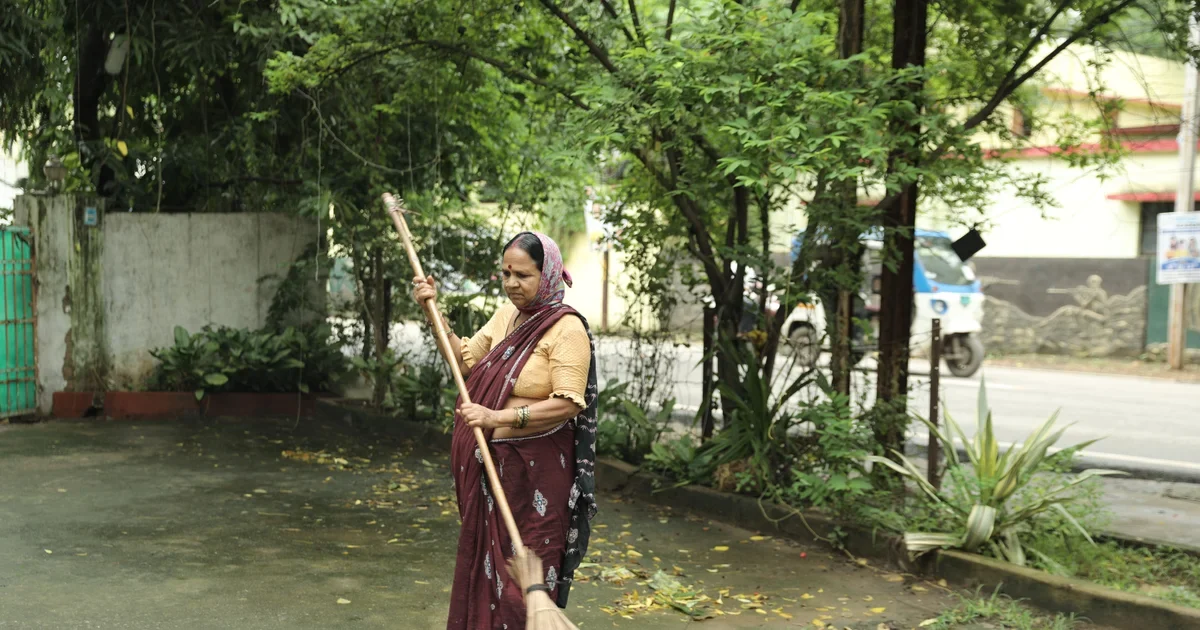
Photo by Shubham Thakur (Beyond India) on Pexels
In this story
How many domestic workers are there in India?
Nobody can say for certain, and the range of estimates shows how little the country knows about a workforce that is in nearly every middle-class home. The official National Sample Survey Office (NSSO) estimated 3.9 million domestic workers in 2011-12, of whom 2.6 million were women. The International Labour Organization (ILO), working from India’s Periodic Labour Force Survey, has put the number at about 4.8 million. The National Domestic Workers’ Movement (NDWM), a union-linked network, gives a range from 4.2 million to more than 50 million, as noted by Drishti IAS.
The government’s own registry adds another number. By July 2023, about 2.81 crore domestic and household workers had signed up on the e-Shram portal, the national database of unorganised workers. That is a registration count, not a survey of all workers, and it is many times higher than the survey estimates.
Source | Estimate | Note |
|---|---|---|
NSSO survey (2011-12) | 3.9 million | 2.6 million women |
ILO using PLFS | About 4.8 million | Survey-based |
NDWM | 4.2 million to over 50 million | Range reflects uncertainty |
e-Shram portal (July 2023) | 2.81 crore registered | Registrations, not a census |
A gap between 4 million and 50 million is not a rounding error. It is the difference between a modest sector and one of the largest sources of women’s paid work in the country.
Why do the estimates differ so much?
Several things pull the numbers apart.
- Definitions. Does domestic work mean only a maid, cook or cleaner, or does it include drivers, gardeners, nannies, elder-care attendants and security guards in a home? Surveys code occupations in different ways, and a woman who cleans three houses may be counted under a different label.
- Part-time and multiple employers. Many workers clean several homes a day. A survey that asks about a person’s main job may record her as a cleaner, a self-employed worker or a household member who helps, depending on the question.
- Hidden workers. Live-in workers, girls placed by agents and workers in small towns are less likely to be found by survey teams. Households may not report a young relative or a girl from the village who lives with them and works.
- Timing. The official figure is old, and the sector has grown with urban incomes and nuclear families.
- Sampling. A national household survey is built to measure big categories, such as total employment. Domestic work is a small slice of the sample, so the margin of error is large.
- Different purposes. Unions count to show scale and win rights, registries count who signs up, and statisticians count who answers a survey. Each uses a different method for a different aim.
The government has announced an All India Domestic Workers Survey to count the workforce directly. Until its results arrive, the honest summary is that India has at least four million domestic workers by the narrowest measure, and probably several times that number once part-time, live-in and unrecorded workers are included.
Who are they?
Domestic work is overwhelmingly women’s work, and it is performed mostly by women from the poorest and least protected groups: migrants from poorer districts, Dalit and Adivasi women, widows and single mothers. Many started when they were girls. Many send money to children and parents in villages, part of the flow of workers described in our piece on India’s internal migrants. For a woman with little schooling and no capital, a household is often the only employer who will take her, which is also why she can be paid so little.
The work itself is physical and unending: cooking, cleaning, washing, caring for children and for the elderly. It is also invisible. Because it happens inside private homes, it is treated as a favour from the family and not as a job. Our article on why India’s female labour force participation is lower than Pakistan’s describes how much women’s work in India goes uncounted, and domestic work is a large part of that story.
What gaps does the law leave?
India has no comprehensive national law for domestic workers. That is the central problem, and most other problems follow from it.
What protections do domestic workers lack?
- No guaranteed minimum wage. There is no uniform national minimum wage for domestic work. Rates are set, if at all, by individual states, and enforcement is weak. Drishti IAS reports that domestic workers earn about a third of the wages paid in other sectors, and that platform-based workers have been documented earning as little as Rs 49 an hour.
- No fixed hours, weekly rest or paid leave. A worker can be called at any hour, and a day off depends on the employer’s goodwill.
- No written contract. Terms are verbal. A dispute over unpaid wages comes down to one person’s word against another’s.
- No clear route for complaints. Labour inspectors do not enter private homes. A worker facing abuse has few places to go, and a police complaint can mean losing her job and sometimes her housing.
- Weak social security. No assured pension, maternity benefit, health cover or accident compensation. A worker who falls ill simply loses her income.
How common is abuse?
Abuse is widespread, though hard to measure. Reports and union surveys describe unpaid wages, verbal abuse, physical violence, confinement, sexual harassment, and humiliating practices such as separate cups, plates or toilets for workers, a form of caste discrimination. The workers most at risk are young girls and women placed through informal agents, who may be underpaid, cut off from their families and denied a way out.
A case that reaches the news, such as the assault or death of a young worker, draws outrage for a few days. The deeper problem is the daily routine: long hours, low pay, no rest, no appeal. Many of these acts are hard to prosecute because the law does not recognise most domestic workers as employees with defined rights.
What about live-in workers?
Live-in workers are the most exposed. Their workplace is also their home, so there is no end to the working day, no privacy and no separation from an employer who may control their food, phone and movement. A worker may not be allowed to leave the house, and her wages may be sent to a recruiter or kept back. Because the setting is private, abuse can continue unseen for years. Placement agencies, some of them unregistered, have been linked to trafficking and the placement of girls under 18, and the child labour law bans the work of children below 14 in households.
Why has India not ratified ILO Convention 189?
In 2011 the ILO adopted Convention 189, the Domestic Workers Convention, which defines domestic work as work performed in or for a household within an employment relationship and sets basic standards: written terms of employment, a minimum wage, weekly rest, protection from abuse and access to a complaint system. India voted in favour. Fifteen years on, it has not ratified the convention, which means its standards are not legally binding in India.
The government’s position, in answers to Parliament, has been that existing laws do not yet conform to the convention, and that ratification should follow domestic legislation. The result is a loop: no law because there is no ratification, and no ratification because there is no law. Meanwhile, the Supreme Court has noticed the gap. In January 2025, a bench of Justices Surya Kant and Ujjal Bhuyan spoke of a legal vacuum and asked the Centre to set up a committee of the ministries of labour, social justice, women and child development, and law to examine a legal framework, with a report in six months, according to Bar and Bench. The Court said it would monitor the progress. Whether a law follows is now a matter for the government and Parliament.
What is working?
The absence of a national law has not stopped progress. States, unions and workers have built partial protections, and these are the models to learn from.
Do state minimum wages help?
Where they exist, yes, though they vary. Kerala, Karnataka and Andhra Pradesh have brought domestic work under their minimum wage laws, according to the Drishti IAS summary, while a source reviewing the field says only around a dozen states have set minimum wages for domestic workers. The actual wage is often set per hour or per task, and compliance is another matter. A published minimum wage that no one enforces does not raise pay. For the notified rate to matter, workers need to know it, employers need to pay it and a complaint route needs to exist.
What do welfare boards do?
Domestic workers’ welfare boards exist in Tamil Nadu (created in 2007), Kerala, Delhi and Maharashtra. A board registers workers and pays benefits from a fund. In Tamil Nadu these include pensions, maternity help, accident relief and education aid. Registration is the weak link: many workers do not know about the board, lack documents or cannot take a day off to stand in a queue, and benefits reach only those who register. Boards are funded by a small contribution, a cess or a government grant, and the money is thin compared with the size of the workforce.
Maharashtra legislated for a board in 2008, and the experience there shows how long the distance is between a law passed and a worker served. Boards matter most when unions help workers to register and claim.
What does the e-Shram registry add?
The e-Shram portal gives each registered unorganised worker a number and an identity, and links her to accident insurance and welfare schemes. For domestic workers, who have no employer-issued record of any kind, the registry is the first official proof that they exist. Millions have signed up. The registry works only if the benefit that follows is worth the effort of registering and if the data lets governments see where the workers are, what they earn and what they need. It does not replace a law that requires employers to pay a minimum wage or to contribute to a fund.
What role do unions and worker groups play?
The most effective protections have come from organised workers. The Self Employed Women’s Association (SEWA), founded in Ahmedabad in 1972, organises informal women workers, including domestic workers, into unions and cooperatives, and offers training, savings, insurance and legal help. The National Domestic Workers’ Movement works in many states to register workers, negotiate wages and take up cases of abuse. Local domestic workers’ unions in cities such as Kolkata, Chennai, Bengaluru, Mumbai and Delhi bargain over wages with housing societies and hold camps where workers can learn their rights.
These groups do three things that a law alone cannot. They give a worker a place to go when she has been cheated. They set a local going rate that members refuse to undercut. And they send workers to the government with a collective voice. This approach has the same logic as the women’s collectives we described in how India’s self-help groups became the world’s largest microfinance network: a woman alone has little bargaining power, and a group of women has plenty.
What are states drafting now?
Karnataka has a draft bill on domestic workers’ social security and welfare, proposed in 2025, which would require written contracts and employer contributions to a welfare fund. The exact status of the bill should be checked, as drafts change. The idea behind it is the right one: spread the cost of social security between employer and state, so that a worker’s pension does not depend on a single household’s generosity.
Why does domestic work stay so poorly paid?
Part of the answer is simple supply and demand. Millions of women with few other options compete for a limited number of household jobs, and employers know it. A worker who asks for more can be replaced by someone who accepts less. Part of the answer is how society values the work. Cooking, cleaning and caring have been women’s unpaid duties for generations, and when the same tasks are done for money, they carry some of the same low status. The old caste attitudes that treat cleaning as impure work add another layer, which shows up in the separate cups and plates some workers are given.
Part of the answer is fear. A worker who loses one house loses a large share of her income, so she hesitates to ask for a raise, a day off or the wages owed. A single employer can set the terms because she has no union, no contract and no record of the job. That is why simple steps, such as a written note of terms, a bank transfer for wages and a registration number, matter more than they appear to. They give the worker something to point to.
The pay gap also has an effect on the employers’ side. Households that rely on domestic help to go out to work are mostly women, too. The arrangement lets one woman take up paid work by passing the unpaid work to another woman who is paid very little. Fixing this means asking what a fair price for care is, and who should share its cost, including the state through childcare, elder care and public services.
What would a fair national framework include?
- Recognition as workers. A legal definition of the domestic worker as an employee, covering part-time, live-in and agency-placed workers.
- A wage floor. A national floor with state adjustments, expressed per hour as well as per month, and indexed to prices.
- Written terms. A simple contract in the worker’s language, with hours, tasks, pay and leave.
- Rest and leave. A weekly day off, paid holidays and sick leave.
- Social security. A pooled fund with employer and government contributions for pension, health cover and maternity benefit, usable across states because many workers migrate.
- Safe complaint routes. A grievance body outside the home, such as a labour officer or a tripartite board with worker representatives, plus a rule against retaliation.
- Regulated placement agencies. Registration, licensing and penalties for trafficking and placement of children.
- Ratification of ILO C189 once domestic law catches up, which would put India with the countries that have already done so.
None of this requires inspectors to enter a family kitchen. It requires clear rules and a place to go. Countries with domestic worker laws, such as South Africa and Brazil, show that these can be designed so that they are practical for households as well as fair to workers, though results there also depend on enforcement. An honest national discussion has to weigh the interests of small households that employ a single part-time worker and cannot manage complicated paperwork. The answer is simple, light-touch rules, such as a standard contract and a contribution that can be paid online.
What can you do?
If you employ a domestic worker, you are already part of the system. The following steps are within your control.
- Pay a fair wage. Ask what the notified minimum is in your state, or what workers in your area earn, and pay at least that. Review the pay each year as prices rise.
- Write down the terms. A short note with the hours, tasks, pay and leave, signed by both sides, avoids many disputes.
- Give a weekly day off, paid holidays and sick leave. Pay for the days she is ill.
- Pay on time and in full, preferably by bank transfer so that there is a record, and never withhold wages or documents.
- Help her register on e-Shram and with the state welfare board, and give her the time to do it. Contribute to her insurance or provident fund if you can.
- Treat her with respect. Do not use separate utensils, address her with an insulting name or ask her to do work outside the agreed tasks.
- Never employ children. Children under 14 cannot lawfully be employed in households, and young people under 18 should not do hazardous work.
- Check placement agencies. Use only registered agencies, and meet the worker’s family where possible.
- Back a housing society policy. Resident welfare associations can set a standard wage, a leave policy and a grievance process for all workers in the complex, and can stop bans on workers using lifts and toilets.
- Support unions and groups such as SEWA and NDWM, and ask your representatives to back a national law.
Frequently asked questions
How many domestic workers are there in India?
Estimates vary from about 4 million in survey data to over 50 million in union estimates. A government survey is under way to count them directly.
Is there a law for domestic workers in India?
There is no comprehensive national law. Some states have minimum wage rules or welfare boards, and the Supreme Court asked the Centre in January 2025 to examine a legal framework.
What is ILO Convention 189?
An international treaty adopted in 2011 that sets standards for domestic workers’ pay, rest, contracts and protection from abuse. India voted for it but has not ratified it.
Is there a minimum wage for domestic workers?
Not nationally. Some states, such as Kerala, Karnataka and Andhra Pradesh, include domestic work in their minimum wage laws, and rates differ.
Can a domestic worker register on e-Shram?
Yes. Domestic workers can register on the e-Shram portal and receive a number and access to certain welfare schemes.
What can a worker do if she is not paid or is abused?
She can seek help from a union such as SEWA or NDWM, a state welfare board, a legal aid authority or the police. The national women’s helpline is 181, and the emergency number is 112.
Can children work as domestic help?
No. Children under 14 cannot be employed in households, and adolescents under 18 are barred from hazardous work.
The bottom line
The domestic worker in India raises other people’s children, cooks their meals and cares for their parents, and has fewer legal protections than almost any other worker. The numbers are uncertain because the work is invisible, and the work is invisible because the law has never said it counts. States have shown what partial protection looks like, unions have shown how to make it real, and the Supreme Court has pointed at the gap. What is left is for the country to decide that a home is also a workplace, and that the person who keeps it running is a worker with rights.
Sources: National Sample Survey Office, employment and unemployment survey (2011-12); International Labour Organization, Convention 189 on Domestic Workers (2011) and estimates based on the Periodic Labour Force Survey; Ministry of Labour and Employment, e-Shram portal data (July 2023); Supreme Court of India, order of January 2025 on domestic workers’ rights; state welfare board and minimum wage notifications as summarised in the linked reports.
What you can do
- Share the evidenceSend this to one person who should know about poverty.Share on WhatsApp
- Give an afternoonTeach, mentor, clean up, or lend your professional skills.Ways to volunteer
- Tell us what's missingKnow a story, a fact we got wrong, or a solution worth spotlighting?Suggest a story
Politically neutral. Every claim sourced. Report a correction.


No comments yet