JharkhandRich Land, Poor People, and the Women Rewriting the Odds
Jharkhand sits on some of India's richest coal and mineral land, yet it is among the poorest states. Adivasi land laws, mining displacement, migration, trafficking, and the women's groups and athletes pushing back.
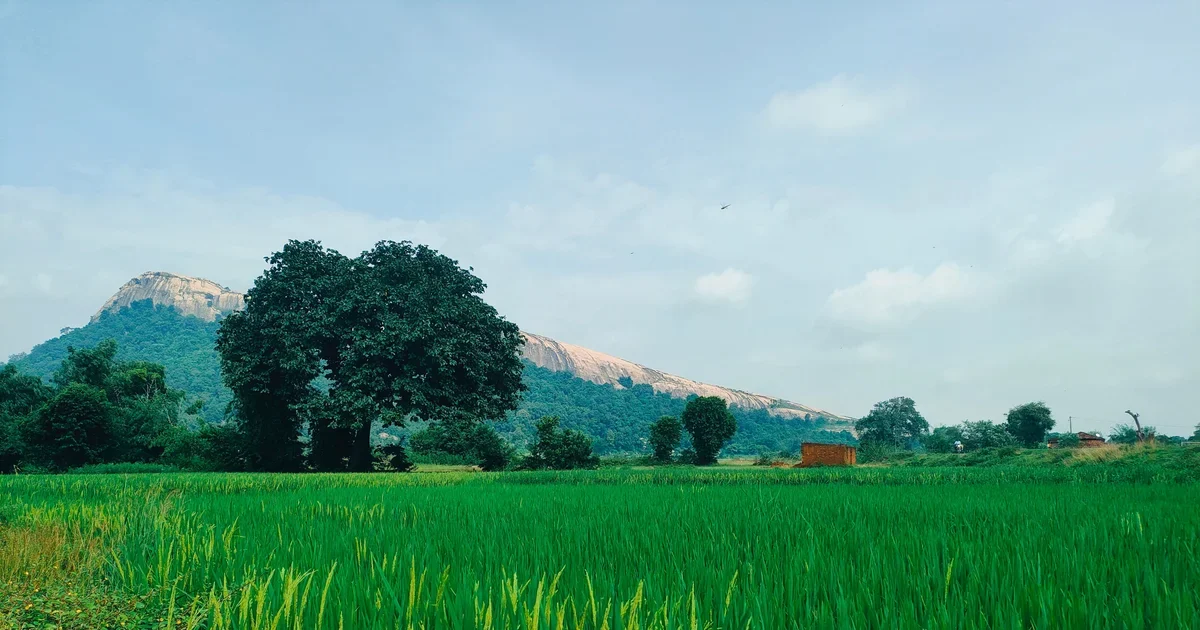
Photo by Smr Toppo on Pexels
In this story
Dig almost anywhere on the Chota Nagpur plateau and you hit something that India’s industry wants: coal, iron ore, bauxite, mica, copper. The state that sits on top of that wealth, Jharkhand, has been among the poorest in the country since the day it was carved out of Bihar in November 2000. More than a quarter of its people are Adivasi, the communities whose forests and fields lie over the minerals. Many of them have seen the mines come and the benefits go elsewhere.
This is a story with two halves. One is the familiar tale of a resource-rich region that stays poor: land taken, families moved, young people leaving, and girls trafficked into other people’s kitchens. The other half is less often told. Jharkhand also produces Olympic archers and hockey players from villages with no stadium, and a women’s movement that now reaches millions of households. This article lays out both halves, using public data and the best reporting available, and asks what works.
Why is a mineral-rich state so poor?
Economists call it the resource curse, and Jharkhand is a textbook case. Mining creates revenue and jobs, but the revenue flows to companies and the national treasury, the best jobs go to skilled outsiders, and the local population gets dust, noise, polluted water and land loss.
The numbers on poverty are consistent. NITI Aayog’s first multidimensional poverty index, released in November 2021 and based on NFHS-4 data for 2015-16, put Jharkhand’s share of multidimensionally poor people at 42.16 percent, second only to Bihar’s 51.91 percent, as The Free Press Journal reported. The second edition, in 2023, used NFHS-5 data from 2019-21 and showed India’s headcount falling from 24.85 percent to 14.96 percent, but Jharkhand was still named, with Bihar, Uttar Pradesh, Meghalaya and Madhya Pradesh, among the states where the share of poor people stayed high, according to a Drishti IAS summary.
The health data tells the same story at the level of a child’s body. In NFHS-5 (2019-21), 67 percent of children aged 6 to 59 months in Jharkhand were anaemic, and about 26 percent of women aged 15 to 49 had a below-normal body mass index, the highest share among the states, according to the NFHS-5 Jharkhand report. These are not the numbers of a state that is short of money in the ground. They are the numbers of a state where the value of that ground has not reached the families who live on it.
Indicator | Value | Source/Year |
|---|---|---|
Share of people multidimensionally poor | 42.16 percent | NITI Aayog MPI, 2015-16 |
Scheduled Tribe population | 86.45 lakh (26.21 percent) | Census 2011 |
Children aged 6-59 months who are anaemic | 67 percent | NFHS-5, 2019-21 |
Women with below-normal BMI | About 26 percent | NFHS-5, 2019-21 |
Land acquired by Coal India | 13,709.44 hectares; 1,043 families displaced | Union government answer, 2025 |
Women working as banking correspondents (BC Sakhi) | 4,619 | JSLPS, as reported |
What is the scale of mining in Jharkhand?
Coal is the main story. Coal mines operate across 12 of the state’s 24 districts, mostly under Coal India subsidiaries such as CCL, BCCL and ECL. Bauxite is mined in Gumla, Lohardaga and Latehar, and iron ore, mica and other minerals add to the list. Estimates of reserves vary by source, and we avoid giving a share of the national total, because the available figures came from secondary summaries and not from the Ministry of Coal.
What can be checked is the land. In a 2025 answer reported by Sabrang India, the Union government said Coal India had acquired 13,709.44 hectares in Jharkhand and that 1,043 families had been displaced for that land. Other estimates run much higher. Advocacy groups cite figures in the millions for people displaced by mines, power plants and dams since independence, but the methods differ and the numbers are contested, so they are best read as a sign of scale and not as a count.
Why does the official number look so low next to the activists’ numbers? Part of the answer is definitions. A family that lost farmland but keeps a house may not be counted as displaced. Another part is time: a mine that expands over twenty years takes a village in slices. A third is documents. Many Adivasi families farm land that is recorded in a village head’s name or in a community record, and compensation follows the paper, not the field.
What do the CNT and SPT Acts protect?
The most important laws for Adivasi land in Jharkhand are two old tenancy laws: the Chotanagpur Tenancy Act of 1908 and the Santhal Pargana Tenancy Act of 1949. Both were written to stop non-tribal people from acquiring Adivasi land. In broad terms, tribal land can be transferred only to other members of the community, in the same area, and with the permission of the deputy commissioner. The laws grew out of a century of tribal uprisings, including the Munda rebellion led by Birsa Munda around 1900.
These laws matter because of what they stop. A rich buyer cannot simply buy a plot from a poor Adivasi farmer. A mine cannot simply take it. Land for industry has to go through a lengthy acquisition process with consent and compensation rules.
That is why proposals to change the laws are among the most heated topics in the state. In late 2016 the state government passed amendments to both acts, which would have allowed some agricultural land to be used for non-agricultural purposes and certain transfers for projects such as schools and roads. Tribal organisations and some members of the ruling party objected. Governor Draupadi Murmu returned the bills in June 2017 and the amendments were dropped, as Newslaundry reported.
The same period saw the Pathalgadi movement, in which villages in Khunti and nearby districts put up large stone slabs inscribed with constitutional provisions on tribal self-rule. The slabs declared a village’s right under the Fifth Schedule and the Panchayats (Extension to Scheduled Areas) Act to decide matters on its own land. The movement led to confrontations, and many cases were filed against villagers. Whatever one thinks of the tactics, the underlying point was a civic one: villagers wanted a say before their land was acquired.
The Supreme Court’s Samatha judgment of 1997 backs that position in law. It held that in Scheduled Areas, government land and tribal land cannot be leased to private parties for mining, and that tribal consent matters. Legal protections exist. What is often missing is the means for a village to use them.
Who lives on the land?
Scheduled Tribes numbered 86.45 lakh in the 2011 Census, or 26.21 percent of Jharkhand’s people, as summarised here. In some districts they are a large majority: Khunti was 73.3 percent ST. The main groups include the Santhal, Oraon, Munda and Ho, along with smaller particularly vulnerable tribal groups such as the Birhor and Asur.
It is worth saying plainly that Adivasi communities are not a single group and that their relationship to the land is not only economic. Forests supply food, fuel, medicine, and material for housing and ceremonies. Sacred groves and burial grounds are tied to specific places. When a mine takes a hillside, the loss is not only the value of the plot but the social fabric around it.
The 2006 Forest Rights Act was meant to correct a historical wrong by recognising individual and community rights over forest land. Nationally the record has been uneven: by July 2015, about 43 lakh claims had been filed and about 16.7 lakh titles distributed, and community titles were only a small share, according to the Ministry of Tribal Affairs’ status report. We could not find an up-to-date Jharkhand breakdown from the ministry, so we do not give one. What can be said is that a community forest right gives a village a legal voice when a mine or a forest diversion is proposed, and that making claims is the first step.
Why do so many people leave?
When land is lost and farming is rain-fed on thin soil, work is somewhere else. Jharkhand’s villages send men to construction sites, brick kilns and farms in other states, and send girls and young women to work in houses. The state does not publish a clean migration count, so the pattern is best seen through its consequences: homes run by women and older people, children left with relatives, and a seasonal emptiness of villages before the harvest.
This is also the story of Bihar, the state Jharkhand was part of until 2000. Our piece on Bihar’s migration economy describes how a state that cannot absorb its workers exports them and waits for remittances. Jharkhand has the same structure with a different cause: instead of too little land, there is land that has been taken or that cannot be used.
What is happening to Jharkhand’s girls?
The darkest consequence of this poverty is trafficking. Agents, often from the same district or a neighbouring one, approach families with promises of a paid job in a city. A girl is sent to Delhi or another metro, placed with a household through a placement agency, and paid little or nothing. Some are cut off from their families and made to work long hours, and some face violence.
Police and NGO accounts show the pattern. In one recent case, Jharkhand Police rescued four missing girls from Delhi and Jaipur, three of whom had been taken on the promise of domestic work, as ThePrint reported. An NGO founder told VOA that over 60 percent of domestic workers in New Delhi come from Jharkhand. That is one organisation’s estimate, and we could not verify it, so treat it as an indication and not as a statistic.
No reliable official count captures the full scale, because trafficking is hidden and many cases are never reported. What is clear is the mechanism. Poverty and debt make an offer of work believable, weak regulation of placement agencies lets traffickers operate in the open, and a girl who is far from home has few ways to ask for help. Our piece on the children who work in the mica mines of Jharkhand and Bihar shows how the same pressures reach even younger children.
What works against trafficking?
- Regulate placement agencies. Registration, written contracts and a record of where each worker is placed make it harder for a trafficker to hide as an agency. Jharkhand has considered a law to regulate agencies, though we could not confirm its present status.
- Track girls who leave. Village-level groups can note who has left with whom, where, and when, and keep a phone number that a family can call. This costs almost nothing.
- Keep girls in school. Girls who stay enrolled beyond Class 8 are much harder to move. Hostels, bicycles and scholarships target exactly this window.
- Give families a credible local income. The offer of a job in Delhi stops working when a woman in the household already earns at home. That is where the women’s groups come in.
How are Jharkhand’s women changing the picture?
The Jharkhand State Livelihood Promotion Society, JSLPS, runs the state’s version of the National Rural Livelihoods Mission. It organises rural women into self-help groups called Sakhi Mandals, links them to banks, and supports them in farming, small enterprise and banking services. The network is large, and the detail shows what it does. In Koderma district, according to the district administration, each Sakhi Mandal is offered a bank loan of Rs 6 lakh at 7 percent a year. JSLPS says 4,619 women work as banking correspondents, called BC Sakhis, bringing bank services to villages that have no branch, and the Morung Express reported that those women handle transactions worth about Rs 120 crore every month. In Palamu, a woman named Pratima Devi took a Rs 1 lakh loan through her group and opened a roadside dhaba she named Didi Ka Bagicha, after the mango orchard that once stood on the site.
These are small enterprises. They will not replace the income from a mine. But they change who holds money in a household, and they create a local reason for a girl to stay in school and for a family to say no to an agent. There is also a tie to land. Women who organise in groups are better placed to file forest rights claims, ask about the gram sabha and take part in the decisions that affect common land. Kerala’s Kudumbashree network, which ties self-help groups to local government, shows what is possible when groups are linked to the panchayat and not left alone.
What about the community fixes beyond SHGs?
Three other levers are worth naming.
The first is the gram sabha. In Scheduled Areas, the Panchayats (Extension to Scheduled Areas) Act gives the village assembly a role in decisions about minor minerals, land acquisition and local resources. A gram sabha that meets, keeps minutes and knows the law is a real check. One that exists only on paper is not.
The second is the District Mineral Foundation, a trust set up in mining districts to spend a share of mining royalty on the people and areas affected by mining. When the trust spends on drinking water, schools and health in affected villages and publishes where the money went, it turns mining revenue into something a village can see. When it does not, the money sits idle or is used far from the mine.
The third is forest rights. A recognised community right lets a village manage and use its forest, and gives it standing when a diversion is proposed. Our reading of the national record shows that community titles have been rare, so the claims process is where support from legal volunteers and local officials matters most.
Why do the nutrition numbers matter for everything else?
It is easy to treat anaemia and underweight as a health department matter, separate from land and mining. They are the same story. A woman who is underweight and anaemic is more likely to have a low-birth-weight baby, and a child who is anaemic at two is slower in school at seven. A state that wants its young people to compete for jobs in the mines, the factories or the sports academies has to start with what its girls and mothers eat.
The levers are well known and cheap compared with a mine. Regular iron and folic acid for adolescent girls, working anganwadi centres that serve a hot meal and weigh children each month, eggs or pulses in the school meal, and a health worker who actually visits. The challenge is delivery in scattered hamlets on forested hills, where a clinic may be hours away and a health worker may cover many villages. That is another reason women’s groups matter: a Sakhi Mandal that meets monthly is also a channel for reaching mothers with a health message or a nutrition kit, and a way for a village to notice when the anganwadi has not opened.
Seen this way, the question of who benefits from the minerals is not abstract. If a fraction of mining revenue went to anganwadis, schools and clinics in the districts that supply it, the poverty numbers above would move. The money is there. The decision is about where it is spent and who is watching.
How do hockey and archery fit in?
Against that background, Jharkhand’s sporting record is striking. Deepika Kumari grew up in Ratu Chati, a village about 15 km from Ranchi, the daughter of an auto-rickshaw driver. She joined a state-run archery academy that trained underprivileged athletes for free, and went on to compete at four Olympic Games and win World Cup, Asian and world championship medals. Her story, told in a YourStory profile and a Netflix documentary, is often told as a personal triumph, and it is. It is also an argument about public investment. A free academy found a talented girl in a village with no range.
Hockey tells a similar story. Jaipal Singh Munda, born in what is now Jharkhand, captained the Indian hockey team that won gold at the 1928 Amsterdam Olympics, and later spoke up for tribal rights in the Constituent Assembly. Today, districts such as Simdega and Khunti send girls to national camps. Salima Tete from Simdega and Nikki Pradhan from Khunti have both played for India. Many of these players started with sticks cut from a tree and a field of packed earth.
What these athletes show is a pool of talent that is not being used. Their success depended on scouting, a free place to train and a coach, not on family wealth. If the same pipeline reached schooling, health and skills, the state’s human capital would look very different.
What would a fairer Jharkhand look like?
- Share mining value locally. Pay compensation on time, publish how District Mineral Foundation money is spent, and prefer local hiring and skills training in mining areas.
- Honour consent. Make gram sabha consent real for land acquisition in Scheduled Areas, and keep the tenancy protections in place.
- Settle forest rights claims. Process pending individual and community claims, with public lists in each panchayat.
- Protect girls on the move. Register placement agencies, track migrating girls and fund shelters and legal help for those rescued.
- Invest in nutrition and schooling. The anaemia and underweight figures are a call for iron, food and clinic access before anything else.
- Scale the sports pipeline. Fund academies and coaching in more blocks and tie sport to scholarships and school places.
What can you do?
- Learn the laws. Read a plain-language summary of the Forest Rights Act and PESA, and share it with a gram sabha or a local group if you work in a tribal district.
- Check where your products come from. Ask cosmetics and electronics brands whether their mica and minerals are traced to certified, child-labour-free sources.
- Hire domestic workers responsibly. Use registered agencies or direct hiring, check the age of any worker, pay the minimum wage and let her speak to her family. Report a suspected child worker to Childline 1098.
- Support local women’s groups. If you are in Jharkhand, volunteer with a Sakhi Mandal on bookkeeping or digital payments, or buy from Didi cafes and village producers.
- Back grassroots sport. Contribute equipment or coaching time to a village hockey or archery club.
- Follow the data. NFHS-5, the Census and the Ministry of Tribal Affairs’ reports are public. Ask your MLA what the state is doing about the numbers in them.
Frequently asked questions
Why is Jharkhand poor despite its minerals?Mining revenue goes mostly to companies and the national treasury, local jobs are limited, land is lost, and public services are thin. NITI Aayog’s index put Jharkhand’s share of poor people at 42.16 percent in 2015-16, and the state remained among the highest in 2019-21.
What are the CNT and SPT Acts?The Chotanagpur Tenancy Act of 1908 and the Santhal Pargana Tenancy Act of 1949 restrict the sale of tribal land to non-tribals and require official permission for transfers.
How many Adivasis live in Jharkhand?The 2011 Census counted 86.45 lakh Scheduled Tribe people, about 26.2 percent of the state.
What is Pathalgadi?It is a movement from about 2017 in which villages in Khunti and nearby areas erected stone slabs citing constitutional provisions on tribal self-rule and land.
How are girls from Jharkhand trafficked?Agents offer jobs in cities, place girls in households through agencies, and often pay little or nothing. Police have arrested agency owners in Delhi on such allegations. Official counts are incomplete.
What is JSLPS?The Jharkhand State Livelihood Promotion Society runs the state’s rural livelihoods mission, organising women into self-help groups and linking them to bank loans, farming support and banking services.
Who is Deepika Kumari?An Olympic archer from Ratu Chati near Ranchi who rose from a free state academy to international medals. She is one of several athletes from rural Jharkhand who have represented India.
What you can do
- Share the evidenceSend this to one person who should know about poverty.Share on WhatsApp
- Give an afternoonTeach, mentor, clean up, or lend your professional skills.Ways to volunteer
- Tell us what's missingKnow a story, a fact we got wrong, or a solution worth spotlighting?Suggest a story
Politically neutral. Every claim sourced. Report a correction.

No comments yet