KeralaThe Model That Does More With Less
Kerala has the highest literacy and some of the lowest infant mortality in India on a modest income. Where the Kerala model came from, where it is straining, and what other states can borrow.
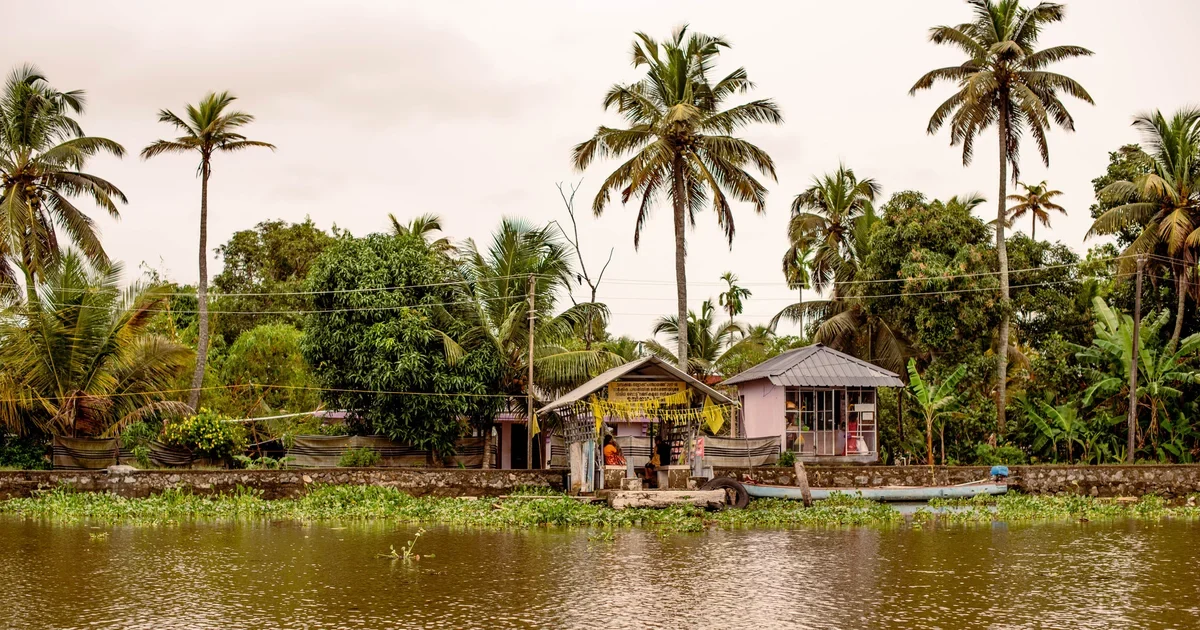
Photo by Gorky Sinha on Pexels
In this story
A child born in a Kerala village today is far more likely to survive infancy, finish school and live into her seventies than a child born in most Indian states, and more likely than children in many countries with much higher incomes. Kerala did not get there by being rich. For most of the twentieth century it was a crowded, poor, land-hungry coastal strip with few factories. What it had was a long habit of insisting that schools, clinics and land belong to everyone.
This is a story about that habit, and about what it cost. The Kerala model is real, but it is not finished. The state now depends on money sent from the Gulf, loses its young people to jobs abroad, is ageing faster than any other state, and has a generation of graduates who cannot find work at home. The useful question for the rest of India is not whether to admire Kerala. It is which parts of the model travel, and which parts are still being repaired.
What is the Kerala model, in numbers?
The phrase “Kerala model” was coined by economists in the 1970s to describe a puzzle: very good social outcomes on a very low income. The puzzle has not gone away. Here is where the state stands on the main measures, from official sources.
Indicator | Kerala | India | Source |
|---|---|---|---|
Literacy, all ages | About 94 percent (2011) | About 74 percent (2011) | Census of India 2011 |
Life expectancy at birth | About 75 years (2016-20) | 70 years (2016-20) | SRS Abridged Life Tables |
Infant deaths per 1,000 live births | Single digits (7 in the 2018 bulletin) | 28 (2020) | Sample Registration System |
Births in a health facility | Close to 100 percent (2019-21) | Around 89 percent | NFHS-5 |
Stunted children under five | 23.4 percent (2019-21) | 35.5 percent | NFHS-5 |
Two cautions on that table. The life expectancy and infant mortality figures come from the Sample Registration System, which publishes slightly different editions, so treat them as the right order of magnitude rather than a final decimal. And the stunting row carries a warning of its own: Kerala’s stunting rose from 19.7 percent in NFHS-4 to 23.4 percent in NFHS-5, a reminder that even the best state has unfinished work.
What makes the numbers more striking is the income they sit on. The health and schooling gains came first. Higher incomes came later, partly because healthy, educated people moved abroad and sent money home.
Where did the Kerala model come from?
The honest answer is that it came from several movements arriving over about a century, and none of them was a plan for a model.
The reformers who made caste a public question
In the nineteenth century, large parts of Kerala lived under some of the harshest caste restrictions in India. Lower-caste communities were barred from temples, from public roads near upper-caste homes and, in many places, from schools. Sree Narayana Guru, a spiritual teacher from the Ezhava community, answered that in 1888 by consecrating a Shiva idol at Aruvippuram himself, which a Brahmin priest would normally have done. The sentence attached to his work, “one caste, one religion, one God for mankind”, became a slogan for a whole movement. The Sree Narayana Dharma Paripalana Yogam, founded in 1903, put the movement into organised form, with schools, hostels and workshops.
Guru did not work alone. Ayyankali pushed for Dalit children to enter government schools and for labourers’ rights. The Vaikom Satyagraha of 1924-25 won the right to walk on roads near a temple. The Temple Entry Proclamation of 1936 in Travancore opened state temples to all Hindus. Each step was small and contested. Together they made a society in which the argument for universal access was already familiar when democratic politics arrived.
The state’s rulers did their part on schooling. A royal proclamation in 1817 in Travancore committed the government to funding education, and the reasons and consequences are set out in our earlier piece on how Kerala decided education was government’s job. Christian missions, community societies and the library movement filled in the rest. By independence, Travancore and Cochin already had literacy well above the Indian average.
Land reform that changed who owned the village
The second pillar was land. The first elected communist government, in 1957, introduced an agrarian relations bill aimed at tenant eviction and landlord power. It was dismissed in 1959 before it could take effect, but the idea stayed. The Kerala Land Reforms Act of 1963, with amendments in 1969, ended the landlord-tenant system and gave tenants rights over the land they farmed and over the plots on which their homes stood. For hundreds of thousands of families, it changed the basic fact of who owned the place they lived.
Land reform in Kerala was not complete. It left out plantations, and it did too little for Adivasi families and for many Dalit labourers who owned no land at all. The Muthanga agitation of 2003, in which Adivasi families occupied forest land in Wayanad, ended in police firing and showed that landlessness had not disappeared. Still, a state where most rural families own a small homestead is different from one where they do not. A secure house plot made it easier for families to send children to school and for women to take part in village life.
A health system built on reach, not on hospitals alone
The third pillar was public health. Kerala spread primary health centres, sub-centres and trained nurses and midwives widely and early, with the result that almost every birth now takes place in a health facility. Compact settlement helps: Kerala’s villages run into each other, so a clinic is rarely far away. High female literacy matters just as much. A mother who can read a vaccination card and a prescription, and who has some say at home, changes the odds for her child more than any single scheme.
Local government finished the job. In 1996 the state launched the People’s Plan Campaign, handing about a third of its development budget to panchayats and municipalities to plan and spend. The idea was that a ward knows its own drains, school roofs and clinic hours better than the capital does. That decision set the stage for the best-known programme of the next decade.
How did Kudumbashree become a model for the country?
Kudumbashree, launched in 1998, is the state poverty eradication mission. Its structure is simple. Women from nearby households form neighbourhood groups of ten to twenty members, each representing one family. Groups pool savings, take bank loans, and plan small enterprises together. Neighbourhood groups link into ward-level and then panchayat-level societies, and the whole network is tied to local government.
The scale is hard to match. A report by the state said the mission had over 46 lakh women in about 3.09 lakh groups, as Deccan Herald reported. State data put the figure near 48 lakh women across about 3.17 lakh groups by March 2025. In a state of roughly 3.5 crore people, that means a large share of adult women belong to one.
What do the groups do? They run micro-enterprises: catering units, tailoring, dairy, farming collectives, canteens. During the pandemic, community kitchens supplied cooked meals at low prices. The groups also act as a social network, so a woman with a problem, from a violent husband to a failing loan, has somewhere to take it. Many groups have fed women into local elections; the state reserves half of the seats in local bodies for women.
It is not a flawless story. The CAG audit covering 2012-17 found weaknesses in record-keeping and in how some funds were used. Some micro-enterprises earn little. The groups also depend on unpaid labour from women who already do most of the care work at home. Even so, the idea that poor women are a development institution, not just a target for welfare, is one the rest of India has been slow to learn. Our post on why India’s female labour force participation is so low shows why this matters: Kerala’s approach gives women a way into paid or semi-paid work that does not require leaving the village.
What is under strain in Kerala today?
The model solved one set of problems and produced another. Each strain below follows from the model’s own success.
Is Kerala too dependent on Gulf money?
Probably yes. Kerala has sent workers to the Gulf since the 1970s, and their remittances now make up a very large part of the state economy. The Kerala Migration Survey 2023, run by the International Institute of Migration and Development, found remittances of about Rs 2,16,893 crore in 2023, up from about Rs 85,092 crore in 2018, which is more than double. The same survey puts remittances at about 23 percent of the state’s net domestic product, as reported by The South First. The report is marked as a draft on the institute’s website, so treat the exact figures as provisional.
The risk is plain. When oil prices, Gulf employment rules or local labour policies change, the money flowing into Kerala changes with them. A state whose consumption, construction and bank deposits rest on remittances has a thin base of local production. The Gulf pays for the houses, the shopping malls and the private hospital beds. It does not build factories in Kerala.
Why are young people leaving?
The pattern of leaving is changing. The same survey found the share of emigrants going to Gulf countries fell from 89.2 percent in 2018 to 80.5 percent in 2023, while the number of students heading abroad rose to about 2.5 lakh, around 11.3 percent of all emigrants. Students are going to Canada, Australia, the UK, Germany and elsewhere. Many do not plan to come back.
That is a personal choice for each family, and an understandable one. For the state it is a loss of exactly the people a modern economy needs. Our look at Bihar’s migration economy shows the poorer version of the same story: states that cannot offer work send their people out. Kerala’s version is different, because the people leaving are educated and the destinations are rich countries, but the underlying fact is the same.
Is Kerala ageing faster than the rest of India?
Yes. The National Statistical Office report “Elderly in India 2021” puts the share of Kerala’s population aged 60 and above at about 16.5 percent, the highest of any state, against roughly 10.1 percent nationally. As ThePrint summarised it, Tamil Nadu and Himachal Pradesh follow, while Bihar, Uttar Pradesh and Assam are the youngest.
Good health and low fertility produce an older population. Add the young who leave, and many Kerala homes have grandparents living alone, while the children work in Dubai or Toronto. That puts weight on the health system, on pensions and on care. It also shows up in the state’s finances, since a larger share of residents are drawing on social security rather than paying income tax. Kerala is a preview of what other southern states will face in a generation.
Why can’t educated people find jobs?
This is perhaps the sharpest contradiction. The Periodic Labour Force Survey for July 2023 to June 2024 found youth unemployment in Kerala, for ages 15 to 29, at about 29.9 percent, against about 17 percent nationally, according to figures reported by Ideas for India. For young women, the reported rate was 47.1 percent. These numbers count people who are looking for work and not finding it, so they are not a sign that women stay home by choice.
Why would the most educated state have the hardest time finding work for its graduates? A few reasons stand out. The state has few large employers outside tourism, banking, health and government. Many graduates want white-collar jobs and will wait for them, while those with fewer qualifications take whatever work is available and so show up as employed. A large part of the state’s work is done by migrant workers from other states, who fill construction and service jobs that locals avoid. And the Gulf and overseas routes have meant that for decades, the answer to scarce local jobs was to leave.
What did the 2018 floods show?
The floods of August 2018 were the worst in a century. The state government counted 483 deaths since the monsoon began, and the damage reached across more than ten districts, with Alappuzha, Ernakulam, Idukki, Kottayam, Pathanamthitta, Thrissur and Wayanad worst hit. A post-disaster needs assessment by the United Nations and partners estimated recovery needs at about Rs 31,000 crore, as The Week reported.
The response was a mix of strength and weakness. The strength was social: fishermen took their boats into flooded towns, local clubs and Kudumbashree groups ran relief camps, and the state’s disaster response worked with volunteers in ways that saved lives. We described that response in our piece on the volunteers who build bridges across flood-hit communities. The weakness was physical. Dams released water at the same time, building had gone on in flood plains and on slopes, and a dense population lived close to rivers. The state launched a Rebuild Kerala Initiative, but the landslides at Mundakkai and Chooralmala in Wayanad in July 2024, which killed well over 200 people, showed that the underlying hazard of steep, heavily built hill land has not gone away.
What about health costs and lifestyle disease?
A state that survives infancy lives long enough to get diabetes, heart disease and cancer. Kerala reports high rates of such illnesses, and its people use private hospitals heavily, so out-of-pocket spending can be high even in a state with a strong public system. The state has responded with public insurance schemes, and its family health centre programme aims to turn primary clinics into places that screen for lifelong conditions. Money is tight, and the challenge of managing long illnesses is different from the challenge of vaccinating infants.
Is the Kerala model really as good as it looks?
Critics raise fair points. Some say the model is only about outcomes and ignores growth. Others note that Adivasi and Dalit communities in Kerala still trail the average on land, income and health, and that those gaps are masked by state-wide numbers. Others point out that the gains were partly financed by remittances, which means a part of the model rested on another region’s economy.
These criticisms deserve a straight answer. The model did not produce equal results for every group, and it did not produce a diversified economy. But the claim does not need to be perfect to be useful. Even the weakest Kerala districts do better on child survival and schooling than the national average for their income group. And the model’s central discovery, that public investment in health and learning pays off sooner and lasts longer than people expect, has been confirmed by the experience of Tamil Nadu, Himachal Pradesh and parts of the Northeast. Our piece on Tamil Nadu’s social outcomes reaches a similar conclusion from a different starting point.
What can other states borrow from Kerala?
Not everything transfers. Kerala’s history, its dense settlement and its tradition of reform movements cannot be copied. A few practical lessons can.
- Put girls and women first in schooling. Female literacy is the strongest single predictor of child survival and smaller families. States with weak records on girls’ schooling should treat it as a health measure as well as an education one.
- Build the health system from the bottom. A reachable sub-centre with a trained nurse and a functioning referral link does more for child survival than one more city hospital.
- Give local governments real money. The People’s Plan Campaign worked because panchayats had funds and the authority to decide how to spend them. Untied funds and trained staff matter more than new schemes.
- Treat women’s groups as institutions. Kudumbashree shows that linking self-help groups to local government and banks produces more than an isolated credit programme does. Jharkhand, Bihar and Odisha have their own self-help group networks that could be tied into local government in the same way.
- Secure a house plot. Even a small homestead changes what a family can plan for. Programmes that grant house-site titles to landless families have an effect that outlasts the grant itself.
- Plan for the next problem. Kerala is a warning on the other side: social gains need an economy that can absorb the people they produce. States that educate their young should plan jobs, skills and care for older people at the same time.
What can you do?
- Check your own state’s numbers. The NFHS-5 state fact sheets and the Sample Registration System bulletins are free to download. Compare your state with Kerala and ask your local representative why the gaps exist.
- Join or support a women’s self-help group. If you live in a village or town, find the nearest group under the National Rural Livelihoods Mission or your state mission, and help members with bank paperwork, bookkeeping or digital payments.
- Attend the gram sabha or ward meeting. Kerala’s results came from local decisions. Your panchayat or ward committee decides how much goes to schools and health centres. Ask to see the budget.
- Volunteer in a local school or clinic. Reading help for primary children or support at a vaccination camp is a direct way to add to the public system.
- Support older neighbours. If you live in a state that is ageing, check on elderly people living alone, and help them reach pension and health schemes.
- Read primary data, not slogans. The Kerala Economic Review, the Census and NFHS reports are public. State comparisons are easy to distort, and the original tables are a better guide.
Frequently asked questions
What is the Kerala model of development?It is the term for Kerala’s record of high literacy, long life expectancy and low infant mortality achieved at a modest income, through public investment in schools, health, land reform and local government.
Why does Kerala have such high literacy?A royal commitment to state-funded schooling in 1817, social reform movements that opened schools to lower-caste children, mission schools, a strong library movement and decades of public spending on education. Census 2011 put Kerala’s literacy at about 94 percent.
What is Kudumbashree?It is Kerala’s state poverty eradication mission, launched in 1998. It organises women into neighbourhood groups, linked to local government, that save, borrow and run small enterprises. It has over 45 lakh members.
How much does Kerala depend on remittances?The Kerala Migration Survey 2023 estimated remittances at about Rs 2.17 lakh crore, roughly 23 percent of the state’s net domestic product. The report is provisional.
Why is youth unemployment so high in Kerala?PLFS 2023-24 reported about 29.9 percent for ages 15 to 29. Causes include few large employers, graduates waiting for white-collar jobs, and a long habit of seeking work abroad.
Is Kerala ageing faster than other states?Yes. The NSO report Elderly in India 2021 puts the 60-plus share at about 16.5 percent, the highest among states, against about 10.1 percent nationally.
Can other states copy the Kerala model?Parts of it, yes. Girls’ schooling, primary health care, funded local governments and women’s self-help networks have all worked elsewhere. The history and settlement pattern cannot be copied, but the policies can.
What you can do
- Share the evidenceSend this to one person who should know about poverty.Share on WhatsApp
- Give an afternoonTeach, mentor, clean up, or lend your professional skills.Ways to volunteer
- Tell us what's missingKnow a story, a fact we got wrong, or a solution worth spotlighting?Suggest a story
Politically neutral. Every claim sourced. Report a correction.
No comments yet